Loading...
Done
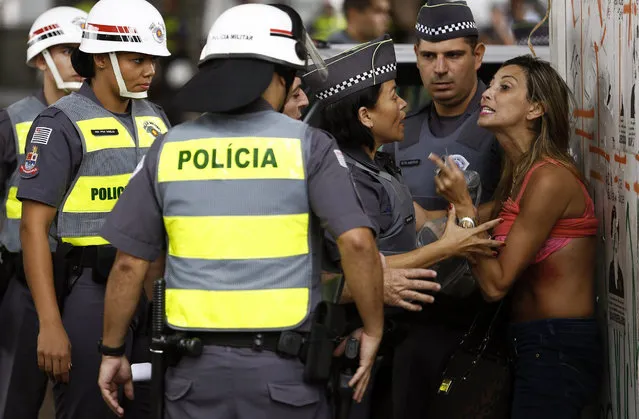
A demonstrator argues with policewomen after she turned up her shirt and was taken out from a protest to demand the resignation of Brazilian President Dilma Rousseff, on March 13, 2016 in Paulista Avenue in Sao Paulo. Protesters, many draped in the Brazilian national flag, poured into the streets of Brasilia and Rio de Janeiro on Sunday at the start of mass demonstrations seeking to bring down President Dilma Rousseff. Authorities in Sao Paulo, Brazil's biggest city and an opposition stronghold, said they were bracing for a million protesters. (Photo by Miguel Schincariol/AFP Photo)

A demonstrator argues with policewomen after she turned up her shirt and was taken out from a protest to demand the resignation of Brazilian President Dilma Rousseff, on March 13, 2016 in Paulista Avenue in Sao Paulo. Protesters, many draped in the Brazilian national flag, poured into the streets of Brasilia and Rio de Janeiro on Sunday at the start of mass demonstrations seeking to bring down President Dilma Rousseff. Authorities in Sao Paulo, Brazil's biggest city and an opposition stronghold, said they were bracing for a million protesters. (Photo by Miguel Schincariol/AFP Photo)
Details
15 Mar 2016 14:25:00
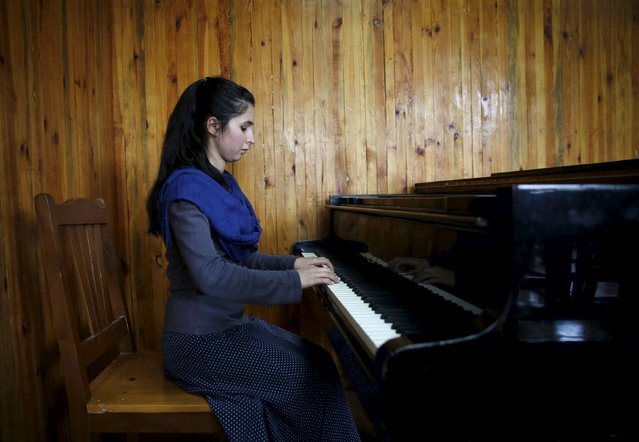
Negin Ekhpulwak, leader of the Zohra orchestra, an ensemble of 35 women, practises on a piano at Afghanistan's National Institute of Music, in Kabul, Afghanistan April 9, 2016. (Photo by Ahmad Masood/Reuters)

Negin Ekhpulwak, leader of the Zohra orchestra, an ensemble of 35 women, practises on a piano at Afghanistan's National Institute of Music, in Kabul, Afghanistan April 9, 2016. Playing instruments was banned under Taliban rule in Afghanistan, and even today, many conservative Muslims frown on most forms of music. Living in an orphanage in the capital, Kabul, 19-year-old Negin Ikhpolwak leads an ensemble of 35 women that plays both Western and Afghan musical instruments. In a country notorious internationally for harsh restrictions on women in most areas of life, Negin's story highlights a double challenge. (Photo by Ahmad Masood/Reuters)
Details
19 Apr 2016 13:47:00
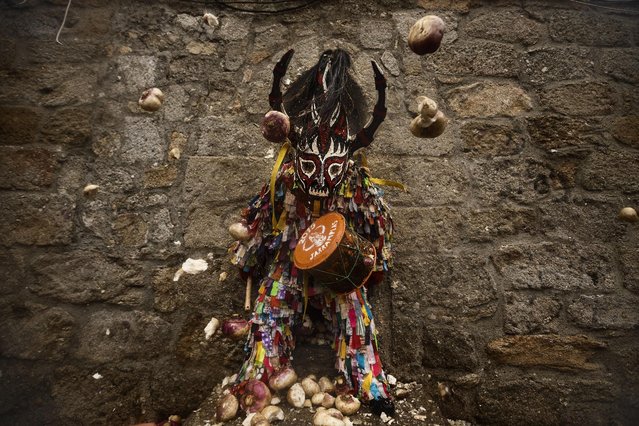
People throw turnips at the Jarramplas as he makes his way through the streets beating his drum during the Jarramplas Festival in Piornal, Spain, Tuesday, January 20, 2015. Jarramplas is a character that wears a costume made from colorful strips of fabric, and a devil-like mask and beats a drum through the streets of Piornal while residents throw turnips as a punishment for stealing cattle. (Photo by Daniel Ochoa de Olza/AP Photo)

People throw turnips at the Jarramplas as he makes his way through the streets beating his drum during the Jarramplas Festival in Piornal, Spain, Tuesday, January 20, 2015. Jarramplas is a character that wears a costume made from colorful strips of fabric, and a devil-like mask and beats a drum through the streets of Piornal while residents throw turnips as a punishment for stealing cattle. The exact origin of the festival are not known, various theories exist from the mythological punishment of Caco by Hercules, to a cattle thief ridiculed and expelled by his neighbors. The Jarramplas Festival takes place every year from the 19th till the 20th of January on Saint Sebastian Day. (Photo by Daniel Ochoa de Olza/AP Photo)
Details
21 Jan 2015 13:42:00
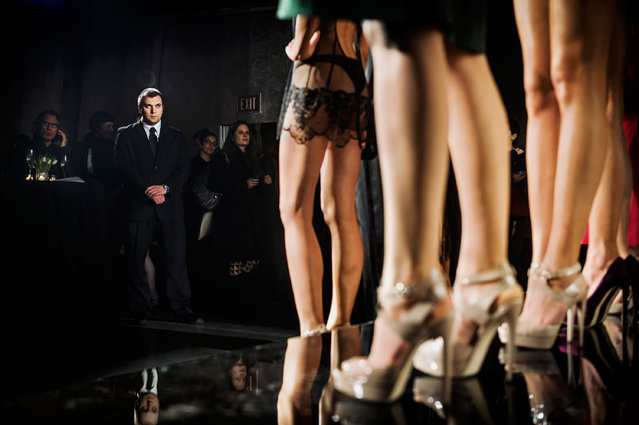
A security guard looks at the models during La Perla’s presentation at the Dream Hotel. Mercedes-Benz Fashion Week, New York City, Spring 2014. From the series “Fashion Lust”. (Photo by Dina Litovsky)

A security guard looks at the models during La Perla’s presentation at the Dream Hotel. Mercedes-Benz Fashion Week, New York City, Spring 2014. From the series “Fashion Lust”. (Photo by Dina Litovsky)
Details
09 Feb 2015 12:25:00
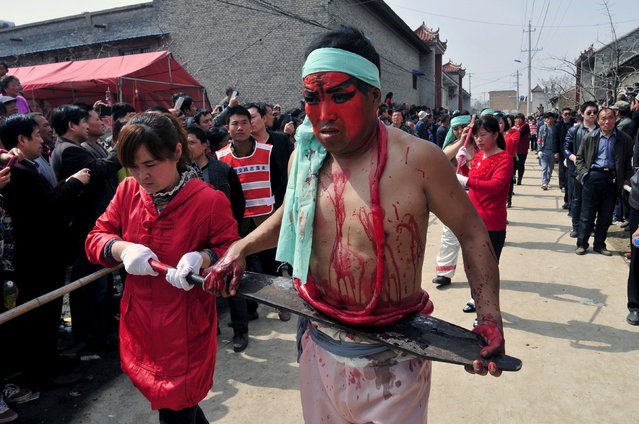
A folk performer (front R) with make-up and props takes part in a “Blood Shehuo” parade, during a performance in Linyi county, Shanxi province March 21, 2015. “Shehuo” is the common name of Chinese traditional activities consisting of folk performances in northern China. The "Blood Shehuo" performers use make-up and props to re-enact scenes of horror in classic Chinese novels like Water Margin. (Photo by Reuters/Stringer)

A folk performer (front R) with make-up and props takes part in a “Blood Shehuo” parade, during a performance in Linyi county, Shanxi province March 21, 2015. “Shehuo” is the common name of Chinese traditional activities consisting of folk performances in northern China. The “Blood Shehuo” performers use make-up and props to re-enact scenes of horror in classic Chinese novels like Water Margin. (Photo by Reuters/Stringer)
Details
23 Mar 2015 10:33:00
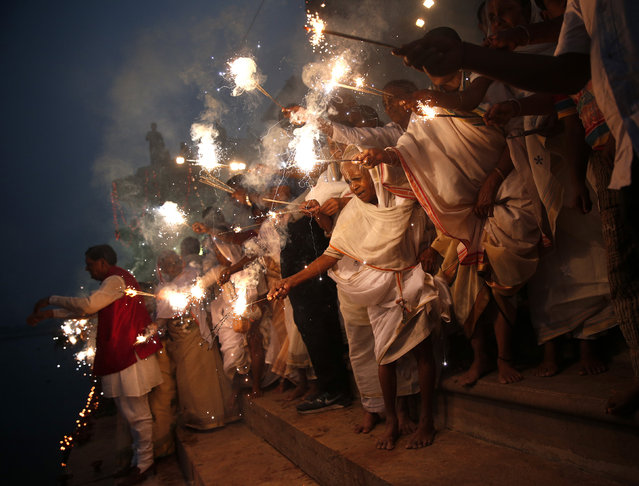
Widows, who have been abandoned by their families, light sparklers after offering prayers on the banks of the river Yamuna as part of Diwali celebrations organised by non-governmental organisation Sulabh International in Vrindavan, Uttar Pradesh October 21, 2014. (Photo by Ahmad Masood/Reuters)

Widows, who have been abandoned by their families, light sparklers after offering prayers on the banks of the river Yamuna as part of Diwali celebrations organised by non-governmental organisation Sulabh International in Vrindavan, Uttar Pradesh October 21, 2014. (Photo by Ahmad Masood/Reuters)
Details
23 Oct 2014 11:07:00
An explosion at a petrochemical plant is seen in Rizhao, Shandong province, July 16, 2015. According to Xinhua News Agency, a fire broke out after the explosion, which was caused by a liquified hydrocarbon leak at the plant, on Thursday morning. There was no report of casualties yet. (Photo by Reuters/China Daily)

An explosion at a petrochemical plant is seen in Rizhao, Shandong province, July 16, 2015. According to Xinhua News Agency, a fire broke out after the explosion, which was caused by a liquified hydrocarbon leak at the plant, on Thursday morning. There was no report of casualties yet. (Photo by Reuters/China Daily)
Details
17 Jul 2015 14:03:00
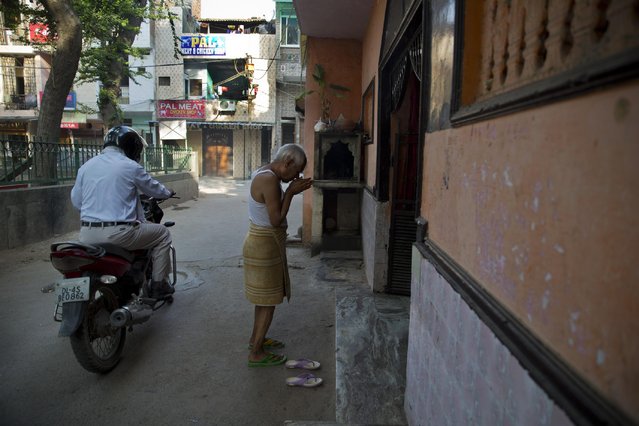
In this June 8, 2015 photo, Omkarnath, who goes by the name “Medicine Baba”, pays his reverence at a neighborhood temple as he begins his day in New Delhi, India. The chatty, 79-year-old retired blood-bank technician has been collecting unused prescription drugs from the affluent for the past eight years, and distributing whatever hasn't expired to patients who need medicines they cannot afford. (Photo by Saurabh Das/AP Photo)

In this June 8, 2015 photo, Omkarnath, who goes by the name “Medicine Baba”, pays his reverence at a neighborhood temple as he begins his day in New Delhi, India. The chatty, 79-year-old retired blood-bank technician has been collecting unused prescription drugs from the affluent for the past eight years, and distributing whatever hasn't expired to patients who need medicines they cannot afford. (Photo by Saurabh Das/AP Photo)
Details
25 Jul 2015 12:18:00