Loading...
Done


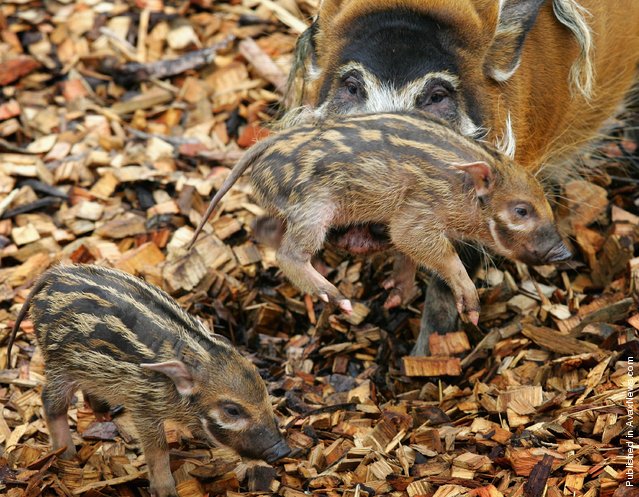
“The Red River Hog (Potamochoerus porcus), also known as the Bush Pig (but not to be confused with P. larvatus, common name “Bushpig”), is a wild member of the pig family living in Africa, with most of its distribution in the Guinean and Congolian forests. It is rarely seen away from rainforests, and generally prefers areas near rivers or swamps.

Red River Hogs eat grass, berries, roots, insects, molluscs, small vertebrates and carrion. They are capable of causing damage to plantations. Red River Hogs typically live in herds of 6-20 members led by a dominant boar. Sows rear 3-6 piglets at a time.”

Photo: Two 17 day old red river hoglet twins forage for food next to their mother Bahiti at London Zoo on August 23, 2007 in London, England. Red River hoglets inhabit the forests and swamps of West and Central Africa. The recent additions to the London Zoo pig pen have been eagerly awaited by zoo keepers. (Photo by Chris Jackson/Getty Images)
Details
18 Mar 2011 15:15:00
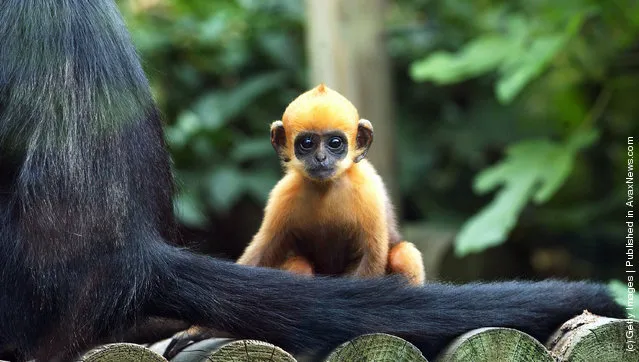
Baby Francois' Langur

“Francois' langur is one of several species of leaf monkeys. Over 50% of its diet is made up of young leaves. It will also consume fruits (17.2%), seeds, flowers, stems, roots, bark and occasionally minerals and insects off of rock surfaces and cliffs. This langur consumes its favorite food, young leaves, at the highest rate during the dry season, April through September, also known as the young leaf-lean period”. – Wikipedia

Photo: An endangered baby Francois' Langur monkey called Laa Laa settles in following her July 6 birth at London Zoo, Regent's Park on August 5, 2004 in London. The bright ginger youngster was born to glossy black parents Max and Shaneka and has the typical orange baby coat which is in stark contrast against the black of her parent's and older brother Grub's fur. (Photo by Steve Finn/Getty Images)
Details
22 Sep 2011 11:28:00
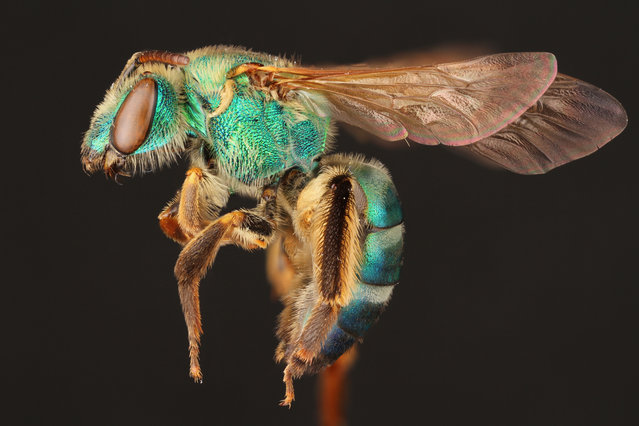
These macro images by Alejandro Santillana are being showcased in the Insects Unlocked project at the University of Texas at Austin. Here: A female sweat bee. (Photo by Alejandro Santillana/Insects Unlocked/Cover Images)

These macro images by Alejandro Santillana are being showcased in the Insects Unlocked project at the University of Texas at Austin. Here: A female sweat bee. (Photo by Alejandro Santillana/Insects Unlocked/Cover Images)
Details
21 Jul 2017 07:55:00
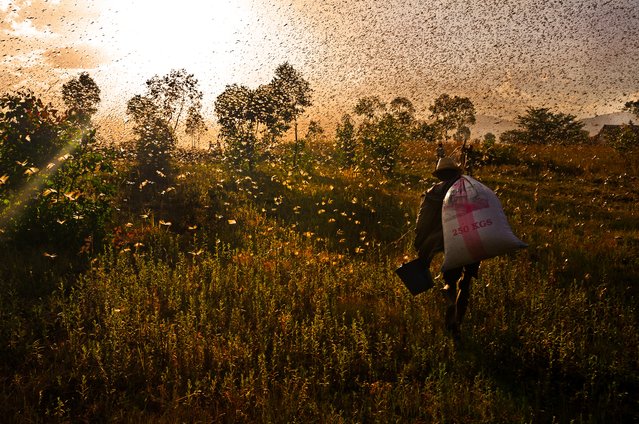
“Locusts & Men”. Oppression, interaction, collaboration. In the life cycle of nature nothing is lost, but the coexistence of different species is sometimes difficult. In Madagascar periodically returns the archaic antagonism between man and the migratory locust, in a circle of life where the two species are looking for space and food for their survival. Photo location: Madagascar, 2013. (Photo and caption by Michele Martinelli/National Geographic Photo Contest)

“Locusts & Men”. Oppression, interaction, collaboration. In the life cycle of nature nothing is lost, but the coexistence of different species is sometimes difficult. In Madagascar periodically returns the archaic antagonism between man and the migratory locust, in a circle of life where the two species are looking for space and food for their survival. At the end of the day a man walks home carrying on his shoulders the heavy bag which contains the locusts captured during the day. The insects provide nutritious meals for the man and his family. Photo location: Madagascar, 2013. (Photo and caption by Michele Martinelli/National Geographic Photo Contest)

ATTENTION! All pictures are presented in high resolution. To see Hi-Res images – just TWICE click on any picture. In other words, click small picture – opens the BIG picture. Click BIG picture – opens VERY BIG picture.
Details
03 Dec 2013 10:59:00
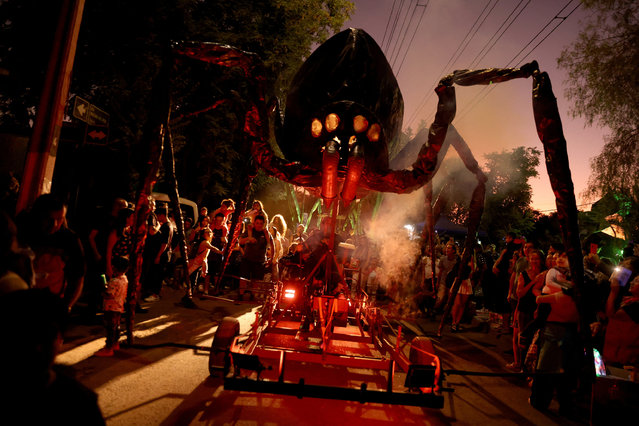
A theater company performs “Insectes” during Santiago a Mil International Theater Festival in Santiago, Chile on January 12, 2023. (Photo by Ivan Alvarado/Reuters)

A theater company performs “Insectes” during Santiago a Mil International Theater Festival in Santiago, Chile on January 12, 2023. (Photo by Ivan Alvarado/Reuters)
Details
04 May 2024 06:00:00
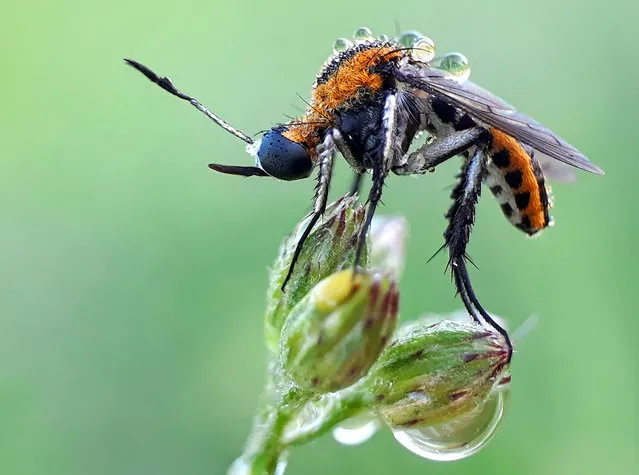
Komangs macro photography of insects using his Samsung Galaxy J7 and homemade camera lens in Bali, Indonesia. (Photo by Komang Wirnata/Caters News Agency)

These snaps were captured by a pro phone camera photographer. You can see the intricate detail in each shot, from the shining eyes of the insects to the tiny water droplets that splash down on them. Here: Komangs macro photography of insects using his Samsung Galaxy J7 and homemade camera lens in Bali, Indonesia. (Photo by Komang Wirnata/Caters News Agency)
Details
10 Jan 2018 06:59:00
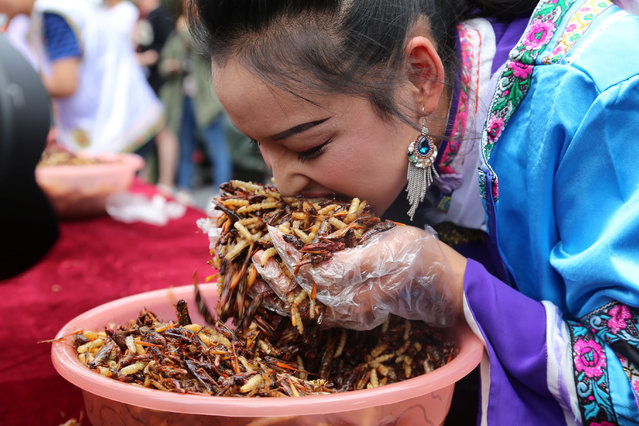
A woman participates in an insect-eating competition at a scenic spot in Lijiang, Yunnan province, China June 25, 2017. (Photo by Reuters/Stringer)

A woman participates in an insect-eating competition at a scenic spot in Lijiang, Yunnan province, China June 25, 2017. Insects have been a part of Yunnan cuisine for centuries, long before their potential as sustainable sources of protein caught the eye of the Western world. Bee larvae, grasshoppers and cicadas are just some items found on menus in the region. (Photo by Reuters/Stringer)
Details
13 Jul 2017 07:41:00
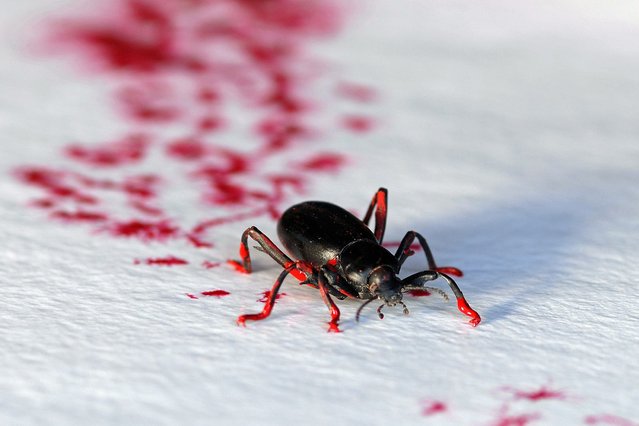
An artist has discovered a bizarre way to create his work – by coating the feet of insects with paint who then crawl across the canvas creating intricate pieces of art. (Photo by Caters News)

An artist has discovered a bizarre way to create his work – by coating the feet of insects with paint who then crawl across the canvas creating intricate pieces of art. (Photo by Caters News)
Details
16 Feb 2014 12:54:00