Loading...
Done
Daisuke Nagasawa travels nationally and internationally with his beautiful kitties Fuku-Chan and Daikichi. The two pose under the iconic Japanese cherry blossoms. (Photo by Daisuke Nagasawa/Caters News Agency)

Daisuke Nagasawa, 49, has spent the past few years taking his two faithful cats, Daikichi and Fuku-Chan, around the world with him. Here: Daisuke Nagasawa travels nationally and internationally with his beautiful kitties Fuku-Chan and Daikichi. The two pose under the iconic Japanese cherry blossoms. (Photo by Daisuke Nagasawa/Caters News Agency)
Details
31 Jul 2018 00:05:00
“When I am there, it reminds me of when I was a child”. (Photo by Vladimir Ryabkov/Caters News Agency)

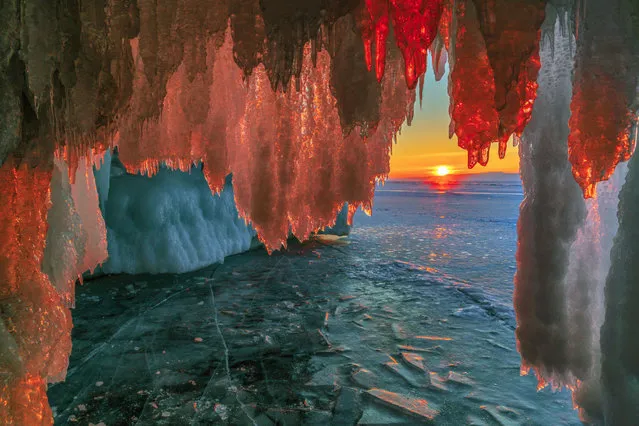
These stunning photographs really do show a land of fire and ice! The frozen landscape of the Olkhon Islands, Russia, appears to be ablaze in some of these pictures as the icy sheets of the glaciers reflect the early morning suns rays. (Photo by Vladimir Ryabkov/Caters News Agency)
Details
14 Apr 2018 00:03:00
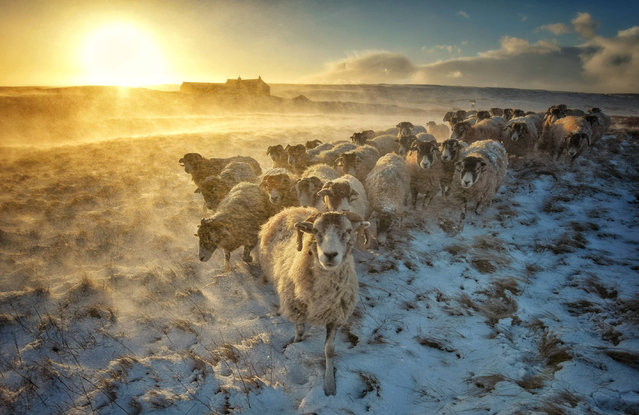
A flock of sheep huddles together while snow spindrift is whipped up by strong winds in Swaledale, North Yorkshire, UK on March 17, 2017. (Photo by Paul Kingston/NNP North News & Pictures Ltd)

A flock of sheep huddles together while snow spindrift is whipped up by strong winds in Swaledale, North Yorkshire, UK on March 17, 2017. (Photo by Paul Kingston/NNP North News & Pictures Ltd)
Details
08 Sep 2017 09:29:00
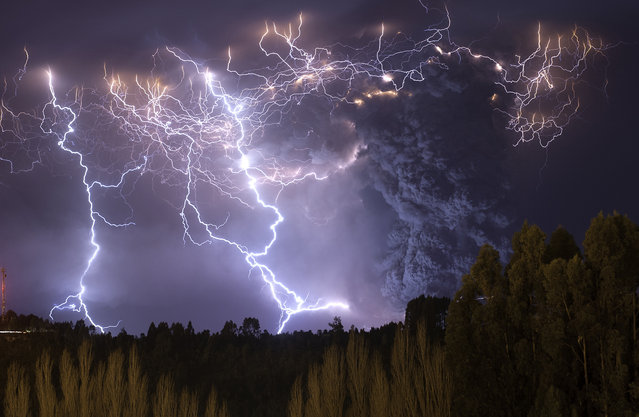
The eruption of Cordon Caulle began on June 4, 2011, located in the Region of Los Rios in Chile. For about 12 months, people and animals became accustomed to living with the daily fall of ash, which also caused problems in the air traffic in South America. The explosions and lightning during first days of the eruption could be seen from hundreds of miles around. This photograph was taken on the second night of eruption from the town of Lago Ranco. (Photo and caption by Francisco Negroni/National Geographic Traveler Photo Contest)

The eruption of Cordon Caulle began on June 4, 2011, located in the Region of Los Rios in Chile. For about 12 months, people and animals became accustomed to living with the daily fall of ash, which also caused problems in the air traffic in South America. The explosions and lightning during first days of the eruption could be seen from hundreds of miles around. This photograph was taken on the second night of eruption from the town of Lago Ranco. (Photo and caption by Francisco Negroni/National Geographic Traveler Photo Contest)

ATTENTION! All pictures are presented in high resolution. To see Hi-Res images – just TWICE click on any picture. In other words, click small picture – opens the BIG picture. Click BIG picture – opens VERY BIG picture.
Details
23 Jun 2013 11:24:00
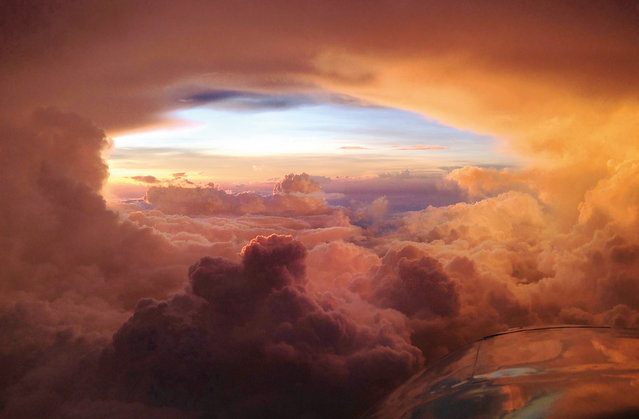
April. A path through the clouds between Townsville and Richmond, Queensland. (Photo by Captain Victoria Harrison/Australian Bureau of Meteorology)

The annual calendar features stunning shots of lighting, cloud formations and the aurora australis. Hundreds of photographers from every Australian state and territory submitted images to the Bureau of Meteorology for selection in the year’s calendar, with only the best chosen to represent the full spectrum of Australian weather. Here: April. A path through the clouds between Townsville and Richmond, Queensland. (Photo by Captain Victoria Harrison/Australian Bureau of Meteorology)
Details
09 Nov 2017 05:42:00
A boy bursts a soap-bubble at Gorky Park in Moscow on July 19, 2017. (Photo by Mladen Antonov/AFP Photo)

A boy bursts a soap-bubble at Gorky Park in Moscow on July 19, 2017. (Photo by Mladen Antonov/AFP Photo)
Details
13 Dec 2017 07:30:00
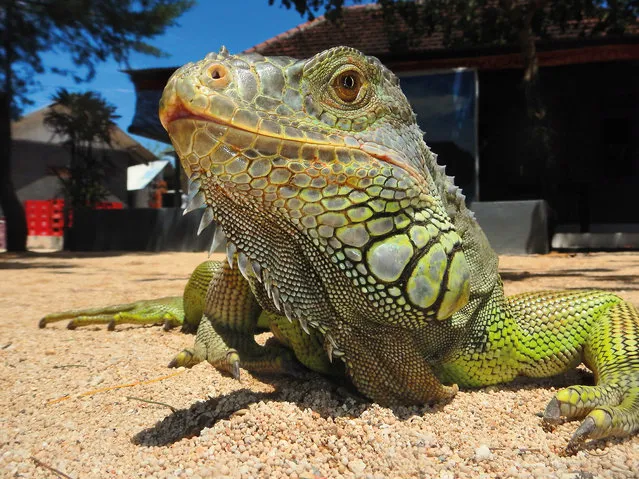
An iguana in Bali helped Julij Kopilović, age eight, from Slovenia, earn second runner-up in Amazing Animals. (Photo by Julij Kopilović/National Geographic)

An iguana in Bali helped Julij Kopilović, age eight, from Slovenia, earn second runner-up in Amazing Animals. (Photo by Julij Kopilović/National Geographic)
Details
04 Feb 2016 11:15:00
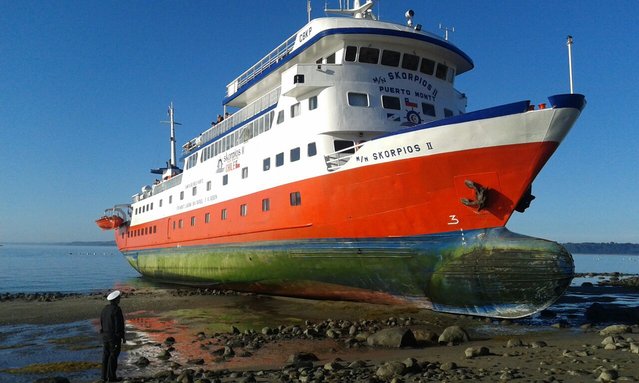
The Chilean ship “Skorpios II” is seen after it ran aground in “Maillen” island, near Puerto Montt, south of Santiago, in this handout picture from the Chilean Navy, February 5, 2015. According to the Chilean Navy, the ship's 89 passengers and 31 crew members were all evacuated and no oil spills or casualties were reported. (Photo by Reuters/Chilean Navy)

The Chilean ship “Skorpios II” is seen after it ran aground in “Maillen” island, near Puerto Montt, south of Santiago, in this handout picture from the Chilean Navy, February 5, 2015. According to the Chilean Navy, the ship's 89 passengers and 31 crew members were all evacuated and no oil spills or casualties were reported. (Photo by Reuters/Chilean Navy)
Details
07 Feb 2015 14:22:00