Loading...
Done
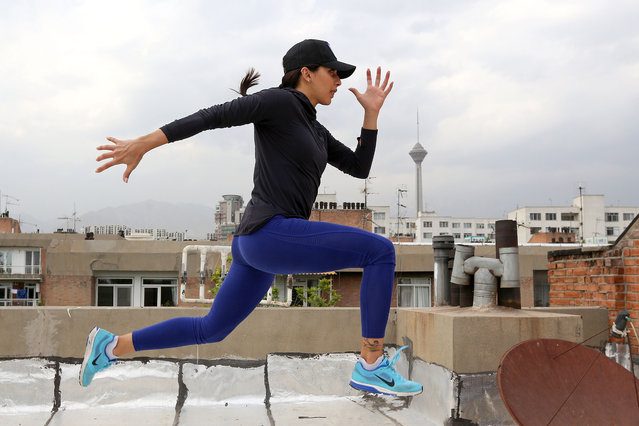
Iranian athlete Maryam Toosi practises on the rooftop of her apartment building following  the closure of sports facilities as part of measures aimed at containing the COVID-19 coronavirus, in Iran's capital Tehran on May 19, 2020. The coronavirus pandemic has forced the world's athletes to keep fit in confinement. The novel coronavirus has claimed the lives of nearly 7,200 people in Iran, making it the deadliest outbreak in the Middle East. The government ordered the closure of sports facilities in mid-March as part of measures aimed at containing the virus. (Photo by Atta Kenare/AFP Photo)

Iranian athlete Maryam Toosi practises on the rooftop of her apartment building following the closure of sports facilities as part of measures aimed at containing the COVID-19 coronavirus, in Iran's capital Tehran on May 19, 2020. The coronavirus pandemic has forced the world's athletes to keep fit in confinement. The novel coronavirus has claimed the lives of nearly 7,200 people in Iran, making it the deadliest outbreak in the Middle East. The government ordered the closure of sports facilities in mid-March as part of measures aimed at containing the virus. (Photo by Atta Kenare/AFP Photo)
Details
29 Jul 2020 00:01:00


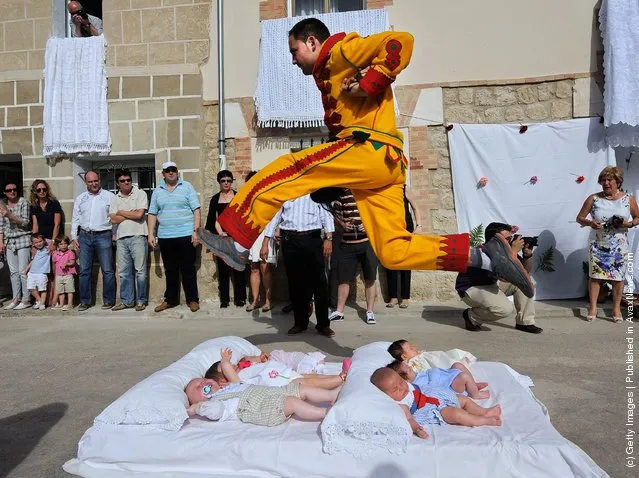
“Baby jumping (El Colacho) is a traditional Spanish practice dating back to 1620 that takes place annually to celebrate the Catholic feast of Corpus Christi in the village of Castrillo de Murcia near Burgos. During the act – known as El Salto del Colacho (the devil's jump) or simply El Colacho – men dressed as the Devil (known as the Colacho) jump over babies born during the previous twelve months of the year who lie on mattresses in the street. ... The festival has been rated as one of the most dangerous in the world”. – Wikipedia

Photo: A man representing the devil leaps over babies during the festival of El Colacho on June 26, 2011 in Castrillo de Murcia near Burgos, Spain. The festival, held on the first Sunday after Corpus Cristi, represents the devil taking away original sin from the newly born babies by leaping over them. (Photo by Denis Doyle/Getty Images)
Details
27 Jun 2011 09:20:00
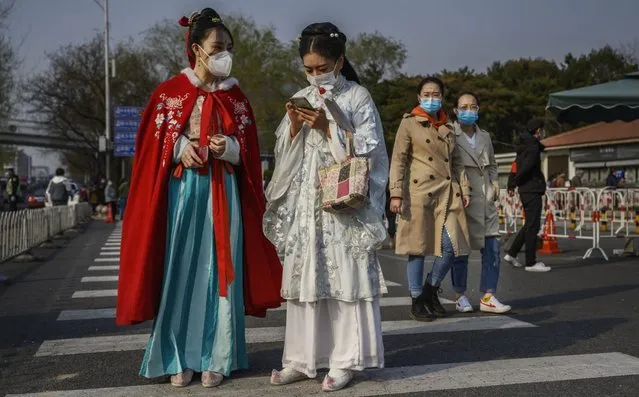
Chinese women wear protective masks as they are dressed in traditional clothing from the Qing Dynasty era outside a park on March 29, 2020 in Beijing, China. A limited section of the iconic tourist site was re-opened to the public this week allowing a smaller number of visitors to reserve tickets online in advance and to enter after passing health screening. With the pandemic hitting hard across the world, China recorded its first day with no new domestic cases of the coronavirus last week, since the government imposed sweeping measures to keep the disease from spreading. For two months, millions of people across China have been restricted in how they move from their homes, while other cities have been locked down in ways that appeared severe at the time but are now being replicated in other countries trying to contain the virus. Officials believe the worst appears to be over in China, though there are concerns of another wave of infections as the government attempts to reboot the worlds second largest economy. In Beijing, it is mandatory to wear masks outdoors, retail stores operate on reduced hours, restaurants employ social distancing among patrons, and tourist attractions at risk of drawing large crowds remain closed. Monitoring and enforcement of virus-related measures and the quarantine of anyone arriving to Beijing is carried out by neighborhood committees and a network of Communist Party volunteers who wear red arm bands. A primary concern for Chinese authorities remains the arrival of flights from Europe and elsewhere, given the exposure of passengers in regions now regarded as hotbeds for transmission. Since January, China has recorded more than 81,000 cases of COVID-19 and at least 3200 deaths, mostly in and around the city of Wuhan, in central Hubei province, where the outbreak first started. (Photo by Kevin Frayer/Getty Images)

Chinese women wear protective masks as they are dressed in traditional clothing from the Qing Dynasty era outside a park on March 29, 2020 in Beijing, China. A limited section of the iconic tourist site was re-opened to the public this week allowing a smaller number of visitors to reserve tickets online in advance and to enter after passing health screening. (Photo by Kevin Frayer/Getty Images)
Details
01 Apr 2020 00:05:00
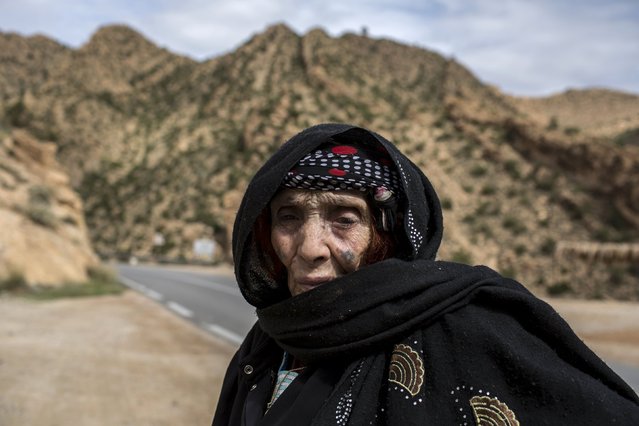
Mazouza Bouglada, 86, a berber woman from the Chaouia region, who has facial tattoos, poses for a photograph in Taghit in the Aures Mountain, Algeria October 8, 2015. Bouglada was tattooed aged 7 by a nomadic man from the Sahara region. She was advised by her mother to get tattooed. The more she got tattooed the more she showed off. Even if she still remembers the pain, she felt beautiful once it was done, Bouglada said. (Photo by Zohra Bensemra/Reuters)

Mazouza Bouglada, 86, a berber woman from the Chaouia region, who has facial tattoos, poses for a photograph in Taghit in the Aures Mountain, Algeria October 8, 2015. Bouglada was tattooed aged 7 by a nomadic man from the Sahara region. She was advised by her mother to get tattooed. The more she got tattooed the more she showed off. Even if she still remembers the pain, she felt beautiful once it was done, Bouglada said. She was very proud of her stars on her cheeks. Her eldest sister had been tattooed before her and she wanted to imitate her. Bouglada said she has now given away all her silver jewellery to atone for the sin that believers told her she had committed by being tattooed. (Photo by Zohra Bensemra/Reuters)
Details
01 Nov 2015 08:02:00


“Kumbh Mela is a mass Hindu pilgrimage in which Hindus gather at the Ganges river. The normal Kumbh Mela is celebrated every 3 years, the Ardh (half) Kumbh Mela is celebrated every six years at Haridwar and Prayag, the Purna (complete) Kumbh takes place every twelve years, at four places (Prayag (Allahabad), Haridwar, Ujjain, and Nashik). The Maha (great) Kumbh Mela which comes after 12 “Purna Kumbh Melas”, or 144 years, is held at Allahabad.

The last Ardh Kumbh Mela was held over a period of 45 days beginning in January 2007, more than 70 million Hindu pilgrims took part in the Ardh Kumbh Mela at Prayag, and on January 15, the most auspicious day of the festival of Makar Sankranti, more than 5 million participated. The previous Maha Kumbh Mela, held in 2001, was attended by around 60 million people, making it at the time the largest gathering anywhere in the world in recorded history”. – Wikipedia

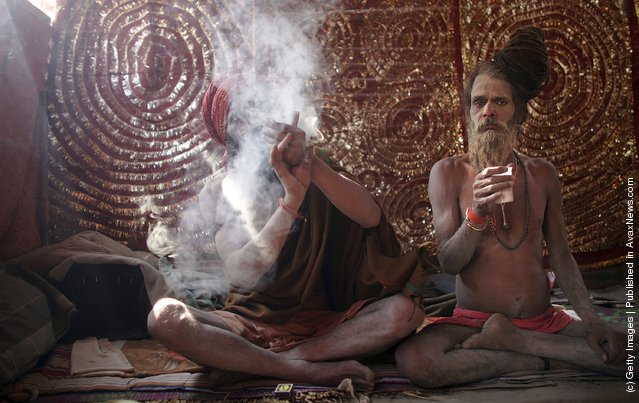
Photo: Sadhus (holy men) smoke at their camp near the ritual site at Sangam, the confluence of the Ganges, Yamuna and mythical Saraswati rivers during the Ardh Kumbh Mela festival (Half Pitcher festival) January 18, 2007 in Allahabad, India. Millions of Hindu pilgrims have flocked to the largest religious gathering in the world which lasts for 45 days in northern India. The festival commemorates the mythical conflict between gods and demons over a pitcher filled with the “nectar of immortality”. Devotees believe that taking a holy dip in the Ganges at this time washes away their sins and paves the path to salvation. (Photo by Mario Tama/Getty Images)

Details
30 Jun 2011 10:27:00
Audrey Hepburn cooking at home, 1954. Colorized by Dana Keller.

Audrey Hepburn cooking at home, 1954. Colorized by Dana Keller.
Details
01 Sep 2013 05:40:00
Romain de Tirtoff (Erte) – Symphony In Black

“Romain de Tirtoff (23 November 1892 – 21 April 1990) was a Russian-born French artist and designer known by the pseudonym Erté, the French pronunciation of his initials, R.T. He was a diversely talented 20th-century artist and designer who flourished in an array of fields, including fashion, jewellery, graphic arts, costume and set design for film, theatre, and opera, and interior decor”. – Wikipedia. Photo: Romain de Tirtoff (Erte) – “Symphony In Black” (please click to enlarge).
Details
29 Jan 2014 13:34:00
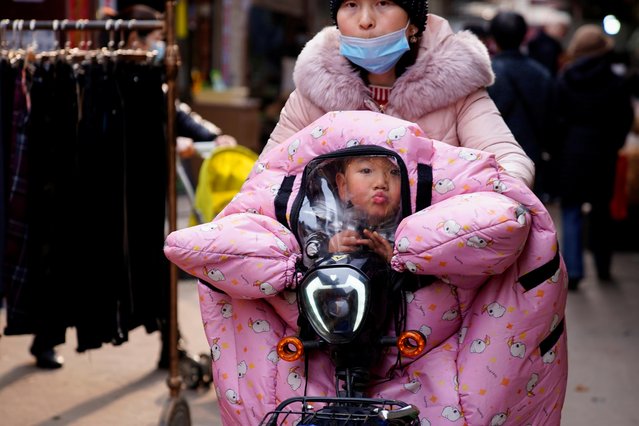
A woman wearing a face mask rides a bicycle with a child, following an outbreak of the coronavirus disease (COVID-19) in Wuhan, Hubei province, China on February 8, 2021. (Photo by Aly Song/Reuters)

A woman wearing a face mask rides a bicycle with a child, following an outbreak of the coronavirus disease (COVID-19) in Wuhan, Hubei province, China on February 8, 2021. (Photo by Aly Song/Reuters)
Details
16 Feb 2021 09:59:00