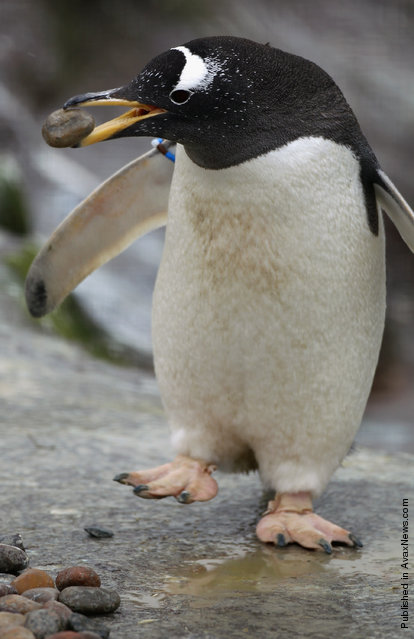
Gentoo penguins begin the breeding season at Edinburgh Zoo on March 1, 2011 in Edinburgh, Scotland. The zoo keepers have just installed the nest rings in the penguin enclosure. The male penguins will then collect pebbles and offer them to the females to fill nest rings with, this helps keep the eggs and chick up off the ground and is part of their courtship display. (Photo by Jeff J Mitchell/Getty Images)ю EDINBURGH, SCOTLAND – MARCH 01
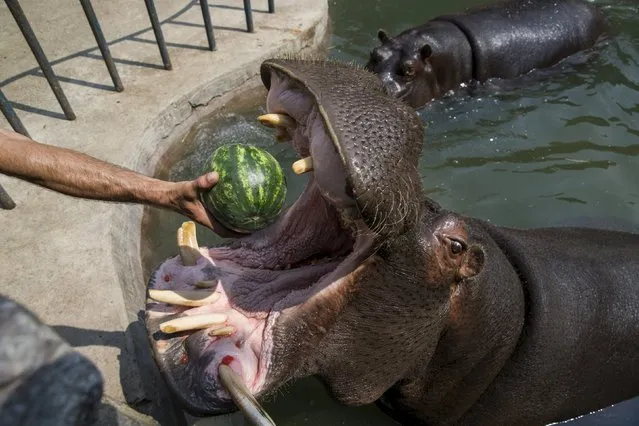
A zookeeper feeds a hippopotamus with a watermelon in its enclosure in Belgrade's zoo, Serbia, July 20, 2015. Temperatures in Serbia have risen up to 40 degrees Celsius (104 degrees Fahrenheit), according to official meteorological data. (Photo by Marko Djurica/Reuters)
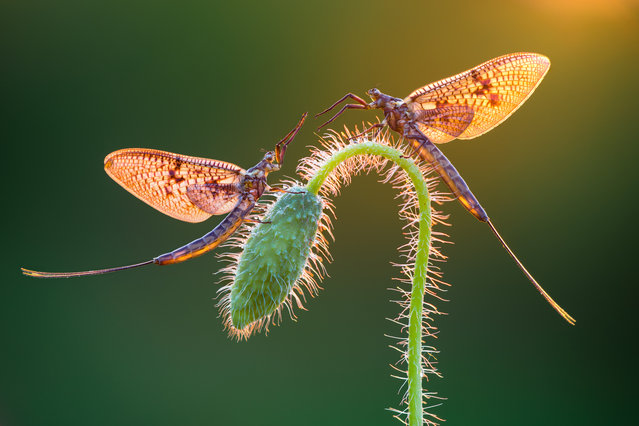
International photographic competition, which runs in association with the Royal Botanic Gardens in Kew, London, awards special prize for the best close-up images. Here: Winner – Mayflies by Petar Sabol, Goričan, Croatia. (Photo by Sabol Petar/International Garden Photographer of the Year)
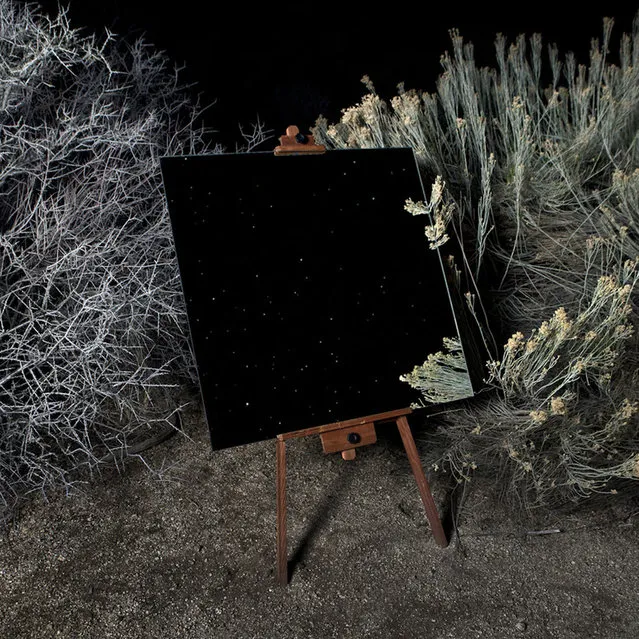
IT'S a relatively simple idea – set up a mirror so you can capture the reflection of a dramatic landscape in a single photograph. Photographer Daniel Kukla, from New York, created a spectacular series of artworks called The Edge Effect using the technique. He clamped the mirror onto an easel and placed it in various settings in the Joshua Tree National Park, California.
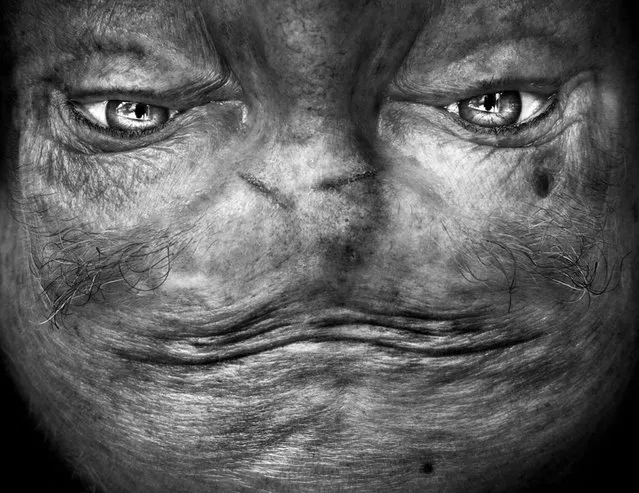
This latest photo series by Anelia Loubser, a photographer in Cape Town, reminds us that even the simplest change in perspective can change how things look drastically. By selectively cropping and flipping the dark portraits in her “Alienation” series, Loubser makes basic human portraits look like creepy alien close-ups.
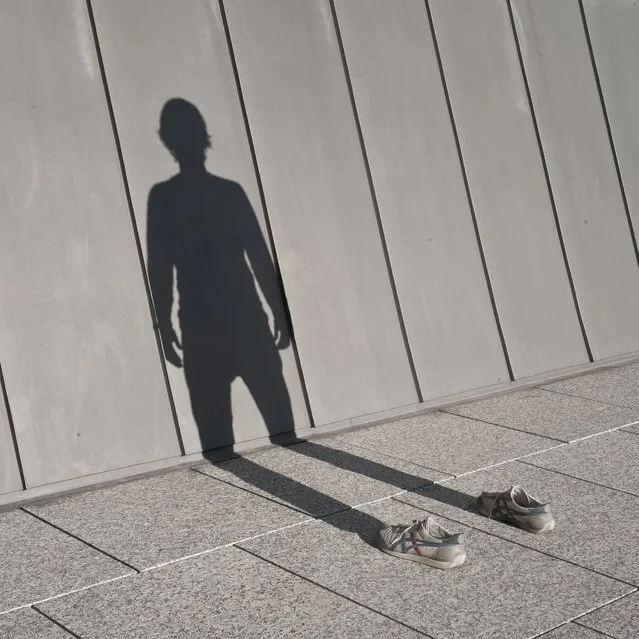
Photographer’s Pol Ubeda Hervas perspective in his “I’m not There” series, is going against the flow. While the focus of modern photography is set on the human interaction with his surroundings, Hervas changes thing up by capturing the human absence from said surroundings. The concept behind the series is deeply metaphorical, visual food for though reflecting the situations where the change is irreversible and we cannot even recognize ourselves.
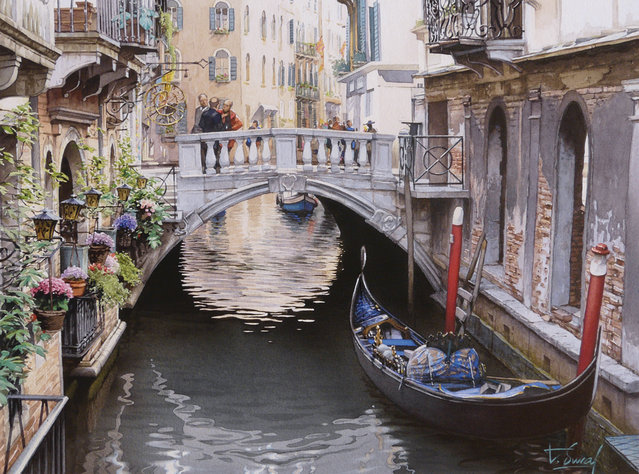
Thierry Duval was born in Paris, France in 1968. His watercolors are characterized by a strong light and precision in drawing, being almost or hiperrealist in the results mainly in his Paris watercolors. By using glazing technique he works in several steps up to get the final, very realistic result. As was said, light is strong in almost all his artworks.