Loading...
Done
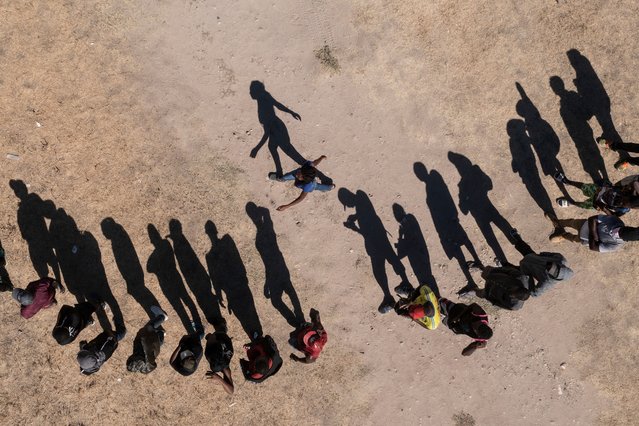
In this aerial view Haitian migrants queue to receive food at a shelter in Ciudad Acuna, Coahuila State, Mexico, on September 23, 2021. At least 50 police vehicles carrying more than a hundred agents are blocking the border crossing at the river that separates the Mexican city of Ciudad Acuña from the United States, AFP reported. (Photo by Pedro Pardo/AFP Photo)

In this aerial view Haitian migrants queue to receive food at a shelter in Ciudad Acuna, Coahuila State, Mexico, on September 23, 2021. At least 50 police vehicles carrying more than a hundred agents are blocking the border crossing at the river that separates the Mexican city of Ciudad Acuña from the United States, AFP reported. (Photo by Pedro Pardo/AFP Photo)
Details
02 Oct 2021 09:10:00
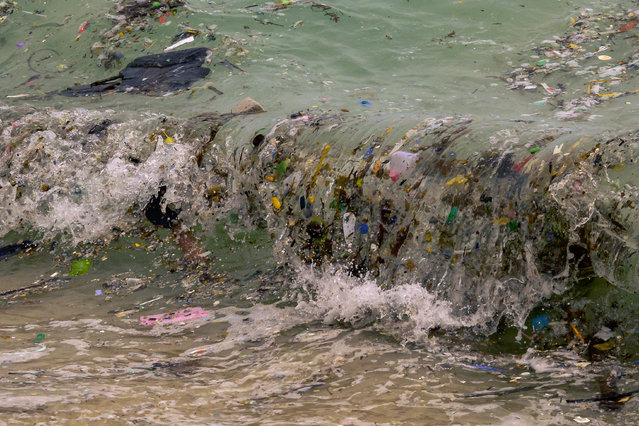
A wave carrying plastic waste and other rubbish washes up on a beach in Koh Samui in the Gulf of Thailand on January 19, 2021. (Photo by Mladen Antonov/AFP Photo)

A wave carrying plastic waste and other rubbish washes up on a beach in Koh Samui in the Gulf of Thailand on January 19, 2021. (Photo by Mladen Antonov/AFP Photo)
Details
20 Aug 2021 08:32:00
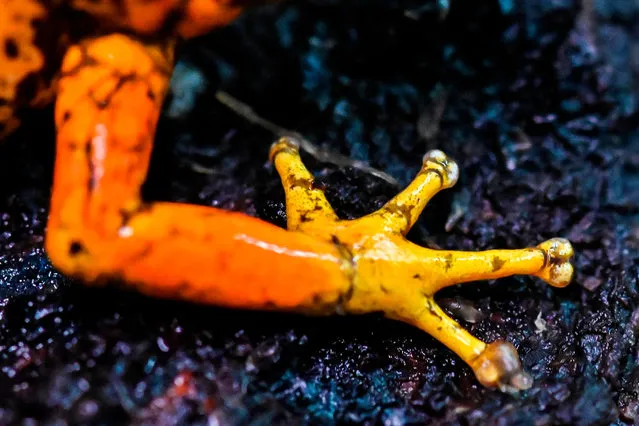
A leg of a “diablito” frog (Oophaga sylvatica) is photographed in a laboratory at a laboratory in the zoo of Cali, Colombia, on July 19, 2019. Colombia is the second country with the largest number of amphibians in the world after Brazil. More than 40% of amphibian species worldwide are in danger of extinction. (Photo by Luis Robayo/AFP Photo)

A leg of a “diablito” frog (Oophaga sylvatica) is photographed in a laboratory at a laboratory in the zoo of Cali, Colombia, on July 19, 2019. Colombia is the second country with the largest number of amphibians in the world after Brazil. More than 40% of amphibian species worldwide are in danger of extinction. (Photo by Luis Robayo/AFP Photo)
Details
28 Nov 2020 00:03:00
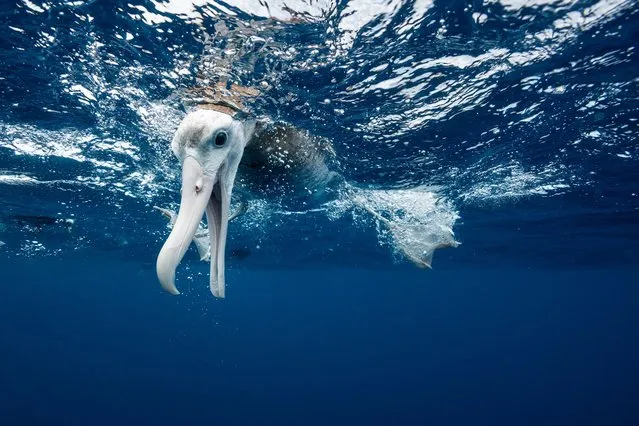
The endangered antipodean albatross, which is often caught in fishing nets, won most first-choice votes out of the more than 55,000 votes cast during the 2020 New Zealand’s bird of the year competition. (Photo by Wildestanimal/Getty Images)

The endangered antipodean albatross, which is often caught in fishing nets, won most first-choice votes out of the more than 55,000 votes cast during the 2020 New Zealand’s bird of the year competition. (Photo by Wildestanimal/Getty Images)
Details
20 Dec 2020 00:05:00
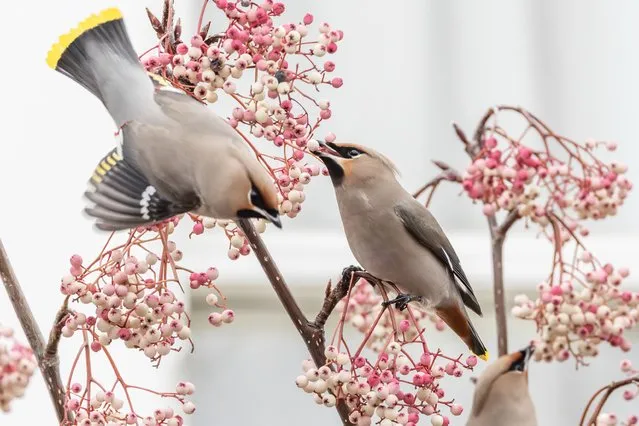
Waxwings in Balham south London on December 31, 2023. There has been a huge influx of this erruptive species this year. This probably due to severe storms and a shortage of food in their native Scandinavia in the Autumn. (Photo by Jack Hill/The Times)

Waxwings in Balham south London on December 31, 2023. There has been a huge influx of this erruptive species this year. This probably due to severe storms and a shortage of food in their native Scandinavia in the Autumn. (Photo by Jack Hill/The Times)
Details
25 Jan 2024 10:02:00
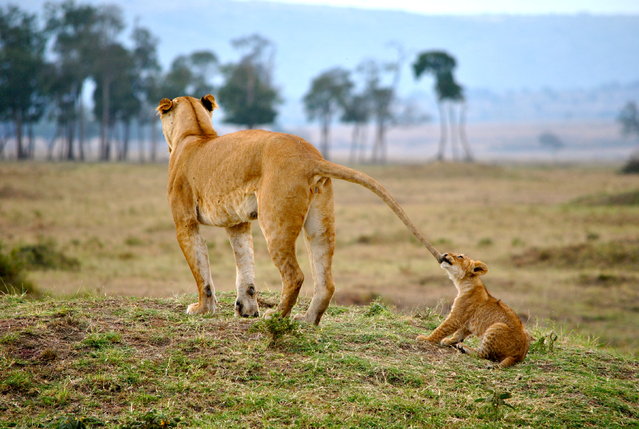
“A Mothers Tail”. A baby cub pulls on his mother's tail to get attention. Photo location: Masai Mara, Kenya. (Photo and caption by Tori Marsh/National Geographic Photo Contest)

“A Mothers Tail”. A baby cub pulls on his mother's tail to get attention. Photo location: Masai Mara, Kenya. (Photo and caption by Tori Marsh/National Geographic Photo Contest)
Details
21 Oct 2014 12:40:00
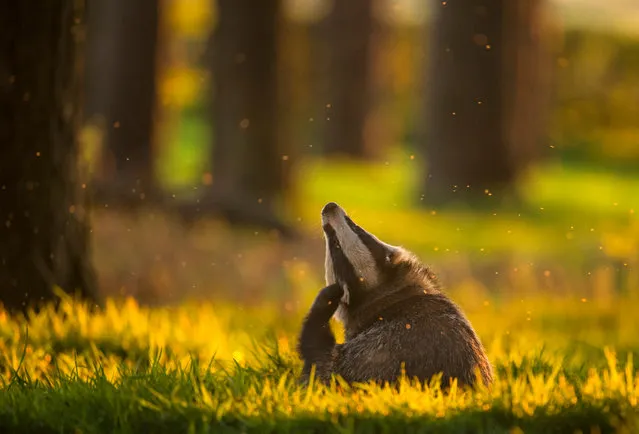
Andrew Parkinson, animal behaviour category winner: Crepuscular Contentment, Derbyshire. “In 15 years of working with badgers I’ve never seen a badger sit out in the open to have a scratch. I was sat concealed behind a tree and downwind so it was especially nice that the badger had his back to me, demonstrating just how inconspicuous and inconsequential my presence was”. (Photo by Andrew Parkinson/British Wildlife Photography Awards 2017)

Andrew Parkinson, animal behaviour category winner: Crepuscular Contentment, Derbyshire. “In 15 years of working with badgers I’ve never seen a badger sit out in the open to have a scratch. I was sat concealed behind a tree and downwind so it was especially nice that the badger had his back to me, demonstrating just how inconspicuous and inconsequential my presence was”. (Photo by Andrew Parkinson/British Wildlife Photography Awards 2017)
Details
10 Nov 2017 09:01:00
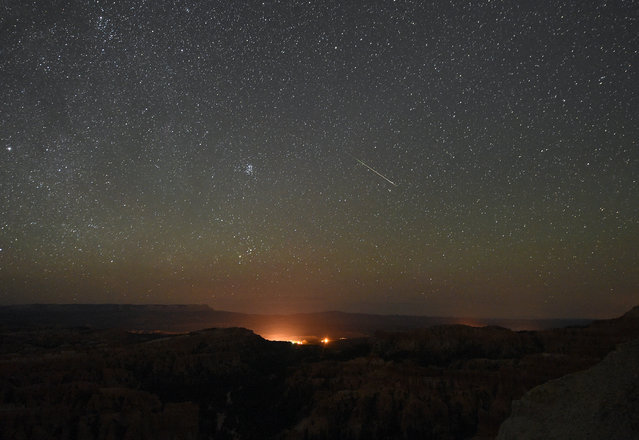
A Perseid meteor streaks across the sky above Inspiration Point early on August 12, 2016 in Bryce Canyon National Park, Utah. The annual display, known as the Perseid shower because the meteors appear to radiate from the constellation Perseus in the northeastern sky, is a result of Earth's orbit passing through debris from the comet Swift-Tuttle. (Photo by Ethan Miller/Getty Images)

A Perseid meteor streaks across the sky above Inspiration Point early on August 12, 2016 in Bryce Canyon National Park, Utah. The annual display, known as the Perseid shower because the meteors appear to radiate from the constellation Perseus in the northeastern sky, is a result of Earth's orbit passing through debris from the comet Swift-Tuttle. (Photo by Ethan Miller/Getty Images)
Details
13 Aug 2016 11:19:00