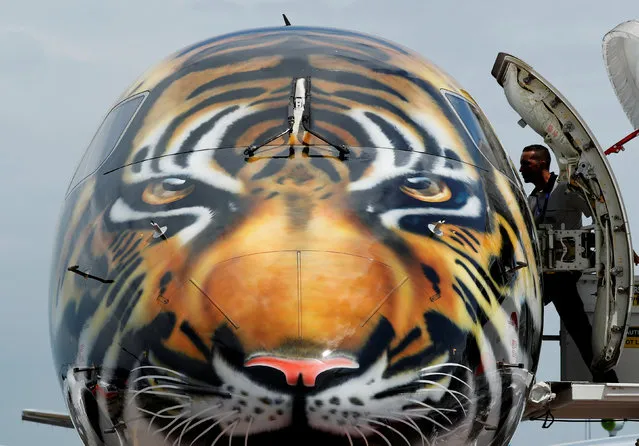
An Embraer E-190 E2 aircraft featuring a spray painted tiger's face on the nose of the aircraft is displayed during a media preview of the Singapore Airshow February 4, 2018. (Photo by Edgar Su/Reuters)
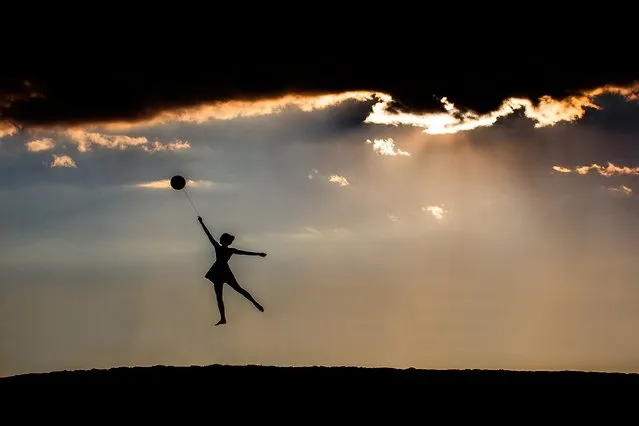
Photographer Tyler Shields had become comfortable, a feeling he found “terrible” as an artist. He wanted to do something challenging, something that pushed the human boundaries. So he spent a year documenting heights, fear, energy and falling – a series he calls “Suspense”. Photo: “Balloon”. (Photo by Tyler Shields)
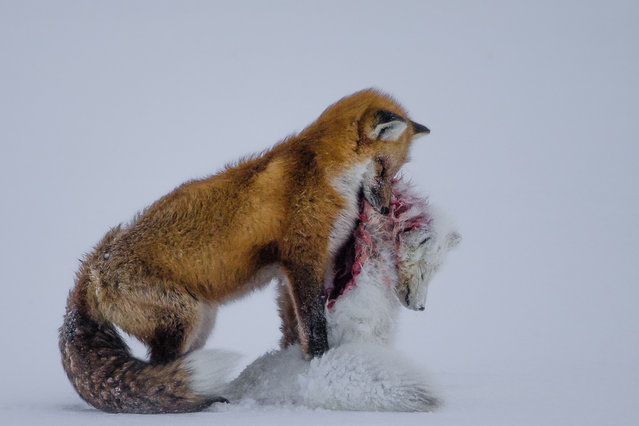
A tale of two foxes. Surprising behaviour, witnessed in Wapusk national park, on Hudson Bay, Canada, in early winter. Red foxes don’t actively hunt Arctic foxes, but where the ranges of two predators overlap, there can be conflict. Though the light was poor, the snow-covered tundra provided the backdrop for the moment that the red fox paused with the smaller fox in its mouth in a grim pose. (Photo by Don Gutoski/2015 Wildlife Photographer of the Year)
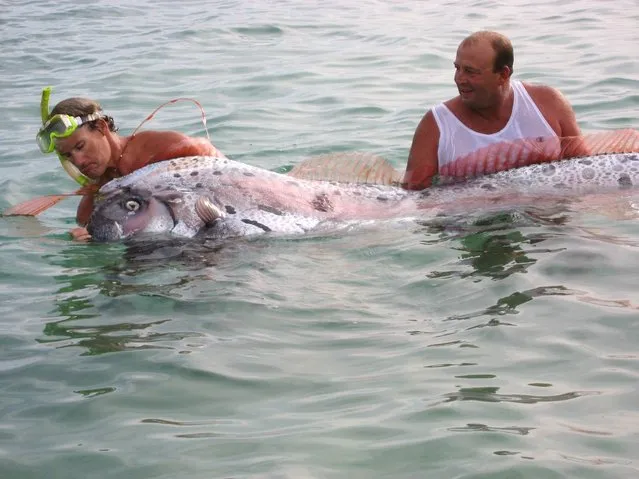
“The king of herrings or giant oarfish, an oarfish of the family Regalecidae, is the world's longest bony fish. Its total length has been documented to reach 17 m (56 ft), and it can weigh up to 300 kg (661 lb)”. – Wikipedia
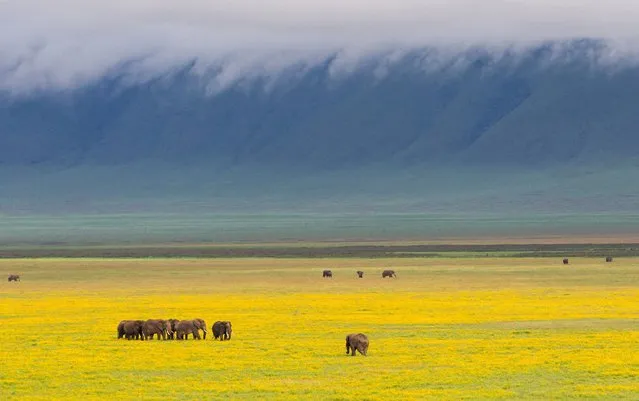
Ngorongoro Crater (Tanzania). At 610m deep and 260 sq km, this is the largest unflooded caldera in the world. A blue-green vision from above it's a haven for engangered wildlife and Maasai livestock. The crater was formed three million years ago when a giant volcano, which could have been as high as Kilimanjaro, exploded and collapsed. The caldera formed the concentric fractures in the crust cracked down to a magma reservoir deep underground. (Photo by John Bryant/Getty Images)
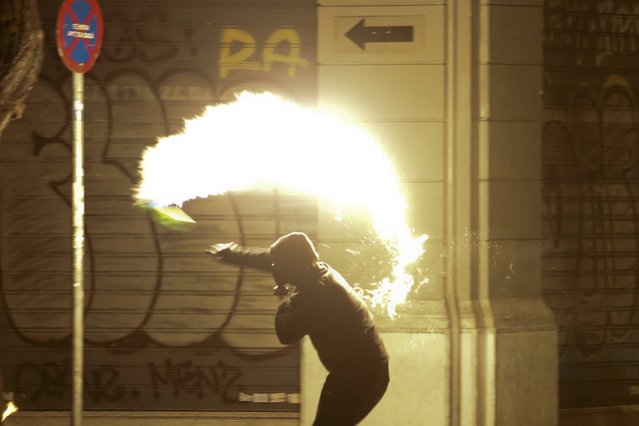
A hooded protester throws a petrol bomb to riot policemen during clashes, following a rally marking the 43rd anniversary of a 1973 student uprising against the military dictatorship that was ruling Greece, in Athens, Greece, November 17, 2016. (Photo by Yannis Behrakis/Reuters)
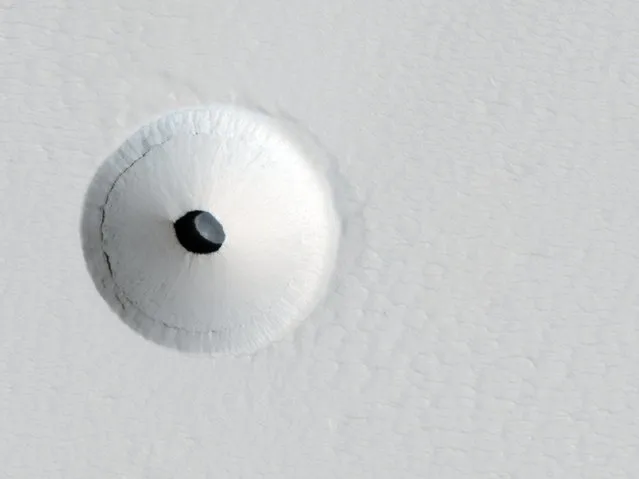
“What created this unusual hole in Mars? The hole was discovered by chance on images of the dusty slopes of Mars' Pavonis Mons volcano taken by the HiRISE instrument aboard the robotic Mars Reconnaissance Orbiter currently circling Mars”. (Photo by NASA/JPL/University of Arizona)