Loading...
Done
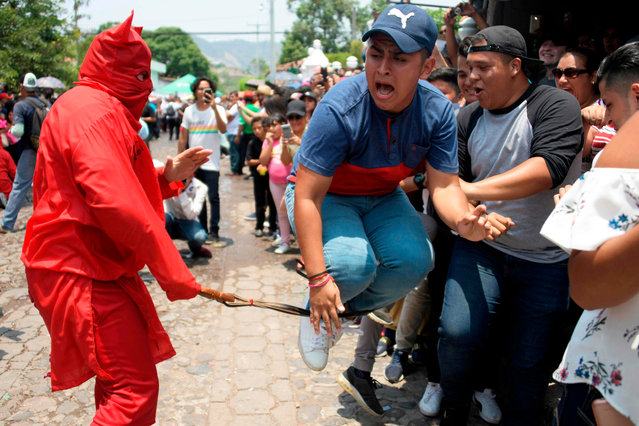
A Catholic faithful fancy dressed as a “talciguin” -character of the local folklore- takes part in the celebration of an ancient local tradition that marks the start of Holy Week, in Texistepeque, some 80 km west of San Salvador, on April 15, 2019. Talciguines are devils who “lash” Catholic faithfuls to cleanse their sins. (Photo by Marvin Recinos/AFP Photo)

A Catholic faithful fancy dressed as a “talciguin” -character of the local folklore- takes part in the celebration of an ancient local tradition that marks the start of Holy Week, in Texistepeque, some 80 km west of San Salvador, on April 15, 2019. Talciguines are devils who “lash” Catholic faithfuls to cleanse their sins. (Photo by Marvin Recinos/AFP Photo)
Details
18 Apr 2019 00:07:00
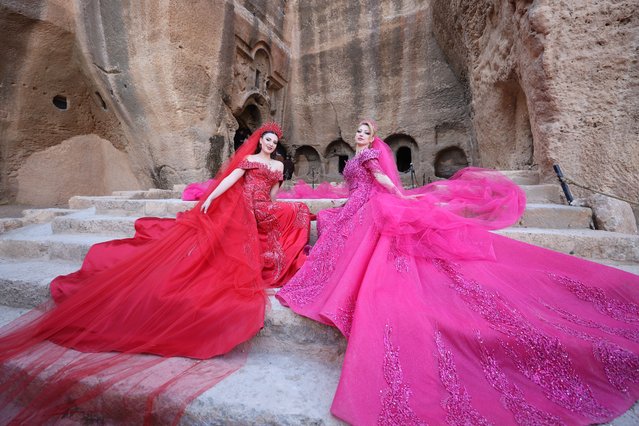
The company selling wedding dresses with designs made of local and wild grass, exhibited its new collection with local and foreign models consisting of Mesopotamian motifs by organizing a fashion show at Dara Ancient City in Mardin, Turkiye on February 26, 2025. (Photo by Halil Ibrahim Sincar/Anadolu via Getty Images)

The company selling wedding dresses with designs made of local and wild grass, exhibited its new collection with local and foreign models consisting of Mesopotamian motifs by organizing a fashion show at Dara Ancient City in Mardin, Turkiye on February 26, 2025. (Photo by Halil Ibrahim Sincar/Anadolu via Getty Images)
Details
04 Mar 2025 04:15:00
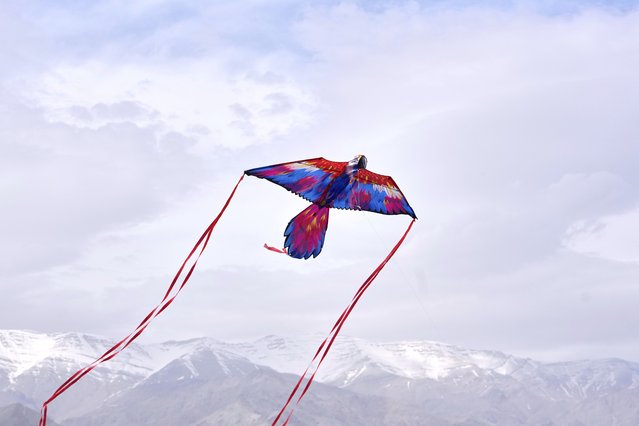
A kite is flown at a park during the ancient annual public picnic day, called Sizdeh Bedar, on the 13th and last day of Nowruz, the Iranian New Year holiday, in Tehran, Iran, Wednesday, April 2, 2025. (Photo by Vahid Salemi/AP Photo)

A kite is flown at a park during the ancient annual public picnic day, called Sizdeh Bedar, on the 13th and last day of Nowruz, the Iranian New Year holiday, in Tehran, Iran, Wednesday, April 2, 2025. (Photo by Vahid Salemi/AP Photo)
Details
18 Jun 2025 03:36:00
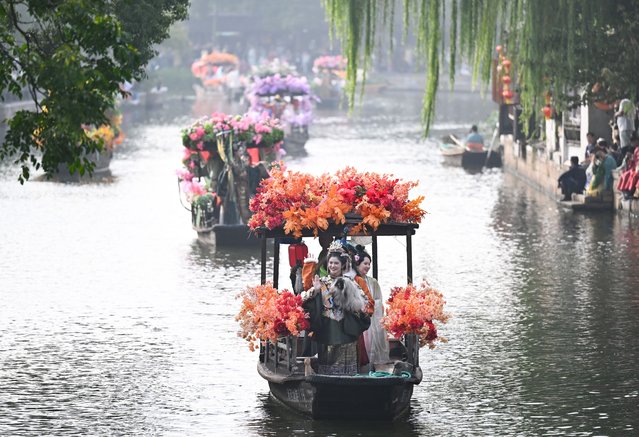
People dressed in Hanfu robes take a boat parade during the Xitang Hanfu Culture Week in the ancient town of Xitang on November 1, 2025 in Jiaixng, Zhejiang Province of China. (Photo by Wang Gang/China News Service/VCG via Getty Images)

People dressed in Hanfu robes take a boat parade during the Xitang Hanfu Culture Week in the ancient town of Xitang on November 1, 2025 in Jiaixng, Zhejiang Province of China. (Photo by Wang Gang/China News Service/VCG via Getty Images)
Details
22 Nov 2025 05:41:00
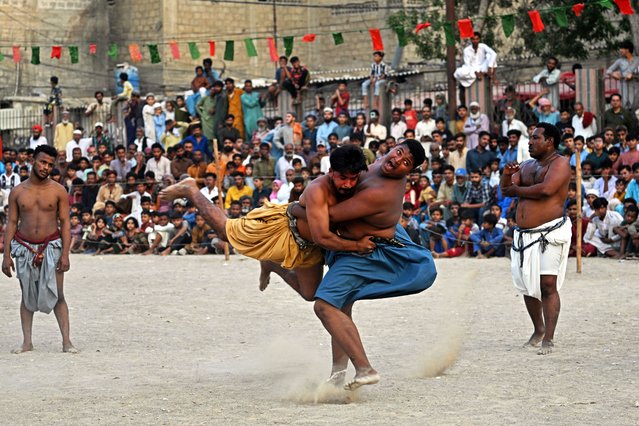
Wrestlers compete in a 'Sindhi Malakhra' wrestling match, an ancient form of wrestling that originated in Pakistan's Sindh region, during a local tournament in Karachi on October 21, 2025. (Photo by Asif Hassan/AFP Photo)

Wrestlers compete in a 'Sindhi Malakhra' wrestling match, an ancient form of wrestling that originated in Pakistan's Sindh region, during a local tournament in Karachi on October 21, 2025. (Photo by Asif Hassan/AFP Photo)
Details
24 Dec 2025 10:10:00
purim

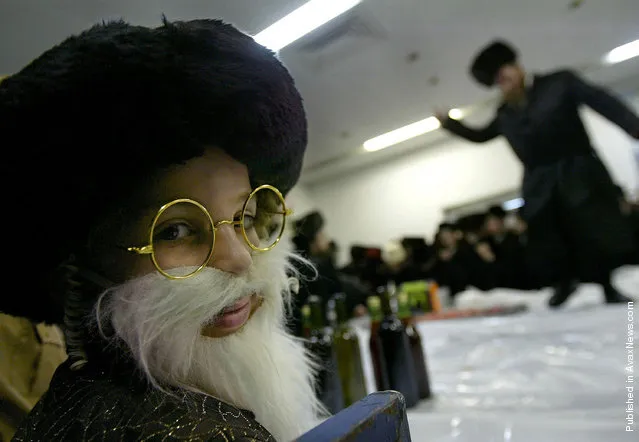
An Israeli girl in costume, celebrates the Jewish festival of Purim on March 5, 2004, in Tel Aviv, Israel. The Festival commemorates the rescue of Jews from genocide in ancient Persia.
Details
18 Mar 2011 08:09:00
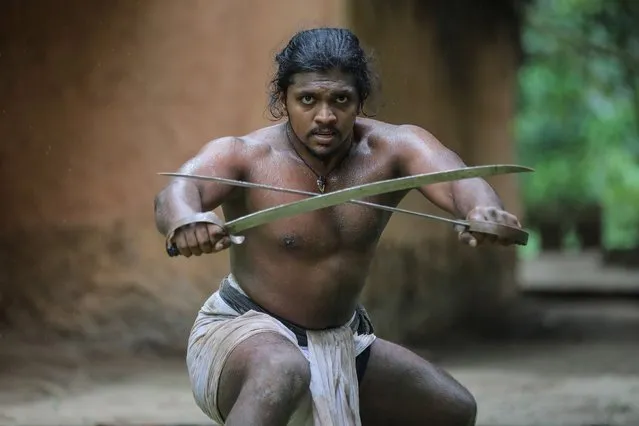
A student of the Sri Lankan ancient martial art “Angampora” performs during a practice session at the angam maduwa or fighting field, in Korathota, a suburb of Colombo, Sri Lanka, 07 September 2022. Sri Lanka's ancient martial art, Angampora, is thought to be thousands of years old. Anga translates to “body parts” and Angampora is a fighting art that uses body parts. Martial arts practitioners in Angampora were mostly in the king's service, and they were tasked with protecting the king and his kingdom. Angampora was practiced in secret for most centuries because the British, who colonized Sri Lanka, banned it in 1818 after seeing it as a threat. (Photo by Chamila Karunarathne/EPA/EFE)

A student of the Sri Lankan ancient martial art “Angampora” performs during a practice session at the angam maduwa or fighting field, in Korathota, a suburb of Colombo, Sri Lanka, 07 September 2022. Sri Lanka's ancient martial art, Angampora, is thought to be thousands of years old. Anga translates to “body parts” and Angampora is a fighting art that uses body parts. Martial arts practitioners in Angampora were mostly in the king's service, and they were tasked with protecting the king and his kingdom. Angampora was practiced in secret for most centuries because the British, who colonized Sri Lanka, banned it in 1818 after seeing it as a threat. (Photo by Chamila Karunarathne/EPA/EFE)
Details
14 Oct 2022 04:47:00


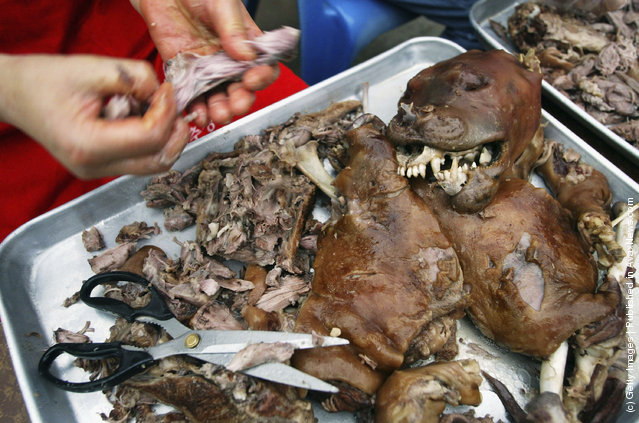
“Dog meat refers to edible parts and the flesh derived from (predominantly domestic) dogs. Human consumption of dog meat has been recorded in many parts of the world, including ancient China, ancient Mexico, and ancient Rome. According to contemporary reports, dog meat is consumed in a variety of countries such as Switzerland, China, Vietnam, the Philippines, and Korea. In addition, dog meat has also been used as survival food in times of war and/or other hardships”. – Wikipedia

Photo: A chef prepares dog meat at a restaurant on July 4, 2005 in Gwacheon, South Korea. Dog meat is a traditional dish in Korea dating back to the Samkuk period (period of the three kingdoms BC 57 – AD 668). Although many recipes existed historically for dog meat, now chefs only make soups, or dishes using boiled or roasted meat. Koreans traditionally eat dog meat on the hottest day of the summer, for it's reputed benefits of virility, invigoration and health. (Photo by Chung Sung-Jun/Getty Images)

Details
24 Jul 2011 13:21:00