Loading...
Done
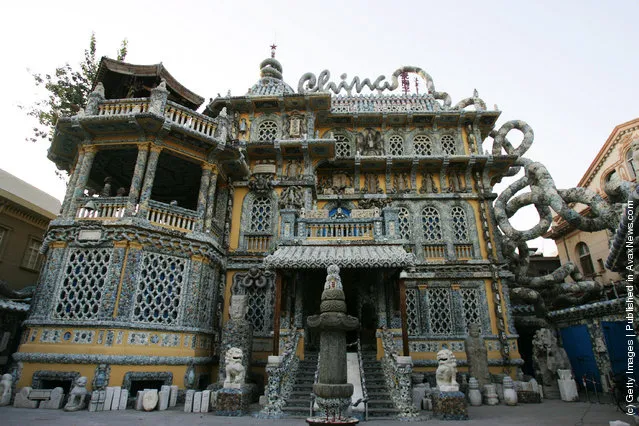
Porcelain House

Facade of the “Porcelain House”, built by Chinese collector Zhang Lianzhi, on November 1, 2008 in the Heping district of Tianjin, China. Over 400 million porcelain fragments, 5,000 ancient vases, 4,000 antique china dishes and bowls, over 20 tons of crystalline rocks and agate, 400 white marble stone carvings were incorporated in the five year refurbishment of the unique French styled house. (Photo by China Photos/Getty Images)
Details
08 Sep 2011 14:23:00
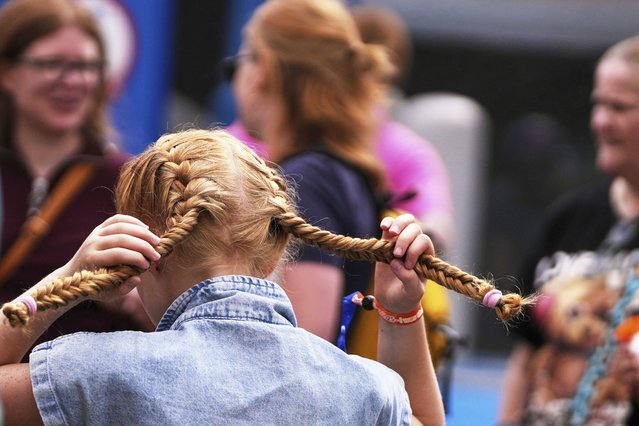
A young girl pulls on her braids during the Red Head Days festival in Tilburg, Netherlands, Saturday, August 30, 2025. (Photo by Virginia Mayo/AP Photo)

A young girl pulls on her braids during the Red Head Days festival in Tilburg, Netherlands, Saturday, August 30, 2025. (Photo by Virginia Mayo/AP Photo)
Details
27 Sep 2025 03:54:00
A diver in a pool at the Army 2021 International Military and Technical Forum, at the Patriot military park in Moscow Region, Russia on August 22, 2021. (Photo by Sergei Karpukhin/TASS/Alamy Live News)

A diver in a pool at the Army 2021 International Military and Technical Forum, at the Patriot military park in Moscow Region, Russia on August 22, 2021. (Photo by Sergei Karpukhin/TASS/Alamy Live News)
Details
11 Oct 2021 05:23:00
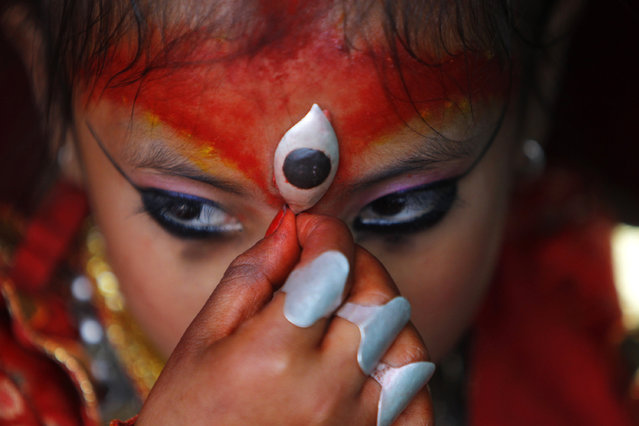
Nepal's Kumari, or living goddess, adjusts her ornament as she watches the Rato Machindranath chariot Festival in Lalitpur, Nepal, Friday, April 24, 2015. Nepal's living goddesses are young pre-pubescent girls considered by devotees to be incarnations of a Hindu goddess. Selected as toddlers, living goddesses usually keep their positions until they reach puberty. (Photo by Niranjan Shrestha/AP Photo)

Nepal's Kumari, or living goddess, adjusts her ornament as she watches the Rato Machindranath chariot Festival in Lalitpur, Nepal, Friday, April 24, 2015. Nepal's living goddesses are young pre-pubescent girls considered by devotees to be incarnations of a Hindu goddess. Selected as toddlers, living goddesses usually keep their positions until they reach puberty. (Photo by Niranjan Shrestha/AP Photo)
Details
25 Apr 2015 10:05:00
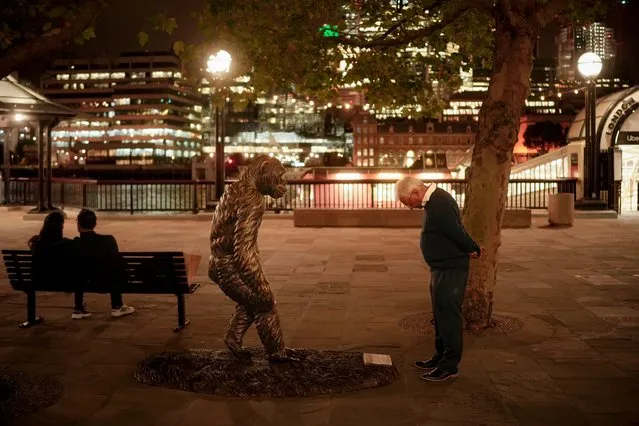
A man looks at the description of a sculpture depicting 17-year-old male chimpanzee Jaska, by Gillie and Mark, in London, Tuesday, September 20, 2022. (Photo by Vadim Ghirda/AP Photo)

A man looks at the description of a sculpture depicting 17-year-old male chimpanzee Jaska, by Gillie and Mark, in London, Tuesday, September 20, 2022. (Photo by Vadim Ghirda/AP Photo)
Details
23 Oct 2022 04:35:00
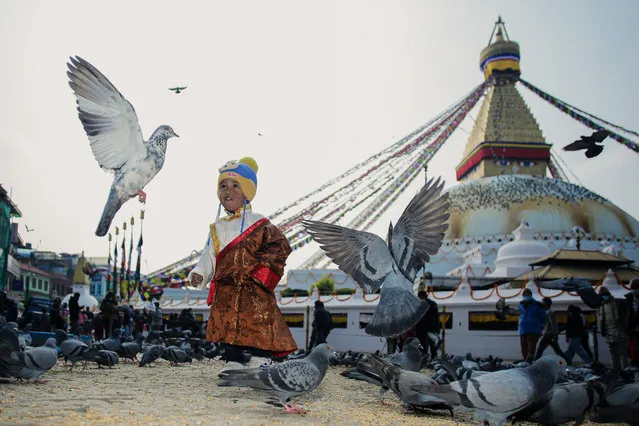
A young boy dressed in traditional Tamang dress plays with pigeons as Sonam Lhosar (the new year festival) is observed in Kathmandu, Nepal on February 2, 2022. (Photo by Amit Machamasi/ZUMA Press Wire/Rex Features/Shutterstock)

A young boy dressed in traditional Tamang dress plays with pigeons as Sonam Lhosar (the new year festival) is observed in Kathmandu, Nepal on February 2, 2022. (Photo by Amit Machamasi/ZUMA Press Wire/Rex Features/Shutterstock)
Details
07 Mar 2022 05:36:00
Youths tussle for the leather ball during the annual 'Fastern Eve Handba' event in Jedburgh's High Street in the Scottish Borders in Jedburgh

“Ba game is a version of medieval football played in Scotland, perhaps most notably in Orkney and the Scottish Borders, around Christmas and New Year”. – Wikipedia

Photo: Men tussle for the leather ball during the annual “Fastern Eve Handba” event in Jedburgh's High Street in the Scottish Borders on March 1, 2012 in Jedburgh, Scotland. The annual event, which started in the 1700's, takes place today and involves two teams, the Uppies (residents from the higher part of Jedburgh) and the Doonies (residents from the lower part of Jedburgh) getting the ball to either the top or bottom of the town. The ball, which is made of leather, stuffed with straw and decorated with ribbons is thrown into the crowd to begin the game. (Photo by Jeff J. Mitchell/Getty Images)
Details
02 Mar 2012 10:07:00
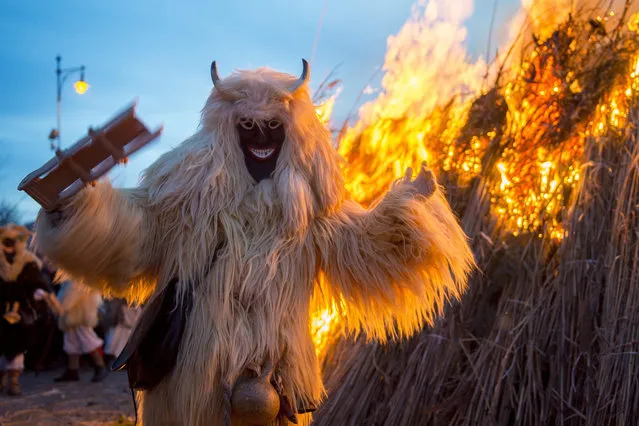
A reveler wearing sheepfur costume is seen in front of a bonfire on which they burn a coffin symbolizing winter during the closing ceremony of the traditional carnival parade in Mohacs, 189 kms south of Budapest, Hungary, 07 February 2016. (Photo by Tamas Soki/EPA)

A reveler wearing sheepfur costume is seen in front of a bonfire on which they burn a coffin symbolizing winter during the closing ceremony of the traditional carnival parade in Mohacs, 189 kms south of Budapest, Hungary, 07 February 2016. The carnival parade of people, the so-called busos, dressed in such costumes and frightening wooden masks, using various noisy wooden rattlers is traditionally held on the seventh weekend before Easter to drive away winter, and is a revival of a legend, which says that ethnic Croats ambushed the Osmanli Turkish troops, who escaped in panic seeing the terrifying figures during the Turkish occupation of Hungary. (Photo by Tamas Soki/EPA)
Details
09 Feb 2016 14:02:00