Loading...
Done
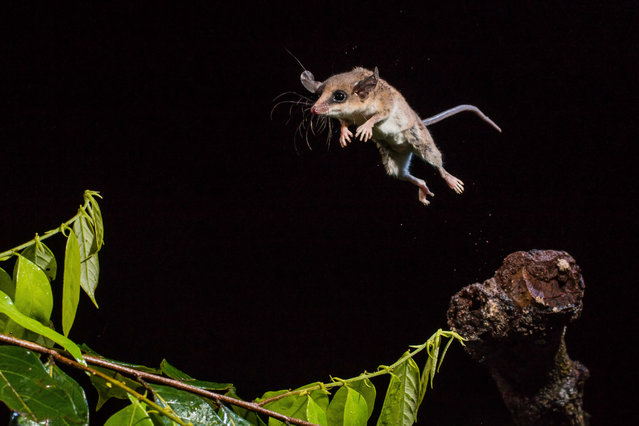
Tropical acrobatics by Adrià López Baucells in Manaus, Brazil. An unidentified South American marsupial, although the characteristic black markings on its face indicate it may be a mouse opossum. These small creatures are nocturnal and feed on bugs, fruit and bird eggs. (Photo by Adrià López Baucells/2019 Royal Society of Biology Photography Competition)

Tropical acrobatics by Adrià López Baucells in Manaus, Brazil. An unidentified South American marsupial, although the characteristic black markings on its face indicate it may be a mouse opossum. These small creatures are nocturnal and feed on bugs, fruit and bird eggs. (Photo by Adrià López Baucells/2019 Royal Society of Biology Photography Competition)
Details
10 Oct 2019 00:03:00
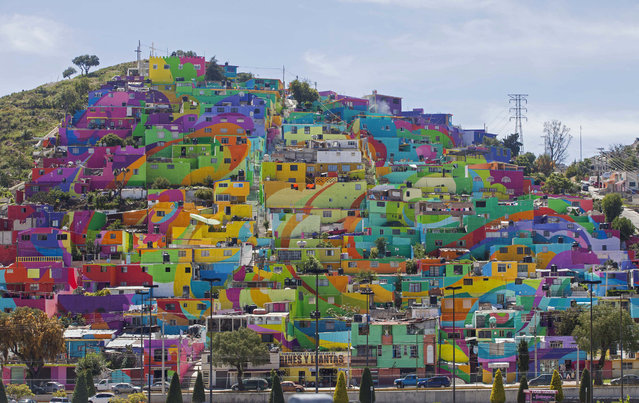
Hundreds of houses painted in bright colors in what organizers claim is Mexico's largest mural, is part of a government-sponsored project is called Pachuca Paints Itself, in the Palmitas neighborhood, in Pachuca, Mexico, Thursday, July 30, 2015. German Crew is the artist collective responsible for painting the mural project. Director Enrique Gomez, who goes by MYBE, said the crew has painted 1,500 square meters with 20,000 liters of paint. (Photo by Sofia Jaramillo/AP Photo)

Hundreds of houses painted in bright colors in what organizers claim is Mexico's largest mural, is part of a government-sponsored project is called Pachuca Paints Itself, in the Palmitas neighborhood, in Pachuca, Mexico, Thursday, July 30, 2015. German Crew is the artist collective responsible for painting the mural project. Director Enrique Gomez, who goes by MYBE, said the crew has painted 1,500 square meters with 20,000 liters of paint. Working hand-in-hand with residents, muralists have painted the facades of 200 homes bright lavender, lime green, incandescent orange – hues more commonly found in a bag of Skittles than in the drab, cement-and-cinderblock neighborhoods where many of Mexico's poor live. The project aims to bring the community together and rehabilitate the area. (Photo by Sofia Jaramillo/AP Photo)

Details
03 Aug 2015 12:02:00
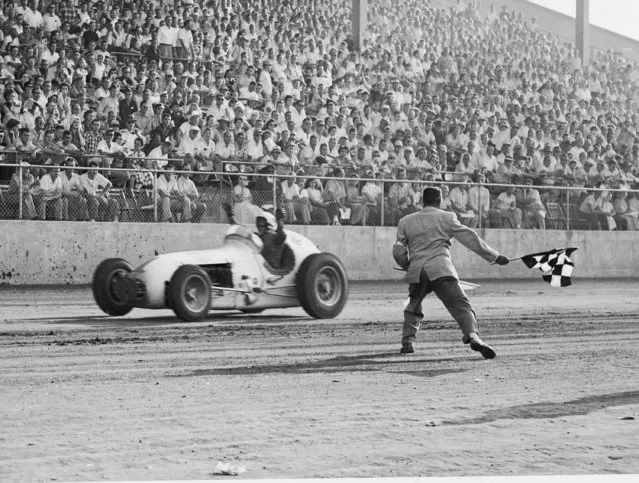
Jimmy Bryan of Phoenix, Ariz., gets the checkered victory flag at the Indiana State Fairgrounds September 17, 1955 as he wins the “Hoosier Hundred” for the second consecutive year. Bryan averaged 83.98 miles an hour for the 100-lap, 100-mile AAA big car race. (Photo by AP Photo)

Jimmy Bryan of Phoenix, Ariz., gets the checkered victory flag at the Indiana State Fairgrounds September 17, 1955 as he wins the “Hoosier Hundred” for the second consecutive year. Bryan averaged 83.98 miles an hour for the 100-lap, 100-mile AAA big car race. (Photo by AP Photo)
Details
18 Sep 2015 15:12:00
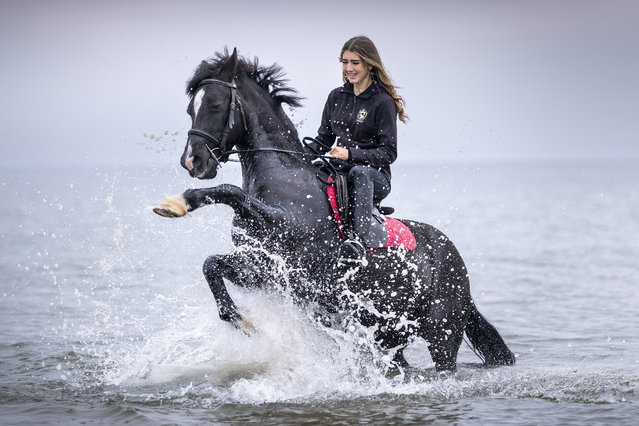
Jess Fulton, 15, from Ayrshire rides her pony Harley through the waves at Irvine Beach, UK on October 20, 2025. (Photo by Jamie Williamson/The Times)

Jess Fulton, 15, from Ayrshire rides her pony Harley through the waves at Irvine Beach, UK on October 20, 2025. (Photo by Jamie Williamson/The Times)
Details
17 Nov 2025 02:24:00
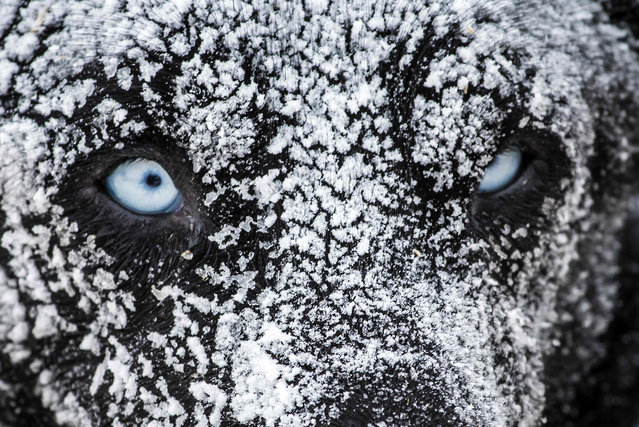
A sledding dog is covered in ice after spending the night in the open air with his musher at the polar base of Val-Cenis, as they ready for the next stage of the 12th edition of “La Grande Odyssee” sledding race across the Alps on January 17, 2016 in Val Cenis Lanslevillard. (Photo by Jean-Philippe Ksiazek/AFP Photo)

A sledding dog is covered in ice after spending the night in the open air with his musher at the polar base of Val-Cenis, as they ready for the next stage of the 12th edition of “La Grande Odyssee” sledding race across the Alps on January 17, 2016 in Val Cenis Lanslevillard. (Photo by Jean-Philippe Ksiazek/AFP Photo)
Details
19 Jan 2016 08:05:00
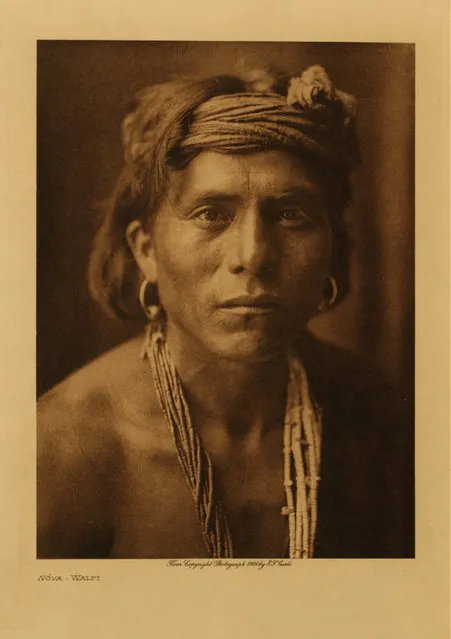
Nova, a Walpi, in 1906. (Photo by Edward S. Curtis)

At the beginning of the 20th century, Edward S. Curtis set out to document what he saw as a disappearing race: the Native American. From 1907 to 1930, Curtis took more than 2,000 photos of 80 tribes stretching from the Great Plains to the Pacific Northwest and Alaska. He then published and sold these photos, along with narrative text, in 20 volumes of work known as “The North American Indian”. It is one of the most significant collections of its kind, “probably the most important photographic document of its age and its topic,” said Jeffrey Garrett, associate university librarian for Special Libraries at Northwestern University. (Photo by Edward S. Curtis)
Details
07 Sep 2014 12:57:00
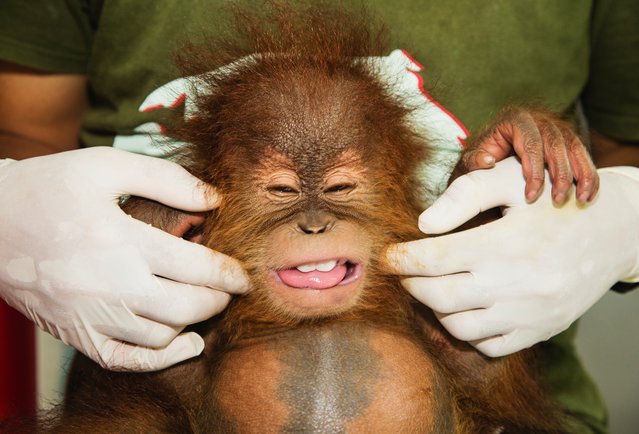
Enjoying a tickle from her keeper, an orphaned orangutan at the SOCP Quarantine Centre in Sumatra, Indonesia on March 20, 2016. The island’s orangutan population has been devastated in recent years as the forest areas are destroyed to make way for palm oil plantations. (Photo by Jami Tarris/Barcroft Media)

Enjoying a tickle from her keeper, an orphaned orangutan at the SOCP Quarantine Centre in Sumatra, Indonesia on March 20, 2016. The island’s orangutan population has been devastated in recent years as the forest areas are destroyed to make way for palm oil plantations. (Photo by Jami Tarris/Barcroft Media)
Details
27 Mar 2016 11:30:00
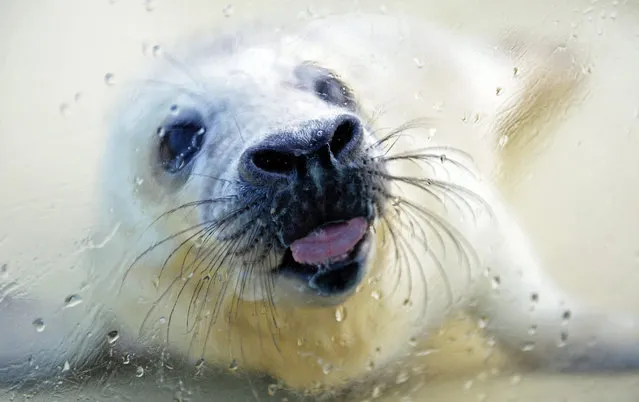
Grey seal pup “Nikolaus” licks a window at the seal enclosure in Friedrichskoog, Germany, 19 December 2014. The pup was abandoned by his mother and would not have a chance at survival without human help. Nikolaus will be fed at the enclosure for two to three months until he has reached the minimum weight of 45 kilograms for being released. (Photo by Daniel Reinhardt/EPA)

Grey seal pup “Nikolaus” licks a window at the seal enclosure in Friedrichskoog, Germany, 19 December 2014. The pup was abandoned by his mother and would not have a chance at survival without human help. Nikolaus will be fed at the enclosure for two to three months until he has reached the minimum weight of 45 kilograms for being released. (Photo by Daniel Reinhardt/EPA)
Details
20 Dec 2014 12:18:00