Loading...
Done
The rear of the Chevorlet Chaparral 2X Vision Gran Turismo concept car at its world debut at the Los Angeles Auto Show in California, November 19, 2014. (Photo by Lucy Nicholson/Reuters)

The rear of the Chevorlet Chaparral 2X Vision Gran Turismo concept car at its world debut at the Los Angeles Auto Show in California, November 19, 2014. The annual event is open to the public beginning November 21. (Photo by Lucy Nicholson/Reuters)
Details
21 Nov 2014 12:24:00
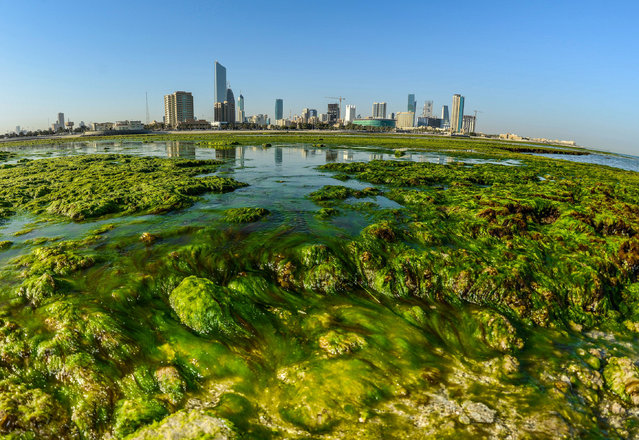
Green algae sits on a beach in Kuwait City, Kuwait, 28 February 2017. The formation of green algae is a normal phenomenon that occurs every year at the shores of Kuwait. (Photo by Raed Qutena/EPA)

Green algae sits on a beach in Kuwait City, Kuwait, 28 February 2017. The formation of green algae is a normal phenomenon that occurs every year at the shores of Kuwait. (Photo by Raed Qutena/EPA)
Details
01 Mar 2017 10:50:00
Myanmar's military parade to mark the 72nd Armed Forces Day in the capital Naypyitaw, Myanmar March 27, 2017. (Photo by Soe Zeya Tun/Reuters)

Myanmar's military parade to mark the 72nd Armed Forces Day in the capital Naypyitaw, Myanmar March 27, 2017. (Photo by Soe Zeya Tun/Reuters)
Details
27 Mar 2017 08:48:00
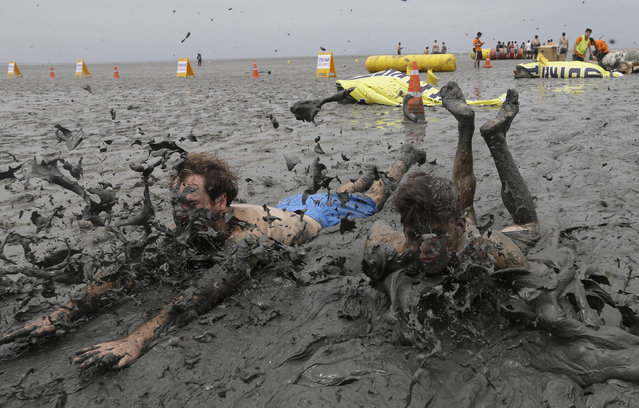
Men slide in the mud during the Boryeong Mud Festival at Daecheon Beach in Boryeong, South Korea, Saturday, July 22, 2017. The 20th annual mud festival features mud wrestling and mud sliding. (Photo by Ahn Young-joon/AP Photo)

Men slide in the mud during the Boryeong Mud Festival at Daecheon Beach in Boryeong, South Korea, Saturday, July 22, 2017. The 20th annual mud festival features mud wrestling and mud sliding. (Photo by Ahn Young-joon/AP Photo)
Details
23 Jul 2017 07:56:00
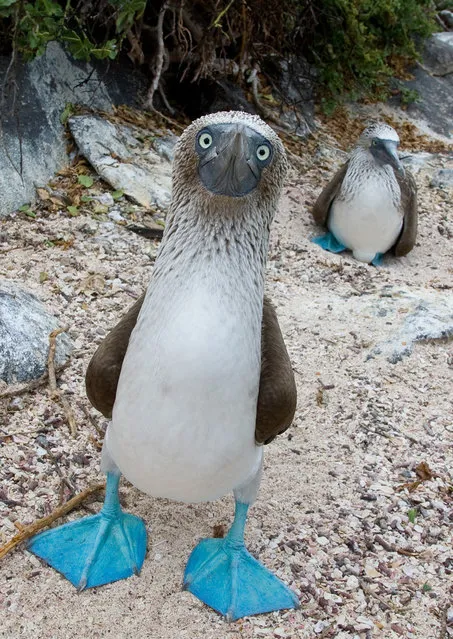
Blue-Footed Booby

The blue-footed booby (Sula nebouxii) is a marine bird in the family Sulidae, which includes ten species of long-winged seabirds. Blue-footed boobies belong to the genus Sula, which comprises six species of boobies. It is easily recognizable by its distinctive bright blue feet, which is a sexually selected trait. Males display their feet in an elaborate mating ritual by lifting their feet up and down while strutting before the female.

See Also: Red
Details
03 Oct 2014 12:42:00
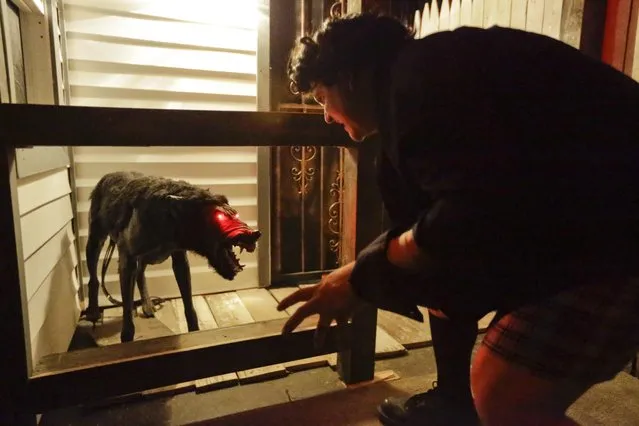
In this October 2, 2014 photo, an actor performs during “Nightmare: New York”, a haunted house attraction in New York. (Photo by Frank Franklin II/AP Photo)

Nightmare: New York”, staged in a Lower East Side building, depicts the ugliest, scariest vision of 1970s- and '80s-era Gotham. Subways are awash in graffiti, creeps and crime. Here: In this October 2, 2014 photo, an actor performs during “Nightmare: New York”, a haunted house attraction in New York. (Photo by Frank Franklin II/AP Photo)
Details
10 Oct 2014 12:45:00
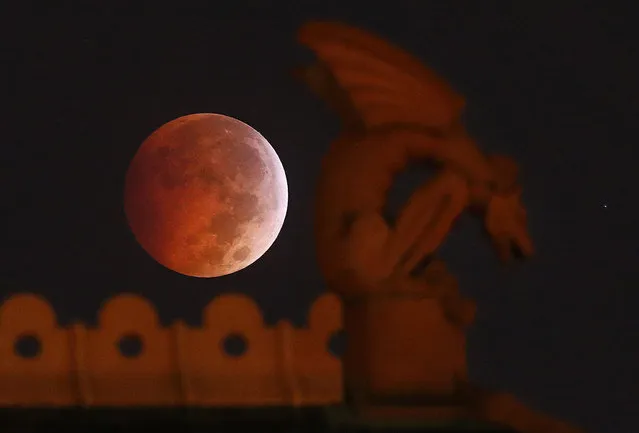
A lunar eclipse appears behind a gargoyle atop the old red Dallas County Courthouse early Wednesday morning, October 8, 2014. The moon appears orange or red, the result of sunlight scattering off Earth's atmosphere. This is known as the blood moon. (Photo by Tom Fox/AP Photo/The Dallas Morning News)

A lunar eclipse appears behind a gargoyle atop the old red Dallas County Courthouse early Wednesday morning, October 8, 2014. The moon appears orange or red, the result of sunlight scattering off Earth's atmosphere. This is known as the blood moon. (Photo by Tom Fox/AP Photo/The Dallas Morning News)
Details
11 Oct 2014 13:57:00
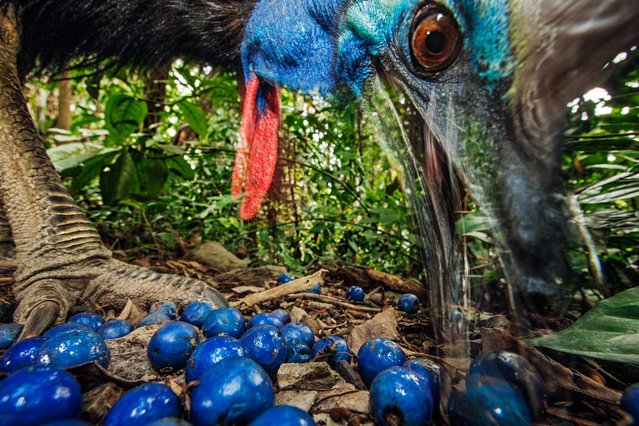
“Cassowaries are large, flightless birds related to emus and (more distantly) to ostriches, rheas, and kiwis”, writes Olivia Judson in the September issue of National Geographic magazine. (Photo by Christian Ziegler/National Geographic)

“Cassowaries are large, flightless birds related to emus and (more distantly) to ostriches, rheas, and kiwis”, writes Olivia Judson in the September issue of National Geographic magazine. How large? People-size: Adult males stand well over five foot five and top 110 pounds. Females are even taller, and can weigh more than 160 pounds. Dangerous when roused, they’re shy and peaceable when left alone. But even birds this big and tough are prey to habitat loss. The dense New Guinea and Australia rain forests where they live have dwindled. Today cassowaries might number 1,500 to 2,000. And because they help shape those same forests – by moving seeds from one place to another – “if they vanish”, Judson writes, “the structure of the forest would gradually change” too. (Photo by Christian Ziegler/National Geographic)

Details
06 Jan 2014 12:21:00