Loading...
Done
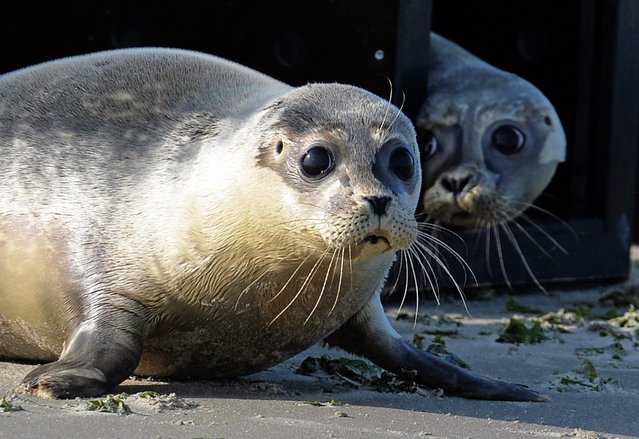
Common seals are reintroduced to the wild on the beach of the island Juist, Germany, 28 July 2014. It is the first reintroduction to the wild drive of the seal breading station Norddeich this year. (Photo by Carmen Jaspersen/EPA)

Common seals are reintroduced to the wild on the beach of the island Juist, Germany, 28 July 2014. It is the first reintroduction to the wild drive of the seal breading station Norddeich this year. (Photo by Carmen Jaspersen/EPA)
Details
02 Aug 2014 14:50:00
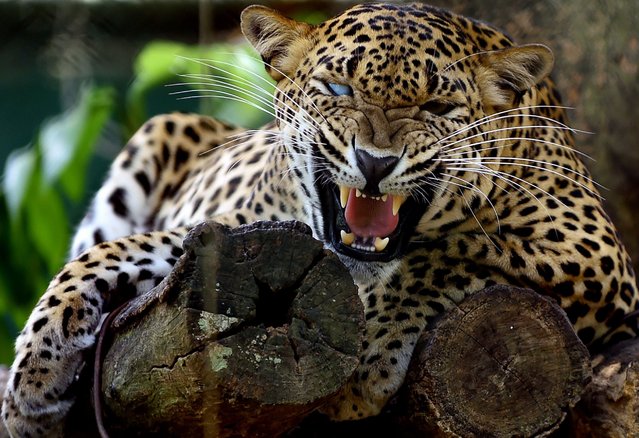
A Sri Lankan leopard is pictured at a zoo in Dehiwala near Colombo on March 3, 2016, on World Wildlife Day. (Photo by Ishara S. Kodikara/AFP Photo)

A Sri Lankan leopard is pictured at a zoo in Dehiwala near Colombo on March 3, 2016, on World Wildlife Day. (Photo by Ishara S. Kodikara/AFP Photo)
Details
06 Mar 2016 09:07:00
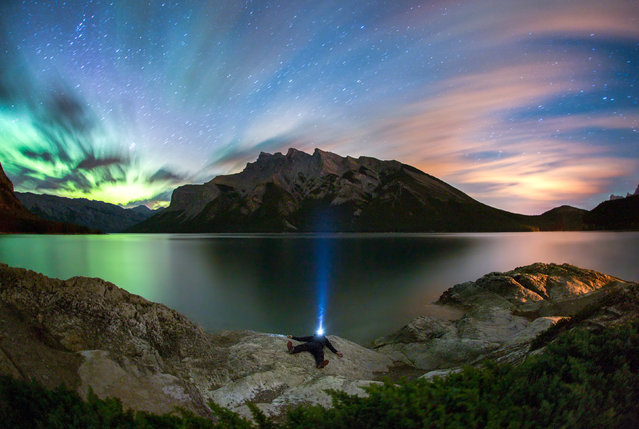
A photographer has shot this series of scenic selfies – scaling freezing mountain tops to snap himself in front of stunning scenery. Paul Zizkas breath-taking work features himself in front of beautiful backdrops such as shimmering lakes, snowy mountains and vibrant auroras. He has travelled to a number of different locations worldwide including Canada, New Zealand, Niue the South Pacific and French Polynesia. (Photo by Paul Zizkas/Caters News)

A photographer has shot this series of scenic selfies – scaling freezing mountain tops to snap himself in front of stunning scenery. Paul Zizkas breath-taking work features himself in front of beautiful backdrops such as shimmering lakes, snowy mountains and vibrant auroras. He has travelled to a number of different locations worldwide including Canada, New Zealand, Niue the South Pacific and French Polynesia. Explorer Paul, from Banff, Alberta, Canada, saw his selfies go viral early in 2014 – and has now unveiled his latest work. He said: I find that sometimes including a person in a landscape scene adds to the photograph – that it conveys a different story. Here: lake Minnewanka, Banff National Park, Alberta, Canada. (Photo by Paul Zizkas/Caters News)

Details
14 Dec 2014 12:18:00
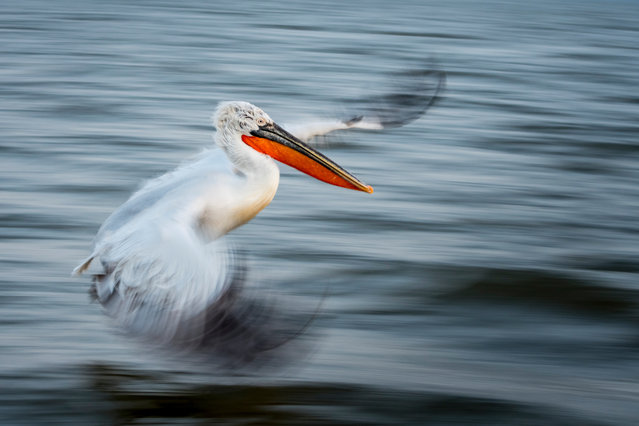
Overall winner: The Art of Flight by Alwin Hardenbol (University of Eastern Finland). A panning shot of a Dalmatian pelican in flight. The picture was taken on Lake Kerkini in Greece. (Photo by Alwin Hardenbol/2020 British Ecological Society Photography Competition)

Overall winner: The Art of Flight by Alwin Hardenbol (University of Eastern Finland). A panning shot of a Dalmatian pelican in flight. The picture was taken on Lake Kerkini in Greece. (Photo by Alwin Hardenbol/2020 British Ecological Society Photography Competition)
Details
01 Dec 2020 00:03:00
Commended. In late May, about a quarter of a million snow geese arrive from North America to nest on Wrangel Island, in northeastern Russia. They form the world's largest breeding colony of snow geese. Photographer Sergey Gorshkov spent two months on the remote island photographing the unfolding dramas. (Photo by Sergey Gorshkov/Veolia Environnement Wildlife Photographer)

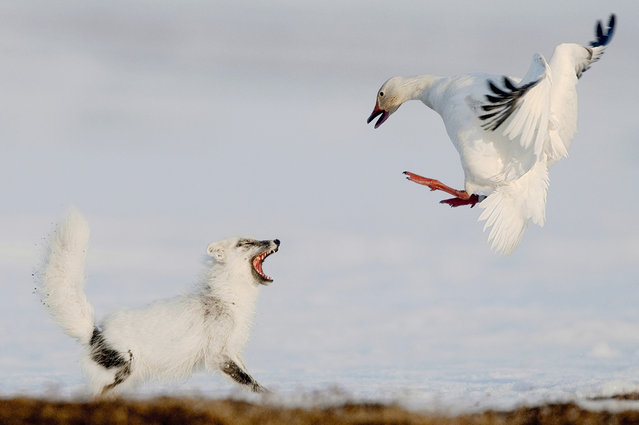
Commended. In late May, about a quarter of a million snow geese arrive from North America to nest on Wrangel Island, in northeastern Russia. They form the world's largest breeding colony of snow geese. Photographer Sergey Gorshkov spent two months on the remote island photographing the unfolding dramas. Arctic foxes take advantage of the abundance of eggs, caching surplus eggs for leaner times. But a goose (here the gander) is easily a match for a fox, which must rely on speed and guile to steal eggs. “The battles were fairly equal”, notes Sergey, “and I only saw a fox succeed in grabbing an egg on a couple of occasions, despite many attempts”. Surprisingly, “the geese lacked any sense of community spirit”, he adds, “and never reacted when a fox harassed a neighboring pair nesting close by”. (Photo by Sergey Gorshkov/Veolia Environnement Wildlife Photographer)
Details
16 Jun 2015 12:30:00
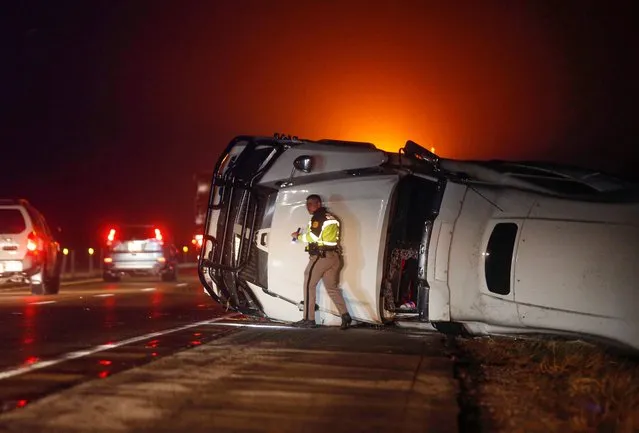
An Iowa State Patrol trooper works the scene of an overturned semi truck along the westbound shoulder of Interstate 80 near Anita, Iowa, on Wednesday, December 15, 2021, after a band of intense weather crossed through the area. A powerful storm system is blowing through the Great Plains and Midwest, combining with unusually warm temperatures to close highways and prompt numerous tornado warnings. (Photo by Bryon Houlgrave/The Des Moines Register via AP Photo)

An Iowa State Patrol trooper works the scene of an overturned semi truck along the westbound shoulder of Interstate 80 near Anita, Iowa, on Wednesday, December 15, 2021, after a band of intense weather crossed through the area. A powerful storm system is blowing through the Great Plains and Midwest, combining with unusually warm temperatures to close highways and prompt numerous tornado warnings. (Photo by Bryon Houlgrave/The Des Moines Register via AP Photo)
Details
20 Dec 2021 07:35:00
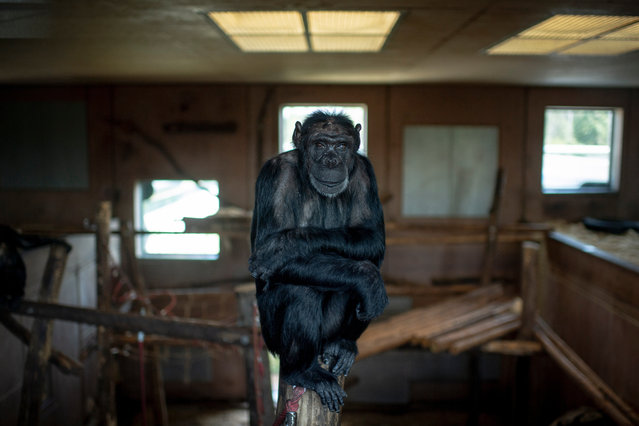
A chimpanzee looks in the direction of a camera at the Gut Aiderbichl Sanctuary for Traumatized Chimpanzees and other Primates in Gaenserndorf, near Vienna, 17 September 2018. 34 former laboratory chimpanzees of former Austrian pharmaceutical company Immuno AG spend their lives at the Gut Aiderbichl Sanctuary for Traumatized Chimpanzees and other Primates since 2009. U.S.-based Baxter International Inc. took over the Immuno AG in 1996, banned experiments with primates and rebuilt a former safari park for the Gut Aiderbichl Sanctuary for Traumatized Chimpanzees and other Primates. After three decades in captivity in too small cages, the chimpanzees, most of them came from Sierra Leone as cubs, have species-appropriate indoor and outdoor enclosures. The financial support by Baxter International Inc. and Austrian officials will end by 2019. (Photo by Christian Bruna/EPA/EFE)

A chimpanzee looks in the direction of a camera at the Gut Aiderbichl Sanctuary for Traumatized Chimpanzees and other Primates in Gaenserndorf, near Vienna, 17 September 2018. 34 former laboratory chimpanzees of former Austrian pharmaceutical company Immuno AG spend their lives at the Gut Aiderbichl Sanctuary for Traumatized Chimpanzees and other Primates since 2009. (Photo by Christian Bruna/EPA/EFE)
Details
23 Sep 2018 00:03:00
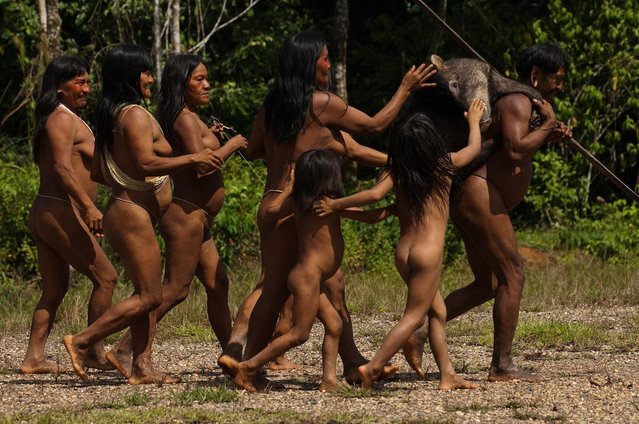
Spectacular images offering insight into the lives of the Huaorani people in the Ecuadorian Amazon have been revealed showing how they use traditional methods to hunt monkeys for food. The stunning pictures were taken by conservation photographer Pete Oxford from Torquay, Devon in the Ecuadorian Amazon. “The Huaorani Indians are a forest people highly in tune with their environment. Many are now totally acculturated since the 1950s by missionaries”, said Pete. “Today they face radical change to their culture to the proximity of oil exploration within their territory and the Yasuni National Park and Biosphere Reserve, they are vastly changed. Some still live very traditionally and for this shoot, through my Huaorani friend, a direct relative of those photographed he wanted to depict them as close to their original culture as possible. They still largely hunt with blow pipes and spears eating a lot of monkeys and peccaries”. The Huaorani are also known as the Waorani, Waodani or the Waos and are native Amerindians. Their lands are located between the Curaray and Napo rivers and speak the Huaorani language. Pete says that during his visit he was welcomed into the group and hopes that ancient cultures can be saved. Here: The tribe were seen celebrating after a hunter returned to camp with a wild pig. (Photo by Pete Oxford/Mediadrumworld.com)

Spectacular images offering insight into the lives of the Huaorani people in the Ecuadorian Amazon have been revealed showing how they use traditional methods to hunt monkeys for food. The stunning pictures were taken by conservation photographer Pete Oxford from Torquay, Devon in the Ecuadorian Amazon. Here: The tribe were seen celebrating after a hunter returned to camp with a wild pig. (Photo by Pete Oxford/Mediadrumworld.com)
Details
20 Jan 2017 07:58:00