Loading...
Done
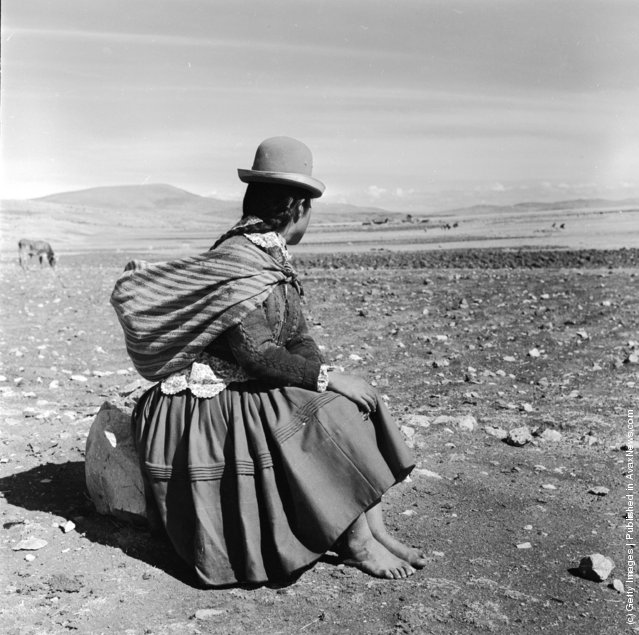
Burdened with a shawl full of her belongings, a woman stops for a rest on the road between Julaca and Puno in Peru, 1955

Burdened with a shawl full of her belongings, a woman stops for a rest on the road between Julaca and Puno in Peru. (Photo by Three Lions/Getty Images). Circa 1955
Details
09 Aug 2011 11:48:00
A couple shares a light moment in a Mass Transit Railway (MTR) subway train in Hong Kong, China on August 28, 2019. (Photo by Anushree Fadnavis/Reuters)

A couple shares a light moment in a Mass Transit Railway (MTR) subway train in Hong Kong, China on August 28, 2019. (Photo by Anushree Fadnavis/Reuters)
Details
01 Jan 2020 00:01:00
Lovot companion robots by Groove X wander in front their booth at CES Unveiled during the 2020 CES in Las Vegas, Nevada, January 5, 2020. (Photo by Steve Marcus/Reuters)

Lovot companion robots by Groove X wander in front their booth at CES Unveiled during the 2020 CES in Las Vegas, Nevada, January 5, 2020. (Photo by Steve Marcus/Reuters)
Details
10 Jan 2020 00:01:00
Professional wrestler Gia Scott (R) tries to break free from the grip of professional wrestler Aria Palmer (L) during Autumn Armageddon 2018 in Galena, Maryland on October 6, 2018. (Photo by Jim Watson/AFP Photo)

AFP presents a photo essay on professional wrestler Gia Scott shot by photographer Jim Watson over several months in 2018. Kierra Scott – better known by her stage name Gia – is a rising star in the US pro wrestling scene. This month, the 19-year-old became the youngest ever female champion of the MCW wrestling league in Maryland. Here: Professional wrestler Gia Scott (R) tries to break free from the grip of professional wrestler Aria Palmer (L) during Autumn Armageddon 2018 in Galena, Maryland on October 6, 2018. (Photo by Jim Watson/AFP Photo)
Details
26 Nov 2018 00:05:00
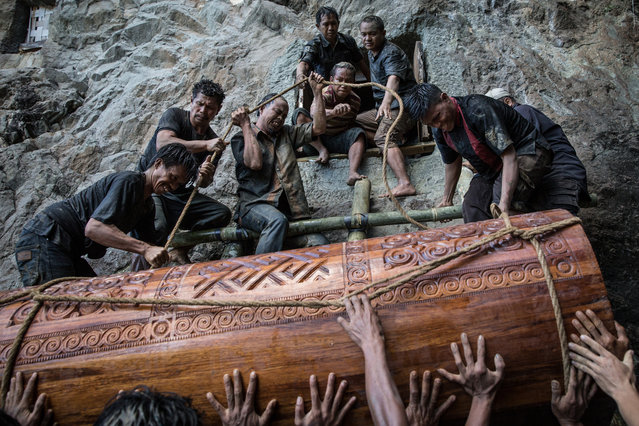
It is said that Torajans are people who “live to die”. For this Indonesian ethnic group, funerals are such extravagant events that they sometimes attract tourists. Families can postpone burials years (and the deceased are considered sick and hosted at home until the funeral) until the family can raise enough money and gather as many relatives as possible. And then it’s a jubilant multiday social event with a parade, dances and animal sacrifices. Agung Parameswara photographed these funerary practices when he traveled to South Sulawesi province, where the Torajans live. But often, their funeral isn’t the last time the dead are seen. In August, crypts are opened, coffins are slid back out and bodies delicately unsheathed. This tender ritual is known as Ma’Nene, which is customarily performed every few years. (Photo by Agung Parameswara/The Washington Post)

It is said that Torajans are people who “live to die”. For this Indonesian ethnic group, funerals are such extravagant events that they sometimes attract tourists. Families can postpone burials years (and the deceased are considered sick and hosted at home until the funeral) until the family can raise enough money and gather as many relatives as possible. And then it’s a jubilant multiday social event with a parade, dances and animal sacrifices. Agung Parameswara photographed these funerary practices when he traveled to South Sulawesi province, where the Torajans live. (Photo by Agung Parameswara/The Washington Post)
Details
06 Oct 2016 09:15:00
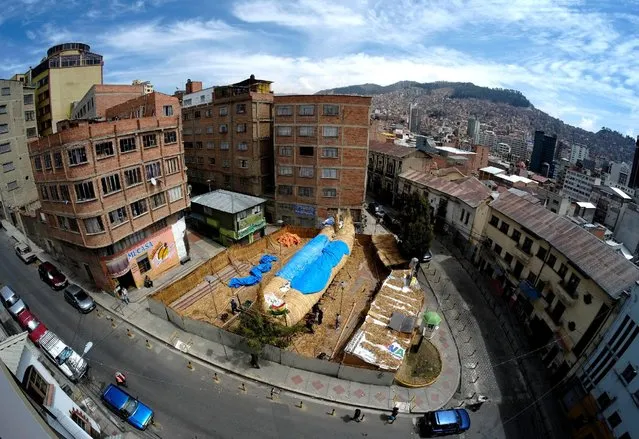
Aerial view of the “Viracocha III”, a boat made only from the totora reed, as it is being prepared to cross the Pacific from Chile to Australia on an expected six-month journey, La Paz, Bolivia, October 19, 2016. An expedition in a boat made only of reeds crafted by indigenous Bolivians is getting ready to cross the Pacific from South America to Australia, in a fresh attempt to prove that ancient mariners were capable of making the journey. Phil Buck, a 51-year-old explorer from the United States, already has led two similar expeditions and will captain the “Viracocha III” set to depart from northern Chile in February on an expected six-month journey. (Photo by David Mercado/Reuters)

Aerial view of the “Viracocha III”, a boat made only from the totora reed, as it is being prepared to cross the Pacific from Chile to Australia on an expected six-month journey, La Paz, Bolivia, October 19, 2016. An expedition in a boat made only of reeds crafted by indigenous Bolivians is getting ready to cross the Pacific from South America to Australia, in a fresh attempt to prove that ancient mariners were capable of making the journey. (Photo by David Mercado/Reuters)
Details
20 Oct 2016 10:53:00
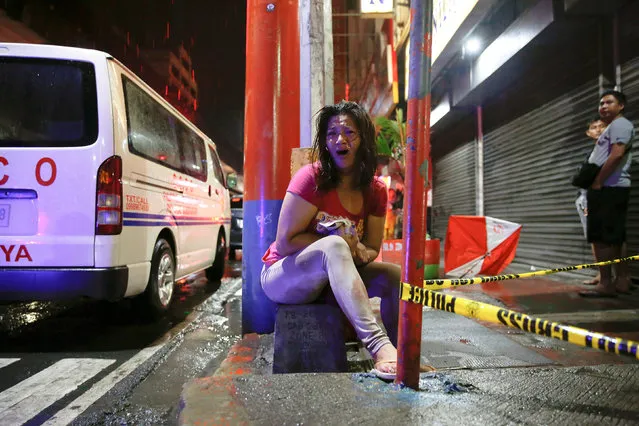
A woman cries after her husband was shot dead by unidentified gunmen riding motorcycles in Manila, Philippines late October 10, 2016. (Photo by Damir Sagolj/Reuters)

A woman cries after her husband was shot dead by unidentified gunmen riding motorcycles in Manila, Philippines late October 10, 2016. According to police reports, around 2,300 people have been killed in Philippine President Rodrigo Duterte's war against illegal drugs. The figure was revised by the police from an original tally of around 3,600 deaths. (Photo by Damir Sagolj/Reuters)
Details
26 Oct 2016 10:53:00
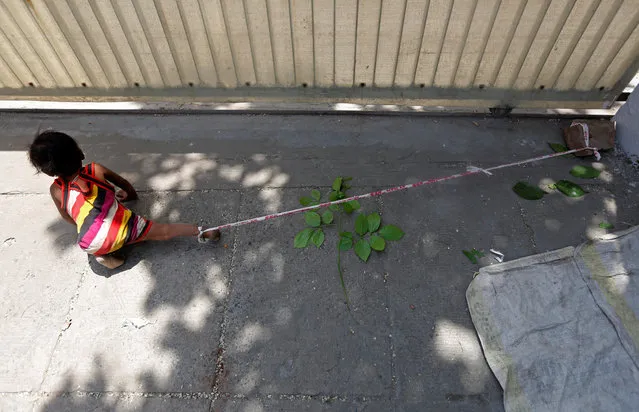
Barrier tape is tied around 15-month-old Shivani's ankle to prevent her from running away, while her mother Sarta Kalara works at a construction site nearby, in Ahmedabad, India, April 19, 2016. Kalara says she has no option but to tether her daughter Shivani to a stone despite her crying, while she and her husband work for 250 rupees ($3.8) each a shift digging holes for electricity cables in the city of Ahmedabad. There are about 40 million construction workers in India, at least one in five of them women, and the majority poor migrants who shift from site to site, building infrastructure for India's booming cities. Across the country it is not uncommon to see young children rolling in the sand and mud as their parents carry bricks or dig for new roads or luxury houses. (Photo by Amit Dave/Reuters)

Barrier tape is tied around 15-month-old Shivani's ankle to prevent her from running away, while her mother Sarta Kalara works at a construction site nearby, in Ahmedabad, India, April 19, 2016. Kalara says she has no option but to tether her daughter Shivani to a stone despite her crying, while she and her husband work for 250 rupees ($3.8) each a shift digging holes for electricity cables in the city of Ahmedabad. There are about 40 million construction workers in India, at least one in five of them women, and the majority poor migrants who shift from site to site, building infrastructure for India's booming cities. Across the country it is not uncommon to see young children rolling in the sand and mud as their parents carry bricks or dig for new roads or luxury houses. (Photo by Amit Dave/Reuters)

Details
14 Dec 2016 07:39:00