Loading...
Done
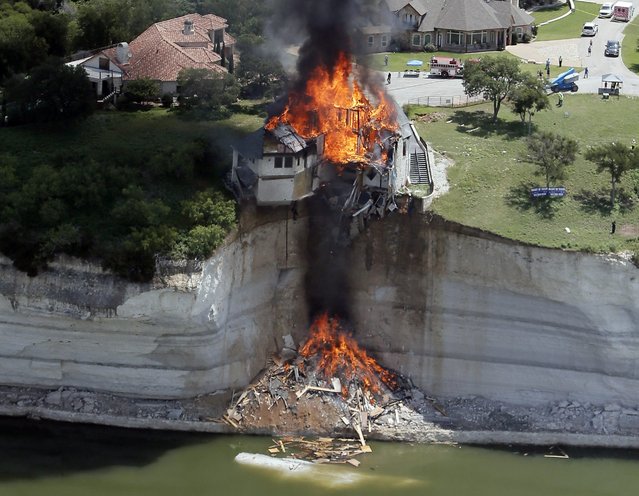
Smoke rises from a house days after part of the ground it was resting on collapsed into Lake Whitney, Texas in this June 13, 2014 file photo. I was covering the controlled burn of a house slowly falling into Lake Whitney due to the decaying cliff underneath.  Asked to take photos from an aerial perspective, an instructor and I took off from Grand Prairie Municipal Airport around 9am. (Photo and caption by Brandon Wade/Reuters)

Smoke rises from a house days after part of the ground it was resting on collapsed into Lake Whitney, Texas in this June 13, 2014 file photo. I was covering the controlled burn of a house slowly falling into Lake Whitney due to the decaying cliff underneath. Asked to take photos from an aerial perspective, an instructor and I took off from Grand Prairie Municipal Airport around 9am. The burn, scheduled to start an hour later, was delayed. I love flying, but patience proved challenging as circling for nearly three hours gets boring fast. Once the fire started we only had 15 minutes to take photos because the plane was booked at 1pm. The owners invested their retirement savings in the house and were even advised by geologists that the ground was stable. To watch your investment literally go up in flames must take its toll emotionally. The owners said they don't expect their insurance to cover the loss. (Photo and caption by Brandon Wade/Reuters)
Details
27 Nov 2014 15:01:00
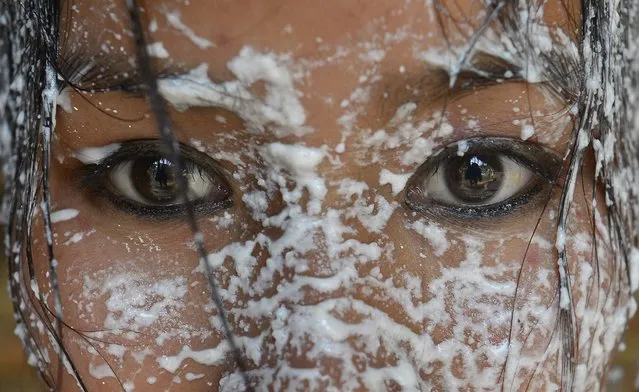
A picture made available on 13 May 2016 shows A Tiwa girl performing her traditional dance as they celebrated the Wanchuwa festival in Karbi Anglong District of Assam state, India, 11 May 2016. Wanchuwa is one of the most important festivals of the Tiwa tribal community living in the hills as it is related with agriculture which is the mainstay of their economy. Tiwas pray for a bountiful harvest during this festival and to protect their crops from pest and other natural calamities. (Photo by EPA/Stringer)

A picture made available on 13 May 2016 shows A Tiwa girl performing her traditional dance as they celebrated the Wanchuwa festival in Karbi Anglong District of Assam state, India, 11 May 2016. Wanchuwa is one of the most important festivals of the Tiwa tribal community living in the hills as it is related with agriculture which is the mainstay of their economy. Tiwas pray for a bountiful harvest during this festival and to protect their crops from pest and other natural calamities. Tiwa is a major tribe of Assam state who practice Jhum or shifting cultivation for their living in the hills. (Photo by EPA/Stringer)
Details
14 May 2016 11:45:00
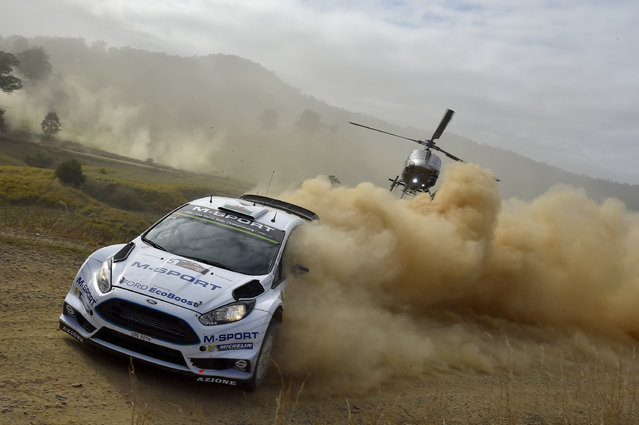
Elfyn Evans of Great Britain and Daniel Barritt of Great Britain compete in their M-Sport WRT Ford Fiesta RS WRC during Day One of the WRC Australia on September 11, 2015 in Coffs Harbour, Australia. (Photo by Massimo Bettiol/Getty Images)

Elfyn Evans of Great Britain and Daniel Barritt of Great Britain compete in their M-Sport WRT Ford Fiesta RS WRC during Day One of the WRC Australia on September 11, 2015 in Coffs Harbour, Australia. (Photo by Massimo Bettiol/Getty Images)
Details
12 Sep 2015 15:50:00
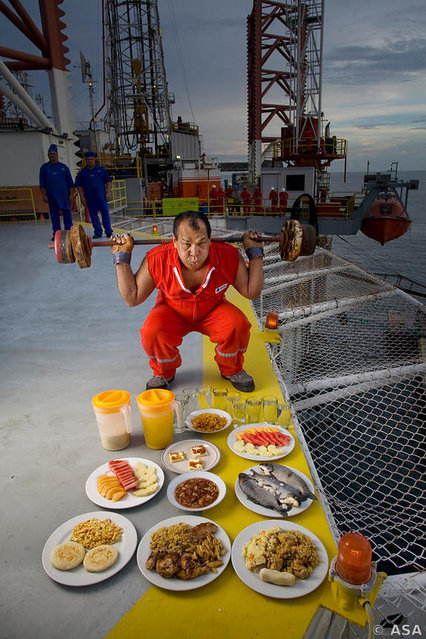
What the World Eats By Peter Menzel And Faith D'Aluisio Part 1

A stunning photographic collection featuring portraits of people from 30 countries and the food they eat in one day. In this fascinating study of people and their diets, 80 profiles are organized by the total number of calories each person puts away in a day. Featuring a Japanese sumo wrestler, a Massai herdswoman, world-renowned Spanish chef Ferran Adria, an American competitive eater, and more, these compulsively readable personal stories also include demographic particulars, including age, activity level, height, and weight. Essays from Harvard primatologist Richard Wrangham, journalist Michael Pollan, and others discuss the implications of our modern diets for our health and for the planet. This compelling blend of photography and investigative reportage expands our understanding of the complex relationships among individuals, culture, and food.
Details
23 Apr 2014 14:34:00
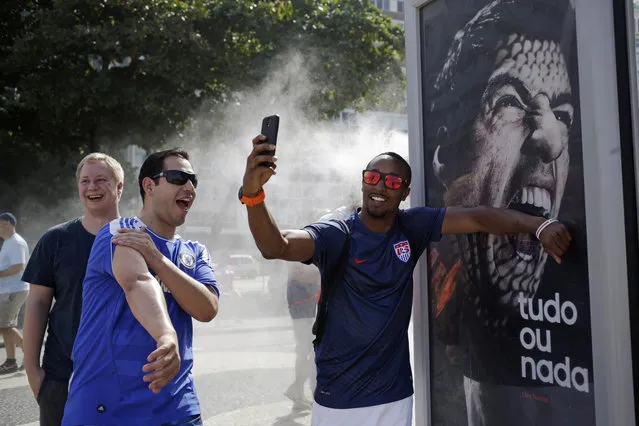
A U.S. soccer fan pretends that Uruguay's soccer striker Luis Suarez is biting him as he takes a selfie next to an Adidas advertisement featuring Suarez near Copacabana beach in Rio de Janeiro, Brazil, Thursday, June 26, 2014. FIFA banned Suarez from all football activities for four months on Thursday for biting an opponent at the World Cup, a punishment that rules him out of the rest of the tournament. (Photo by Matt Dunham/AP Photo)

A U.S. soccer fan pretends that Uruguay's soccer striker Luis Suarez is biting him as he takes a selfie next to an Adidas advertisement featuring Suarez near Copacabana beach in Rio de Janeiro, Brazil, Thursday, June 26, 2014. FIFA banned Suarez from all football activities for four months on Thursday for biting an opponent at the World Cup, a punishment that rules him out of the rest of the tournament. (Photo by Matt Dunham/AP Photo)
Details
28 Jun 2014 13:52:00
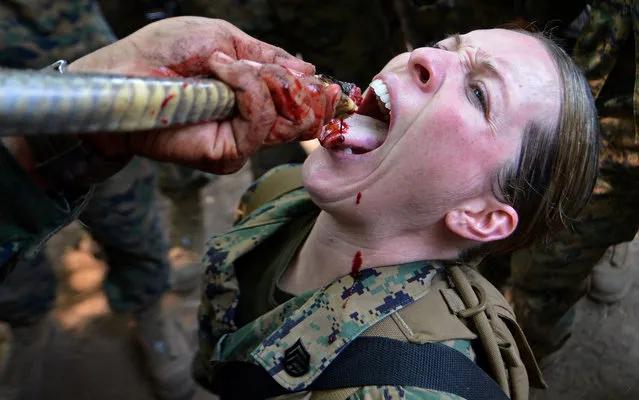
In a military base in the Thai province of Chon Buri February 20 U.S. Marines Navy with Thailand began their studies in jungle survival. The event is held in joint military exercises “Cobra Gold 2013”. During a jungle survival program February 20, 2013 taught by Royal Thai Special Forces in Sannapit, Thailand, U.S. Marines learned to catch cobras and drink their fresh blood, not to mention eat forest insects and pull the heads off of chicken. The training was part of Operation Cobra Gold 13, the 32nd edition of international military exercises hosted by the Thai. According to a U.S. Marines press release, Cobra Gold is the largest exercise of its kind in Asia and incorporates troops from five other nations in addition to the U.S. and Thailand. The Daily Mail reports that the Marines were invited to experience the local custom of drinking cobra blood after being taught to catch and kill cobras in the wild. As CNN notes, Cobra blood is believed to be a panacea and aphrodiasic in parts of Southeast Asia. In Jakarta, vendors can earn over $100 a night selling shots of cobra blood mixed with liquor. (Photo by Pornchai Kittiwongsakul/AFP Photo)

During a jungle survival program February 20, 2013 taught by Royal Thai Special Forces in Sannapit, Thailand, U.S. Marines learned to catch cobras and drink their fresh blood, not to mention eat forest insects and pull the heads off of chicken. The training was part of Operation Cobra Gold 13, the 32nd edition of international military exercises hosted by the Thai. According to a U.S. Marines press release, Cobra Gold is the largest exercise of its kind in Asia and incorporates troops from five other nations in addition to the U.S. and Thailand. The Daily Mail reports that the Marines were invited to experience the local custom of drinking cobra blood after being taught to catch and kill cobras in the wild. As CNN notes, Cobra blood is believed to be a panacea and aphrodiasic in parts of Southeast Asia. In Jakarta, vendors can earn over $100 a night selling shots of cobra blood mixed with liquor. (Photo by Pornchai Kittiwongsakul/AFP Photo)
Details
23 Feb 2013 11:52:00
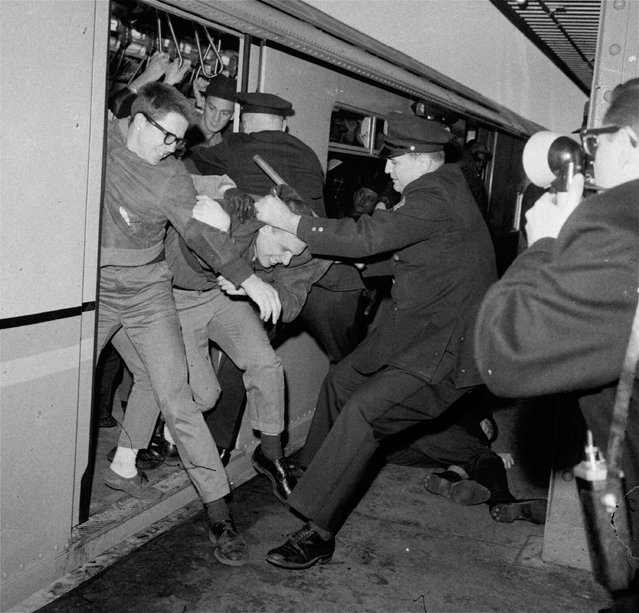
New York City policemen tangled with demonstrators at a subway station on the opening day of the New York World's Fair, April 22, 1964. Youths attempted to stall the train, which was headed from the city to the fairgrounds, as a form of protest on behalf of civil rights for blacks. (Photo by Charles Gorry/AP Photo)

New York City policemen tangled with demonstrators at a subway station on the opening day of the New York World's Fair, April 22, 1964. Youths attempted to stall the train, which was headed from the city to the fairgrounds, as a form of protest on behalf of civil rights for blacks. (Photo by Charles Gorry/AP Photo)
Details
26 Jan 2015 11:52:00
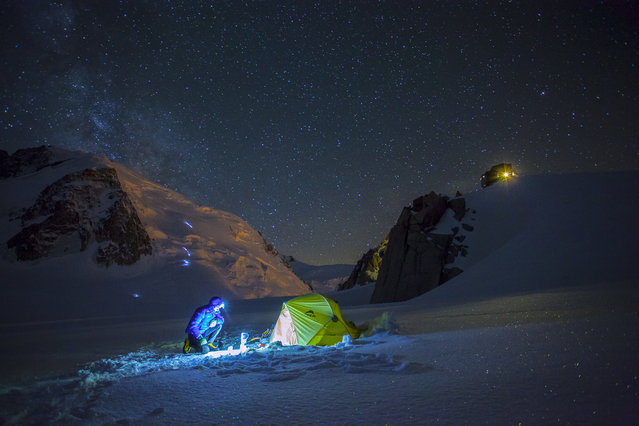
“A snapshot from mountaineer's life”. Have you ever wondered how does a mountaineer's day start? (Photo and caption by Kamil Tamiola/National Geographic Traveler Photo Contest)

“A snapshot from mountaineer's life”. Have you ever wondered how does a mountaineer's day start? I will give you a hint: you wake up at 3 am, set the stove, wake up your partner, pretend it is warm, quickly consume a high-calorie breakfast, watch your friends slowly ascending the icy slopes of your dream summit with their tiny head torches glimmering against perfectly blue ice, and hope for the good weather. One would ask: why all this trouble? The answer is easy: for the love of the adventure and the unknown. Location: Chamonix, Haute Savoye, France. (Photo and caption by Kamil Tamiola/National Geographic Traveler Photo Contest)

ATTENTION! All pictures are presented in high resolution. To see Hi-Res images – just TWICE click on any picture. In other words, click small picture – opens the BIG picture. Click BIG picture – opens VERY BIG picture.
Details
27 Jun 2013 12:47:00