Loading...
Done
Taras Mychalewych, 75, poses for a portrait with his vaccination card after receiving his coronavirus disease (COVID-19) vaccine at a rural vaccination site in Columbus, New Mexico, U.S., April 16, 2021. (Photo by Paul Ratje/Reuters)

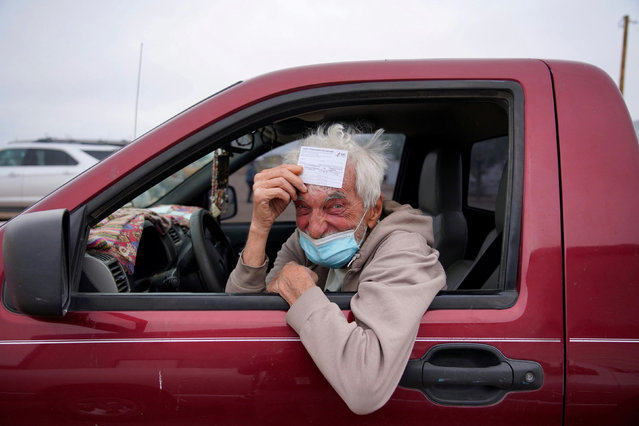
Taras Mychalewych, 75, poses for a portrait with his vaccination card after receiving his coronavirus disease (COVID-19) vaccine at a rural vaccination site in Columbus, New Mexico, U.S., April 16, 2021. (Photo by Paul Ratje/Reuters)
Details
19 Apr 2021 09:51:00
A model is reflected in the mirror applying makeup during the Mr. and Mrs. Kibera leadership contest, on International Youth Day, in Nairobi, Kenya, Tuesday, August 12, 2025. (Photo by Brian Inganga/AP Photo)

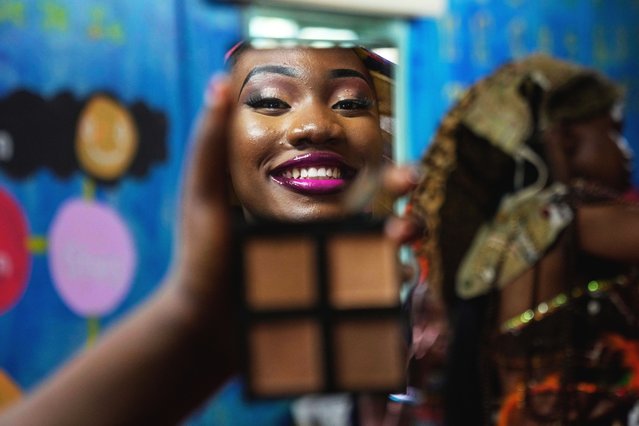
A model is reflected in the mirror applying makeup during the Mr. and Mrs. Kibera leadership contest, on International Youth Day, in Nairobi, Kenya, Tuesday, August 12, 2025. (Photo by Brian Inganga/AP Photo)
Details
25 Aug 2025 04:23:00
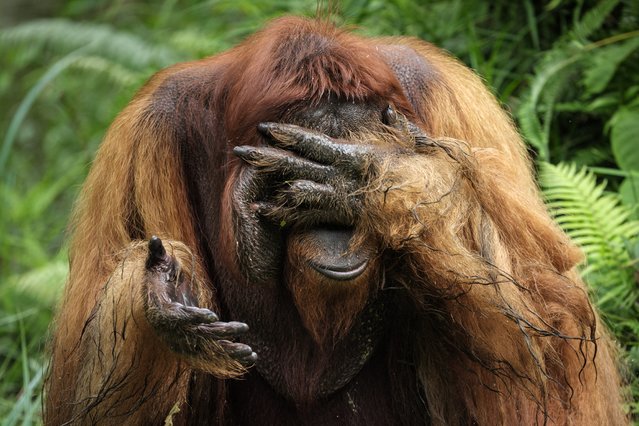
Bujang, a 35-year-old male orangutan rescued from a circus in Sumatra, washes his face on a sanctuary island surrounded by a river where non-releasable orangutans are protected for life at the Samboja Lestari Orangutan Rehabilitation Center run by the non-profit Borneo Orangutan Survival (BOS) Foundation in Samboja, East Kalimantan, on July 12, 2024. (Photo by Yasuyoshi Chiba/AFP Photo)

Bujang, a 35-year-old male orangutan rescued from a circus in Sumatra, washes his face on a sanctuary island surrounded by a river where non-releasable orangutans are protected for life at the Samboja Lestari Orangutan Rehabilitation Center run by the non-profit Borneo Orangutan Survival (BOS) Foundation in Samboja, East Kalimantan, on July 12, 2024. (Photo by Yasuyoshi Chiba/AFP Photo)

Details
14 Nov 2025 03:17:00
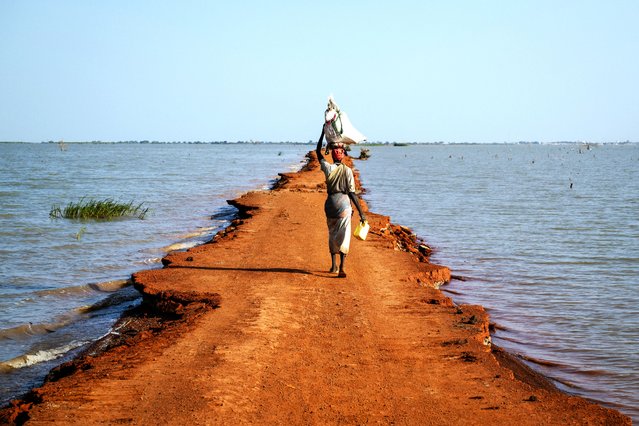
A woman carries a heavy load on her head while walking along the narrow Kilo ZeroKilo 30 road near Bentiu in Unity State, South Sudan, on November 6, 2025. The eroded and flood-affected road compels residents to travel long distances on foot to access supplies in Bentiu and Rubkona. (Photo by Rian Cope/AFP Photo)

A woman carries a heavy load on her head while walking along the narrow Kilo ZeroKilo 30 road near Bentiu in Unity State, South Sudan, on November 6, 2025. The eroded and flood-affected road compels residents to travel long distances on foot to access supplies in Bentiu and Rubkona. (Photo by Rian Cope/AFP Photo)
Details
28 Nov 2025 04:21:00
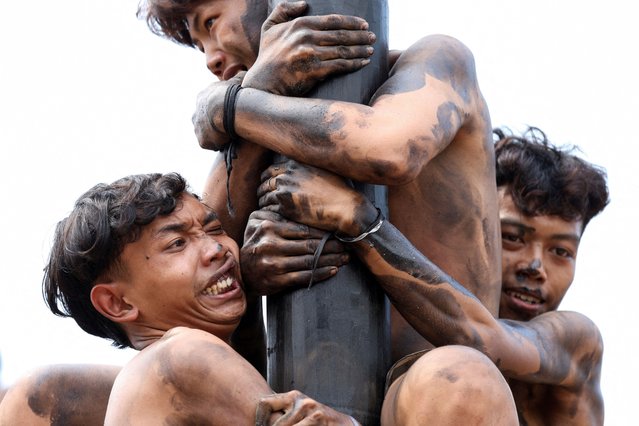
Participants react as they try to reach the top of a greased pole to collect the prizes, during a “Panjat Pinang” competition, that is held to celebrate Indonesia's 79th Independence Day at Ancol in Jakarta, Indonesia, on August 17, 2024. (Photo by Ajeng Dinar Ulfiana/Reuters)

Participants react as they try to reach the top of a greased pole to collect the prizes, during a “Panjat Pinang” competition, that is held to celebrate Indonesia's 79th Independence Day at Ancol in Jakarta, Indonesia, on August 17, 2024. (Photo by Ajeng Dinar Ulfiana/Reuters)
Details
05 Dec 2025 06:16:00
A Gnawa traditional group performs in the city of Essaouira on December 14, 2019, to celebrate the decision of adding the Gnawa culture to UNESCO's list of Intangible Cultural Heritage of Humanity. Gnawa culture, a centuries-old Moroccan practice rooted in music, African rituals and Sufi traditions, was added to UNESCO's list of Intangible Cultural Heritage of Humanity earlier in the week. Gnawa refers to a “set of musical productions, fraternal practices and therapeutic rituals where the secular mixes with the sacred”, according to the nomination submitted by Morocco. Often dressed in colourful outfits, Gnawa musicians play the guenbri, a type of lute with three strings, accompanied by steel castanets called krakebs. (Photo by Fadel Senna/AFP Photo)

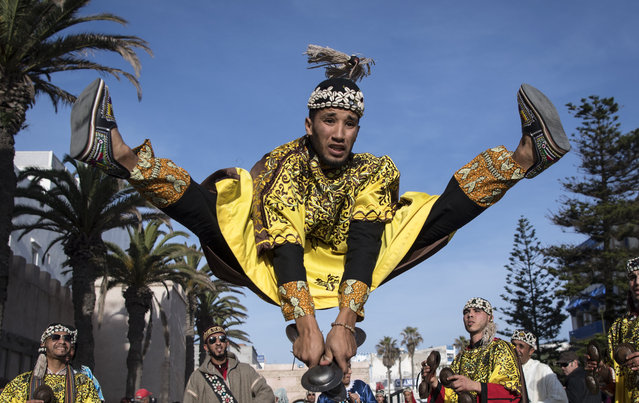
A Gnawa traditional group performs in the city of Essaouira on December 14, 2019, to celebrate the decision of adding the Gnawa culture to UNESCO's list of Intangible Cultural Heritage of Humanity. Gnawa culture, a centuries-old Moroccan practice rooted in music, African rituals and Sufi traditions, was added to UNESCO's list of Intangible Cultural Heritage of Humanity earlier in the week. Gnawa refers to a “set of musical productions, fraternal practices and therapeutic rituals where the secular mixes with the sacred”, according to the nomination submitted by Morocco. Often dressed in colourful outfits, Gnawa musicians play the guenbri, a type of lute with three strings, accompanied by steel castanets called krakebs. (Photo by Fadel Senna/AFP Photo)
Details
18 Dec 2019 00:05:00
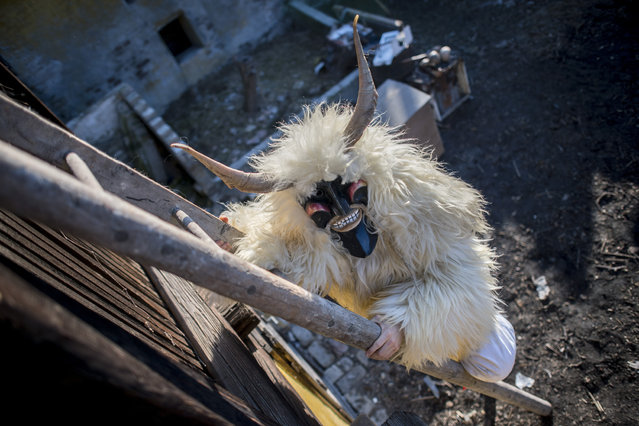
A man wears a busho mask and a costume made of sheep pelt while climbing up a ladder outside a barn in Mohacs, Hungary, 20 February 2020, on the first day of carnival. The traditional Busho carnival, which marks the end of winter, dates back to the 16th century. According to local legend, members of an ethnic South Slavic group living in Mohacs at the time dressed up in similar costumes and wore wooden masks to scare away Ottoman invaders, who mistook them for demons. (Photo by Tamas Soki/EPA/EFE)

A man wears a busho mask and a costume made of sheep pelt while climbing up a ladder outside a barn in Mohacs, Hungary, 20 February 2020, on the first day of carnival. The traditional Busho carnival, which marks the end of winter, dates back to the 16th century. According to local legend, members of an ethnic South Slavic group living in Mohacs at the time dressed up in similar costumes and wore wooden masks to scare away Ottoman invaders, who mistook them for demons. (Photo by Tamas Soki/EPA/EFE)
Details
23 Feb 2020 00:07:00
Chinese women wear protective masks as they are dressed in traditional clothing from the Qing Dynasty era outside a park on March 29, 2020 in Beijing, China. A limited section of the iconic tourist site was re-opened to the public this week allowing a smaller number of visitors to reserve tickets online in advance and to enter after passing health screening. With the pandemic hitting hard across the world, China recorded its first day with no new domestic cases of the coronavirus last week, since the government imposed sweeping measures to keep the disease from spreading. For two months, millions of people across China have been restricted in how they move from their homes, while other cities have been locked down in ways that appeared severe at the time but are now being replicated in other countries trying to contain the virus. Officials believe the worst appears to be over in China, though there are concerns of another wave of infections as the government attempts to reboot the worlds second largest economy. In Beijing, it is mandatory to wear masks outdoors, retail stores operate on reduced hours, restaurants employ social distancing among patrons, and tourist attractions at risk of drawing large crowds remain closed. Monitoring and enforcement of virus-related measures and the quarantine of anyone arriving to Beijing is carried out by neighborhood committees and a network of Communist Party volunteers who wear red arm bands. A primary concern for Chinese authorities remains the arrival of flights from Europe and elsewhere, given the exposure of passengers in regions now regarded as hotbeds for transmission. Since January, China has recorded more than 81,000 cases of COVID-19 and at least 3200 deaths, mostly in and around the city of Wuhan, in central Hubei province, where the outbreak first started. (Photo by Kevin Frayer/Getty Images)

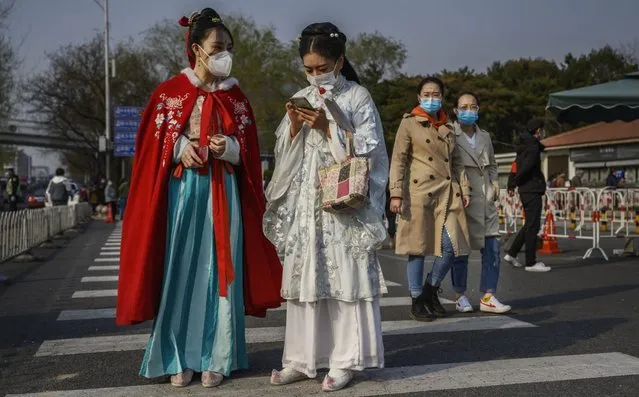
Chinese women wear protective masks as they are dressed in traditional clothing from the Qing Dynasty era outside a park on March 29, 2020 in Beijing, China. A limited section of the iconic tourist site was re-opened to the public this week allowing a smaller number of visitors to reserve tickets online in advance and to enter after passing health screening. (Photo by Kevin Frayer/Getty Images)
Details
01 Apr 2020 00:05:00