Loading...
Done
A horse buggy is headed for the stables on a foggy night in New Orleans, Monday, December 18, 2017. (Photo by David Grunfeld/NOLA.com The Times-Picayune via AP Photo)

A horse buggy is headed for the stables on a foggy night in New Orleans, Monday, December 18, 2017. (Photo by David Grunfeld/NOLA.com The Times-Picayune via AP Photo)
Details
20 Dec 2017 06:58:00
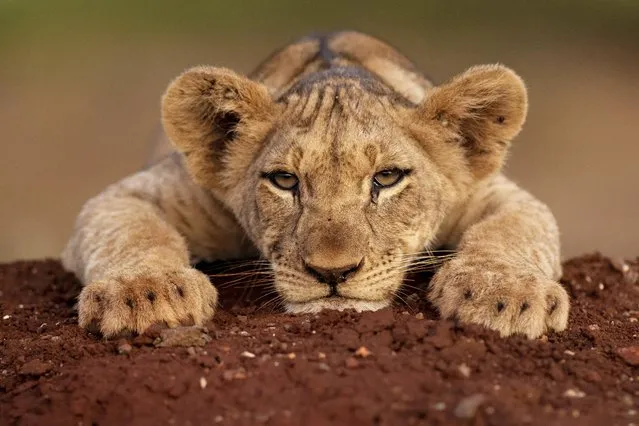
A lion cub wakes in the morning sun at the Zimanga private game reserve in South Africa on April 9, 2022. (Photo by Calvin Kotze/Animal News Agency)

A lion cub wakes in the morning sun at the Zimanga private game reserve in South Africa on April 9, 2022. (Photo by Calvin Kotze/Animal News Agency)
Details
17 Apr 2022 04:46:00
Festival goers blow soap-bubbles at the 28th Sziget (Island) Festival on Shipyard Island, Northern Budapest, Hungary, 15 August 2022. The festival is one of the biggest cultural events of Europe offering art exhibitions, theatrical and circus performances and above all music concerts. (Photo by Marton Monus/EPA/EFE)

Festival goers blow soap-bubbles at the 28th Sziget (Island) Festival on Shipyard Island, Northern Budapest, Hungary, 15 August 2022. The festival is one of the biggest cultural events of Europe offering art exhibitions, theatrical and circus performances and above all music concerts. (Photo by Marton Monus/EPA/EFE)
Details
25 Aug 2022 05:05:00
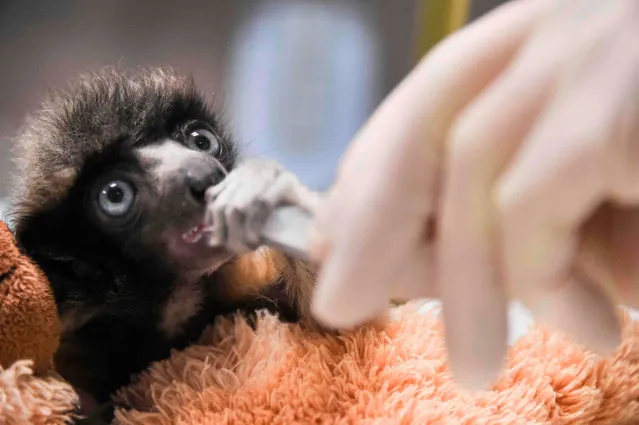
A veterinarian from the zoo of Besancon feeds “Soa”, a female crowned sifaka, in Besancon, eastern France, on February 18, 2019. The crowned sifaka is a critically endangered species from Madagascar. There were only 6 females over 20 individuals living in 7 zoos worldwide end of 2018. (Photo by Sébastien Bozon/AFP Photo)

A veterinarian from the zoo of Besancon feeds “Soa”, a female crowned sifaka, in Besancon, eastern France, on February 18, 2019. The crowned sifaka is a critically endangered species from Madagascar. There were only 6 females over 20 individuals living in 7 zoos worldwide end of 2018. (Photo by Sébastien Bozon/AFP Photo)
Details
24 Feb 2019 00:03:00
Kawakanih Yawalapiti, 9, Upper Xingu region of Mato Grosso, Brazil, 2018: Kawakanih lives with her tribe, the Yawalapiti, in Xingu national park, a preserve in the Amazon basin of Brazil. The Yawalapiti collect seeds to preserve species unique to their ecosystem, which lies between the rain forest and savannah. Kawakanih’s diet is simple, consisting mainly of fish, cassava, porridge, fruit and nuts. “It takes five minutes to catch dinner”, says Kawakanih. “When you’re hungry, you just go to the river with your net”. (Photo by Gregg Segal/The Guardian)

Photographer Gregg Segal travelled the world to document children and the food they eat in a week. Partly inspired by the increasing problems of childhood obesity, he tracked traditional regional diets as yet unaffected by globalisation, and ironically, found that the healthiest diets were often eaten by the least well off. (Photo by Gregg Segal/The Guardian)
Details
03 Jul 2019 00:03:00
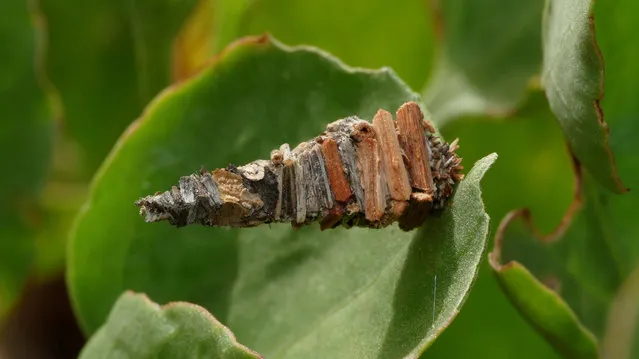
An undated handout photo made available by the Zerynthia Association shows the pupa of an amicta moneiba, a recently discovered species of moth endemic to La Gomera and El Hierro islands in the Canary Islands, Spain (issued 01 July 2020), as those two islands pulled apart from the rest of the Canary Islands 2.5 million years ago. The Institute of Evolutionary Biology of the Spanish National Research Council (CSIC) and the Zerynthia Association have recently discovered two new moth species in El Hierro and La Gomera. (Photo by Yeray Monasterio/Zerynthia/EPA/EFE)

An undated handout photo made available by the Zerynthia Association shows the pupa of an amicta moneiba, a recently discovered species of moth endemic to La Gomera and El Hierro islands in the Canary Islands, Spain (issued 01 July 2020), as those two islands pulled apart from the rest of the Canary Islands 2.5 million years ago. The Institute of Evolutionary Biology of the Spanish National Research Council (CSIC) and the Zerynthia Association have recently discovered two new moth species in El Hierro and La Gomera. (Photo by Yeray Monasterio/Zerynthia/EPA/EFE)
Details
11 Oct 2020 00:01:00
Wrestlers participate during the traditional Sindhi Malakhra wrestling in Larkana, Pakistan, 30 January 2021. A Malakhra match begins with both wrestlers tying a twisted cloth around the opponent's waist. Each one then holds onto the opponent's waistcloth and tries to throw him to the ground. (Photo by Waqar Hussein/EPA/EFE)

Wrestlers participate during the traditional Sindhi Malakhra wrestling in Larkana, Pakistan, 30 January 2021. A Malakhra match begins with both wrestlers tying a twisted cloth around the opponent's waist. Each one then holds onto the opponent's waistcloth and tries to throw him to the ground. (Photo by Waqar Hussein/EPA/EFE)
Details
19 Feb 2021 09:21:00
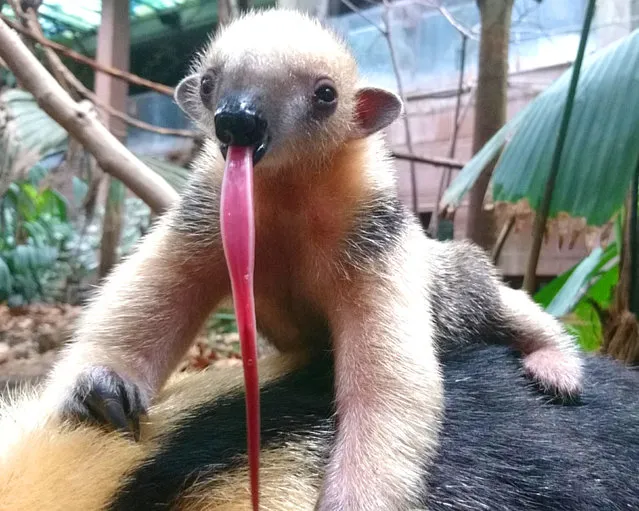
A baby tamandua, or anteater, named Poco sticks out its tongue on May 31, 2018. ZSL London Zoo is celebrating the creature’s surprise birth after they found a male to be the companion of its mother Ria last October. (Photo by ZSL London Zoo/PA Wire)


A baby tamandua, or anteater, named Poco sticks out its tongue on May 31, 2018. ZSL London Zoo is celebrating the creature’s surprise birth after they found a male to be the companion of its mother Ria last October. (Photo by ZSL London Zoo/PA Wire)
Details
03 Jun 2018 00:03:00