Loading...
Done
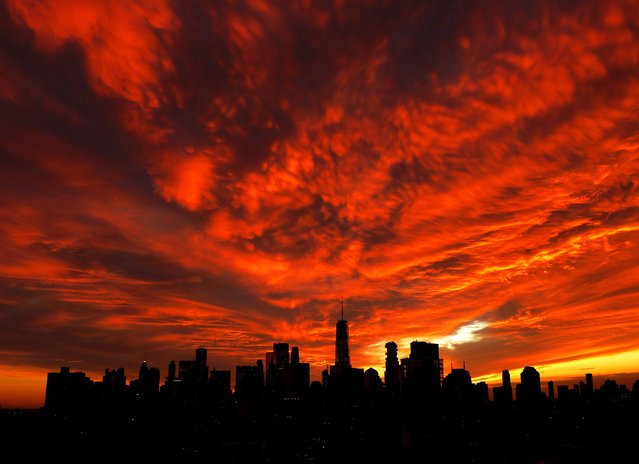
Clouds turn shades of red and orange when the sun sets behind One World Trade Center and the Manhattan skyline on Wednesday, November 5, 2025 in New York City. (Photo by John Angelillo/UPI/Rex Features/Shutterstock)

Clouds turn shades of red and orange when the sun sets behind One World Trade Center and the Manhattan skyline on Wednesday, November 5, 2025 in New York City. (Photo by John Angelillo/UPI/Rex Features/Shutterstock)
Details
13 Nov 2025 03:17:00
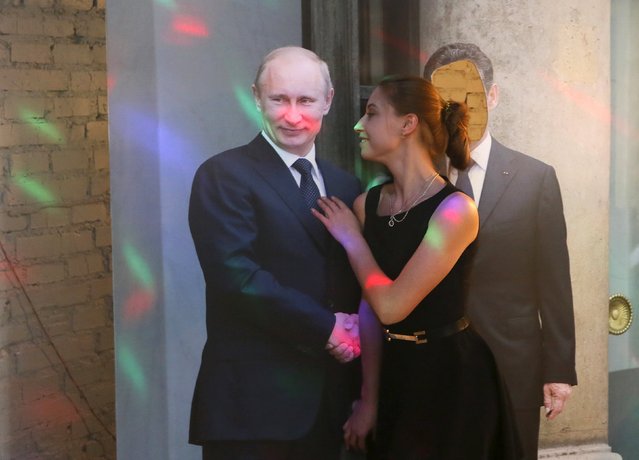
A woman poses with a cut-out of Vladimir Putin in the “President Cafe” in Krasnoyarsk, Siberia, Russia, April 7, 2016. (Photo by Ilya Naymushin/Reuters)

A woman poses with a cut-out of Vladimir Putin in the “President Cafe” in Krasnoyarsk, Siberia, Russia, April 7, 2016. Dozens of photos of Vladimir Putin, from childhood to Russian President, hang on the walls of President Cafe in a working-class area of Krasnoyarsk, a city in eastern Siberia. A life-size cut-out of Putin stands by the bar. Images of U.S. President Barack Obama, as well as leaders of Germany and Britain, greet customers in the toilets. (Photo by Ilya Naymushin/Reuters)
Details
14 Apr 2016 12:14:00
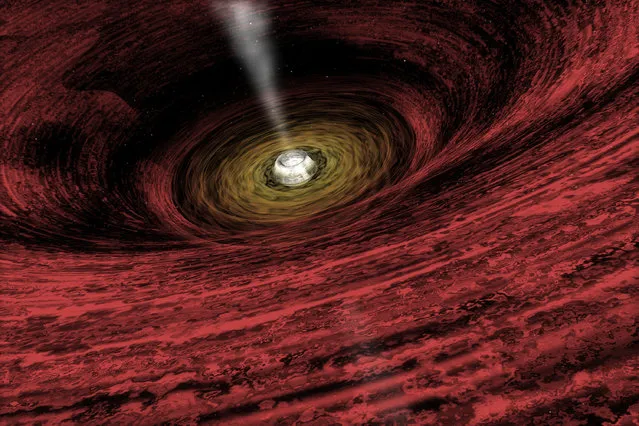
An artist's impression of a growing supermassive black hole located in the early Universe is seen in this NASA handout illustration released on June 15, 2011. Using the deepest X-ray image ever taken, astronomers found the first direct evidence that massive black holes were common in the early universe. This discovery from NASA's Chandra X-Ray Observatory shows that very young black holes grew more aggressively than previously thought, in tandem with the growth of their host galaxies. (Photo by Reuters/NASA/Chandra X-Ray Observatory/A.Hobart)

An artist's impression of a growing supermassive black hole located in the early Universe is seen in this NASA handout illustration released on June 15, 2011. Using the deepest X-ray image ever taken, astronomers found the first direct evidence that massive black holes were common in the early universe. This discovery from NASA's Chandra X-Ray Observatory shows that very young black holes grew more aggressively than previously thought, in tandem with the growth of their host galaxies. (Photo by Reuters/NASA/Chandra X-Ray Observatory/A.Hobart)
Details
11 Feb 2016 12:57:00
On August 31, 2012, a long filament of solar material that had been hovering in the sun's atmosphere, the corona, erupted out into space at 4:36 p.m. EDT. The coronal mass ejection, or CME, traveled at over 900 miles per second. The CME did not travel directly toward Earth, but did connect with Earth's magnetic environment, or magnetosphere, causing aurora to appear on the night of Monday, September 3. (Photo by NASA/GSFC/SDO)

On August 31, 2012, a long filament of solar material that had been hovering in the sun's atmosphere, the corona, erupted out into space at 4:36 p.m. EDT. The coronal mass ejection, or CME, traveled at over 900 miles per second. The CME did not travel directly toward Earth, but did connect with Earth's magnetic environment, or magnetosphere, causing aurora to appear on the night of Monday, September 3. (Photo by NASA/GSFC/SDO via The Atlantic)
Details
14 Sep 2012 09:01:00
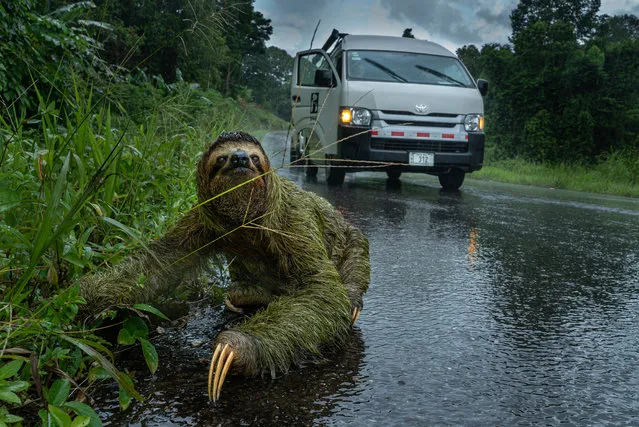
People and Nature category winner: Why did the sloth cross the road? by Andrew Whitworth (Osa Conservation and University of Glasgow), taken in Osa Peninsula, Costa Rica. “I was driving out from the Osa Peninsula, located on the southern Pacific coast of Costa Rica on a dark, stormy day. This female three-toed sloth (Bradypus variegatus) had luckily just about made it across the road, and the drivers of the Toyota on this occasion had spotted her in good time”. (Photo by Andrew Whitworth/2019 British Ecological Society Photography Competition)

People and Nature category winner: Why did the sloth cross the road? by Andrew Whitworth (Osa Conservation and University of Glasgow), taken in Osa Peninsula, Costa Rica. “I was driving out from the Osa Peninsula, located on the southern Pacific coast of Costa Rica on a dark, stormy day. This female three-toed sloth (Bradypus variegatus) had luckily just about made it across the road, and the drivers of the Toyota on this occasion had spotted her in good time”. (Photo by Andrew Whitworth/2019 British Ecological Society Photography Competition)
Details
30 Nov 2019 00:05:00
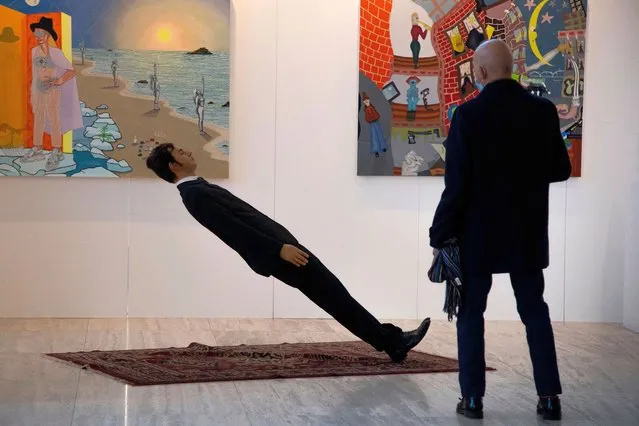
A man walks near a artwork of Italian artist Dario Agrimi entitled “ascesa” during a press preview of the first edition of “Roma Arte in Nuvola”, the international fair of modern and contemporary art in Rome on November 18, 2021 at the Roma Convention Center “La Nuvola”. (Photo by Tiziana Fabi/AFP Photo)

A man walks near a artwork of Italian artist Dario Agrimi entitled “ascesa” during a press preview of the first edition of “Roma Arte in Nuvola”, the international fair of modern and contemporary art in Rome on November 18, 2021 at the Roma Convention Center “La Nuvola”. (Photo by Tiziana Fabi/AFP Photo)
Details
04 Dec 2021 07:51:00
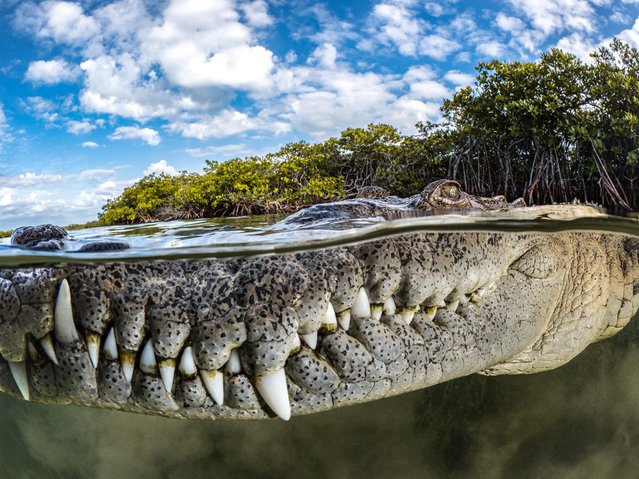
Guardian of the Mangroves – Overall Winner. Tanya Houppermans, Cuba. A curious American crocodile (Crocodylus acutus) swims right up to Tanya, at Gardens of the Queen (Jardines De La Reina), an archipelago off the coast of Cuba. It has been strictly protected since 1996, and is one of the most untouched marine ecosystems in the world. ‍ “The healthy population of American crocodiles is down to the pristine condition of the mangroves and I wanted to capture close ups of this gentle giant in its natural habitat. I hope this image can illustrate that protecting areas like this is so critical”. (Photo by Tanya Griffin Houppermans/Mangrove Photographer of the Year)

Guardian of the Mangroves – Overall Winner. Tanya Houppermans, Cuba. A curious American crocodile (Crocodylus acutus) swims right up to Tanya, at Gardens of the Queen (Jardines De La Reina), an archipelago off the coast of Cuba. It has been strictly protected since 1996, and is one of the most untouched marine ecosystems in the world. ‍ “The healthy population of American crocodiles is down to the pristine condition of the mangroves and I wanted to capture close ups of this gentle giant in its natural habitat. I hope this image can illustrate that protecting areas like this is so critical”. (Photo by Tanya Griffin Houppermans/Mangrove Photographer of the Year)
Details
05 Nov 2022 04:24:00
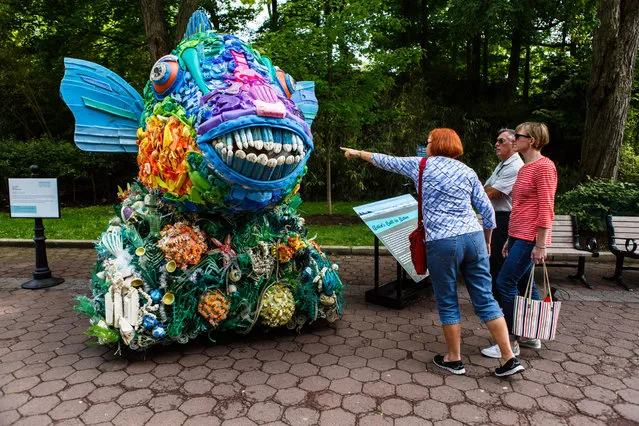
Visitors at the National Zoo check out a parrotfish made from found waste from the ocean in Washington, DC on May 23, 2016. The artwork can be seen at the National Zoo until September 5th. (Photo by Keith Lane/The Washington Post)

Visitors at the National Zoo check out a parrotfish made from found waste from the ocean in Washington, DC on May 23, 2016. The artwork can be seen at the National Zoo until September 5th. (Photo by Keith Lane/The Washington Post)
Details
25 May 2016 13:11:00