Loading...
Done
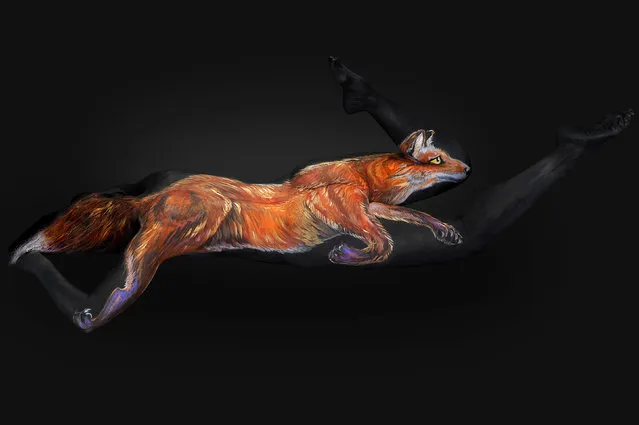
This is the stunning body of work by a talented painter – who transforms humans into amazing animals. From alligators to foxes and even owls, artist Shannon Holt, 39, paints every little detail on models to turn them into wildlife. The incredible paintings, which take anywhere between six to 12.5 hours to complete, are part of her Florida Wildlife Series. (Photo by Ryder Gledhill/Shannon Holt/Caters News)

This is the stunning body of work by a talented painter – who transforms humans into amazing animals. From alligators to foxes and even owls, artist Shannon Holt, 39, paints every little detail on models to turn them into wildlife. The incredible paintings, which take anywhere between six to 12.5 hours to complete, are part of her Florida Wildlife Series. Shannon, from DeLand, Florida, previously worked on different surfaces such as glass, metals and wood. But the animal advocate decided to experiment with human canvasses and incorporate animals in her work. Here: Red Fox. (Photo by Ryder Gledhill/Shannon Holt/Caters News)
Details
16 Dec 2014 12:13:00
His goal with the project is to make the invisible visible. (Photo by Luis Hernan)

Luis Hernan was always curious about how wireless technologies like radio are transmitted through the air. So after finishing up his studies in architecture, computer science, and design, Hernan decided to research these invisible signals through a PhD at Newcastle University. Hernan set up a system that turned the wireless signals around him into colourful, ghostlike images using long-exposure photography, allowing people to see the strength of the signals around them. (Photo by Luis Hernan)
Details
13 Aug 2014 09:38:00
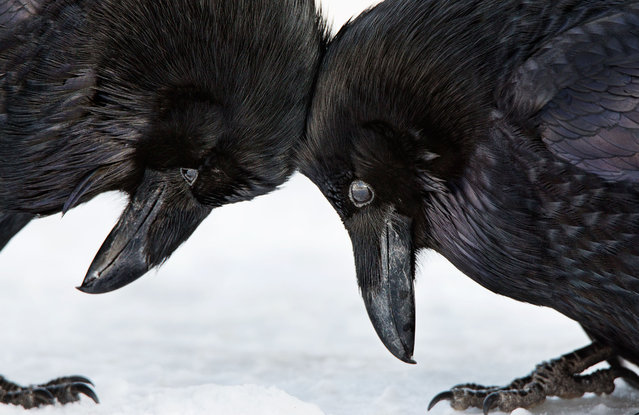
Amateur honorable mention | Common raven at Banff National Park in Alberta, Canada. (Photo by Colleen Gara/Audubon Photography Awards)

Amateur honorable mention | Common raven at Banff National Park in Alberta, Canada. (Photo by Colleen Gara/Audubon Photography Awards)
Details
22 Jul 2016 12:10:00
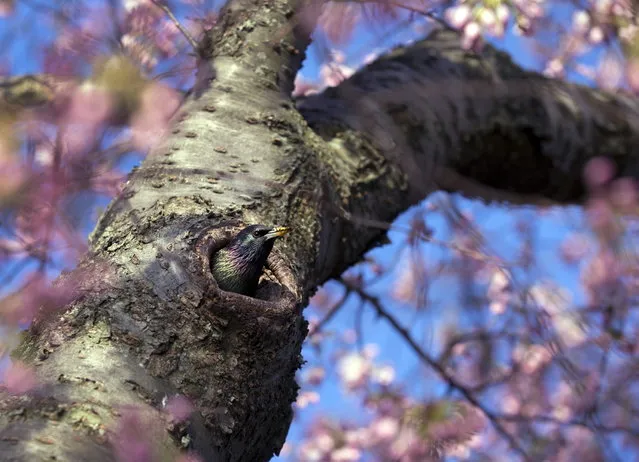
A nesting bird peeks out of the budding Japanese Yoshino cherry tree along the Tidal Basin in Washington, Sunday, April 7, 2013. Despite repeated predictions peak blossom time for the historic cherry trees is not yet here, but almost, almost. (Photo by Carolyn Kaster/AP Photo)

A nesting bird peeks out of the budding Japanese Yoshino cherry tree along the Tidal Basin in Washington, Sunday, April 7, 2013. Despite repeated predictions peak blossom time for the historic cherry trees is not yet here, but almost, almost. (Photo by Carolyn Kaster/AP Photo)
Details
08 Apr 2013 10:05:00
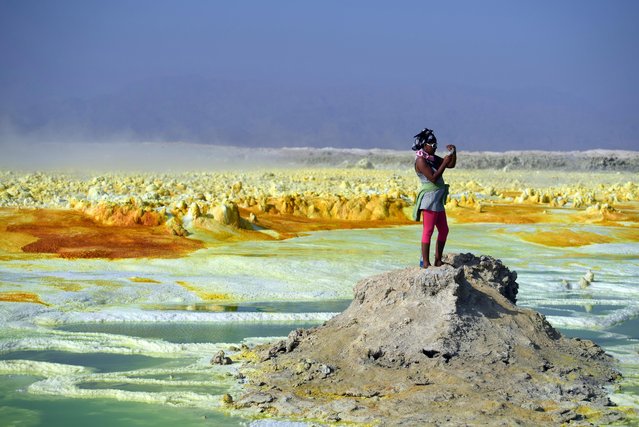
A tourist take a photograph of a sulphur lake in the Danakil Depression on January 23, 2017 near Dallol, Ethiopia. (Photo by Carl Court/Getty Images)

A tourist take a photograph of a sulphur lake in the Danakil Depression on January 23, 2017 near Dallol, Ethiopia. The depression lies 100 metres below sea level and is one of the hottest and most inhospitable places on Earth. Despite the gruelling conditions, Ethiopians continue a centuries old industry of mining salt from the ground by hand in temperatures that average 34.5 degrees centigrade but have risen to over 50 degrees. (Photo by Carl Court/Getty Images)
Details
25 Jan 2017 11:36:00
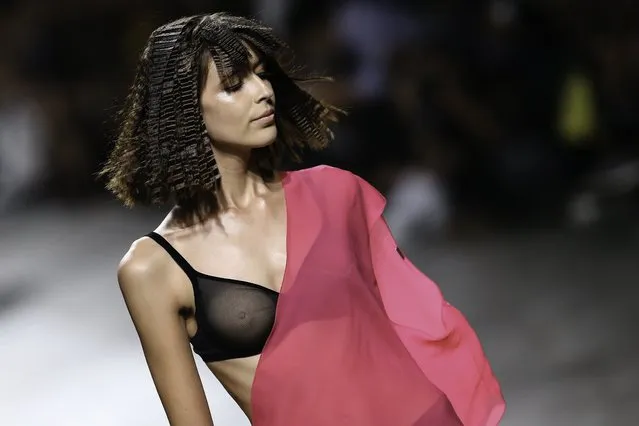
A model displays a creation by Portuguese fashion designer Filipe Faisca in his runway show at Lisbon Fashion Week, at Carlos Lopes Pavillion in Lisbon, Portugal, 08 October 2017. (Photo by Miguel A. Lopes/EPA/EFE)

A model displays a creation by Portuguese fashion designer Filipe Faisca in his runway show at Lisbon Fashion Week, at Carlos Lopes Pavillion in Lisbon, Portugal, 08 October 2017. (Photo by Miguel A. Lopes/EPA/EFE)
Details
18 Oct 2017 09:10:00
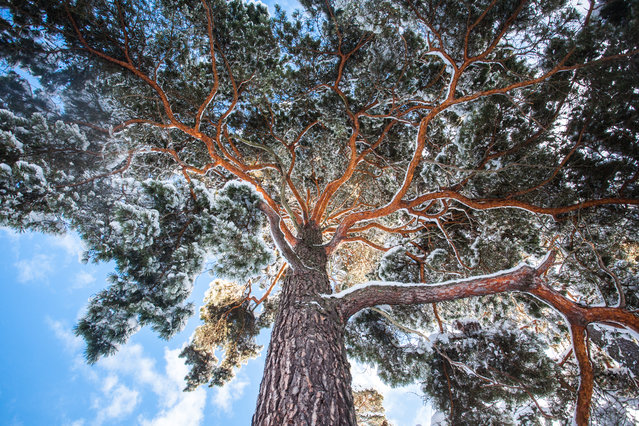
Snow covered pine tree reaches for the sky. Shot in Sweden on a crisp winter day. (Photo by Anna Rebecka Lindberg/The Guardian)

Snow covered pine tree reaches for the sky. Shot in Sweden on a crisp winter day. (Photo by Anna Rebecka Lindberg/The Guardian)
Details
20 Apr 2019 00:03:00
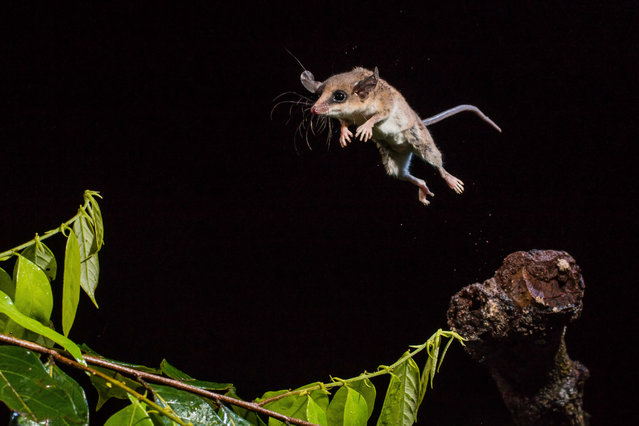
Tropical acrobatics by Adrià López Baucells in Manaus, Brazil. An unidentified South American marsupial, although the characteristic black markings on its face indicate it may be a mouse opossum. These small creatures are nocturnal and feed on bugs, fruit and bird eggs. (Photo by Adrià López Baucells/2019 Royal Society of Biology Photography Competition)

Tropical acrobatics by Adrià López Baucells in Manaus, Brazil. An unidentified South American marsupial, although the characteristic black markings on its face indicate it may be a mouse opossum. These small creatures are nocturnal and feed on bugs, fruit and bird eggs. (Photo by Adrià López Baucells/2019 Royal Society of Biology Photography Competition)
Details
10 Oct 2019 00:03:00