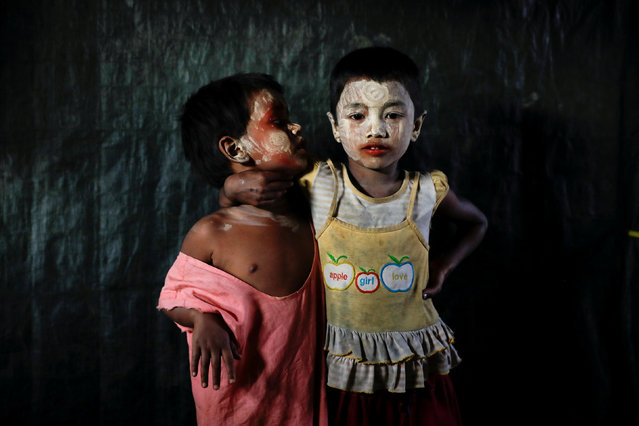
Rohingya refugee sisters Nur Kaida (R) and Ruhana hug each other at their shelter at the Palongkhali refugee camp near Cox's Bazar, Bangladesh December 21, 2017. (Photo by Marko Djurica/Reuters)
Sepak Takraw – ISTAF Super Series Korea 2014-15 – Gunsan City, South Korea April 26, 2015: Thailand's Fueangfa (L) in action during the final. (Photo by Jeremy Lee/Reuters)
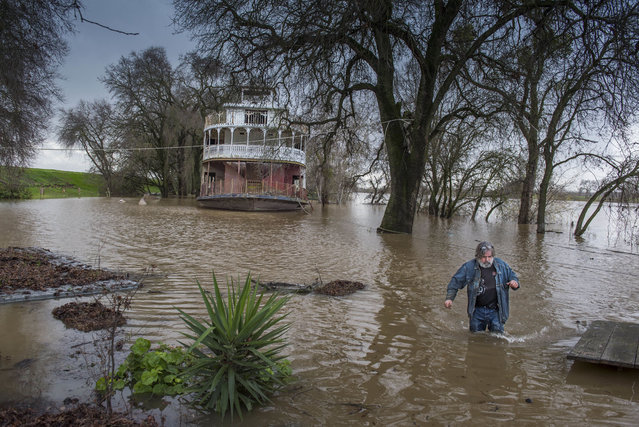
Rick Sorenson, owner of the Rio Ramaza Marina, wades in the Sacramento River after securing an old paddlewheel boat on his property as the river makes its way up the levee on Garden Highway in Sacramento, Calif., Monday, January 9, 2017. (Photo by Hector Amezcua/The Sacramento Bee via AP Photo)
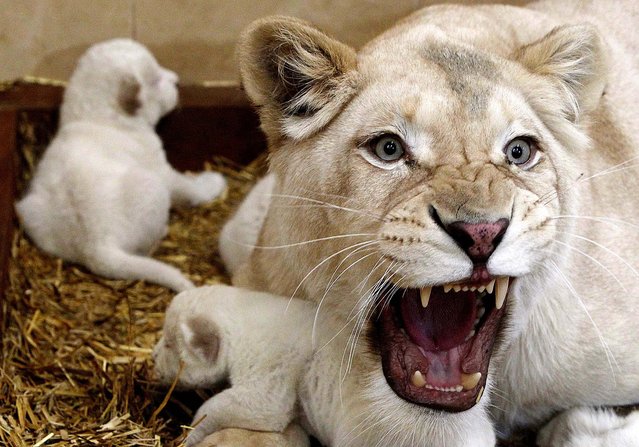
White lioness Azira lies in the cage with her three white cubs, on February 4, 2014. Zoo owner Andrzej Pabich says white lions often have defects that prevent giving birth, or the mother rejects her cubs, but Azira has been patiently feeding and caring for her little ones. (Photo by Czarek Sokolowski/Associated Press)
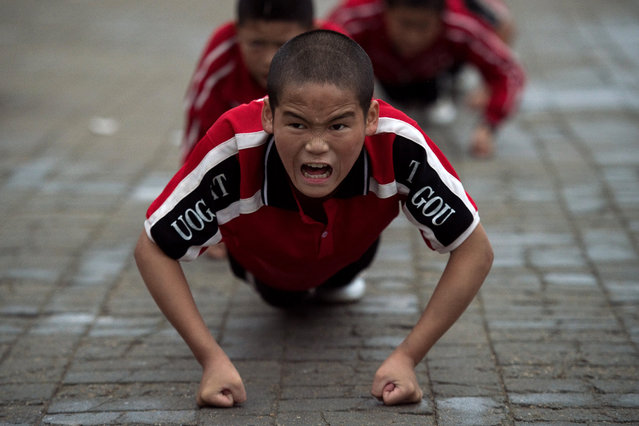
This picture taken on October 20, 2016 shows students practising wushu at the Tagou martial arts school in Dengfeng. China is investing hugely in football training and has vowed to have 50 million school- age players by 2020, as the ruling Communist party eyes “football superpower” status by 2050. (Photo by Nicolas Asfouri/AFP Photo)
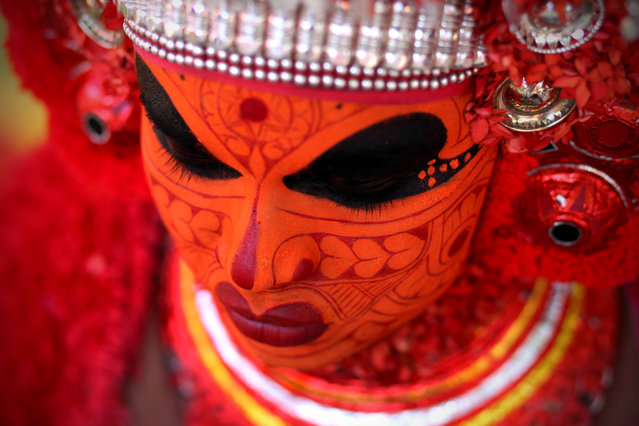
“Theyyam”. Preparation for the Theyyam performance in the surroundings of Kasaragod city. Theyyam is a popular ritual dance form of North Kerala, particularly in Kannur and Kasargod districts. The Theyyam represents a mythological, divine or heroic character. Make up of Theyyams is done by specialist. There are different types of face painting for which primarily and secondary colours are used. Therefore it is essential that the makeup man should have perfect knowledge of primary and secondary colour combinations. Sometimes, it takes several hours to paint each face. Photo location: Kasaragod, India. (Photo and caption by Rafal Ziejewski/National Geographic Photo Contest)
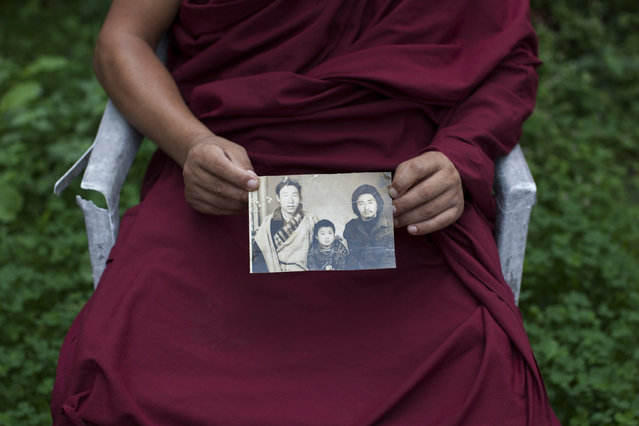
“When I was 8 years old, my parents paid a smuggler to take me across the Himalayas, a weekslong walk over the mountains from Tibet to India. It was a trek that tens of thousands of other Tibetans have taken since the Dalai Lama fled a failed 1959 uprising against Chinese rule. My parents must have had their reasons to send me here; they must have had the best of intentions. But 18 years later, I still don't know why they did it. They are not political people. They are small farmers who raise barley and a few yak in a rural area not far from Lhasa, the Tibetan capital. I have not seen them since I left...”. – Tsering Topgyal via The Associated Press. (Photo by Tsering Topgyal/AP Photo)