Loading...
Done
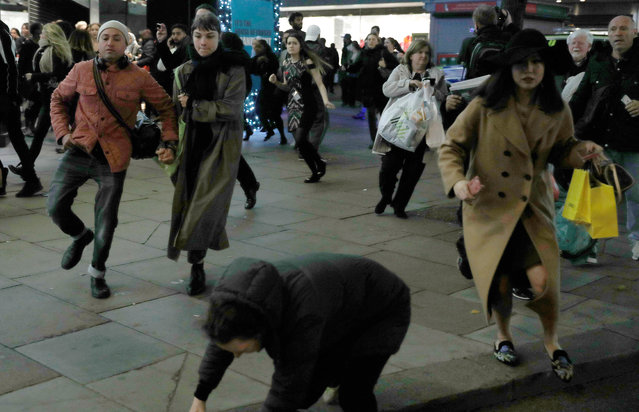
A woman stumbes as people run down Oxford Street, London, Britain, November 24, 2017. (Photo by Peter Nicholls/Reuters)

A woman stumbes as people run down Oxford Street, London, Britain, November 24, 2017. Police are responding to reports of an incident at London's Oxford Circus Tube station and have urged the public to avoid the area. (Photo by Peter Nicholls/Reuters)
Details
25 Nov 2017 08:13:00
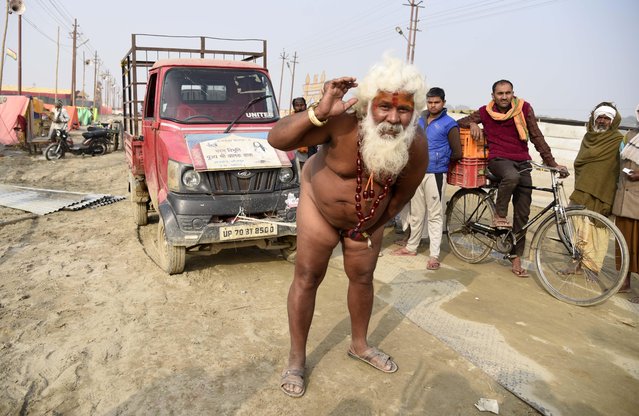
A naked holy man pulls a vehicle using his pen*s during the Magh mela festival in Allahabad, India on January 3, 2018. (Photo by Prabhat Kumar Verma/ZUMA Wire/Rex Features/Shutterstock)

A naked holy man pulls a vehicle using his pen*s during the Magh mela festival in Allahabad, India on January 3, 2018. (Photo by Prabhat Kumar Verma/ZUMA Wire/Rex Features/Shutterstock)
Details
04 Jan 2018 09:59:00
Racegoers during Ladies Day of the 2018 Cheltenham Festival in Cheltenham, England on March 14, 2018. (Photo by Graham Stone/Rex Features/Shutterstock)

Racegoers during Ladies Day of the 2018 Cheltenham Festival in Cheltenham, England on March 14, 2018. (Photo by Graham Stone/Rex Features/Shutterstock)
Details
15 Mar 2018 09:14:00
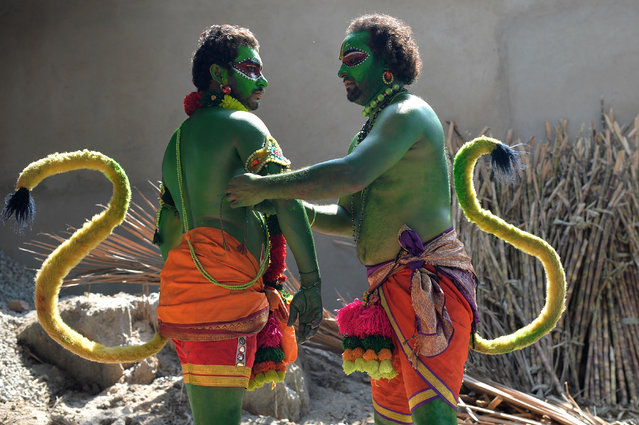
Indian artists dress up as the Hindu deity “Hanuman” – the monkey God in Hindu mythology – to mark the Rama Navami festival in Bangalore on March 25, 2018. Rama Navami is a spring Hindu festival that celebrates the birthday of the deity Rama. He is particularly important to the Vaishnavism tradition of Hinduism, as the seventh avatar of Vishnu. (Photo by Manjunath Kiran/AFP Photo)

Indian artists dress up as the Hindu deity “Hanuman” – the monkey God in Hindu mythology – to mark the Rama Navami festival in Bangalore on March 25, 2018. Rama Navami is a spring Hindu festival that celebrates the birthday of the deity Rama. He is particularly important to the Vaishnavism tradition of Hinduism, as the seventh avatar of Vishnu. (Photo by Manjunath Kiran/AFP Photo)
Details
27 Mar 2018 00:03:00
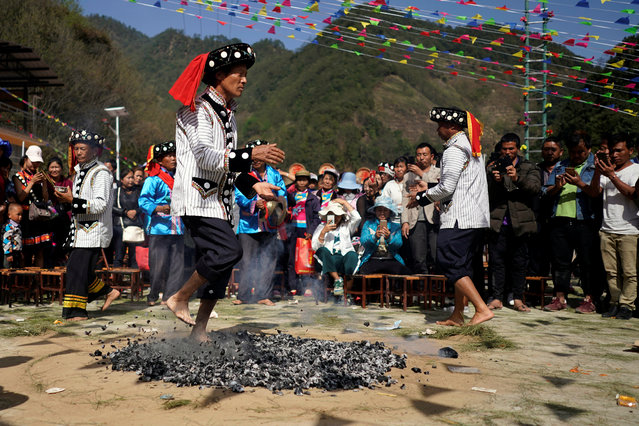
An ethnic Lisu man dances barefoot on hot charcoal embers to celebrate the annual Knife Pole Festival in Luzhang township of Nujiang Lisu Autonomous Prefecture in Yunnan province, China, March 29, 2018. (Photo by Aly Song/Reuters)

An ethnic Lisu man dances barefoot on hot charcoal embers to celebrate the annual Knife Pole Festival in Luzhang township of Nujiang Lisu Autonomous Prefecture in Yunnan province, China, March 29, 2018. (Photo by Aly Song/Reuters)
Details
05 Apr 2018 00:05:00
A performer dressed as a lobster is seen during a lobster-themed electronic music party at a water park on August 01, 2020 in Hangzhou, Zhejiang Province of China. (Photo by Lian Guoqing/VCG via Getty Images)

A performer dressed as a lobster is seen during a lobster-themed electronic music party at a water park on August 01, 2020 in Hangzhou, Zhejiang Province of China. (Photo by Lian Guoqing/VCG via Getty Images)
Details
12 Aug 2020 00:03:00
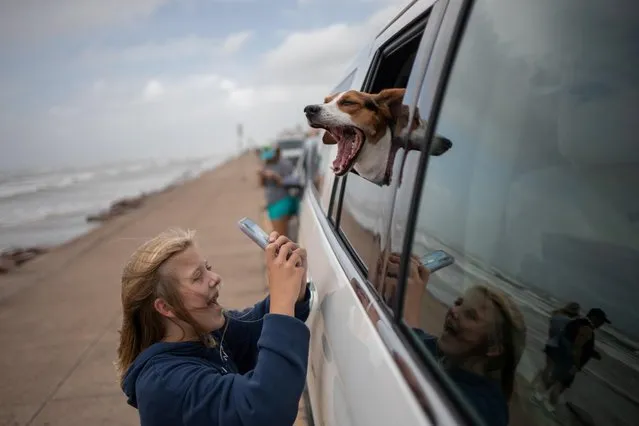
Galveston resident Charlotte, 12, photographs her two-year-old beagle Sunny who reacts to high wind ahead of Hurricane Laura in Galveston, Texas, U.S., August 26, 2020. (Photo by Adrees Latif/Reuters)

Galveston resident Charlotte, 12, photographs her two-year-old beagle Sunny who reacts to high wind ahead of Hurricane Laura in Galveston, Texas, U.S., August 26, 2020. (Photo by Adrees Latif/Reuters)
Details
31 Aug 2020 00:01:00
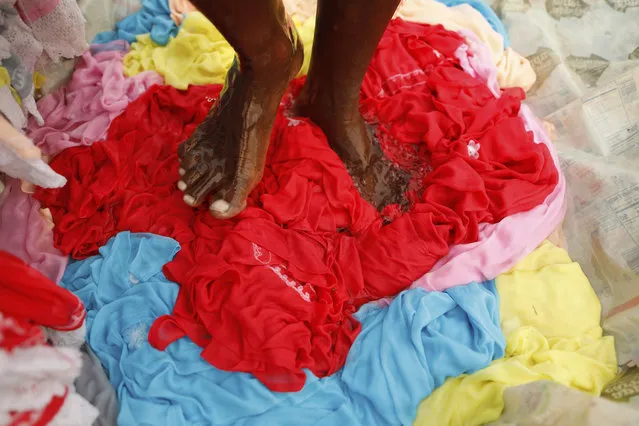
A dhobi, or a washerman washes cloths on the banks of the River Gomti in Lucknow, India, Saturday, September 12, 2020. Dhobis are traditional laundry workers who wash clothes by hand and dry them in the sun, an occupation which has been in existence for generations. Most cities in India have a Dhobi Ghat, or washermen's area, where the city's pile of clothes is laundered. This practice is still popular in India, despite of modern technology. Around 1,000 families work in Lucknow's Dhobi Ghat. However, in light of the novel coronavirus, their wages have decreased drastically. With each family earning around US$100-200 per month. (Photo by Rajesh Kumar Singh/AP Photo)

A dhobi, or a washerman washes cloths on the banks of the River Gomti in Lucknow, India, Saturday, September 12, 2020. Dhobis are traditional laundry workers who wash clothes by hand and dry them in the sun, an occupation which has been in existence for generations. Most cities in India have a Dhobi Ghat, or washermen's area, where the city's pile of clothes is laundered. This practice is still popular in India, despite of modern technology. Around 1,000 families work in Lucknow's Dhobi Ghat. However, in light of the novel coronavirus, their wages have decreased drastically. With each family earning around US$100-200 per month. (Photo by Rajesh Kumar Singh/AP Photo)
Details
25 Sep 2020 00:03:00