Loading...
Done
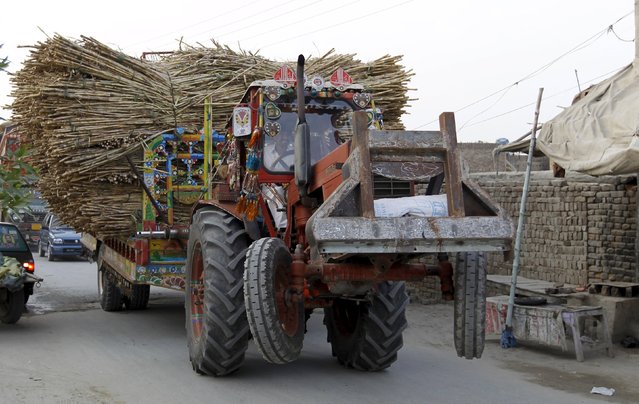
The front wheels of a tractor, pulling a trailer overloaded with sugarcane, are seen lifted off the ground as it passes through the streets of Karor Lan Esan, Pakistan December 6, 2015. (Photo by Caren Firouz/Reuters)

The front wheels of a tractor, pulling a trailer overloaded with sugarcane, are seen lifted off the ground as it passes through the streets of Karor Lan Esan, Pakistan December 6, 2015. (Photo by Caren Firouz/Reuters)
Details
17 Jan 2016 08:01:00
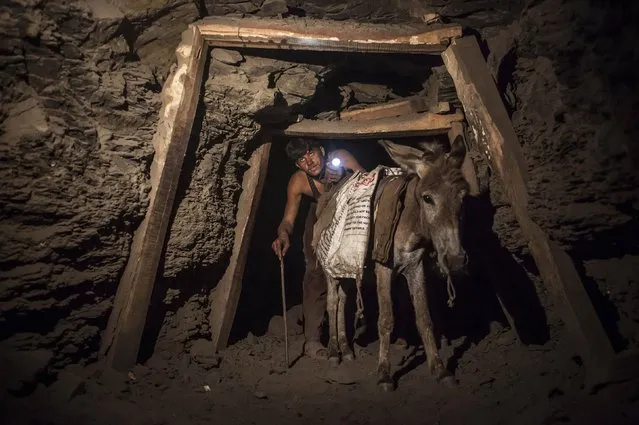
A miner with a donkey makes his way through the low and narrow tunnel leading out of a coal mine in Choa Saidan Shah in Punjab province, April 29, 2014. Workers at this mine in Choa Saidan Shah dig coal with pick axes, break it up and load it onto donkeys to be transported to the surface. (Photo by Sara Farid/Reuters)

A miner with a donkey makes his way through the low and narrow tunnel leading out of a coal mine in Choa Saidan Shah in Punjab province, April 29, 2014. Workers at this mine in Choa Saidan Shah dig coal with pick axes, break it up and load it onto donkeys to be transported to the surface. Employed by private contractors, a team of four workers can dig about a ton of coal a day, for which they earn around $10 to be split between them. The coalmine is in the heart of Punjab, Pakistan's most populous and richest province, but the labourers mostly come from the poorer neighbouring region of Khyber Pakhtunkhwa. (Photo by Sara Farid/Reuters)

Details
03 Aug 2014 07:35:00
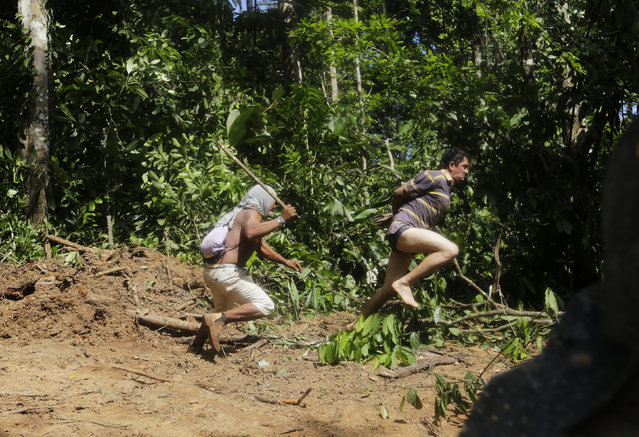
A Ka'apor Indian warrior (L) chases a logger who tried to escape after they captured him during a jungle expedition to search for and expel loggers from the Alto Turiacu Indian territory, near the Centro do Guilherme municipality in the northeast of Maranhao state in the Amazon basin, August 7, 2014. (Photo by Lunae Parracho/Reuters)

A Ka'apor Indian warrior (L) chases a logger who tried to escape after they captured him during a jungle expedition to search for and expel loggers from the Alto Turiacu Indian territory, near the Centro do Guilherme municipality in the northeast of Maranhao state in the Amazon basin, August 7, 2014. Tired of what they say is a lack of sufficient government assistance in keeping loggers off their land, the Ka'apor Indians, who along with four other tribes are the legal inhabitants and caretakers of the territory, have sent their warriors out to expel all loggers they find and set up monitoring camps in the areas that are being illegally exploited. (Photo by Lunae Parracho/Reuters)
Details
05 Sep 2014 11:41:00
A newly-married couple takes a nap before their mass wedding ceremony at the CheongShim Peace World Center in Gapyeong, South Korea, Sunday, February 17, 2013. Some 3,500 South Korean and foreign couples exchanged or reaffirmed marriage vows in the Unification Church's mass wedding arranged by Hak Ja Han Moon, a wife of the late Rev. Sun Myung Moon, the controversial founder of the Unification Church. (Photo by Lee Jin-man/AP Photo)

A newly-married couple takes a nap before their mass wedding ceremony at the CheongShim Peace World Center in Gapyeong, South Korea, Sunday, February 17, 2013. Some 3,500 South Korean and foreign couples exchanged or reaffirmed marriage vows in the Unification Church's mass wedding arranged by Hak Ja Han Moon, a wife of the late Rev. Sun Myung Moon, the controversial founder of the Unification Church. (Photo by Lee Jin-man/AP Photo)
Details
18 Feb 2013 11:15:00
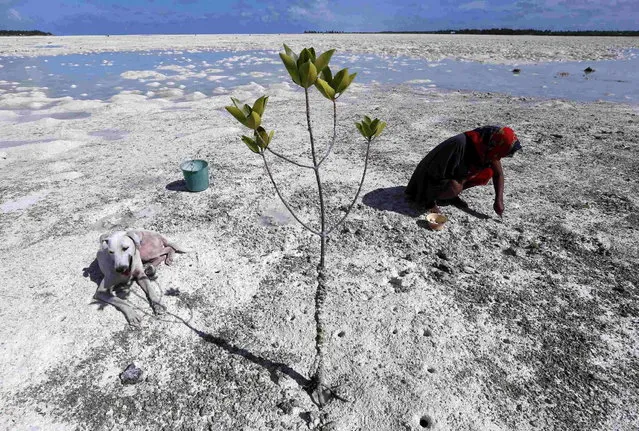
A dog sits in the shade of a mangrove tree as a woman uses a fork to dig for shellfish on the reef-mud flats of a lagoon located at South Tarawa in the central Pacific island nation of Kiribati May 23, 2013. (Photo by David Gray/Reuters)

A dog sits in the shade of a mangrove tree as a woman uses a fork to dig for shellfish on the reef-mud flats of a lagoon located at South Tarawa in the central Pacific island nation of Kiribati May 23, 2013. Kiribati consists of a chain of 33 atolls and islands that stand just metres above sea level, spread over a huge expanse of otherwise empty ocean. With surrounding sea levels rising, Kiribati President Anote Tong has predicted his country will likely become uninhabitable in 30-60 years because of inundation and contamination of its freshwater supplies. (Photo by David Gray/Reuters)
Details
13 Jun 2013 09:23:00
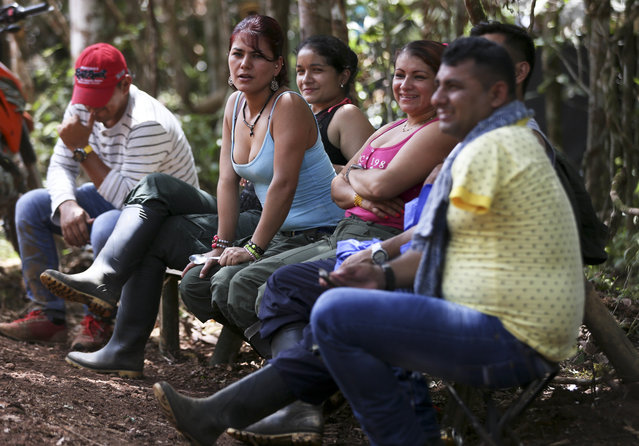
Rebels of the Revolutionary Armed Forces of Colombia (FARC) visit as they wait to have lunch in El Diamante, Colombia, Friday, September 16, 2016. FARC rebels are gathering for a congress were delegates will debate and vote on the accord reached last month with the Colombian government to end five decades of war. (Photo by Ricardo Mazalan/AP Photo)

Rebels of the Revolutionary Armed Forces of Colombia (FARC) visit as they wait to have lunch in El Diamante, Colombia, Friday, September 16, 2016. FARC rebels are gathering for a congress were delegates will debate and vote on the accord reached last month with the Colombian government to end five decades of war. (Photo by Ricardo Mazalan/AP Photo)
Details
18 Sep 2016 07:47:00
A vendor smokes behind a display of dog meat at a dog meat market on the day of a local dog meat festival in Yulin, Guangxi Autonomous Region, June 22, 2015. (Photo by Kim Kyung-Hoon/Reuters)

A vendor smokes behind a display of dog meat at a dog meat market on the day of a local dog meat festival in Yulin, Guangxi Autonomous Region, June 22, 2015. (Photo by Kim Kyung-Hoon/Reuters)
Details
22 Jun 2016 13:02:00
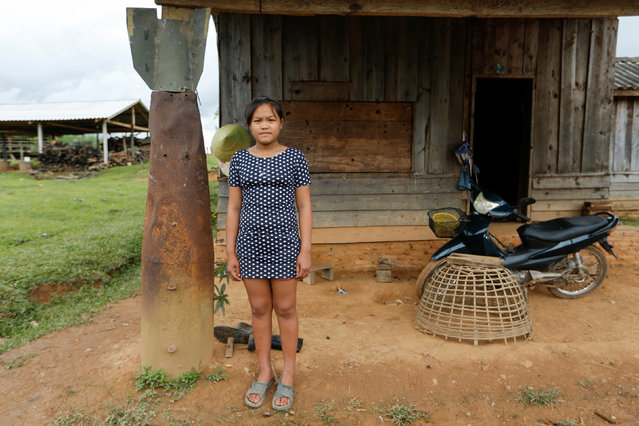
A girl poses at an entrance of her house next to a bomb dropped by the U.S. Air Force planes during the Vietnam War, in the village of Ban Napia in Xieng Khouang province, Laos September 3, 2016. (Photo by Jorge Silva/Reuters)

A girl poses at an entrance of her house next to a bomb dropped by the U.S. Air Force planes during the Vietnam War, in the village of Ban Napia in Xieng Khouang province, Laos September 3, 2016. From 1964 to 1973, U.S. warplanes dropped more than 270 million cluster munitions on Laos, one-third of which did not explode, according to the Lao National Regulatory Authority. (Photo by Jorge Silva/Reuters)
Details
06 Sep 2016 10:30:00