Loading...
Done
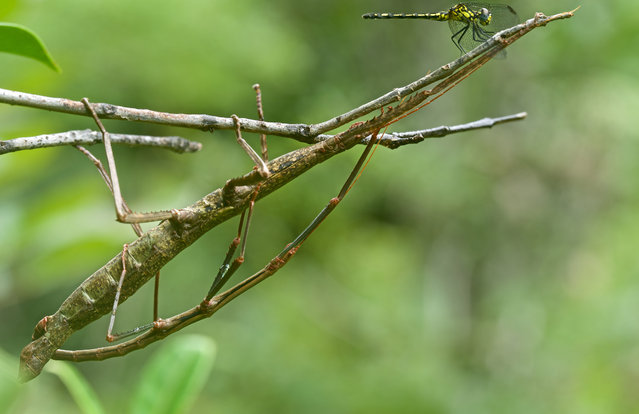
Stick insects. (Photo by Paul Bertner/Caters News)

These tiny insects are so well camouflaged it is nearly impossible to make out their cleverly disguised forms. Canadian photographer and adventurer Paul Bertner attempted to catch the bugs in their natural habitats as part of a hide-and-seek game to show biodiversity in nature. Here: Stick insects. (Photo by Paul Bertner/Caters News)
Details
02 Apr 2016 09:20:00
Hunstiger Hohlweg

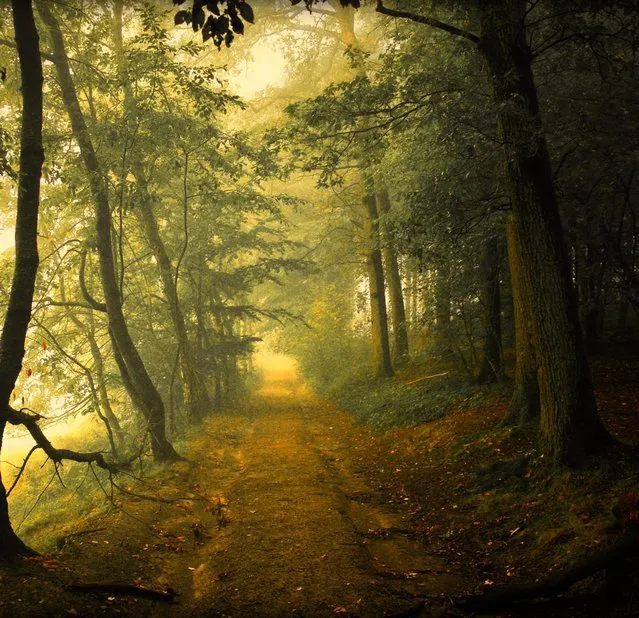
“Wer in der Natur, der Kunst oder dem Menschen Gott nicht finden kann, der findet ihn nirgendwo” (Who cannot find God in the nature, the art or the person, that nowhere finds him). Photo: Hunstiger Hohlweg. (Photo by Norbert)

Details
23 Oct 2012 11:43:00
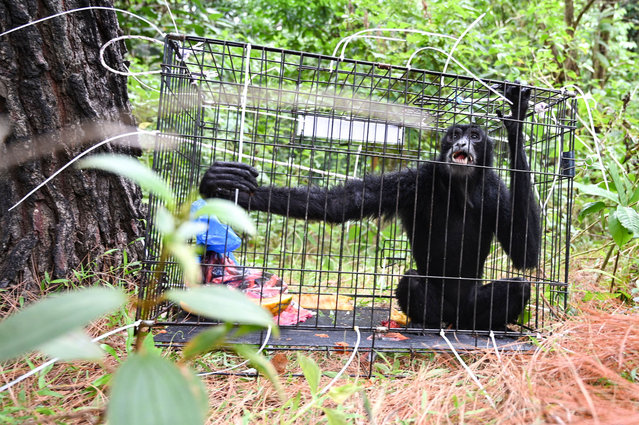
A black gibbon is seen in a cage before being released into the wild by Indonesian nature conservation agency (BKSDA) in Jantho forest, Aceh province on August 26, 2021. (Photo by Chaideer Mahyuddin/AFP Photo)

A black gibbon is seen in a cage before being released into the wild by Indonesian nature conservation agency (BKSDA) in Jantho forest, Aceh province on August 26, 2021. (Photo by Chaideer Mahyuddin/AFP Photo)
Details
04 Sep 2021 08:56:00
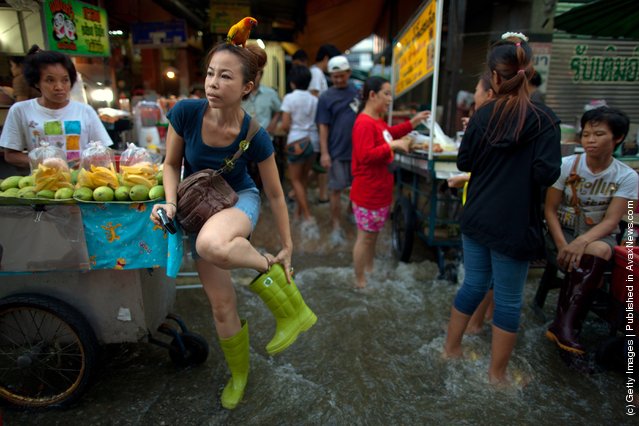
Patarawan fixes her boots as her parrot, Sim sits on her head as she goes shopping for dinner at a busy flooded market near the Chao Phraya river

Patarawan fixes her boots as her parrot, Sim sits on her head as she goes shopping for dinner at a busy flooded market near the Chao Phraya river October 27, 2011 in Bangkok, Thailand. Hundreds of factories closed in the central Thai province of Ayutthaya and Nonthaburi as the flood waters began to reach Bangkok. Around 350 people have died in flood-related incidents since late July according to the Department of Disaster Prevention and Mitigation, with Thailand experiencing the worst flooding in 50 years. (Photo by Paula Bronstein/Getty Images)
Details
28 Oct 2011 13:14:00
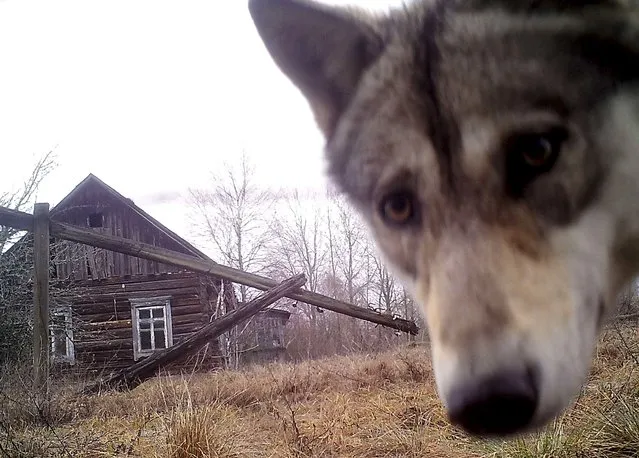
A wolf looks into the camera at the 30 km (19 miles) exclusion zone around the Chernobyl nuclear reactor in the abandoned village of Orevichi, Belarus, March 2, 2016. (Photo by Vasily Fedosenko/Reuters)

A wolf looks into the camera at the 30 km (19 miles) exclusion zone around the Chernobyl nuclear reactor in the abandoned village of Orevichi, Belarus, March 2, 2016. What happens to the environment when humans disappear? Thirty years after the Chernobyl nuclear disaster, booming populations of wolf, elk and other wildlife in the vast contaminated zone in Belarus and Ukraine provide a clue. (Photo by Vasily Fedosenko/Reuters)
Details
08 Apr 2016 15:13:00
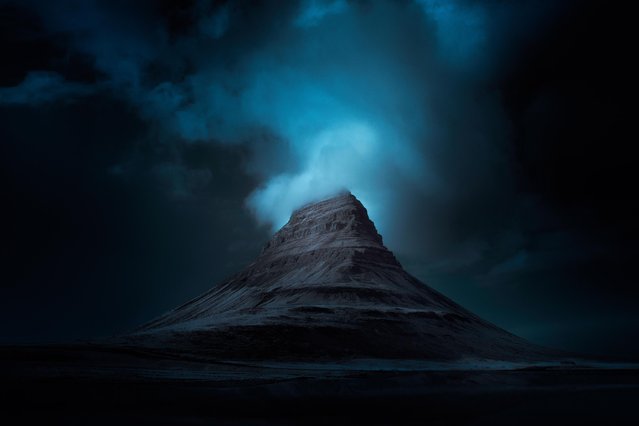
Location: Kirkjufell. These eerily stunning images taken using infrared lighting reveal the landscapes of Iceland in all their natural glory. (Photo by Andy Lee/Caters News)

“These eerily stunning images taken using infrared lighting reveal the landscapes of Iceland in all their natural glory. Andy Lee, 45, uses a special technique which blocks out light from some visible wavelengths and picks up light from others invisible to the naked eye”. – Caters News. Photo: Location: Kirkjufell. These eerily stunning images taken using infrared lighting reveal the landscapes of Iceland in all their natural glory. (Photo by Andy Lee/Caters News)
Details
04 Jul 2014 10:49:00
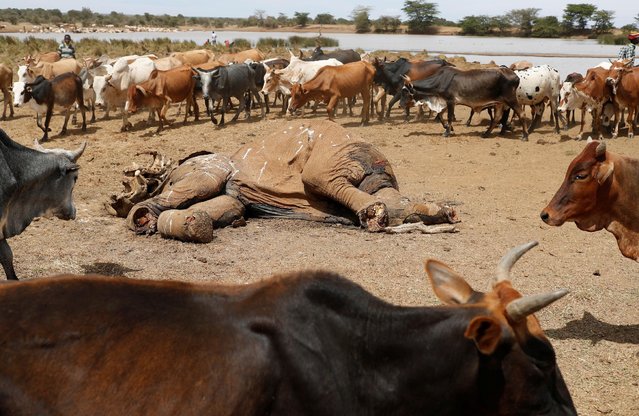
Cows belonging to Samburu tribesmen walk around the carcass of an elephant killed by armed cattle herders in Mugui Conservancy, Kenya February 11, 2017. (Photo by Goran Tomasevic/Reuters)

Cows belonging to Samburu tribesmen walk around the carcass of an elephant killed by armed cattle herders in Mugui Conservancy, Kenya February 11, 2017. Kenya has declared the ongoing drought affecting many parts of the country a national disaster, calling for aid to counter the situation which is posing a major risk to people, livestock and wildlife. (Photo by Goran Tomasevic/Reuters)
Details
14 Feb 2017 00:01:00
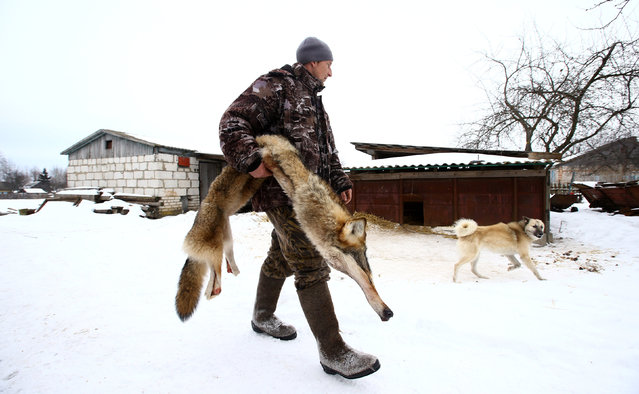
Nikolay Skidan, a hunter, carries the skin of a wolf in the village of Khrapkovo, Belarus February 1, 2017. (Photo by Vasily Fedosenko/Reuters)

Nikolay Skidan, a hunter, carries the skin of a wolf in the village of Khrapkovo, Belarus February 1, 2017. Wolf fur grows thickest in winter, so Belarussian hunter Vladimir Krivenchik only sets his traps once snow is on the ground. He and his wife live on the edge of the Chernobyl exclusion zone – 2,600 square km of land on the Belarus-Ukraine border that was contaminated by a nuclear disaster in 1986. (Photo by Vasily Fedosenko/Reuters)
Details
16 Feb 2017 00:04:00