Loading...
Done
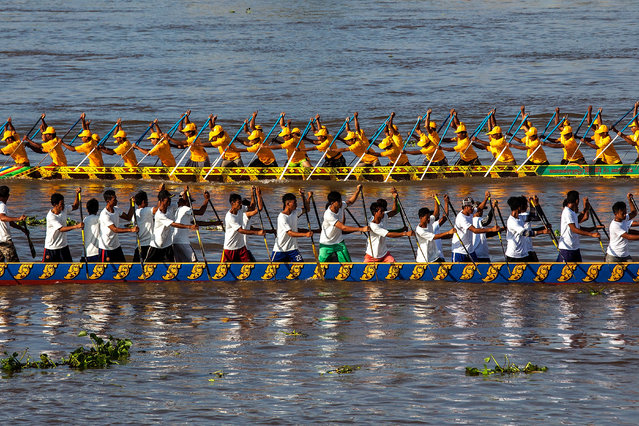
Boat crew members train on the waters of the Tonle Sap River on the morning of the first day of the Water Festival on November 13, 2016 in Phnom Penh, Cambodia. The yearly three-day Water Festival is one of the most important holidays in Cambodia and celebrates the end of the rainy season and the start of the rice harvesting. The Festival also coincides with the Tonle Sap river reversing course, which it does twice a year. Approximately 2 million people are expected to attend this year's festival, during which 259 boats and nearly 20,000 oarsmen will participate in the races. After a fatal stampede resulting in the death of some 353 people during the Water Festival in 2010, it has been cancelled four times over the past five years, with weather used as an official excuse. (Photo by Omar Havana/Getty Images)

Boat crew members train on the waters of the Tonle Sap River on the morning of the first day of the Water Festival on November 13, 2016 in Phnom Penh, Cambodia. The yearly three-day Water Festival is one of the most important holidays in Cambodia and celebrates the end of the rainy season and the start of the rice harvesting. The Festival also coincides with the Tonle Sap river reversing course, which it does twice a year. Approximately 2 million people are expected to attend this year's festival, during which 259 boats and nearly 20,000 oarsmen will participate in the races. After a fatal stampede resulting in the death of some 353 people during the Water Festival in 2010, it has been cancelled four times over the past five years, with weather used as an official excuse. (Photo by Omar Havana/Getty Images)
Details
15 Nov 2016 11:26:00
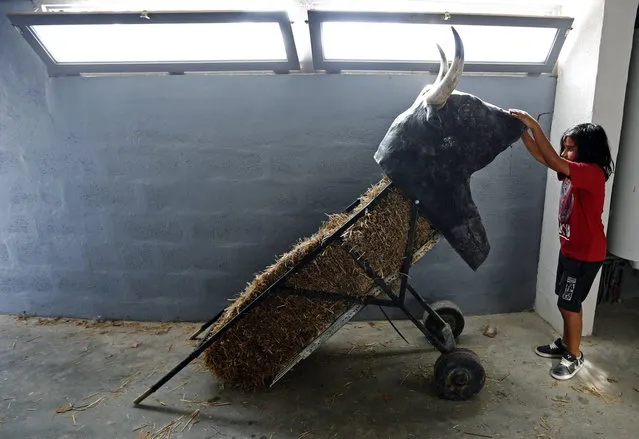
Nino, a ten-year-old toreador apprentice of the French Tauromachy Centre, nicknamed El Nino, touches a practice bull at the bullring of Garons, near Nimes, September 25, 2013. (Photo by Jean-Paul Pelissier/Reuters)

Nino, a ten-year-old toreador apprentice of the French Tauromachy Centre, nicknamed El Nino, touches a practice bull at the bullring of Garons, near Nimes, September 25, 2013. Since 1983, the French Tauromachy Centre in Nimes has trained some 1,000 youths in the art of bullfighting. Twenty of them have gone on to become professional matadors, facing fighting bulls in the arena. Twice a week, students take courses with a matador to learn the movements and gestures of the bullfighter in the ring, but without an animal present. Students train with calves in the surrounding fields during spring, and regularly participate in beginner's bullfights (becerradas) without killing calves. Solal has been taking courses for three years and Nino, for just a year now. Both are normally enrolled in French public schools, but have one thought in mind – bullfighting. They share a passion linked to the city of Nimes, famous for its ferias and bullring. (Photo by Jean-Paul Pelissier/Reuters)
Details
06 Nov 2013 10:12:00
Rabbit Sport Tournament

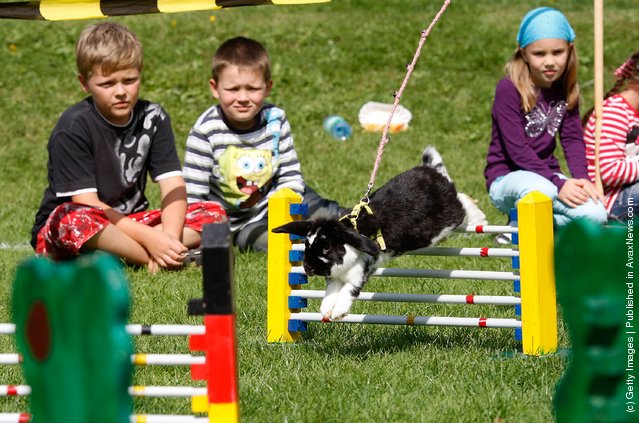
Children watch a rabbit, jumping over a hurdle at an obstacle course the 5th Open Rabbit Sport Tournament (5. offene Kaninchensport Turnier) on August 28, 2011 in Rommerz near Fulda, Germany. Eighty rabbits competed in light-weight, middle-weight and jumping-for-points categories at today's tournament in Rommerz that is based on Kanin Hop, or Rabbit Hopping. Rabbit Hopping is a growing trend among pet rabbit owners in Central Europe and the first European Championships are scheduled to be held later this year in Switzerland. (Photo by Ralph Orlowski/Getty Images)
Details
29 Aug 2011 14:44:00
Harmless Weapons By Sonia Rentsch

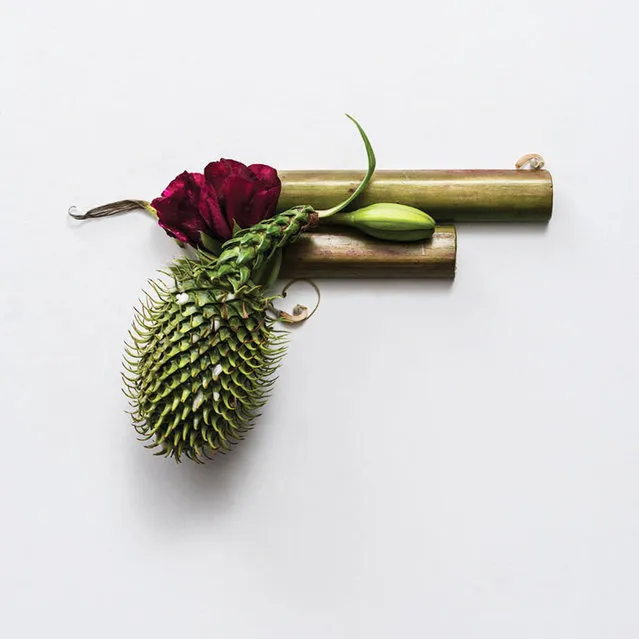
Wouldn’t it be wonderful if all weapons were created by Sonia Rentsch rather than by gunsmiths? In the series Harm Less, Sonia had constructed a number of firearms using various plants. Of course people might say that it’s not the guns that kill people; it’s the people that kill people. However, this statement is completely false. Can you imagine some equivalent of school shooting if the guns were not available? Yes, some crazy kid would still be able to bring a weapon to class, but most likely it would be a club or a penknife, making him easily tamable. (Photo by Sonia Rentsch)
Details
26 Dec 2014 14:45:00
Sculptures By Hu Shaoming

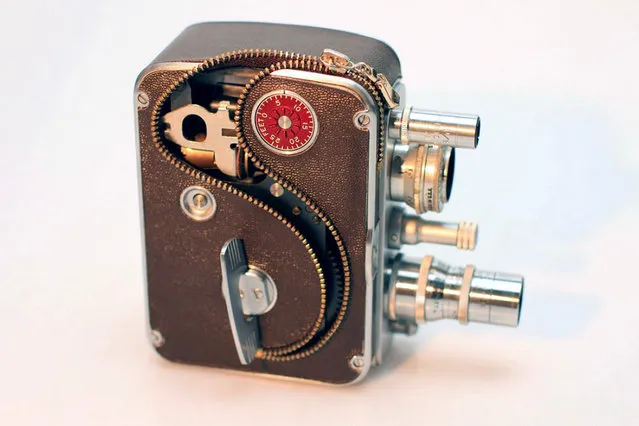
The works of Hu Shaoming immediately catch the eye of the onlookers with their level on intricacy and uniqueness. To provide a glimpse into the intricate workings of vintage cameras he uses a very unique method. He made it seem as if the fine leather covering of the camera was opened by zipper, showing its innards. A similar technique was used on an ancient telephone, though there it looks more like an embellishment. The idea was so marvelously put into life that it seems as if those items can actually be zipped up, though of course that is not possible.
Details
05 Mar 2015 11:31:00
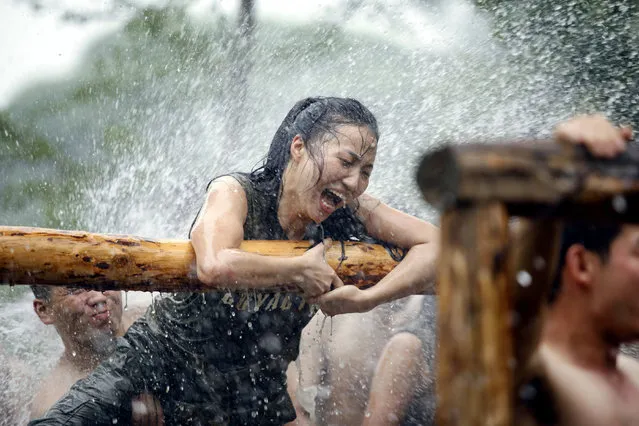
Female and male trainees run during a bodyguard training program at the boot camp of Genghis Security Academy in Beijing, China. (Photo by ImagineChina/The Grosby Group)

This summer China opened its door to its first private bodyguard training company in Beijing. Genghis Security Academy offers rigorous training course which includes aquatic training, martial arts, vehicle safety training and other necessary skills. Photo: Female and male trainees run during a bodyguard training program at the boot camp of Genghis Security Academy in Beijing, China. (Photo by ImagineChina/The Grosby Group)
Details
28 Nov 2013 09:01:00
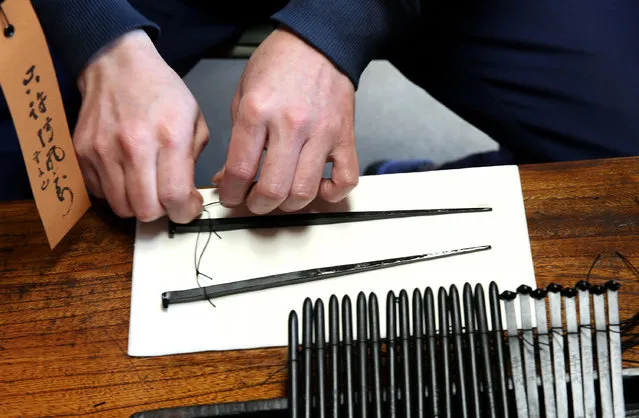
Myouchin Munehisa, 44, as he finishes Hibashi iron bells made of iron on a production line at Myochin Honpo shop on April 25, 2014 in Himeji, Japan. (Photo by Buddhika Weerasinghe/Getty Images)

Myouchin Munehisa, 44, as he finishes Hibashi iron bells made of iron on a production line at Myochin Honpo shop on April 25, 2014 in Himeji, Japan. Myochin family's iron business, started in the Heian period (794-1185) of Japan as an armor and helmet maker, shifted as the needs of people changed in the course of history. (Photo by Buddhika Weerasinghe/Getty Images)
Details
27 Apr 2014 06:29:00
Afghanistan: Dogs of War Part 2

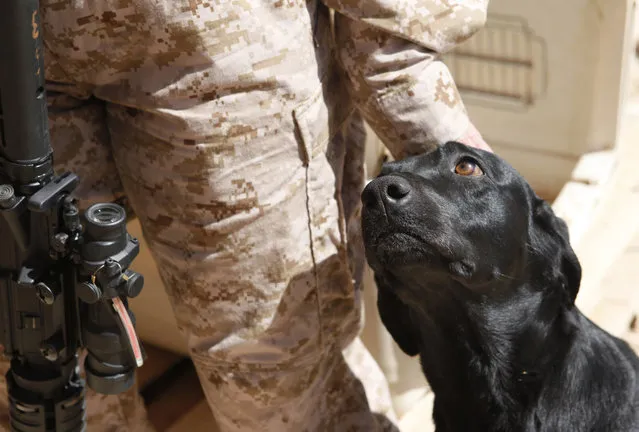
Throughout the course of the long war in Afghanistan, Coalition troops have relied on thousands of military working dogs to help keep them safe, and make their jobs easier. The dogs are trained to detect explosives, to find illegal drugs, to search for missing comrades, or target enemy combatants. Not only are they active on the front lines, but behind the lines they serve as therapy dogs, service dogs, and loyal companions. They also share the same risks as the ground troops, suffering injuries and sometimes death on the battlefields. Gathered here are images of these dogs and their handlers in Afghanistan and back home, from over the past several years, part of the ongoing series here on Afghanistan.
Details
05 Jun 2014 21:10:00