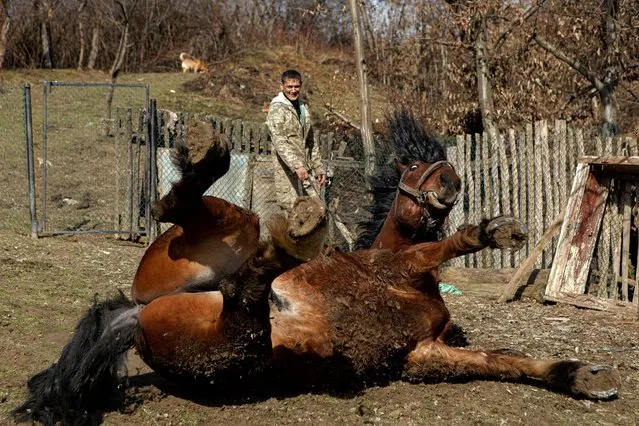
A horse rolls in mud in the Romani camp in Velykyi Bereznyi urban-type settlement, Zakarpattia Region, western Ukraine on February 28, 2021. (Photo by Ukrinform/Rex Features/Shutterstock)
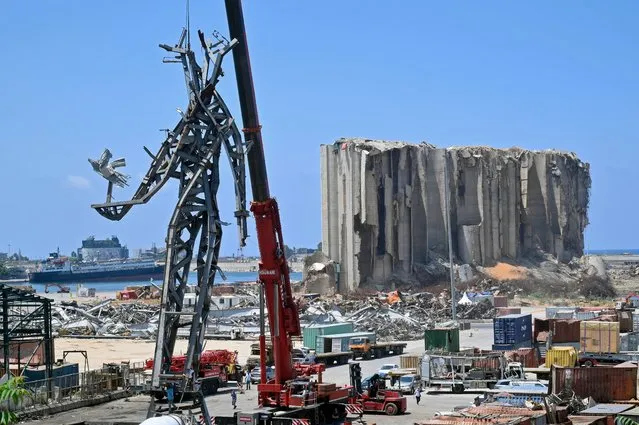
Workers install a monument inside Beirut port as a remembrance for the victims of the 04 August harbor blast in Beirut, Lebanon, 27 July 2021. A massive blast on 04 August 2020 rocked Beirut's port in which at least 200 people were killed and more than 6,000 injured, believed to have been caused by an estimated 2,750 tons of ammonium nitrate stored in a warehouse, devastated the port area of Beirut and several parts of the city. (Photo by Wael Hamzeh/EPA/EFE)
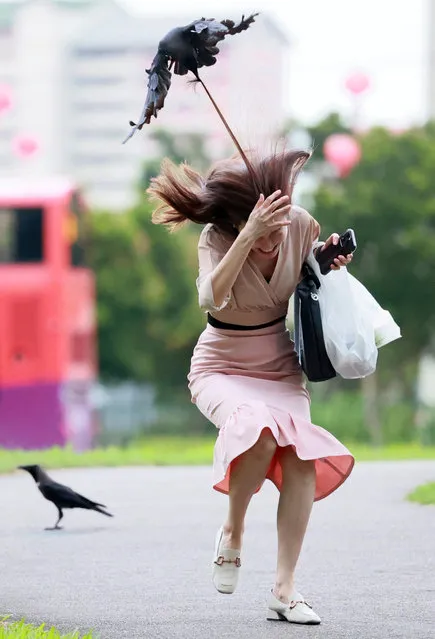
A crow attacks a passerby, in a series of crow attacks on residents at a neighbourhood in Singapore on February 14, 2023. (Photo by Leonard Phuah/Shin Min Daily/Singapore Press Holding Media Trust via Reuters)
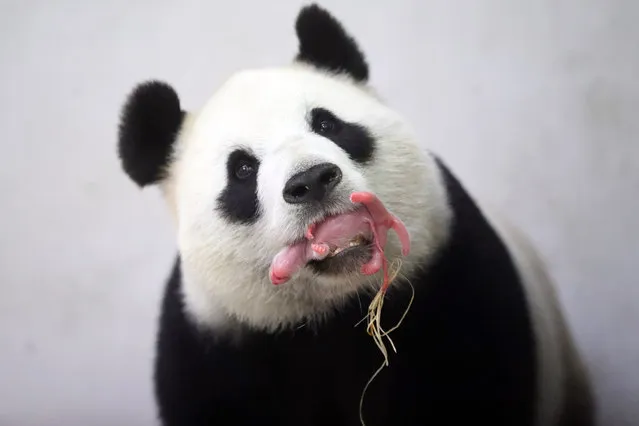
In this image provided by the Pairi Daiza park, giant panda Hao Hao holds her newborn baby in her mouth at the park in Brugelette, Belgium, on Thursday, June 2, 2016. With the help of the Chinese government Hao Hao and her mate Xing Hui arrived in Belgium two years ago and Pairi Daiza adapted its park to build a bamboo forest for them. (Photo by Benoit Bouchez/Pairi Daiza via AP Photo)
A man takes a picture of models as they pose next to Cosmis Racing Wheels products during the 2016 Moscow International Auto Salon in Moscow, Russia, August 26, 2016. (Photo by Sergei Karpukhin/Reuters)
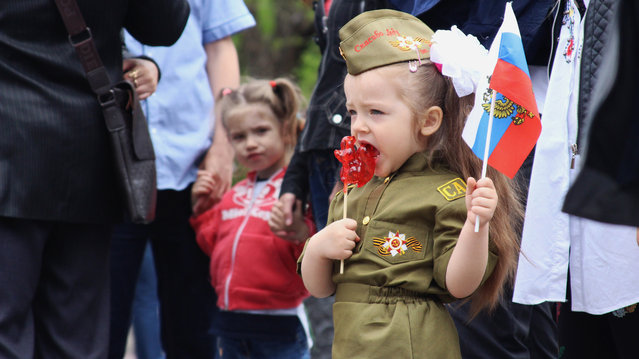
Children carrying guns and flags or wearing Soviet-style uniforms have become a common sight at Victory Day parades and other events in Russian-controlled Crimea. Russian and Ukrainian human rights activists have warned that such displays point to a growing trend of promoting Russian patriotism among kids on the Crimean peninsula, annexed from Ukraine in 2014. Here: A young Crimean girl wears military-type clothes during a Victory Day celebration in Sevastopol on May 9, 2018. (Photo by Oleksandra Surgan/Radio Free Europe/Radio Liberty)
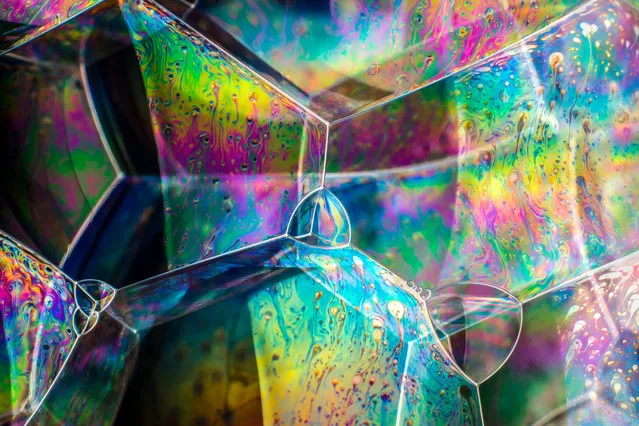
Soap Bubble Structures by Kym Cox. Bubbles optimise space and minimise their surface area for a given volume of air. This phenomenon makes them a useful tool in many areas of research, in particular, materials science and “packing” – how things fit together. Bubble walls drain under gravity, thin at the top, thick at the bottom, which interferes with travelling lightwaves to create bands of colour. Black spots show the wall is too thin for interference colours, indicating the bubble is about to burst. (Photo by Kym Cox/2019 Science Photographer of the Year/RPS)