Loading...
Done
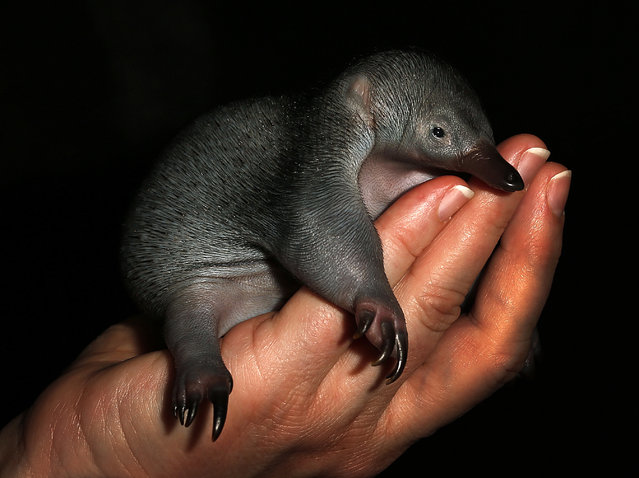
Bo, a 55-day-old baby Echidna known as a puggle, rests in the hands of vet nurse Annabelle Sehlmeier at Taronga Zoo in Sydney November 1, 2012. The puggle was brought to the zoo after it being found by itself on a walking track north of Sydney and will be fed by hand until it is weaned at about six months of age. (Photo by Tim Wimborne/Reuters)

Bo, a 55-day-old baby Echidna known as a puggle, rests in the hands of vet nurse Annabelle Sehlmeier at Taronga Zoo in Sydney November 1, 2012. The puggle was brought to the zoo after it being found by itself on a walking track north of Sydney and will be fed by hand until it is weaned at about six months of age. (Photo by Tim Wimborne/Reuters)
Details
23 Apr 2018 00:03:00
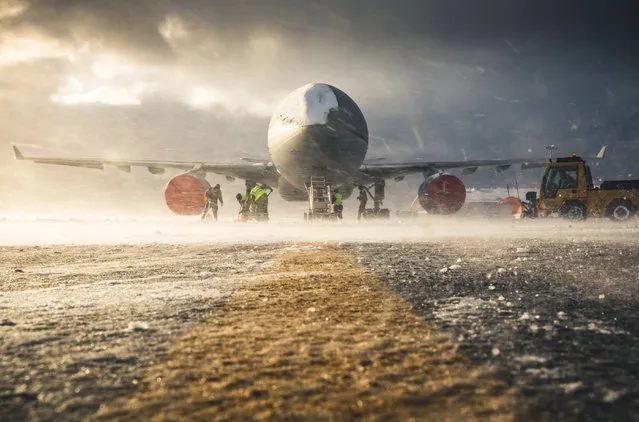
Operations & Exercises, 1st place. An RAF Voyager aircraft sits in the harsh winter weather at Mount Pleasant Complex, Falkland Islands, while personnel work to ensure the snow is cleared. (Photo by Sgt Andy Holmes/2020 RAF Photo Competition)

Operations & Exercises, 1st place. An RAF Voyager aircraft sits in the harsh winter weather at Mount Pleasant Complex, Falkland Islands, while personnel work to ensure the snow is cleared. (Photo by Sgt Andy Holmes/2020 RAF Photo Competition)
Details
15 Dec 2020 00:05:00
Contestants compete in the swimsuit segment of the Miss Venezuela 2016 pageant in Caracas, Venezuela October 5, 2016. (Photo by Marco Bello/Reuters)

Contestants compete in the swimsuit segment of the Miss Venezuela 2016 pageant in Caracas, Venezuela October 5, 2016. (Photo by Marco Bello/Reuters)
Details
07 Oct 2016 09:47:00
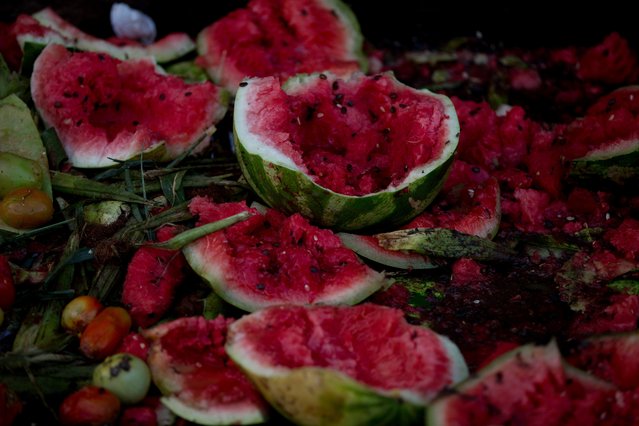
In this May 31, 2016 photo, pieces of watermelon litter the trash area of the Coche public market in Caracas, Venezuela. Staples such as corn flour and cooking oil are subsidized, costing pennies at the strongest of two official exchange rates. But fruit and vegetables have become an unaffordable luxury for many Venezuelan families. (Photo by Fernando Llano/AP Photo)

In this May 31, 2016 photo, pieces of watermelon litter the trash area of the Coche public market in Caracas, Venezuela. Staples such as corn flour and cooking oil are subsidized, costing pennies at the strongest of two official exchange rates. But fruit and vegetables have become an unaffordable luxury for many Venezuelan families. (Photo by Fernando Llano/AP Photo)
Details
08 Jun 2016 10:21:00
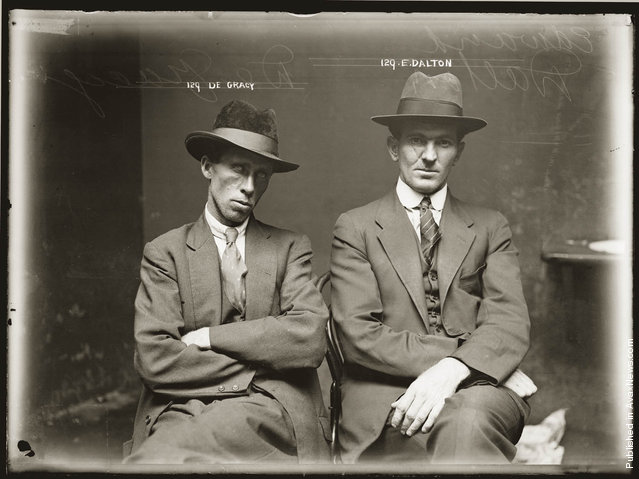
Mug shot of De Gracy (sic) and Edward Dalton. Details unknown. Central Police Station, Sydney, around 1920

Mug shot of De Gracy (sic) and Edward Dalton. Details unknown. Central Police Station, Sydney, around 1920. (Photo by NSW Police Forensic Photography Archive, Justice & Police Museum, Histiric Houses Trust of NSW)
Details
21 Apr 2012 12:24:00
Bar Refaeli

Model Bar Refaeli arrives at amfAR's Cinema Against AIDS 2007 at Le Moulin de Mougins on May 23, 2007 in Mougins, France. The amfAR Foundation raises funds for research, education and treatment of AIDS/HIV worldwide.
Details
09 May 2011 10:37:00
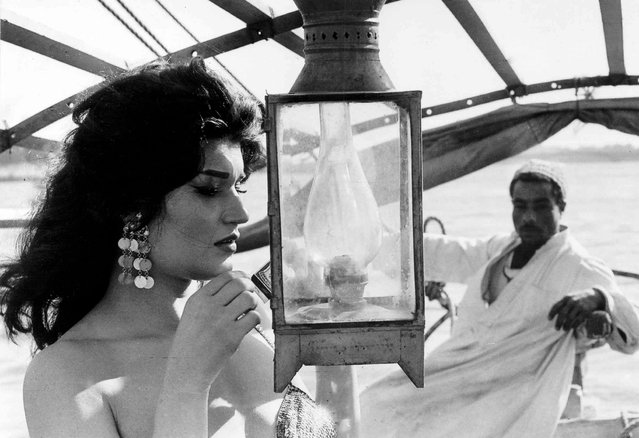
Belly dancer Nagwa Fouad sailing on the river Nile, 1972. Farouk Ibrahim was a society photographer, capturing Egyptian’s political and cultural elite, including presidents Nasser, Sadat and Mubarak. (Photo by Farouk Ibrahim)

Belly dancer Nagwa Fouad sailing on the river Nile, 1972. Egypt is one of 23 countries represented at the Dubai Photo Exhibition, showing off photography that dates to the 1920s. Dubai Photo Exhibition is in various venues of Dubai’s design district from 16-19 March. (Photo by Farouk Ibrahim)
Details
17 Mar 2016 15:09:00
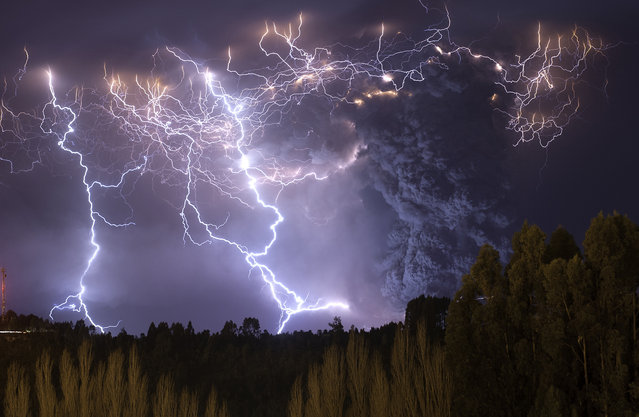
The eruption of Cordon Caulle began on June 4, 2011, located in the Region of Los Rios in Chile. For about 12 months, people and animals became accustomed to living with the daily fall of ash, which also caused problems in the air traffic in South America. The explosions and lightning during first days of the eruption could be seen from hundreds of miles around. This photograph was taken on the second night of eruption from the town of Lago Ranco. (Photo and caption by Francisco Negroni/National Geographic Traveler Photo Contest)

The eruption of Cordon Caulle began on June 4, 2011, located in the Region of Los Rios in Chile. For about 12 months, people and animals became accustomed to living with the daily fall of ash, which also caused problems in the air traffic in South America. The explosions and lightning during first days of the eruption could be seen from hundreds of miles around. This photograph was taken on the second night of eruption from the town of Lago Ranco. (Photo and caption by Francisco Negroni/National Geographic Traveler Photo Contest)

ATTENTION! All pictures are presented in high resolution. To see Hi-Res images – just TWICE click on any picture. In other words, click small picture – opens the BIG picture. Click BIG picture – opens VERY BIG picture.
Details
23 Jun 2013 11:24:00