Loading...
Done
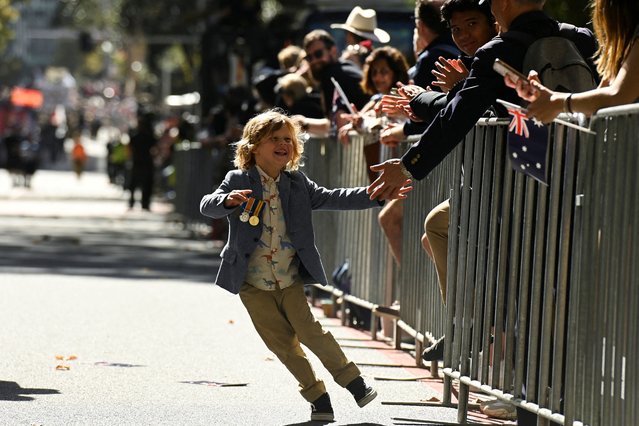
A young marcher high fives the crowd as Australian military personnel, past and present, commemorate ANZAC Day during a parade through the city centre in Sydney, Australia on April 25, 2023. (Photo by Jaimi Joy/Reuters)

A young marcher high fives the crowd as Australian military personnel, past and present, commemorate ANZAC Day during a parade through the city centre in Sydney, Australia on April 25, 2023. (Photo by Jaimi Joy/Reuters)
Details
16 May 2023 03:56:00
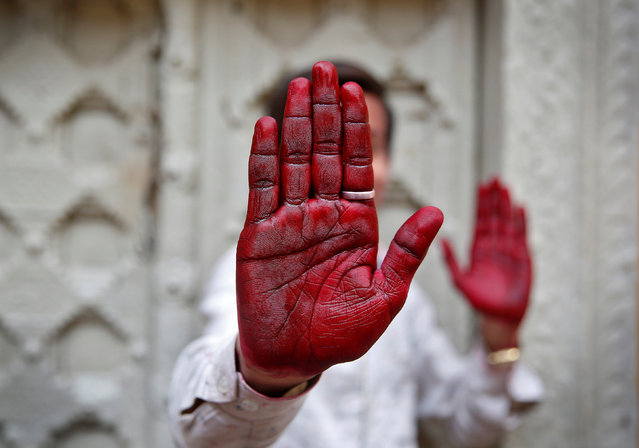
A Hindu devotee displays his inked hand after taking part in the religious festival of Holi in Vrindavan, in the northern state of Uttar Pradesh, India, March 8, 2017. (Photo by Cathal McNaughton/Reuters)

A Hindu devotee displays his inked hand after taking part in the religious festival of Holi in Vrindavan, in the northern state of Uttar Pradesh, India, March 8, 2017. (Photo by Cathal McNaughton/Reuters)
Details
10 Mar 2017 00:05:00
Crystal ice cubes at Jingyuetan National Forest Park attract tourists in Changchun City, northeast China's Jilin Province on January 10, 2024. (Photo by Splash News and Pictures)

Crystal ice cubes at Jingyuetan National Forest Park attract tourists in Changchun City, northeast China's Jilin Province on January 10, 2024. (Photo by Splash News and Pictures)
Details
01 Feb 2024 07:39:00
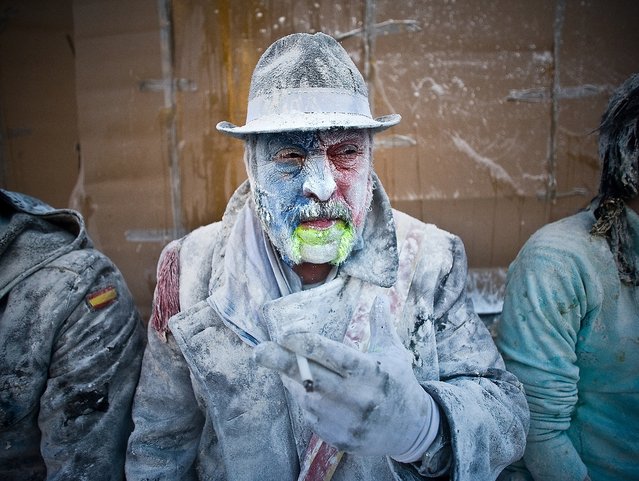
A Reveller smokes during the battle of “Enfarinats”, a flour fight in celebration of the Els Enfarinats festival. (Photo by David Ramos)

It’s a classic tale of dictatorship gone wrong and the fight for freedom. Like in any good battle, there’s fire, albeit from firecrackers, but the ammunition in this one is – flour. It takes place in a Hemingway-esque Spanish village. The battle of “Enfarinats” in celebration of the Els Enfarinats festival, rages on on December 28, 2012 in Ibi, Spain. Citizens of Ibi annually celebrate the festival with a fight using flour, eggs and firecrackers. The battle takes place between two groups, a group of married men called “Els Enfarinats” who take the control of the village for one day pronouncing a number of ridiculous laws and fining the citizens that infringe them and a group called “La Oposicio” who try to restore order. At the end of the day the money collected from the fines is donated to charitable causes in the village. The festival has been celebrated since 1981 after the town of Ibi recovered the tradition but the origins remain unknown.

Photo: A Reveller smokes during the battle of “Enfarinats”, a flour fight in celebration of the Els Enfarinats festival. (Photo by David Ramos)
Details
30 Dec 2012 10:28:00
A fan wearing leggings marked with the stripes of Great Britain's flag rests on the grass at the rowing venue in Eton Dorney, near Windsor, England, at the 2012 Summer Olympics, Monday, July 30, 2012. (Photo by Natacha Pisarenko/AP Photo)

“Natacha Pisarenko was born in Buenos Aires and studied photography at that city’s School of Photographic Arts. Pisarenko currently works out of Buenos Aires, Argentina. She started her career in 1988 as a photographer for La Nación, one of Argentina’s largest newspapers, then joined the AP in Buenos Aires in 2002”. – Associated Press. Photo: A fan wearing leggings marked with the stripes of Great Britain's flag rests on the grass at the rowing venue in Eton Dorney, near Windsor, England, at the 2012 Summer Olympics, Monday, July 30, 2012. (Photo by Natacha Pisarenko/AP Photo)
Details
25 May 2014 13:11:00
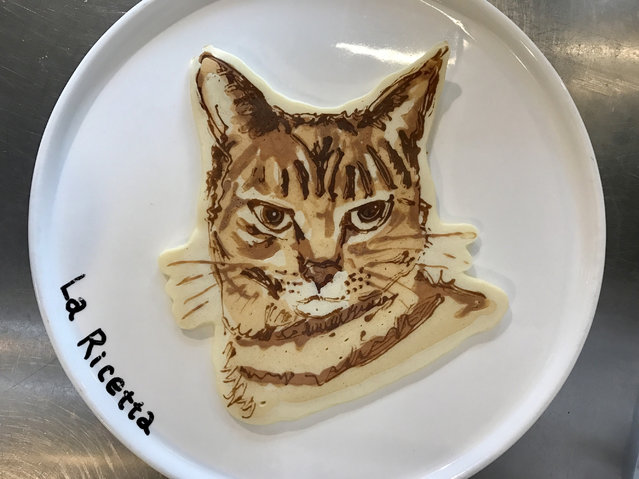
A pancake that looks like a cat, in Zama City, Japan. (Photo by Keisuke Inagaki/Barcroft Images)

As pancake day has creped up on us once again, a Japanese chef has combined our favourite things; cute animals and sugar. Keisuke Inagaki has been a chef at his restaurant La Ricetta in Zama City, Japan, for the last 18 years. He rose to Instagram fame from his Pokemon and anime pancake art, and the time around heis created a lifelike animal series. The 46-year-old chef began making pancakes in 2011 to raise spirits after the devastating nuclear disaster in Fukushima, Japan. Here: A pancake that looks like a cat, in Zama City, Japan. (Photo by Keisuke Inagaki/Barcroft Images)
Details
02 Mar 2017 00:03:00


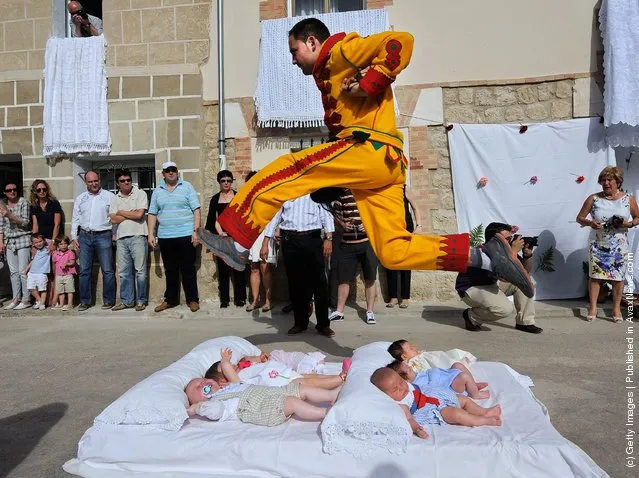
“Baby jumping (El Colacho) is a traditional Spanish practice dating back to 1620 that takes place annually to celebrate the Catholic feast of Corpus Christi in the village of Castrillo de Murcia near Burgos. During the act – known as El Salto del Colacho (the devil's jump) or simply El Colacho – men dressed as the Devil (known as the Colacho) jump over babies born during the previous twelve months of the year who lie on mattresses in the street. ... The festival has been rated as one of the most dangerous in the world”. – Wikipedia

Photo: A man representing the devil leaps over babies during the festival of El Colacho on June 26, 2011 in Castrillo de Murcia near Burgos, Spain. The festival, held on the first Sunday after Corpus Cristi, represents the devil taking away original sin from the newly born babies by leaping over them. (Photo by Denis Doyle/Getty Images)
Details
27 Jun 2011 09:20:00
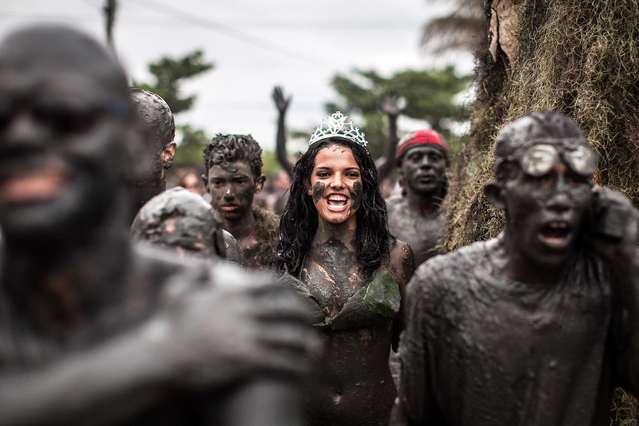
Revelers participate in the traditional Bloco da Lama (Mud block) carnival in Parati, Rio de Janeiro State, Brazil, on February 9, 2013. The event, which was begun by two men in a playful manner in 1986, has now become a traditional carnival in which participants disguised as primitives with rags, lianas or skulls and bones, dive in the mud. (Photo by Victor Moriyama/AFP Photo)

Revelers participate in the traditional Bloco da Lama (Mud block) carnival in Parati, Rio de Janeiro State, Brazil, on February 9, 2013. The event, which was begun by two men in a playful manner in 1986, has now become a traditional carnival in which participants disguised as primitives with rags, lianas or skulls and bones, dive in the mud. (Photo by Victor Moriyama/AFP Photo)
Details
12 Feb 2013 14:10:00