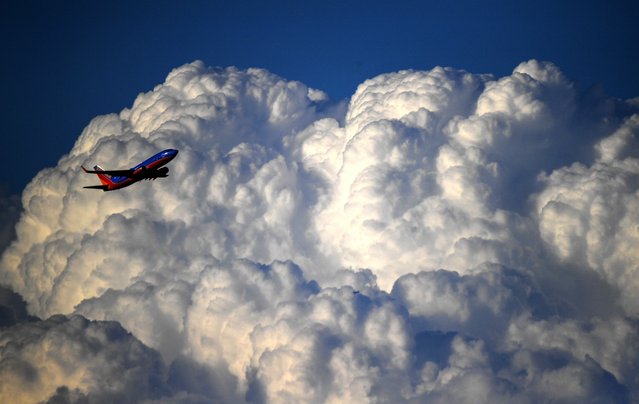
A Southwest Airlines jet takes off from Reagan National Airport with a thunderhead to the east on June 20, 2017 in Alexandria, VA. (Photo by Jonathan Newton/The Washington Post)
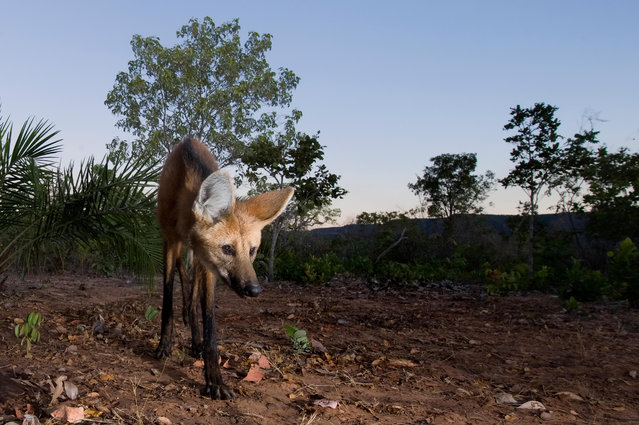
Global wildlife populations will decline by 67% by 2020 unless urgent action is taken to reduce human impact on species and ecosystems, warns the biennial Living Planet Index report from WWF (World Wide Fund for Nature) and ZSL (Zoological Society of London). From elephants to eels, here are some of the wildlife populations most affected by human activity. Here: The maned wolf is among the large mammals in the Brazilian Cerrado that are threatened by the increasing conversion of grasslands into farmland for grazing and growing crops. (Photo by Ben Cranke/Nature Picture Library/Alamy Stock Photo)
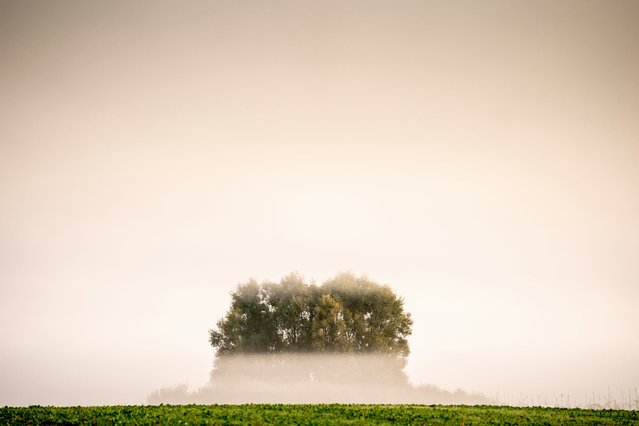
A view of trees shrouded in fog on a late summer morning between Tureby and Slimminge on Zealand, Denmark, 10 September 2021. (Photo by Mads Claus Rasmussen/EPA/EFE)
Visitors dressed in superhero costumes attend the Paris Comics Expo at the Parc Floral in Paris, France, April 15, 2016. (Photo by Charles Platiau/Reuters)
A student activist is detained during a silent protest after Thailand's election commission filed charges against a group for posting “foul and strong” comments online criticising a military-backed draft constitution, in Bangkok, Thailand April 27, 2016. (Photo by Jorge Silva/Reuters)
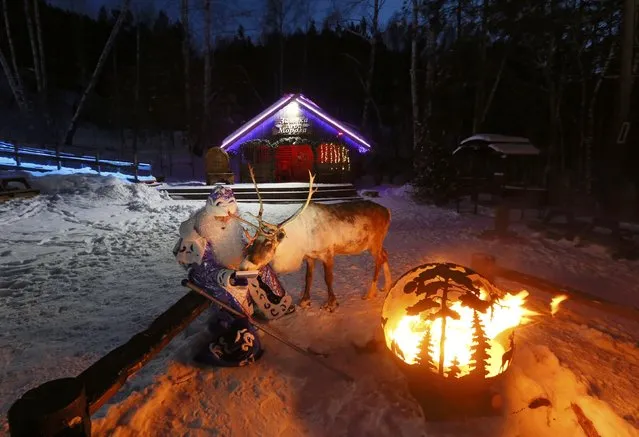
A man dressed as Father Frost, Russian equivalent of Santa Claus, sits by the fire with a reindeer Yakut, marking winter solstice at the Royev Ruchey Park of Flora and Fauna in the Siberian Taiga wood in the suburbs of Krasnoyarsk, Russia, December 21, 2016. (Photo by Ilya Naymushin/Reuters)
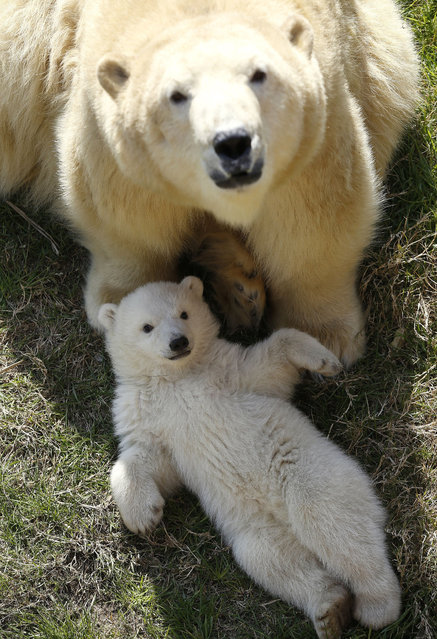
A polar bear cub, born on November 26, 2014, and its mother Flocke spend time outdoors on March 9, 2015 at the Marineland animal exhibition park in the French Riviera city of Antibes. AFP PHOTO / VALERY HACHE (Photo credit should read VALERY HACHE/AFP/Getty Images)