Loading...
Done
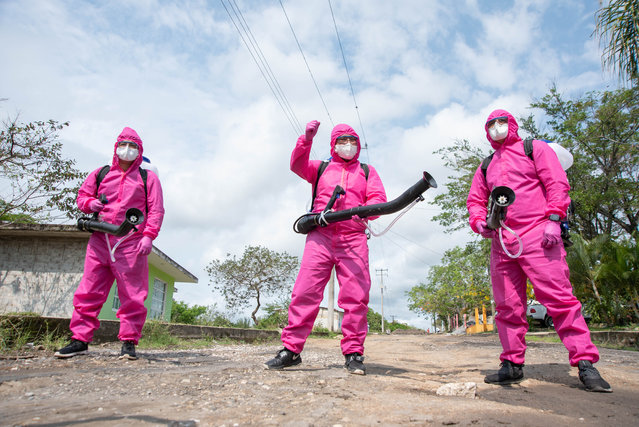
Health authority workers sanitise the rural community of Teocelo, Veracruz, Mexico on May 12, 2020 – in the hope of preventing the spread of COVID-19 infections. (Photo by Hector Adolfo Quintanar Perez/ZUMA Wire/Rex Features/Shutterstock)

Health authority workers sanitise the rural community of Teocelo, Veracruz, Mexico on May 12, 2020 – in the hope of preventing the spread of COVID-19 infections. (Photo by Hector Adolfo Quintanar Perez/ZUMA Wire/Rex Features/Shutterstock)
Details
14 May 2020 00:07:00
Two girls run through the heavy rain as people head out to Wind Street in Swansea, Wales to celebrate Halloween on Monday, October 31, 2022. (Photo by Robert Melen)

Two girls run through the heavy rain as people head out to Wind Street in Swansea, Wales to celebrate Halloween on Monday, October 31, 2022. (Photo by Robert Melen)
Details
01 Nov 2022 05:40:00
A protester from the People for the Ethical Treatment of Animals (PETA) displays a placard from a bathtub as a people looks on during a demonstration to call on the public to eat more vegetables to save water, in Sao Paulo on August 2, 2016. (Photo by Cris Faga via ZUMA Wire)

A protester from the People for the Ethical Treatment of Animals (PETA) displays a placard from a bathtub as a people looks on during a demonstration to call on the public to eat more vegetables to save water, in Sao Paulo on August 2, 2016. (Photo by Cris Faga via ZUMA Wire)
Details
03 Aug 2016 12:06:00
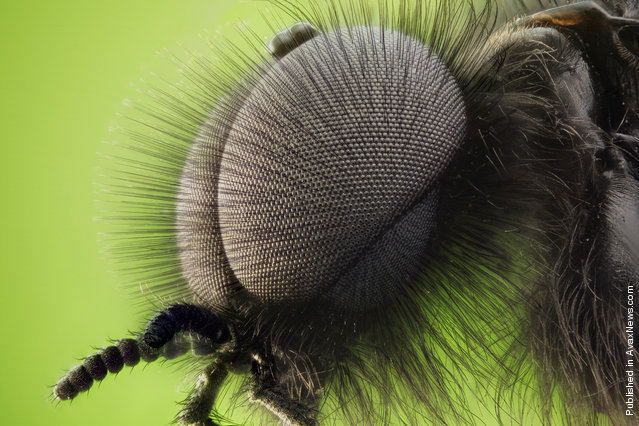
The double compound eyes of a male St. Mark's fly (Bibio marci), submitted by Dr. David Maitland from Feltwell, UK

The double compound eyes of a male St. Mark's fly (Bibio marci), submitted by Dr. David Maitland from Feltwell, UK. (Dr. David Maitland)
Details
07 Apr 2012 13:22:00
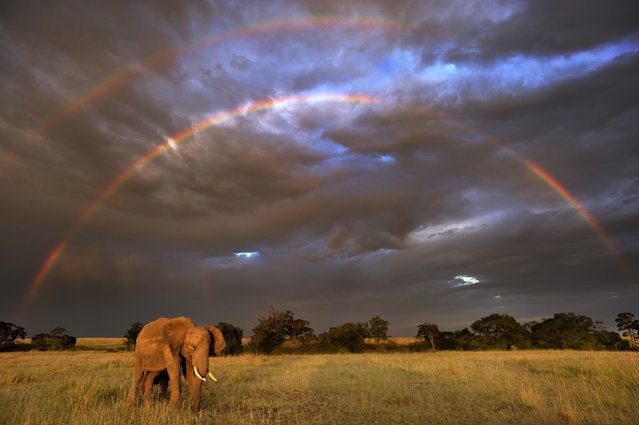
This photo provided by Netflix/naturepl.com and WWF-International shows an African Elephant (Loxodonta africana) in front of double rainbow, in Masai Mara, Kenya, included in the Netflix natural history series, “Our Planet”, in collaboration with Silverback Films and WWF. The eight-part series debuts in 2019. (Photo by Andy Rouse/Naturepl.com/WWF-International/Netflix via AP Photo)

This photo provided by Netflix/naturepl.com and WWF-International shows an African Elephant (Loxodonta africana) in front of double rainbow, in Masai Mara, Kenya, included in the Netflix natural history series, “Our Planet”, in collaboration with Silverback Films and WWF. The eight-part series debuts in 2019. (Photo by Andy Rouse/Naturepl/WWF-International/Netflix via AP Photo)
Details
09 Oct 2015 08:05:00
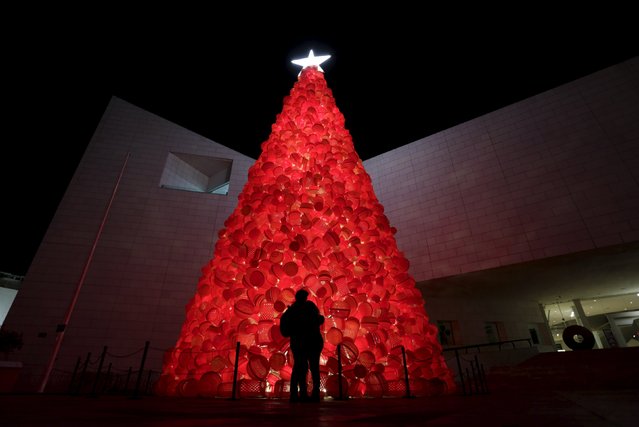
A couple hugs while standing near a Christmas tree made out of plastic bins and plastic hampers outside the Museum of History in Monterrey, Mexico, December 4, 2015. (Photo by Daniel Becerril/Reuters)

A couple hugs while standing near a Christmas tree made out of plastic bins and plastic hampers outside the Museum of History in Monterrey, Mexico, December 4, 2015. The humble Christmas tree has a rich history, from evergreen trees used to symbolise eternal life in Ancient Egypt to tree worship among pagan Europeans. The modern version has its origins in Germany, where the song “O Tannenbaum” is still a festive favourite. Today the traditional tree with lights and decorations appears in cities including Washington, Moscow and Beirut. Alternative constructions range from recycled rubbish in Mexico City to old window frames in Rakvere, Estonia. Whatever the shape or size, the message is the same: Merry Christmas. (Photo by Neil Hall/Reuters)

Details
23 Dec 2015 08:01:00
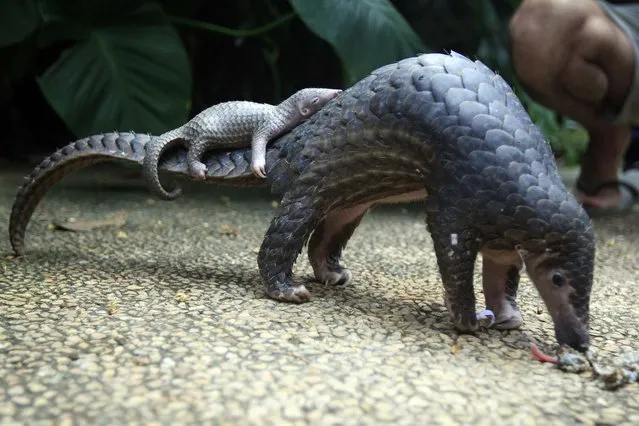
A pangolin carries its baby at a Bali zoo, Indonesia, Thursday, June 19, 2014. The pangolin baby was born on May 31. (Photo by Firdia Lisnawati/AP Photo)

A pangolin carries its baby at a Bali zoo, Indonesia, Thursday, June 19, 2014. The pangolin baby was born on May 31. (Photo by Firdia Lisnawati/AP Photo)
Details
21 Jun 2014 13:11:00
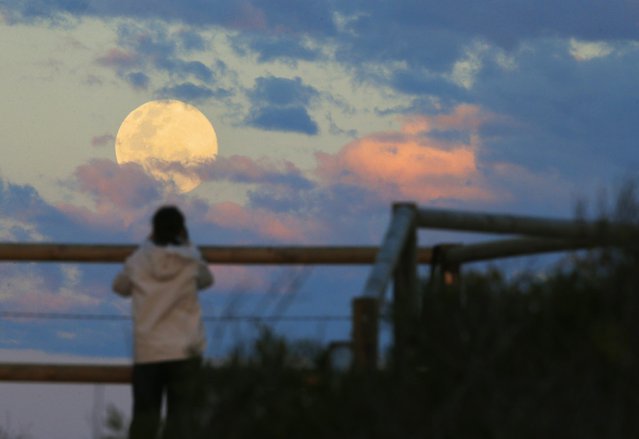
Sydney resident Virginia Maddock watches the supermoon rise off the Sydney beachside suburb of Wanda, August 10, 2014. The astronomical event occurs when the moon is closest to the Earth in its orbit, making it appear much larger and brighter than usual. (Photo by Jason Reed/Reuters)

Sydney resident Virginia Maddock watches the supermoon rise off the Sydney beachside suburb of Wanda, August 10, 2014. Sunday’s moon was at its closest approach to Earth, appearing bigger and brighter than any other moon this year. The moon was 221,765 miles away and looked 16 percent larger and 30 percent brighter than usual. (Photo by Jason Reed/Reuters)
Details
11 Aug 2014 11:50:00