Loading...
Done
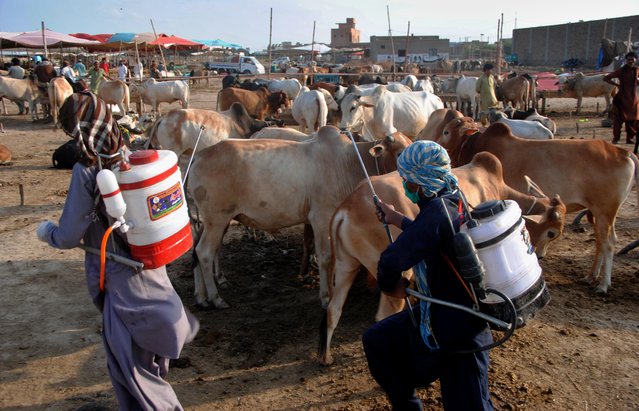
Health workers wearing face masks spray disinfectant liquid on sacrificial animals amid concerns over the spread of the SARS-CoV-2 coronavirus that causes the pandemic COVID-19 disease ahead of the Muslim festival of Eid al-Adha at an animal market in Hyderabad, southern Pakistan, 21 July 2020. Eid al-Adha, also known as the Festival of the Sacrifice, is the second and holiest of the two main Islamic holidays celebrated each year (the other one being Eid al-Fitr). Every year, on the 10th day of the Islamic lunar month of Dhu al-Hijjah, Muslims around the world ritually slaughter a sacrificial animal and split the meat into three parts: one is reserved for the family, another for friends and relatives, and the third is given to the poor and needy. The Saudi Supreme Court has declared that the first day of Eid al-Adha this year falls on 31 July. (Photo by Nadeem Khawar/EPA/EFE)

Health workers wearing face masks spray disinfectant liquid on sacrificial animals amid concerns over the spread of the SARS-CoV-2 coronavirus that causes the pandemic COVID-19 disease ahead of the Muslim festival of Eid al-Adha at an animal market in Hyderabad, southern Pakistan, 21 July 2020. (Photo by Nadeem Khawar/EPA/EFE)
Details
23 Jul 2020 00:07:00
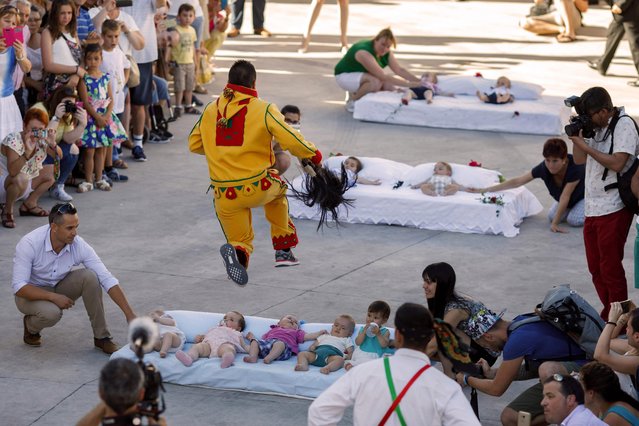
A man dressed up as the devil jumps over babies lying on a mattress in the street during “El Colacho”, the “baby jumping festival” in the village of Castrillo de Murcia, near Burgos on June 18, 2017. Baby jumping (El Colacho) is a traditional Spanish practice dating back to 1620 that takes place annually to celebrate the Catholic feast of Corpus Christi. During the act – known as El Salto del Colacho (the devil's jump) or simply El Colacho – men dressed as the Devil jump over babies born in the last twelve months of the year who lie on mattresses in the street. (Photo by Cesar Manso/AFP Photo)

A man dressed up as the devil jumps over babies lying on a mattress in the street during “El Colacho”, the “baby jumping festival” in the village of Castrillo de Murcia, near Burgos on June 18, 2017. Baby jumping (El Colacho) is a traditional Spanish practice dating back to 1620 that takes place annually to celebrate the Catholic feast of Corpus Christi. During the act – known as El Salto del Colacho (the devil's jump) or simply El Colacho – men dressed as the Devil jump over babies born in the last twelve months of the year who lie on mattresses in the street. (Photo by Cesar Manso/AFP Photo)
Details
20 Jun 2017 07:29:00
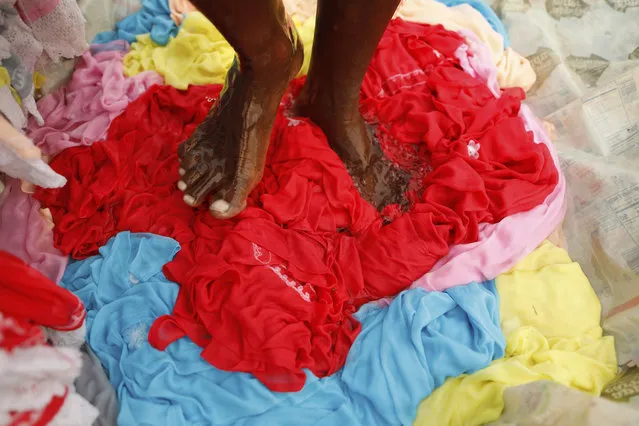
A dhobi, or a washerman washes cloths on the banks of the River Gomti in Lucknow, India, Saturday, September 12, 2020. Dhobis are traditional laundry workers who wash clothes by hand and dry them in the sun, an occupation which has been in existence for generations. Most cities in India have a Dhobi Ghat, or washermen's area, where the city's pile of clothes is laundered. This practice is still popular in India, despite of modern technology. Around 1,000 families work in Lucknow's Dhobi Ghat. However, in light of the novel coronavirus, their wages have decreased drastically. With each family earning around US$100-200 per month. (Photo by Rajesh Kumar Singh/AP Photo)

A dhobi, or a washerman washes cloths on the banks of the River Gomti in Lucknow, India, Saturday, September 12, 2020. Dhobis are traditional laundry workers who wash clothes by hand and dry them in the sun, an occupation which has been in existence for generations. Most cities in India have a Dhobi Ghat, or washermen's area, where the city's pile of clothes is laundered. This practice is still popular in India, despite of modern technology. Around 1,000 families work in Lucknow's Dhobi Ghat. However, in light of the novel coronavirus, their wages have decreased drastically. With each family earning around US$100-200 per month. (Photo by Rajesh Kumar Singh/AP Photo)
Details
25 Sep 2020 00:03:00
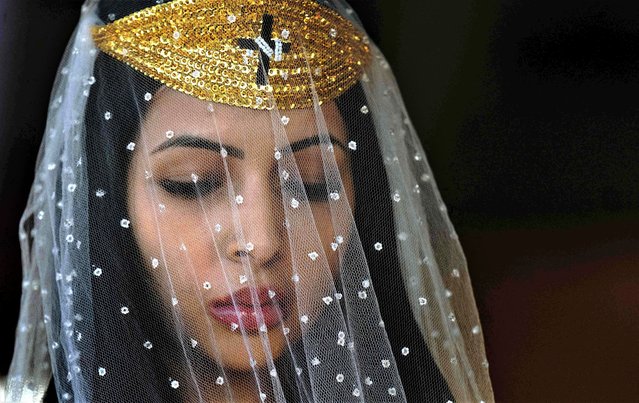
A Nymph or female devotee of the Vale do Amanhecer religious community, prays at their temple complex in Vale do Amanhecer (Sunrise Valley), a community on the outskirts of Planaltina, 50 km from the Brazilian capital, Brasilia, on April 29, 2023. This eclectic community holds its most important ritual of the year on Labour Day to honour the mediums who communicate with good and bad spirits. The group combines a range of religious practices, including Christian and Hindu, with symbols borrowed from the Incas and Mayans, as well as a belief in extraterrestrial life and intergalactic travel. The religion claims hundred temples throughout Brazil, Portugal and other countries. (Photo by Carl de Souza/AFP Photo)

A Nymph or female devotee of the Vale do Amanhecer religious community, prays at their temple complex in Vale do Amanhecer (Sunrise Valley), a community on the outskirts of Planaltina, 50 km from the Brazilian capital, Brasilia, on April 29, 2023. This eclectic community holds its most important ritual of the year on Labour Day to honour the mediums who communicate with good and bad spirits. The group combines a range of religious practices, including Christian and Hindu, with symbols borrowed from the Incas and Mayans, as well as a belief in extraterrestrial life and intergalactic travel. The religion claims hundred temples throughout Brazil, Portugal and other countries. (Photo by Carl de Souza/AFP Photo)
Details
08 Aug 2024 05:51:00
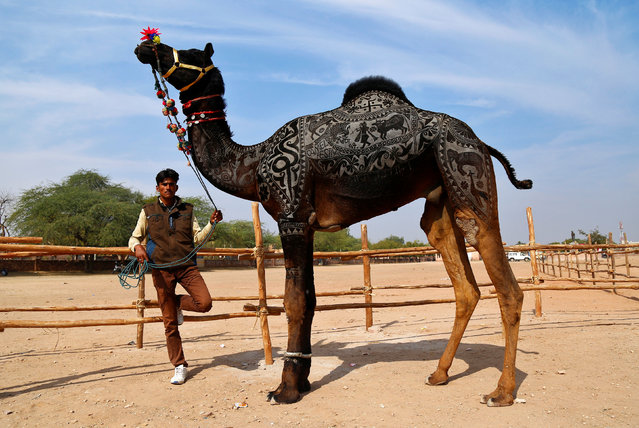
A man waits with his camel to take part in a camel decoration competition at the Nagaur Cattle Fair, where animals like camels, cows, horses, and bulls are brought to be sold or traded, in Nagaur, in the desert state of Rajasthan, India February 2, 2017. (Photo by Himanshu Sharma/Reuters)

A man waits with his camel to take part in a camel decoration competition at the Nagaur Cattle Fair, where animals like camels, cows, horses, and bulls are brought to be sold or traded, in Nagaur, in the desert state of Rajasthan, India February 2, 2017. (Photo by Himanshu Sharma/Reuters)
Details
08 Feb 2017 00:06:00
A tribeswoman sporting a huge lip plate and wearing a skinned animal carcass on her head. (Photo by Eric Lafforgue/Exclusivepix Media)

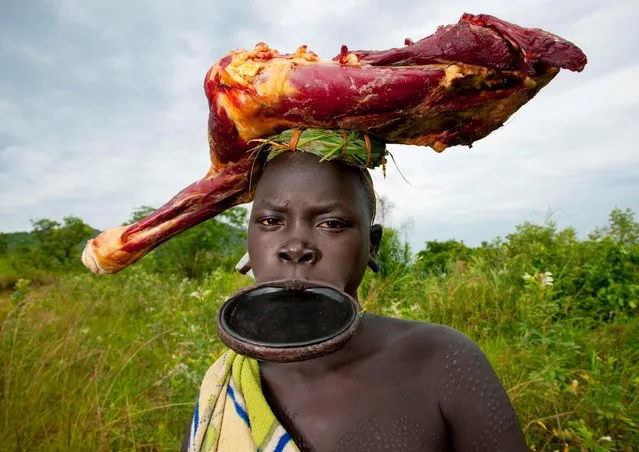
Warriors from the Suri tribe in Ethiopia still stage the savage “Donga” battles – even after many fighters have been died from their injuries. Donga stick fights take place after the harvests, the Surmas count days owing to knots on a long stem of grass or jags on the trunk of a tree dedicated to that specific use. Here: A tribeswoman sporting a huge lip plate and wearing a skinned animal carcass on her head. (Photo by Eric Lafforgue/Exclusivepix Media)
Details
22 Apr 2017 09:30:00
Underwater pictures show the 23-year-old diver cosying up to a range of animals. (Photo by Amelia Klonaris/Mediadrumworld)

Dublin student beat depression by befriending sharks, stingrays and pigs in the Bahamas. Awesome underwater pictures show the 23-year-old diver cosying up to a range of animals including turtles, stingray and sharks. The sunny selfies were taken in the Bahamas by Stuart’s Cove dive instructor and native of the island, Amelia Klonaris – who beat depression by embracing her incredible beach paradise lifestyle. (Photo by Amelia Klonaris/Mediadrumworld)
Details
01 Jul 2017 07:38:00
Vegetarian 19-year-old model Courtney Stodden gets ready to serve veggie hot dogs wearing a lettuce bikini during a People for the Ethical Treatment of Animals (PETA)  free veggie dog handout on Capitol Hill in Washington, DC, July 16, 2014. (Photo by Jim Watson/AFP Photo)

Vegetarian 19-year-old model Courtney Stodden gets ready to serve veggie hot dogs wearing a lettuce bikini during a People for the Ethical Treatment of Animals (PETA) free veggie dog handout on Capitol Hill in Washington, DC, July 16, 2014. (Photo by Jim Watson/AFP Photo)
Details
19 Jul 2014 10:52:00