Loading...
Done
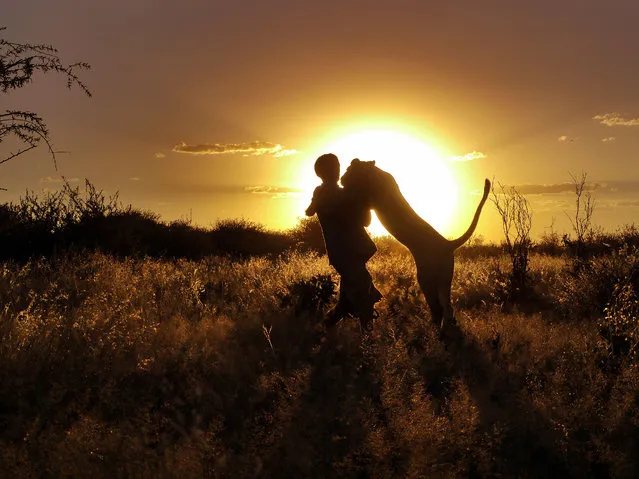
These heart-warming photograph show an incredible bond between a wild lioness and the men fighting to save her species. The picture show Sirga – a 110lb lioness – and her adopted pride Valentin Gruener (not pictured) and Mikkel Legarth. Incredibly she treats the two men just like she would other lions and with their help she can now hunt for prey on her own. (Photo by Caters News)

These heart-warming photograph show an incredible bond between a wild lioness and the men fighting to save her species. The picture show Sirga – a 110lb lioness – and her adopted pride Valentin Gruener (not pictured) and Mikkel Legarth. Incredibly she treats the two men just like she would other lions and with their help she can now hunt for prey on her own. As a cub she was driven out from a pride and rescued by German and Danish duo Valentin and Mikkel who could not stand by and watch her die. She is now a beacon for hoped success of the Modisa Wildlife Project, founded in Botswana, Africa, by Valentin and Mikkel with the hope of saving the lion population. (Photo by Caters News)
Details
27 Apr 2014 09:36:00
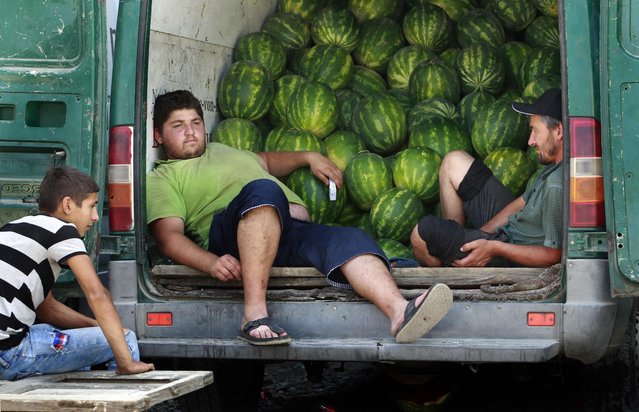
Georgian men take a break from selling fruit and vegetable at a street market in Tbilisi, Georgia, Wednesday, July 20, 2016. (Photo by Shakh Aivazov/AP Photo)

Georgian men take a break from selling fruit and vegetable at a street market in Tbilisi, Georgia, Wednesday, July 20, 2016. (Photo by Shakh Aivazov/AP Photo)
Details
02 Aug 2016 08:05:00
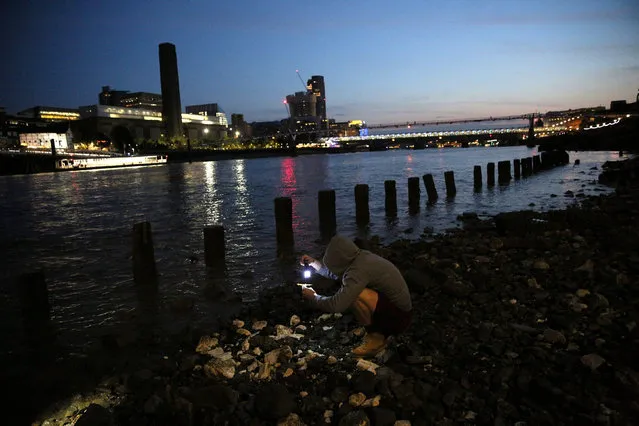
A mudlark uses a torch to look for items on the bank of the River Thames in London, Britain June 06, 2016. Mudlarking is believed to trace its origins to the 18th and 19th century, when scavengers searched the Thames' shores for items to sell. These days, history and archaeology fans are the ones hoping to find old relics such as coins, ceramics, artifacts or everyday items from across centuries. They wait for the low tide and then scour specific areas of exposed shores. "If you're in a field you could be out all day long, with the river you're restricted to about two or three hours," mudlark Nick Stevens said. While many just use the naked eye for their searches, others rely on metal detectors for which a permit from the Port of London Authority is needed. Digging also requires consent. (Photo by Neil Hall/Reuters)

A mudlark uses a torch to look for items on the bank of the River Thames in London, Britain June 06, 2016. Mudlarking is believed to trace its origins to the 18th and 19th century, when scavengers searched the Thames' shores for items to sell. These days, history and archaeology fans are the ones hoping to find old relics such as coins, ceramics, artifacts or everyday items from across centuries. their finds with the Portable Antiquities Scheme. Any item over 300 years old must be recorded. (Photo by Neil Hall/Reuters)
Details
27 Aug 2016 10:43:00
A Kurdish girl celebrates Newroz Day, a festival marking spring and the new year, in Akra, Iraq March 20, 2016. (Photo by Ari Jalal/Reuters)

A Kurdish girl celebrates Newroz Day, a festival marking spring and the new year, in Akra, Iraq March 20, 2016. Nowruz is the name of the Iranian New Year also referred to as Persian New Year which is celebrated worldwide by Iranian peoples, along with some other ethno-linguistic groups. Nowruz is the day of the vernal equinox, and marks the beginning of spring in the Northern Hemisphere. It usually occurs on March 21 or the previous/following day, depending on where it is observed. Although having Persian and religious Zoroastrian origins, Nowruz has been celebrated by people from diverse ethno-linguistic communities for thousands of years. (Photo by Ari Jalal/Reuters)
Details
21 Mar 2016 12:47:00
British Holidaymakers seen partying partying in Punta Bella main Street in Magaluf, a major holiday resort on the Spanish island of Majorca this summer, July 2017. (Photo by Splash News and Pictures)

British Holidaymakers seen partying partying in Punta Bella main Street in Magaluf, a major holiday resort on the Spanish island of Majorca this summer, July 2017. (Photo by Splash News and Pictures)
Details
19 Jul 2017 08:34:00
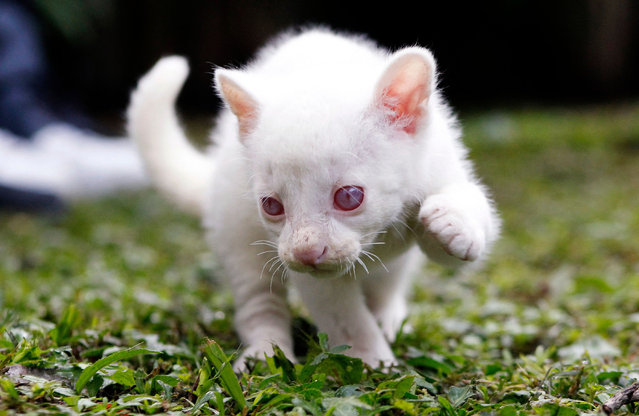
An alleged albino cub of Jaguarundi (Herpailurus yagouaroundi) plays at the Conservation Park in Medellin, Colombia, on December 23, 2021. According to environmentalists of the Conservation Park of Medellin, the little Jaguarundi will have to live in captivity as its albinism prevents it to hunt, camouflage, and protect itself from predators in the wild. (Photo by Fredy Builes/AFP Photo)

An alleged albino cub of Jaguarundi (Herpailurus yagouaroundi) plays at the Conservation Park in Medellin, Colombia, on December 23, 2021. According to environmentalists of the Conservation Park of Medellin, the little Jaguarundi will have to live in captivity as its albinism prevents it to hunt, camouflage, and protect itself from predators in the wild. (Photo by Fredy Builes/AFP Photo)
Details
02 Jan 2022 07:07:00
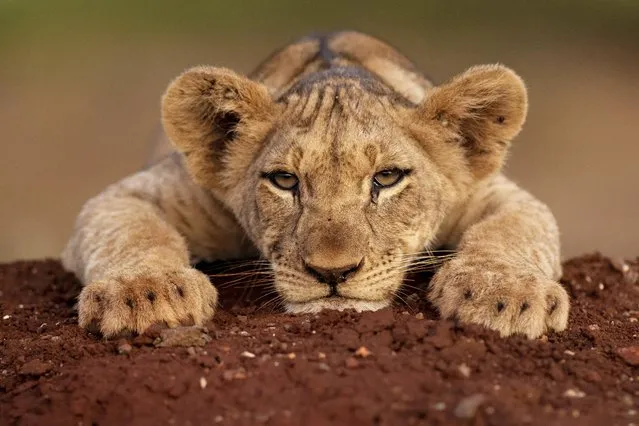
A lion cub wakes in the morning sun at the Zimanga private game reserve in South Africa on April 9, 2022. (Photo by Calvin Kotze/Animal News Agency)

A lion cub wakes in the morning sun at the Zimanga private game reserve in South Africa on April 9, 2022. (Photo by Calvin Kotze/Animal News Agency)
Details
17 Apr 2022 04:46:00
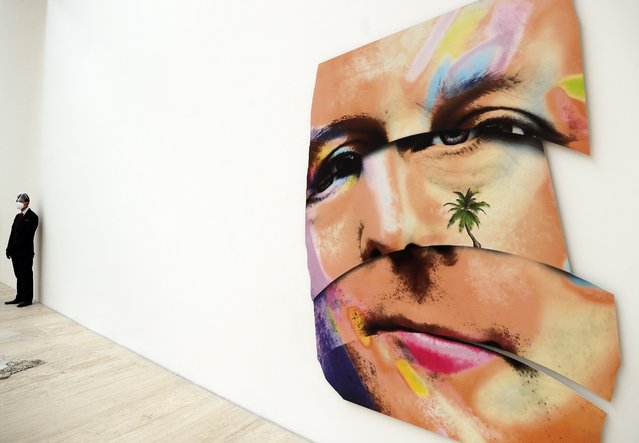
View of the work “Divided” (2016), within the visual artist's exhibition “Urs Fischer: Lovers”, exhibited at the Museo Jumex in Mexico City, Mexico 31 March 2022. The sensations and emotions of love and life, as well as the energy and forces that create and wear it down, inhabit “Urs Fischer: Lovers”, the first solo exhibition in Mexico by Swiss plastics artist Urs Fischer. (Photo by Alex Cruz/EPA/EFE)

View of the work “Divided” (2016), within the visual artist's exhibition “Urs Fischer: Lovers”, exhibited at the Museo Jumex in Mexico City, Mexico 31 March 2022. The sensations and emotions of love and life, as well as the energy and forces that create and wear it down, inhabit “Urs Fischer: Lovers”, the first solo exhibition in Mexico by Swiss plastics artist Urs Fischer. (Photo by Alex Cruz/EPA/EFE)
Details
26 May 2022 04:25:00