Loading...
Done
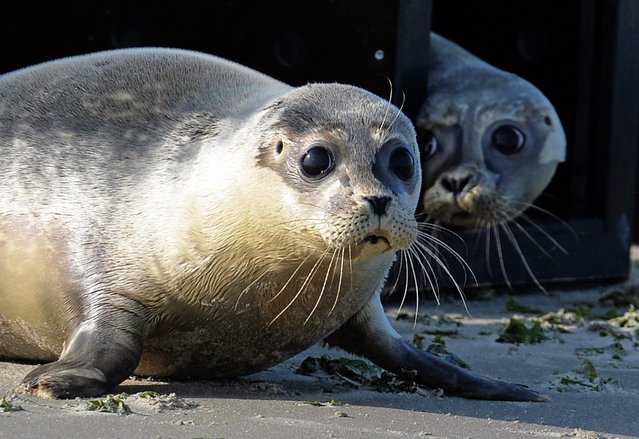
Common seals are reintroduced to the wild on the beach of the island Juist, Germany, 28 July 2014. It is the first reintroduction to the wild drive of the seal breading station Norddeich this year. (Photo by Carmen Jaspersen/EPA)

Common seals are reintroduced to the wild on the beach of the island Juist, Germany, 28 July 2014. It is the first reintroduction to the wild drive of the seal breading station Norddeich this year. (Photo by Carmen Jaspersen/EPA)
Details
02 Aug 2014 14:50:00
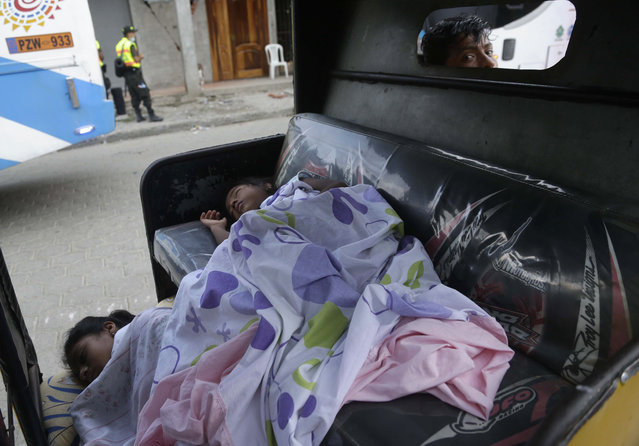
Girls sleep in the back of their father's moto-taxi as he watches them from the front seat, days after an earthquake in Pedernales, Ecuador, Wednesday, April 20, 2016. A fresh tremor rattled Ecuador before dawn Wednesday, a magnitude-6.1 jolt that set babies crying and shaken residents pouring once again into the streets, fearful of yet more damage following a monster earthquake over the weekend. (Photo by Dolores Ochoa/AP Photo)

Girls sleep in the back of their father's moto-taxi as he watches them from the front seat, days after an earthquake in Pedernales, Ecuador, Wednesday, April 20, 2016. A fresh tremor rattled Ecuador before dawn Wednesday, a magnitude-6.1 jolt that set babies crying and shaken residents pouring once again into the streets, fearful of yet more damage following a monster earthquake over the weekend. (Photo by Dolores Ochoa/AP Photo)
Details
21 Apr 2016 12:02:00
People carrying torches march during the traditional Bonfire Celebrations in Lewes, Britain, 04 November 2017. (Photo by Neil Hall/EPA/EFE)

People carrying torches march during the traditional Bonfire Celebrations in Lewes, Britain on November 4, 2017. Lewes holds Britain's largest Bonfire night celebrations. The event marks Guy Fawkes Night and the uncovering of the Gunpowder Plot in 1605 and commemorates the memory seventeen Protestant martyrs from the town who were burned at the stake. Thousands gather with flaming torches to march through the street and burn effigies. (Photo by Neil Hall/EPA/EFE)
Details
05 Nov 2017 08:30:00
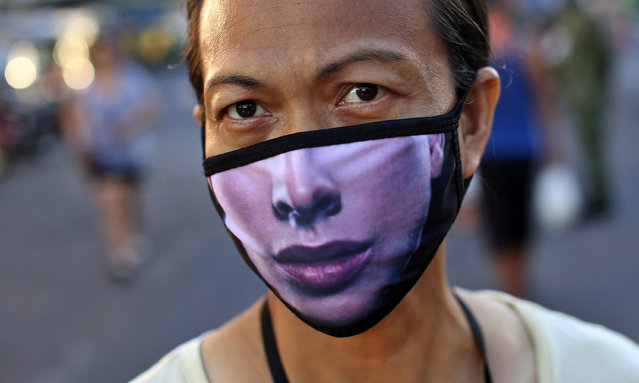
A Filipino woman wears a mask to try and protect against the spread of coronavirus in Malate district, Manila City on March 24, 2020. The Philippines has taken drastic measures to combat the spread of Covid-19. The entire country is under strict quarantine and the army is on the streets to monitor compliance. According to official figures, there are 462 positive cases and 33 dead in the Philippines, but it is thought that thousands of cases remain undetected due to lack of resources in a country where millions of people have no access to health care. In the poorest and most crowded areas, it’s almost impossible to adhere to the physical distancing required during quarantine. (Photo by Alejandro Ernesto/The Guardian)

A Filipino woman wears a mask to try and protect against the spread of coronavirus in Malate district, Manila City on March 24, 2020. The Philippines has taken drastic measures to combat the spread of Covid-19. The entire country is under strict quarantine and the army is on the streets to monitor compliance. According to official figures, there are 462 positive cases and 33 dead in the Philippines, but it is thought that thousands of cases remain undetected due to lack of resources in a country where millions of people have no access to health care. In the poorest and most crowded areas, it’s almost impossible to adhere to the physical distancing required during quarantine. (Photo by Alejandro Ernesto/The Guardian)
Details
08 Apr 2020 00:01:00
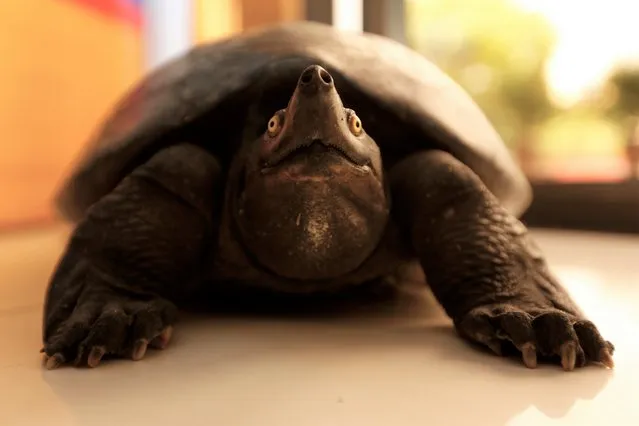
A view of a turtle during an event at the Ministry of Environment in Phnom Penh, Cambodia, 24 June 2020. A Cambodian woman recently bought endangered Royal Turtles from local villagers and gave them to Ministry of Environment. (Photo by Kith Serey/EPA/EFE)

A view of a turtle during an event at the Ministry of Environment in Phnom Penh, Cambodia, 24 June 2020. A Cambodian woman recently bought endangered Royal Turtles from local villagers and gave them to Ministry of Environment. (Photo by Kith Serey/EPA/EFE)
Details
28 Jun 2020 00:01:00
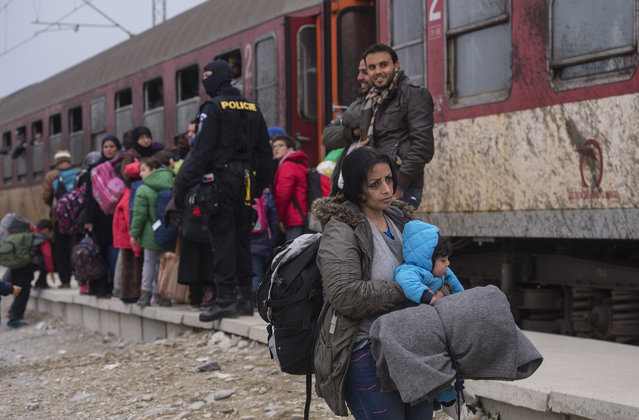
Refugees and migrants try to find a place on an already full train headed for Serbia, near the city of Gevgelija, The Former Yugoslav Republic of Macedonia, on February 24, 2016. Refugees and migrants from Iraq and Syria continue to pass through Macedonia on their way to the European Union. (Photo by Georgi Licovski/EPA)

Refugees and migrants try to find a place on an already full train headed for Serbia, near the city of Gevgelija, The Former Yugoslav Republic of Macedonia, on February 24, 2016. Refugees and migrants from Iraq and Syria continue to pass through Macedonia on their way to the European Union. (Photo by Georgi Licovski/EPA)
Details
25 Feb 2016 11:57:00
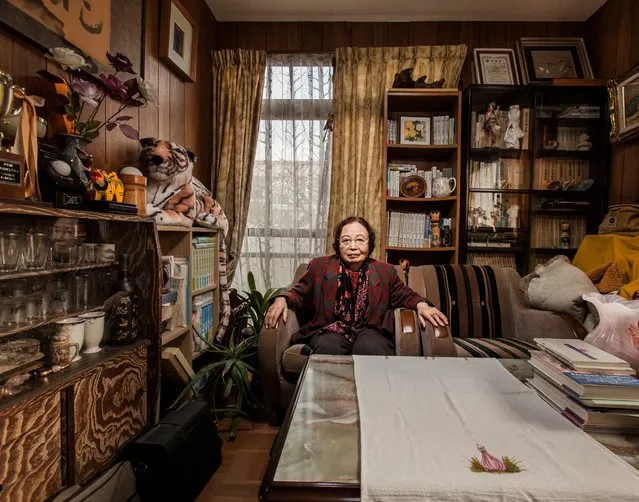
Takeoka Chisaka, Hiroshima, Japan. “One morning in August 1945, I was walking home from the night shift at a factory in Hiroshima. As I reached my door, there was a huge explosion. When I came to, my head was bleeding and I had been blasted 30m away”. (Photo and caption by Sasha Maslov)

Takeoka Chisaka, Hiroshima, Japan. “One morning in August 1945, I was walking home from the night shift at a factory in Hiroshima. As I reached my door, there was a huge explosion. When I came to, my head was bleeding and I had been blasted 30m away. The atomic bomb had detonated. When I found my mother, her eyes were badly burned. A doctor said they had to come out, but he didn’t have the proper tools so used a knife instead. It was hellish. I became a peace-worker after the war. In the 1960s, at a meeting at the UN, I met one of the people who created the atomic bomb. He apologised”. (Photo and caption by Sasha Maslov)

Details
11 May 2015 11:56:00
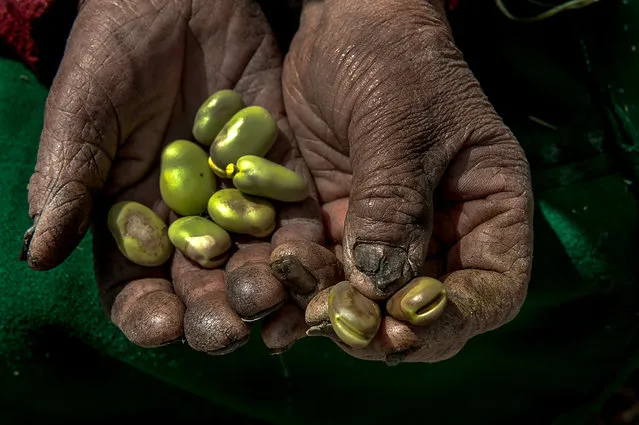
The hard-worked hands of Jacaba Coaquira, 80, holding the green beans she grew on her land. This year the production of her land was affected by lack of rain and early cold weather that froze the crops before they finished growing. Santiago de Okola, Bolivia. (Photo by Renée C. Byer/Living on a Dollar a Day)

The hard-worked hands of Jacaba Coaquira, 80, holding the green beans she grew on her land. This year the production of her land was affected by lack of rain and early cold weather that froze the crops before they finished growing. Santiago de Okola, Bolivia. (Photo by Renée C. Byer/Living on a Dollar a Day)
Details
16 Oct 2014 13:11:00