Loading...
Done
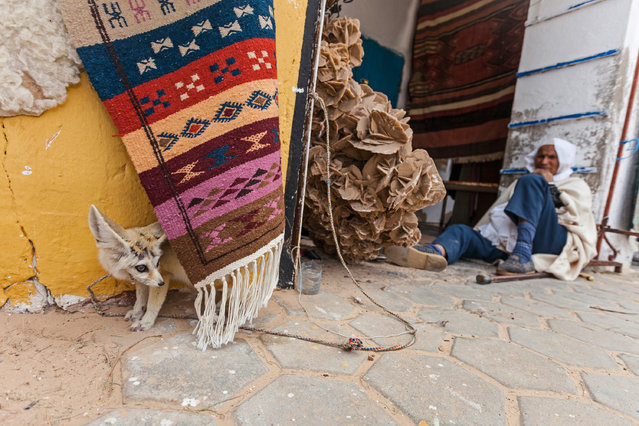
Sultan, a famous captive fennec that is displayed tied on a rope in front of a tourist shop, is the main attraction in the souk of Douz, a desert town in Tunisia. By the display of such a charismatic animal, tourists are often lured to buy things or pay for pictures. On inquiry, although Sultan has been caught as a pup in the wild, the owners of the shop reassure the foreigners stating that the animal is ‘domestic’. (Photo by Bruno D’Amicis/Fritz Pölking Prize/GDT EWPY 2015)

Sultan, a famous captive fennec that is displayed tied on a rope in front of a tourist shop, is the main attraction in the souk of Douz, a desert town in Tunisia. By the display of such a charismatic animal, tourists are often lured to buy things or pay for pictures. On inquiry, although Sultan has been caught as a pup in the wild, the owners of the shop reassure the foreigners stating that the animal is ‘domestic’. (Photo by Bruno D’Amicis/Fritz Pölking Prize/GDT EWPY 2015)
Details
23 Nov 2015 08:02:00
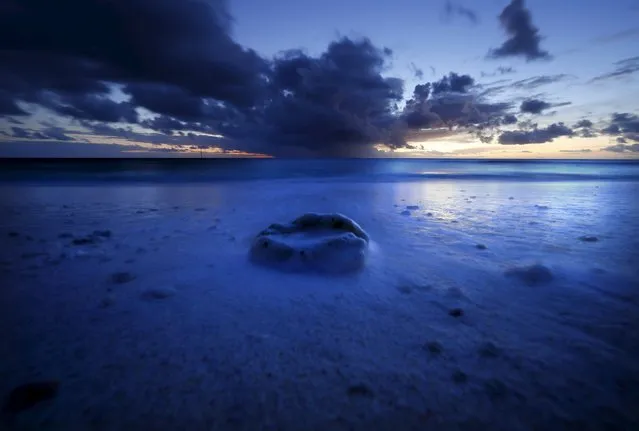
A reef shell lies on a beach as the sun sets on Lady Elliot Island located north-east of the town of Bundaberg in Queensland, Australia, June 10, 2015. (Photo by David Gray/Reuters)

A reef shell lies on a beach as the sun sets on Lady Elliot Island located north-east of the town of Bundaberg in Queensland, Australia, June 10, 2015. UNESCO World Heritage delegates recently snorkelled on Australia’s Great Barrier Reef, thousands of coral reefs, which stretch over 2,000 km off the northeast coast. Surrounded by manta rays, dolphins and reef sharks, their mission was to check the health of the world's largest living ecosystem, which brings in billions of dollars a year in tourism. Some coral has been badly damaged and animal species, including dugong and large green turtles, are threatened. UNESCO will say on Wednesday whether it will place the reef on a list of endangered World Heritage sites, a move the Australian government wants to avoid at all costs, having lobbied hard overseas. Earlier this year, UNESCO said the reef's outlook was “poor”. (Photo by David Gray/Reuters)
Details
30 Jun 2015 12:21:00
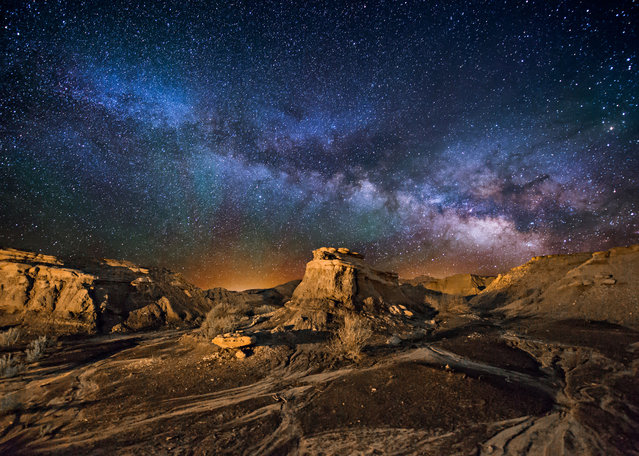
Bisit Badlands, New Mexico. (Photo by Wayne Pinkston/Caters News)

These are the stunning pictures of the night sky brilliantly capturing the lights and colors of the Milky Way glistening over desert landscapes. Taken in various locations across Australia and the United States from the Grand Canyon to the Coral Sea, the pictures perfectly show the bright lights of the starry skies. Here: Bisit Badlands, New Mexico. (Photo by Wayne Pinkston/Caters News)
Details
26 Sep 2015 08:05:00
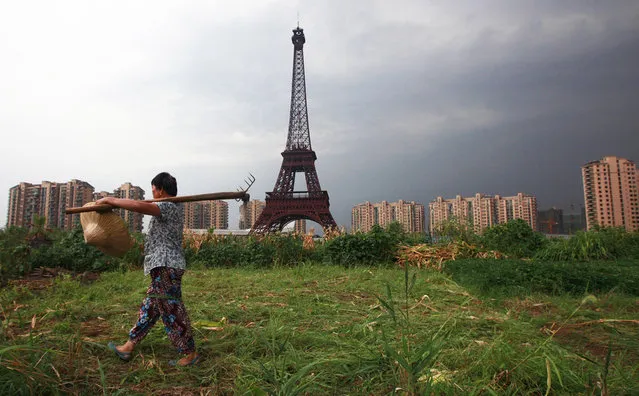
Ghost City China Ordos

Built for over a million people, the city of Ordos was designed to be the crowning glory of Inner Mongolia. Doomed to incompletion however, this futuristic metropolis now rises empty out of the deserts of northern China. Only 2% of its buildings were ever filled; the rest has largely been left to decay, abandoned mid-construction, earning Ordos the title of China's Ghost City.
Details
06 Dec 2015 12:57:00
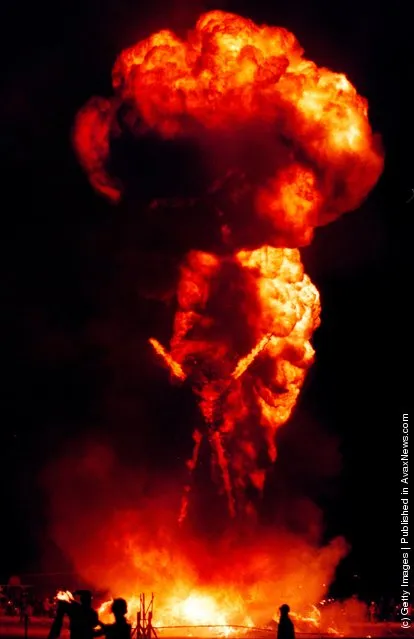
Burning Man Festival

“Burning Man is a week-long annual event held in the Black Rock Desert in northern Nevada, in the United States. The event starts on the Monday before the American Labor Day holiday, and ends on the holiday itself. It takes its name from the ritual burning of a large wooden effigy on Saturday evening. The event is described by many participants as an experiment in community, radical self-expression, and radical self-reliance”. – Wikipedia

Photo: A fireball billows up from a 52-foot tall wooden man as it goes up in flames September 2, 2000 during the15th annual Burning Man festival in the Black Rock Desert near Gerlach, Nevada. Despite high winds, dust storms, and a bit of rain, some 27,000 people camped out on a remote desert playa, or dry lake, for the week-long counter-cultural celebration of art and “radical self-expression”. (Photo by David McNew/Newsmakers)
Details
15 Oct 2011 10:41:00


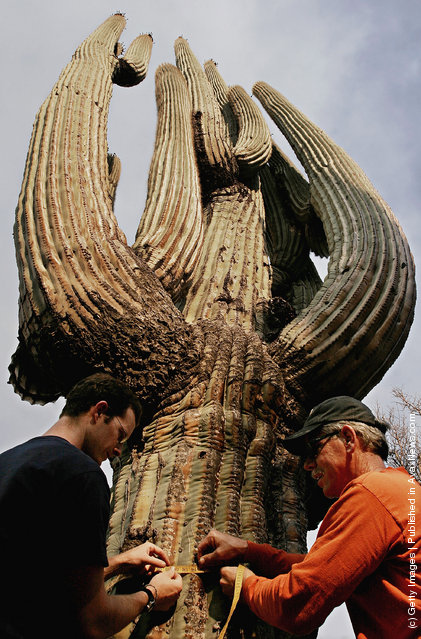
“The saguaro (scientific name Carnegiea gigantea) is a large, tree-sized cactus species in the monotypic genus Carnegiea. It is native to the Sonoran Desert in the U.S. state of Arizona, the Mexican state of Sonora, a small part of Baja California in the San Felipe Desert and an extremely small area of California, U.S. The saguaro blossom is the State Wildflower of Arizona”. – Wikipedia

Photo: Daniel Appel (L), a firefighter with Engine 84 from the Lassen National Forest in California and Mike Hallen, (R), Arizona representative of the National Register of Big Trees, measure the circumference of this Saguaro cactus called the "Grand One," in the Tonto National Forest on July 1, 2005 35 miles north of Phoenix, near Carefree, Arizona. The cactus, estimated to be more than 200 years old, measures a circumference of 7 feet, 10 inches (2.4 meters) and stands 46 feet high (14 meters). The cactus was burned in the Cave Creek Complex fire and may not survive. It was once the largest Saguaro in the world, two others have been found recently that have tied it's measurements. The fire has burned more than 214,000 acres of the Sonoran desert. (Photo by Jeff Topping/Getty Images)

Details
26 Jul 2011 12:27:00
The “Rabid Transit” Burning Man art car erupts with flames from it's onboard propane poofers during the 4th day of the annual Burning Man arts and music festival in the Black Rock Desert of Nevada, U.S., August 31, 2017. (Photo by Jim Bourg/Reuters)

The “Rabid Transit” Burning Man art car erupts with flames from it's onboard propane poofers during the 4th day of the annual Burning Man arts and music festival in the Black Rock Desert of Nevada, U.S., August 31, 2017. (Photo by Jim Bourg/Reuters)
Details
02 Sep 2017 06:33:00
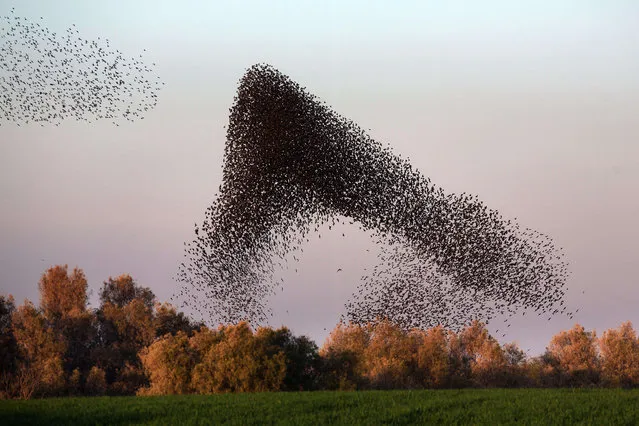
A flock of starlings is seen as they perform their traditional dance fly before landing to sleep during the sunset near the southern Arab Israeli city of Rahat, in the northern Israeli Negev desert, on February 2, 2015. (Photo by Menahem Kahana/AFP Photo)

A flock of starlings is seen as they perform their traditional dance fly before landing to sleep during the sunset near the southern Arab Israeli city of Rahat, in the northern Israeli Negev desert, on February 2, 2015. (Photo by Menahem Kahana/AFP Photo)
Details
17 Jul 2018 00:03:00