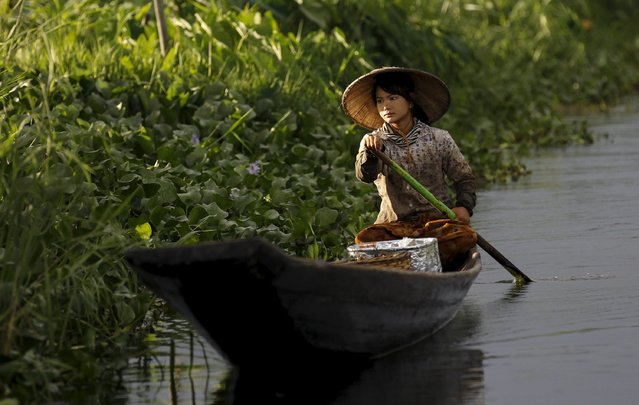
A woman rows her boat as she harvests tomatoes on Inle lake, in Myanmar's Shan State September 4, 2015. Inle is one of the country's most popular tourist sites. (Photo by Soe Zeya Tun/Reuters)
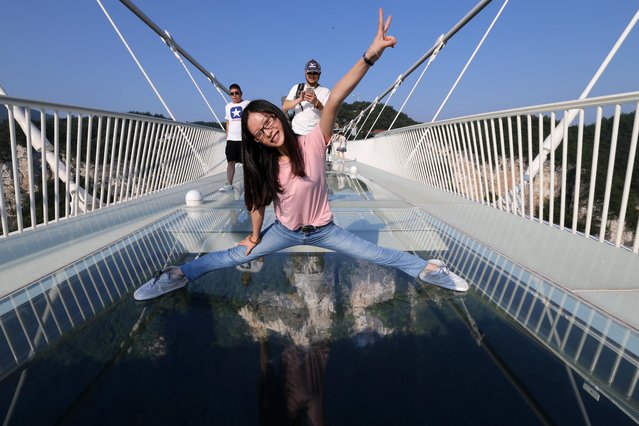
A tourist poses on the glass-bottom bridge at Zhangjiajie Grand Canyon on August 20, 2016 in Zhangjiajie, Hunan Province of China. The Zhangjiajie Grand Canyon's glass-bottomed bridge welcame its trial operation on Saturday and about 8,000 tourists crowded to view the grand glass bridge. (Photo by VCG/VCG via Getty Images)
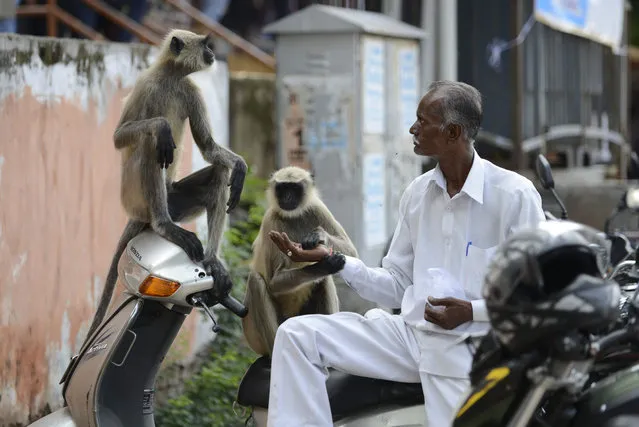
An Indian man feeds peanuts to monkeys along a busy street in Ahmedabad on July 31, 2016. Feeding animals is sacred in Hindu society. (Photo by Sam Panthaky/AFP Photo)
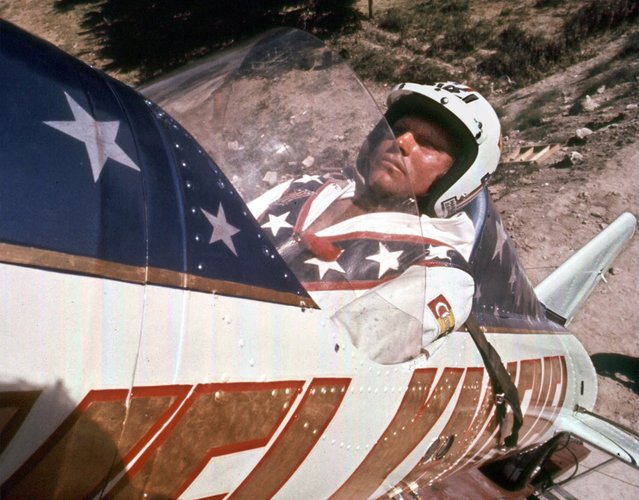
Evel Knievel is shown in his rocket before his failed attempt at a highly promoted 3/4-mile leap across Snake River Canyon in Twin Falls, Idaho, on September 8, 1974. The jump failed when the parachute on his rocket malfunctioned, opening prematurely. Knievel was uninjured. (Photo by AP Photo)
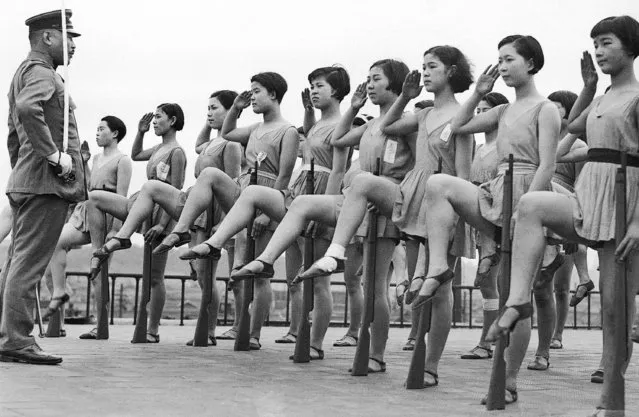
Japanese chorus girls appear to be drilling in military tactics atop their theater building as they perform salutes, June 30, 1937. The officer is from the Japanese regular army and says the girls display more rhythm in their drills than do the regular troops. (Photo by AP Photo)
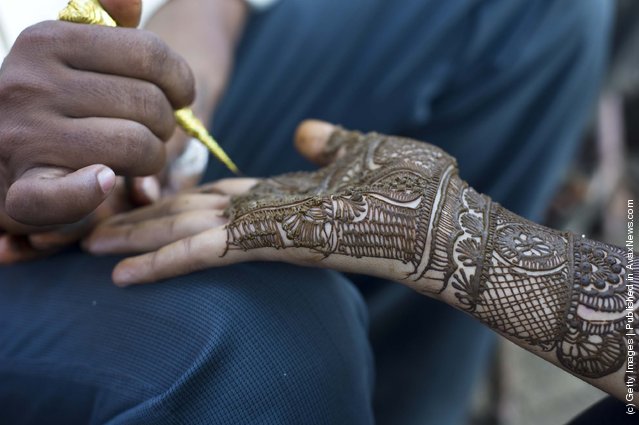
“Mehndi or menhdi is the application of henna as a temporary form of skin decoration in India, as well as by expatriate communities from the country. The word mehndi is derived from the Sanskrit word mendhikā. The use of mehndi and turmeric is described in the earliest Vedic ritual books. Haldi (Staining oneself with turmeric paste) as well as mehndi are important Vedic customs as a symbolic representation of the Outer and the Inner Sun. Vedic customs are meant to awaken the “inner light” and so the gold of the inner Sun has an important symbolic function”. – Wikipedia
Photo: Application of henna or “Mehndi” to a girls hand in a market on October 18, 2010 in Jaipur, India. (Photo by Simon de Trey-White/Getty Images)