Loading...
Done
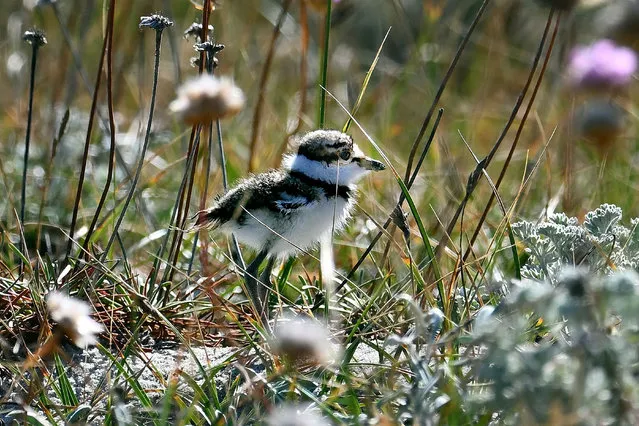
A killdeer (Charadrius vociferus) chick on sand dunes in Pacific Grove, California, US on June 21, 2023. The killdeer gets its name from its shrill, loud call. (Photo by Rory Merry/ZUMA Press Wire/Rex Features/Shutterstock)

A killdeer (Charadrius vociferus) chick on sand dunes in Pacific Grove, California, US on June 21, 2023. The killdeer gets its name from its shrill, loud call. (Photo by Rory Merry/ZUMA Press Wire/Rex Features/Shutterstock)
Details
02 Jul 2023 03:03:00
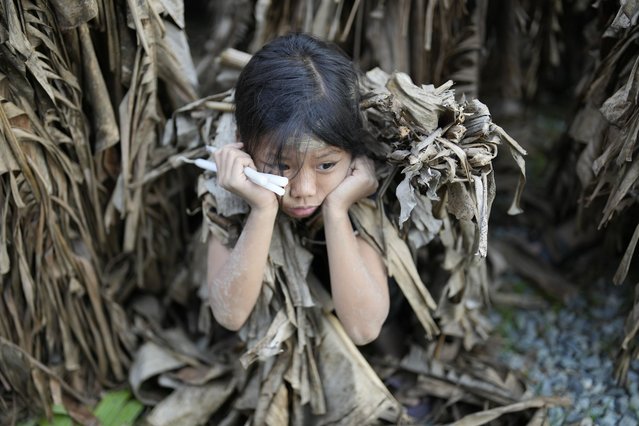
A young Catholic waits for the start of mass at the church of Saint John the Baptist during the mud festival at Bibiclat, Nueva Ecija province, northern Philippines, Monday, June 24, 2024. (Photo by Aaron Favila/AP Photo)

A young Catholic waits for the start of mass at the church of Saint John the Baptist during the mud festival at Bibiclat, Nueva Ecija province, northern Philippines, Monday, June 24, 2024. (Photo by Aaron Favila/AP Photo)
Details
27 Jul 2024 02:42:00
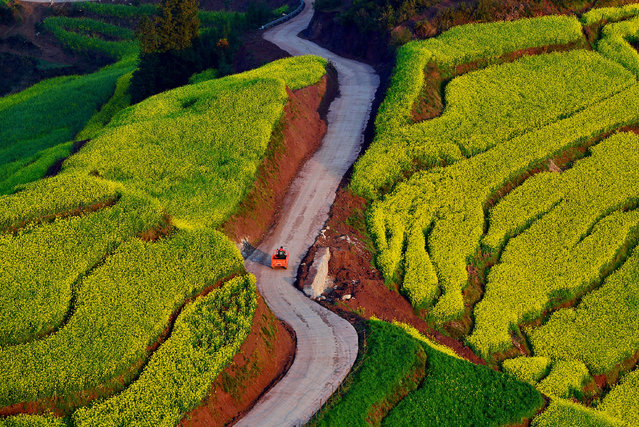
Aerial photo taken on March 4, 2017 shows cole flower fields in Luoping County, southwest China's Yunnan Province. (Photo by Xinhua/Barcroft Images)

Aerial photo taken on March 4, 2017 shows cole flower fields in Luoping County, southwest China's Yunnan Province. (Photo by Xinhua/Barcroft Images)
Details
07 Mar 2017 00:03:00
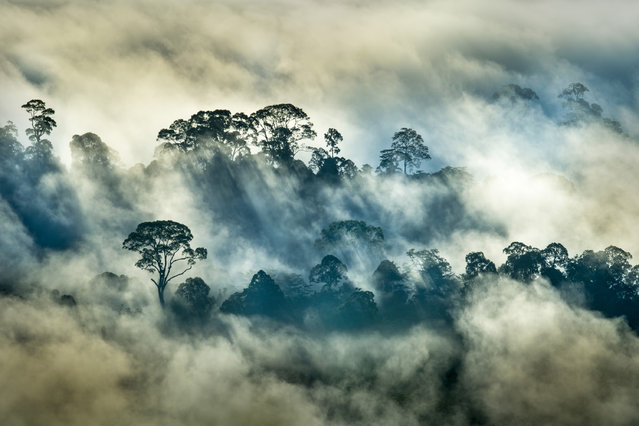
Landscapes, second place: Florian Smit, “Rainforest” (Danum valley, Borneo). (Photo by Florian Smit/2019 GDT Nature Photographer of the Year)

Run by the Society of German Nature Photographers (Gesellschaft Deutscher Tierfotografen), the prestigious annual contest celebrates the best wildlife photography from members in Germany. Here: Landscapes, second place: Florian Smit, “Rainforest” (Danum valley, Borneo). (Photo by Florian Smit/2019 GDT Nature Photographer of the Year)
Details
11 May 2019 00:03:00
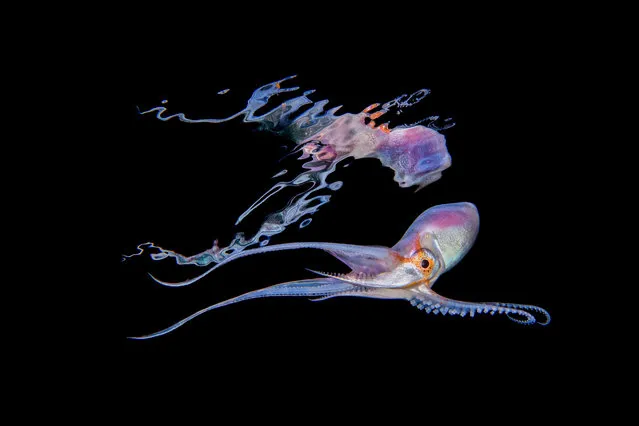
A Tremoctopus Gracilis in the waters around Anilao, Philippines. (Photo by Cai Songda/Caters News Agency)

Impressive images of these alien-like creatures were captured underwater – photographer Cai Songda is a keen diver and did not miss the chance to snap pictures of the unique “aliens”. Here: A Tremoctopus Gracilis in the waters around Anilao, Philippines. (Photo by Cai Songda/Caters News Agency)
Details
17 Aug 2018 00:03:00
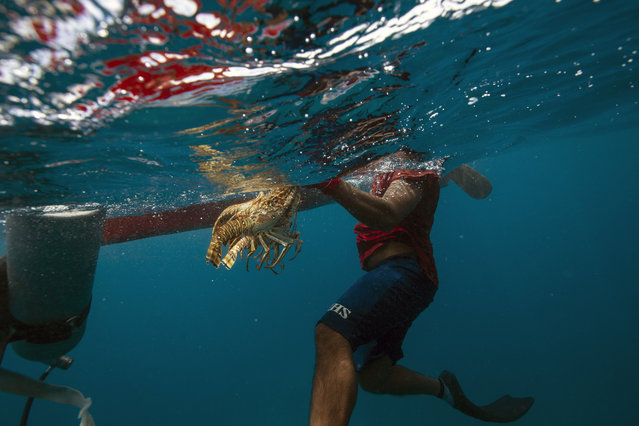
In this September 9, 2018 photo, a diver holds onto his catch of lobsters during a fishing journey in the Miskito coast near Cay Savannah, Honduras. A diver makes 75 lempiras ($3) per pound of lobster. An average 10-pound daily haul of lobster is a windfall for people in one of the most impoverished regions of the Americas, so many take the risk, and many suffer for it. (Photo by Rodrigo Abd/AP Photo)

In this September 9, 2018 photo, a diver holds onto his catch of lobsters during a fishing journey in the Miskito coast near Cay Savannah, Honduras. A diver makes 75 lempiras ($3) per pound of lobster. An average 10-pound daily haul of lobster is a windfall for people in one of the most impoverished regions of the Americas, so many take the risk, and many suffer for it. (Photo by Rodrigo Abd/AP Photo)
Details
23 Jan 2019 00:01:00
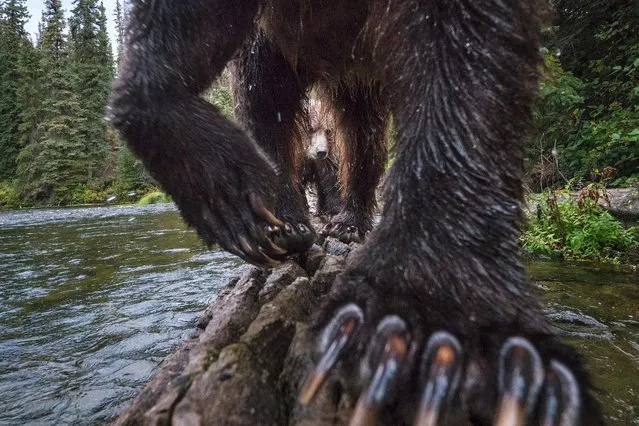
“The Salmon Catchers”. Terrestrial Wildlife. To capture this view of a mother grizzly bear and her cub, photographer Peter Mather set up a camera trap on a log that he knew the bears tended to traverse while fishing for salmon, in the Yukon River watershed in Canada. (Photo by Peter Mather/BigPicture Natural World Photography Competition 2017)

The fourth annual BigPicture Natural World Photography Competition aims to celebrate the diversity of life on Earth, and encourages people to protect and conserve it. Here: “The Salmon Catchers”. Terrestrial Wildlife. To capture this view of a mother grizzly bear and her cub, photographer Peter Mather set up a camera trap on a log that he knew the bears tended to traverse while fishing for salmon, in the Yukon River watershed in Canada. (Photo by Peter Mather/BigPicture Natural World Photography Competition 2017)
Details
02 Jul 2017 07:25:00
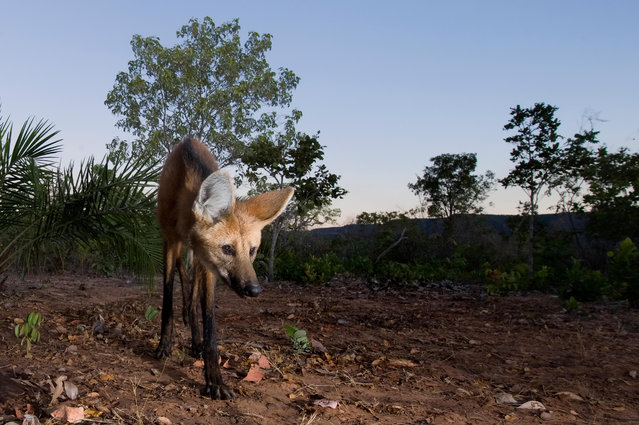
The maned wolf is among the large mammals in the Brazilian Cerrado that are threatened by the increasing conversion of grasslands into farmland for grazing and growing crops. (Photo by Ben Cranke/Nature Picture Library/Alamy Stock Photo)

Global wildlife populations will decline by 67% by 2020 unless urgent action is taken to reduce human impact on species and ecosystems, warns the biennial Living Planet Index report from WWF (World Wide Fund for Nature) and ZSL (Zoological Society of London). From elephants to eels, here are some of the wildlife populations most affected by human activity. Here: The maned wolf is among the large mammals in the Brazilian Cerrado that are threatened by the increasing conversion of grasslands into farmland for grazing and growing crops. (Photo by Ben Cranke/Nature Picture Library/Alamy Stock Photo)
Details
28 Oct 2016 10:47:00