Loading...
Done
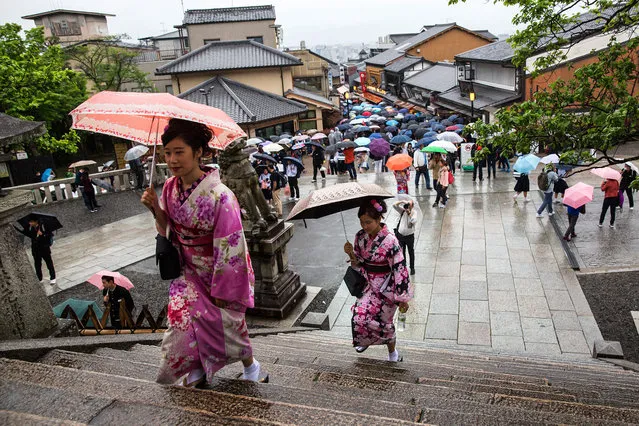
Tourists dressed in yukatas, a light, unlined, summer kimono made of cotton instead of the traditional silk, climb steps to visit a temple on April 27, 2016 in Kyoto, Japan. Now the seventh largest city in Japan, Kyoto was once the Imperial capital for more than one thousand years, it is now the capital city of Kyoto Prefecture and a major part of the Kyoto-Osaka-Kobe metropolitan area. (Photo by Carl Court/Getty Images)

Tourists dressed in yukatas, a light, unlined, summer kimono made of cotton instead of the traditional silk, climb steps to visit a temple on April 27, 2016 in Kyoto, Japan. Now the seventh largest city in Japan, Kyoto was once the Imperial capital for more than one thousand years, it is now the capital city of Kyoto Prefecture and a major part of the Kyoto-Osaka-Kobe metropolitan area. (Photo by Carl Court/Getty Images)
Details
21 May 2016 10:48:00
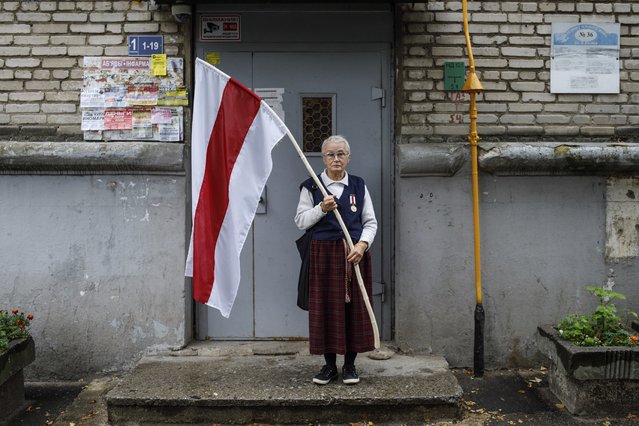
Nina Bahinskaya, 73, poses for a photo holding an old Belarusian national flag at an entrance of her apartment building in Minsk, Belarus, Thursday, September 10, 2020. The 73-year-old former geologist has become one of the most recognizable faces of Belarus protests, fearlessly waving a huge opposition's red-and-white flag in front of riot police. (Photo by AP Photo/Stringer)

Nina Bahinskaya, 73, poses for a photo holding an old Belarusian national flag at an entrance of her apartment building in Minsk, Belarus, Thursday, September 10, 2020. The 73-year-old former geologist has become one of the most recognizable faces of Belarus protests, fearlessly waving a huge opposition's red-and-white flag in front of riot police. (Photo by AP Photo/Stringer)
Details
22 Sep 2020 00:05:00
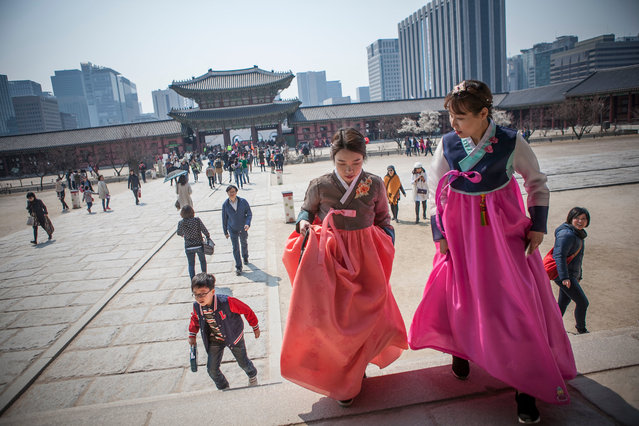
Young Korean women wearing  hanbok (Korean traditional dress) walk inside Gyeongbok Palace on March 27, 2016 in Seoul, South Korea. There has been a trend in recent years for the young Koreans to wear the traditional Korean dress, Hanbok. Wearing the traditional dress, they will walk around downtown Seoul on weekends taking selfies, and share their memories with friends on social media, and also to promote their traditional dress to foreign visitors. (Photo by Jean Chung/Getty Images)

Young Korean women wearing hanbok (Korean traditional dress) walk inside Gyeongbok Palace on March 27, 2016 in Seoul, South Korea. There has been a trend in recent years for the young Koreans to wear the traditional Korean dress, Hanbok. Wearing the traditional dress, they will walk around downtown Seoul on weekends taking selfies, and share their memories with friends on social media, and also to promote their traditional dress to foreign visitors. (Photo by Jean Chung/Getty Images)
Details
03 Apr 2016 11:31:00
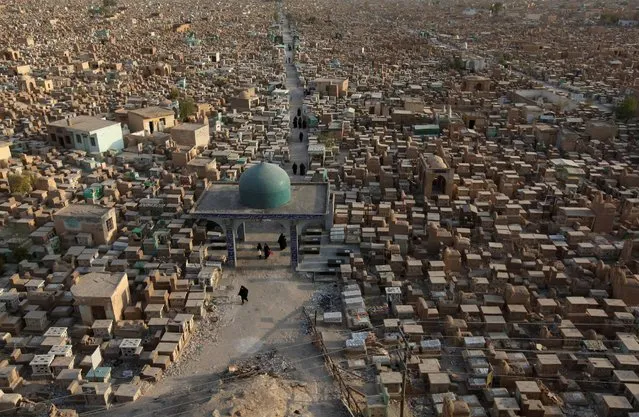
The Wadi al-Salam cemetery, Arabic for “Peace Valley”, is seen in Najaf, south of Baghdad, Iraq August 3, 2016. The world's largest cemetery, in Iraq's Shi'ite holy city of Najaf, is expanding at double its usual rate as Shi'ite militias bury their dead from the war against Islamic State. The Wadi al-Salam cemetery, Arabic for “Peace Valley” has a special place in the hearts of Shi'ite Muslims as it surrounds the Mausoleum of their first imam, Ali Bin Abi Talib, a cousin and son-in-law of Prophet Mohammad. (Photo by Alaa Al-Marjani/Reuters)

The Wadi al-Salam cemetery, Arabic for “Peace Valley”, is seen in Najaf, south of Baghdad, Iraq August 3, 2016. The world's largest cemetery, in Iraq's Shi'ite holy city of Najaf, is expanding at double its usual rate as Shi'ite militias bury their dead from the war against Islamic State. The Wadi al-Salam cemetery, Arabic for “Peace Valley” has a special place in the hearts of Shi'ite Muslims as it surrounds the Mausoleum of their first imam, Ali Bin Abi Talib, a cousin and son-in-law of Prophet Mohammad. (Photo by Alaa Al-Marjani/Reuters)
Details
24 Aug 2016 11:38:00
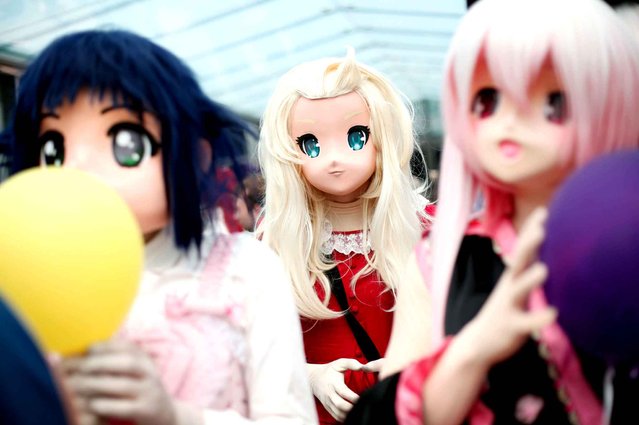
Women dressed like manga characters attend the 16th edition of the Japan Expo exhibition, in Villepinte, north of Paris, Thursday, July 2, 2015. (Photo by Thibault Camus/AP Photo)

Women dressed like manga characters attend the 16th edition of the Japan Expo exhibition, in Villepinte, north of Paris, Thursday, July 2, 2015. (Photo by Thibault Camus/AP Photo)
Details
10 Aug 2015 08:19:00
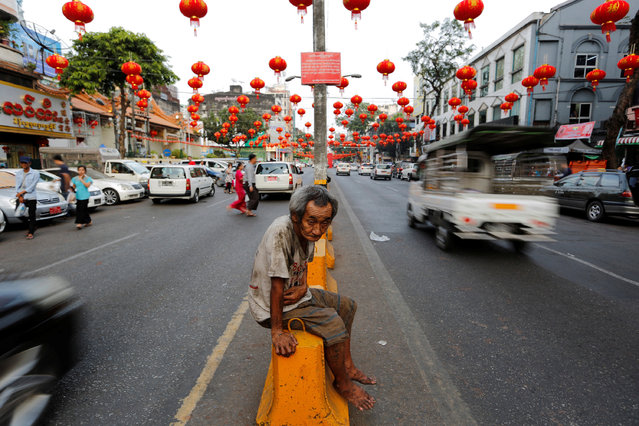
A man sits under lanterns and decorations on a street ahead of the Chinese Lunar New Year in Chinatown Yangon, Myanmar January 23, 2017. (Photo by Soe Zeya Tun/Reuters)

A man sits under lanterns and decorations on a street ahead of the Chinese Lunar New Year in Chinatown Yangon, Myanmar January 23, 2017. (Photo by Soe Zeya Tun/Reuters)
Details
25 Jan 2017 11:32:00
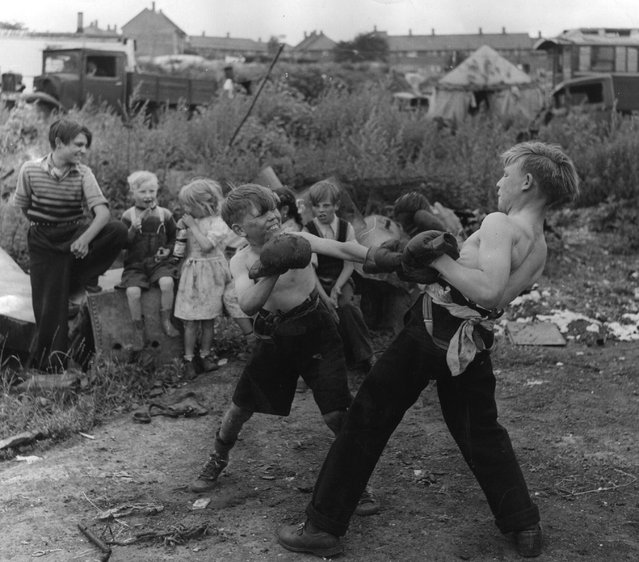
The unromantic gypsies. Children boxing in a gypsy camp in Kent, England on July 1, 1951. Like all boys these gypsy lads like to try their hand at boxing. Encouraged by their friends they fight it out on Corke's Meadow. Few Romanies now live a life of wandering romance. Most are like the three hundred squatters of Corke's Meadow, Kent, which is part of a “gypsy problem” that involves about 100,000 today. Of those about 25,000 can be rightly called gypsies, the rest are Mumpers and Posh-rats and Hobos. Corke's Meadow has both kinds. “Picture Post” cameraman Bert Hardy photographs the Corke's Meadow gypsies in their encampment. (Photo by Hulton-Deutsch Collection/Corbis via Getty Images)

The unromantic gypsies. Children boxing in a gypsy camp in Kent, England on July 1, 1951. Like all boys these gypsy lads like to try their hand at boxing. Encouraged by their friends they fight it out on Corke's Meadow. Few Romanies now live a life of wandering romance. Most are like the three hundred squatters of Corke's Meadow, Kent, which is part of a “gypsy problem” that involves about 100,000 today. Of those about 25,000 can be rightly called gypsies, the rest are Mumpers and Posh-rats and Hobos. Corke's Meadow has both kinds. “Picture Post” cameraman Bert Hardy photographs the Corke's Meadow gypsies in their encampment. (Photo by Hulton-Deutsch Collection/Corbis via Getty Images)
Details
12 Mar 2017 00:01:00
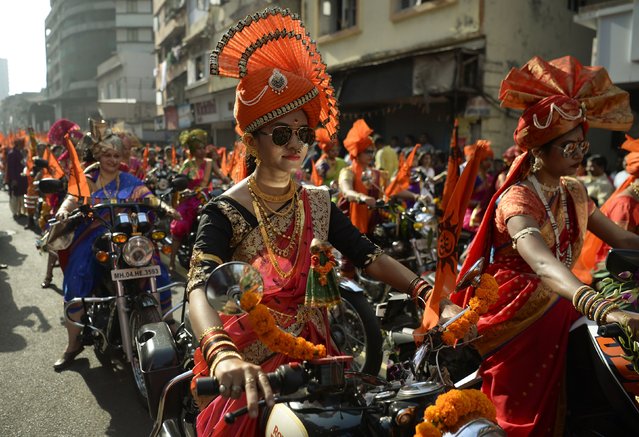
Indian women dressed in traditional attire drive motorcycles as they take part in a procession celebrating “Gudhi Padwa” or the Maharashtrian New Year in Mumbai on March 28, 2017. Gudhi Padwa is the Hindu New Year for people in India's Maharashtra state and marks the end of a harvest and the beginning of a new one. (Photo by Punit Paranjpe/AFP Photo)

Indian women dressed in traditional attire drive motorcycles as they take part in a procession celebrating “Gudhi Padwa” or the Maharashtrian New Year in Mumbai on March 28, 2017. Gudhi Padwa is the Hindu New Year for people in India's Maharashtra state and marks the end of a harvest and the beginning of a new one. (Photo by Punit Paranjpe/AFP Photo)
Details
29 Mar 2017 09:39:00