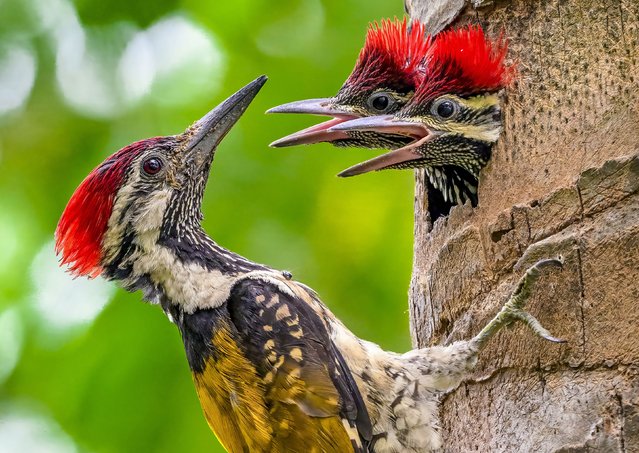
An adult black-rumped flameback woodpecker is pestered by a pair of hungry chicks in Rajarhat, India in the second decade of May 2024. (Photo by Kalyan Acharya/Solent News)
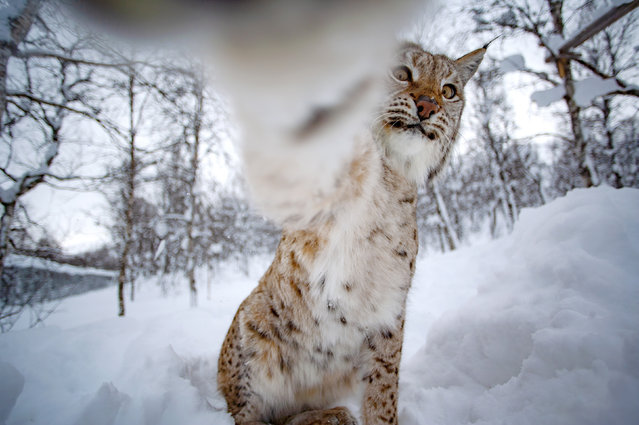
A lynx in a wintry forest investigates a remote camera in the last decade of January 2025. Four lynx were recently illegally released into the Cairngorms, in the Scottish Highlands, and were rescued by the Royal Zoological Society of Scotland, although one subsequently died. (Photo by Brian Matthews/Solent News)
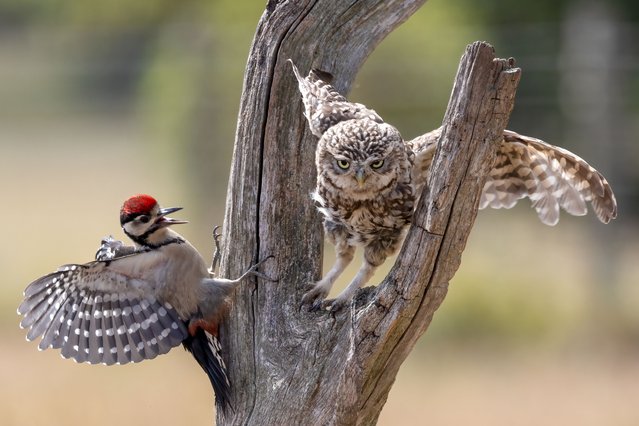
A woodpecker and an owl bicker on a tree branch near Bromsgrove in the West Midlands, UK in the second decade of July 2025. The photographer says the juvenile woodpecker, with a red crown, poked the owl in the eye before flying off. (Photo by Julie Yates/Solent News & Photo Agency)
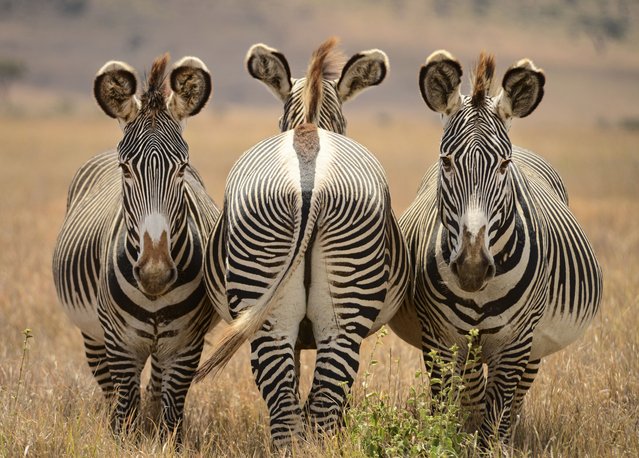
It doesn’t make for the most flattering photoshoot, but there is a reason these zebras at Lewa wildlife conservancy in Kenya in the second decade of August 2025 are stood head to tail: they use their tails to swat flies from each others’ faces. (Photo by Andrew Campbell/Solent News & Photo Agency)
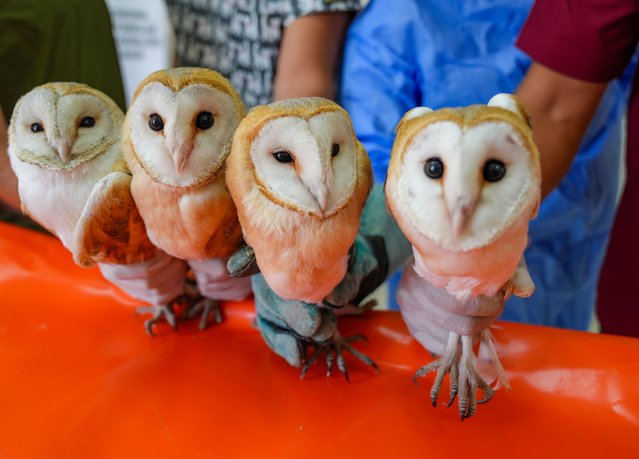
Four orphan barn owl chicks were found weak from hunger and thirst after their mother's death, are under treatment at the Dicle Wildlife Rescue and Rehabilitation Center before being released back into their natural habitat on September 23, 2025, in Diyarbakir, Turkiye. (Photo by Bestami Bodruk/Anadolu via Getty Images)
A Japanese white-eye is seen on a branch of cherry blossoms at Kyoto Imperial Palace on March 26, 2010 in Kyoto, Japan. (Photo by Akihiro I/Getty Images)
October 25, 2009; London,UK; The mascot for the Tampa Bay Buccaneers watches a cheerleader during the NFL International Series game against the New England Patriots at Wembley Stadium. (Photo by David Wilkinson/Offside Sports)
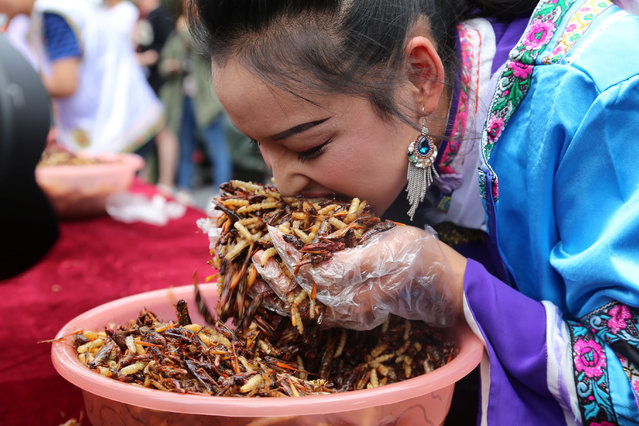
A woman participates in an insect-eating competition at a scenic spot in Lijiang, Yunnan province, China June 25, 2017. Insects have been a part of Yunnan cuisine for centuries, long before their potential as sustainable sources of protein caught the eye of the Western world. Bee larvae, grasshoppers and cicadas are just some items found on menus in the region. (Photo by Reuters/Stringer)