Loading...
Done
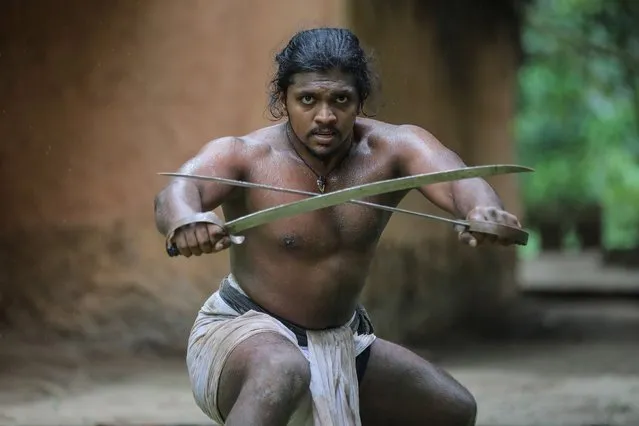
A student of the Sri Lankan ancient martial art “Angampora” performs during a practice session at the angam maduwa or fighting field, in Korathota, a suburb of Colombo, Sri Lanka, 07 September 2022. Sri Lanka's ancient martial art, Angampora, is thought to be thousands of years old. Anga translates to “body parts” and Angampora is a fighting art that uses body parts. Martial arts practitioners in Angampora were mostly in the king's service, and they were tasked with protecting the king and his kingdom. Angampora was practiced in secret for most centuries because the British, who colonized Sri Lanka, banned it in 1818 after seeing it as a threat. (Photo by Chamila Karunarathne/EPA/EFE)

A student of the Sri Lankan ancient martial art “Angampora” performs during a practice session at the angam maduwa or fighting field, in Korathota, a suburb of Colombo, Sri Lanka, 07 September 2022. Sri Lanka's ancient martial art, Angampora, is thought to be thousands of years old. Anga translates to “body parts” and Angampora is a fighting art that uses body parts. Martial arts practitioners in Angampora were mostly in the king's service, and they were tasked with protecting the king and his kingdom. Angampora was practiced in secret for most centuries because the British, who colonized Sri Lanka, banned it in 1818 after seeing it as a threat. (Photo by Chamila Karunarathne/EPA/EFE)
Details
14 Oct 2022 04:47:00


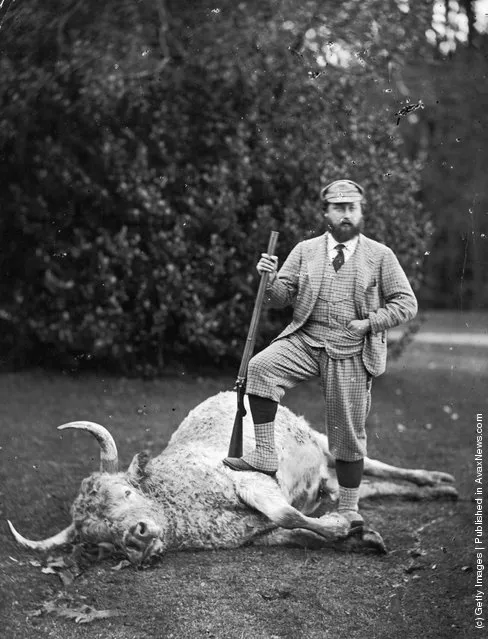
Edward, Prince of Wales (1840–1910), later King Edward VII, stands over the carcass of a wild Chillingham bull, shot by himself during a visit to Chillingham Castle, Northumberland, circa 1879. (Photo by Hulton Archive/Getty Images)
Details
05 Apr 2011 09:25:00
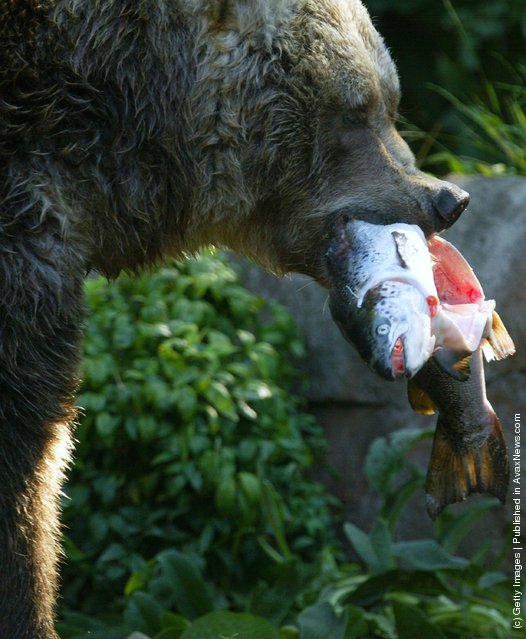
Bear Eat Fish

Cynthia the Kodiak Bear enjoys a whole Tasmanian Atlantic Salmon to celebrate her 28th birthday at Taronga Zoo on January 17, 2005 in Sydney, Australia. (Photo by Matt King/Getty Images)
Details
20 Sep 2011 12:34:00
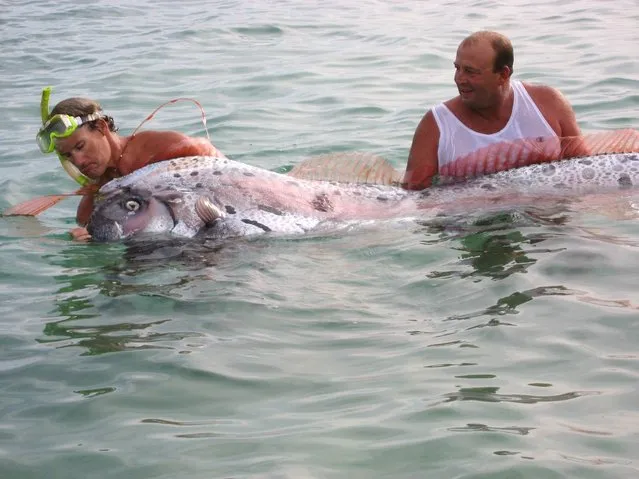
Regalecus Glesne

“The king of herrings or giant oarfish, an oarfish of the family Regalecidae, is the world's longest bony fish. Its total length has been documented to reach 17 m (56 ft), and it can weigh up to 300 kg (661 lb)”. – Wikipedia
Details
23 May 2012 13:38:00
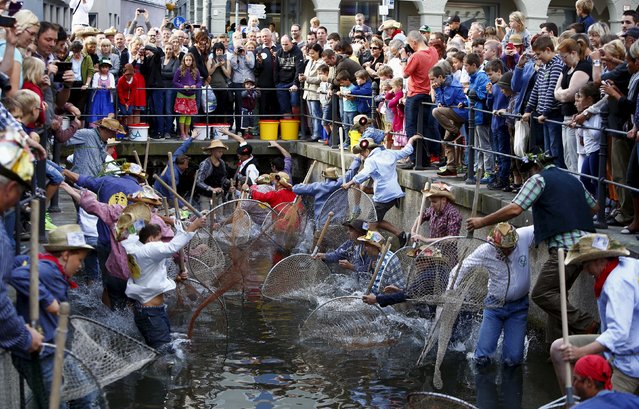
Fishermen jump into a small river to catch trout as they celebrate Fischertag (Fisherman's Day) in downtown Memmingen, southern Germany, July 25, 2015. The annual Fisherman's Day (Fischertag) tradition goes back to the year of 1465 where every fisherman who were born in Memmingen tries to catch trout from the river. The participant who catches the biggest trout will be named the “Fisher King” for one year. (Photo by Michaela Rehle/Reuters)

Fishermen jump into a small river to catch trout as they celebrate Fischertag (Fisherman's Day) in downtown Memmingen, southern Germany, July 25, 2015. The annual Fisherman's Day (Fischertag) tradition goes back to the year of 1465 where every fisherman who were born in Memmingen tries to catch trout from the river. The participant who catches the biggest trout will be named the “Fisher King” for one year. (Photo by Michaela Rehle/Reuters)
Details
26 Jul 2015 10:37:00
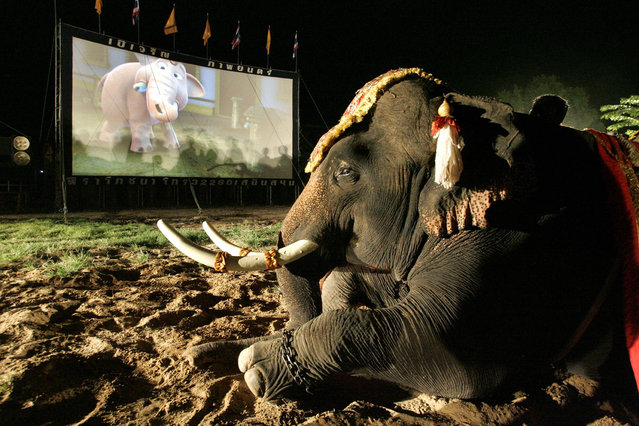
A mahout watches the Thai animation movie Kan Kluay with his elephant in Ayuthaya province, about 80km (49 miles) north of Bangkok June 5, 2006. The movie tells the story of a young Thai wild elephant who, while looking for his father, becomes the war elephant of the Thai King fighting against Burma and restored Thailand's ancient Ayuthaya empire that existed about 400 years ago. (Photo by Sukree Sukplang/Reuters)

A mahout watches the Thai animation movie Kan Kluay with his elephant in Ayuthaya province, about 80km (49 miles) north of Bangkok June 5, 2006. The movie tells the story of a young Thai wild elephant who, while looking for his father, becomes the war elephant of the Thai King fighting against Burma and restored Thailand's ancient Ayuthaya empire that existed about 400 years ago. (Photo by Sukree Sukplang/Reuters)
Details
12 Aug 2015 13:33:00
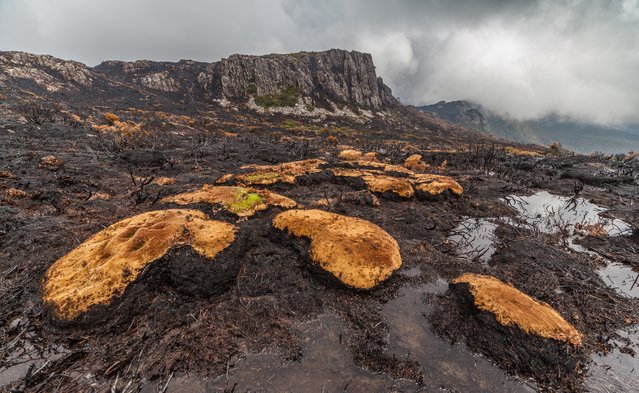
Pictures from Tasmania’s central plateau, shot by wilderness photographer Dan Broun, show the extraordinary damage wrought by more than a week of bushfires following lightning strikes in Australia’s southernmost state on January 13. 2016. The world heritage area was home to a range of unique alpine flora including pencil pines, king billy pines and cushion plants, some more than 1,000 years old. (Photo by Dan Broun)

Pictures from Tasmania’s central plateau, shot by wilderness photographer Dan Broun, show the extraordinary damage wrought by more than a week of bushfires following lightning strikes in Australia’s southernmost state on January 13. 2016. The world heritage area was home to a range of unique alpine flora including pencil pines, king billy pines and cushion plants, some more than 1,000 years old. Now more than 10,000ha of land has been incinerated, and ecologist say that, unlike eucalyptus trees, the ancient flora will not recover. (Photo by Dan Broun)
Details
02 Feb 2016 13:56:00
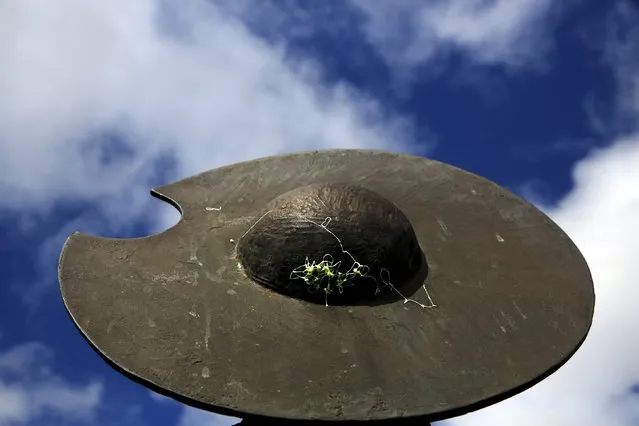
A sculpture of Don Quixote shows him wearing the basin he mistook for the enchanted helmet of the fictional Moorish king Mambrino in Alcazar de San Juan, Spain, April 5, 2016. (Photo by Susana Vera/Reuters)

A sculpture of Don Quixote shows him wearing the basin he mistook for the enchanted helmet of the fictional Moorish king Mambrino in Alcazar de San Juan, Spain, April 5, 2016. The arid central Spanish region of La Mancha is the setting for “Don Quixote”, the seventeenth-century novel by Miguel de Cervantes. Four hundred years after his death, references to the characters of Don Quixote, his loyal squire Sancho Panza and his beautiful lady Dulcinea abound in the surrounding villages from sweet treats to theatre productions involving livestock. Cervantes did not give away the name of the birthplace of Don Quixote, a middle-aged gentleman who becomes obsessed with chivalrous ideals. But many identify the village of Argamasilla de Alba as his hometown. The anniversary of Cervantes’ death is marked on the 23 April. (Photo by Susana Vera/Reuters)
Details
21 Apr 2016 12:32:00