Loading...
Done
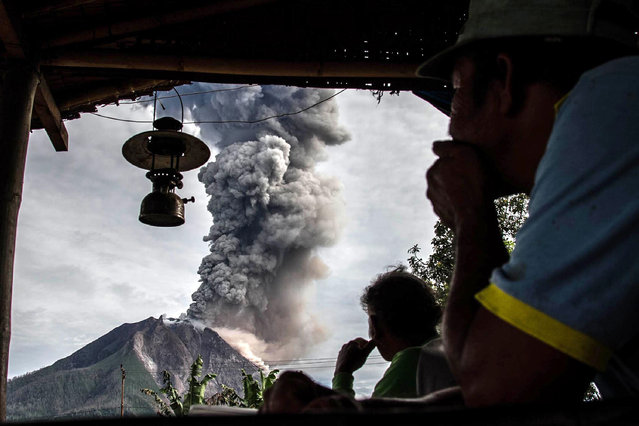
Villagers look on as Mount Sinabung volcano spews thick volcanic ash, as seen from Beganding village in Karo, North Sumatra province, on May 19, 2017. Sinabung roared back to life in 2010 for the first time in 400 years. After another period of inactivity, it erupted once more in 2013 and has remained highly active since. (Photo by Ivan Damanik/AFP Photo)

Villagers look on as Mount Sinabung volcano spews thick volcanic ash, as seen from Beganding village in Karo, North Sumatra province, on May 19, 2017. Sinabung roared back to life in 2010 for the first time in 400 years. After another period of inactivity, it erupted once more in 2013 and has remained highly active since. (Photo by Ivan Damanik/AFP Photo)
Details
20 May 2017 10:09:00
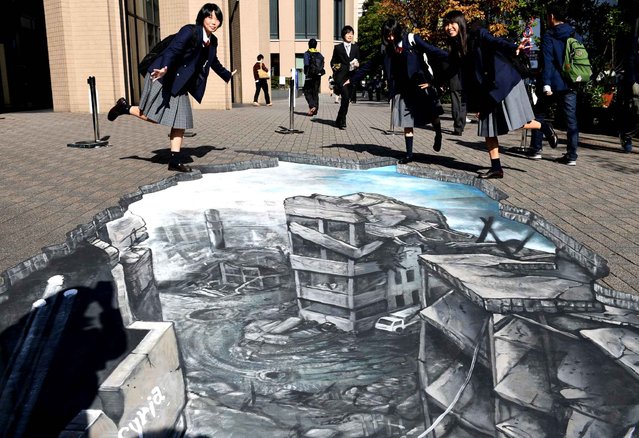
Students pose for a picture with a 3- D optical illusion artwork of a devastated cityscape in Aleppo, Syria at the campus of the Meiji University in Tokyo on November 18, 2016. The Japanese branch of the human rights organisation Amnesty International displayed the artwork to encourage people to think about the Syrian civil war. (Photo by Toshifumi Kitamura/AFP Photo)

Students pose for a picture with a 3- D optical illusion artwork of a devastated cityscape in Aleppo, Syria at the campus of the Meiji University in Tokyo on November 18, 2016. The Japanese branch of the human rights organisation Amnesty International displayed the artwork to encourage people to think about the Syrian civil war. (Photo by Toshifumi Kitamura/AFP Photo)
Details
19 Nov 2016 11:36:00
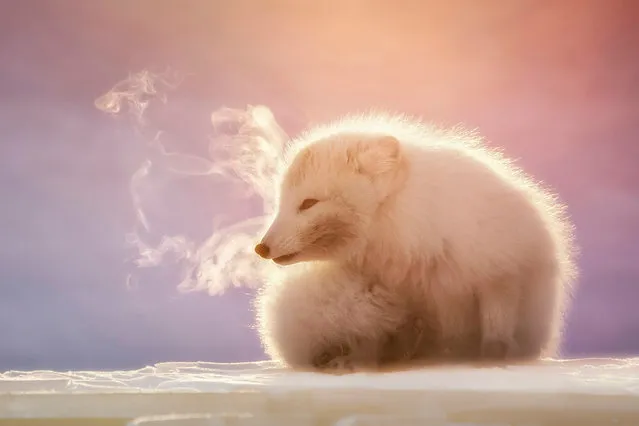
Breath of an Arctic fox by Marco Gaiotti, Italy. Marco was watching this little Arctic fox as it incessantly called another nearby. Gradually he noticed the fox’s wet breath was quickly freezing in the air after each call. It was late winter in Spitsbergen, Svalbard, and the air was -35C (-31F). Photographing Arctic foxes is often frustrating, as they are normally running around fast in search of food, but this one was very relaxed and let Marco get close enough to focus on it, with the light glowing perfectly in the background. (Photo by Marco Gaiotti/Wildlife Photographer of the Year 2021)

Breath of an Arctic fox by Marco Gaiotti, Italy. Marco was watching this little Arctic fox as it incessantly called another nearby. Gradually he noticed the fox’s wet breath was quickly freezing in the air after each call. It was late winter in Spitsbergen, Svalbard, and the air was -35C (-31F). Photographing Arctic foxes is often frustrating, as they are normally running around fast in search of food, but this one was very relaxed and let Marco get close enough to focus on it, with the light glowing perfectly in the background. (Photo by Marco Gaiotti/Wildlife Photographer of the Year 2021)
Details
05 Dec 2021 06:36:00
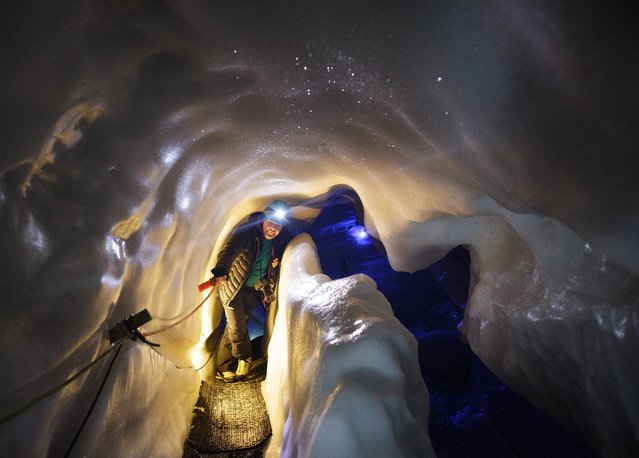
A tourist walks inside the Ice Palace glacier hollow at Hintertux glacier, located at around 3250 meters above sea level, in Zillertal, Austria, 02 March, 2016. The hollow's temperature remains constant at 0 degrees Celsius, in summer and winter alike, and is also used by the University of Innsbruck for scientific research projects. (Photo by Lisi Niesner/EPA)

A tourist walks inside the Ice Palace glacier hollow at Hintertux glacier, located at around 3250 meters above sea level, in Zillertal, Austria, 02 March, 2016. The hollow's temperature remains constant at 0 degrees Celsius, in summer and winter alike, and is also used by the University of Innsbruck for scientific research projects. (Photo by Lisi Niesner/EPA)
Details
03 Mar 2016 11:44:00
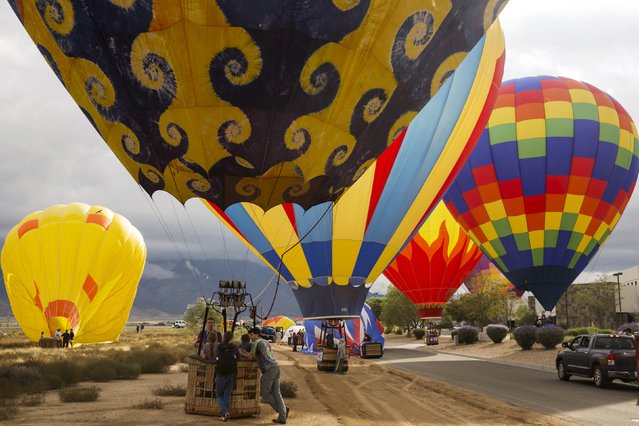
Crew members work to secure a hot air balloon after landing during the 2015 Albuquerque International Balloon Fiesta in Albuquerque, New Mexico, October 4, 2015. (Photo by Lucas Jackson/Reuters)

Crew members work to secure a hot air balloon after landing during the 2015 Albuquerque International Balloon Fiesta in Albuquerque, New Mexico, October 4, 2015. (Photo by Lucas Jackson/Reuters)
Details
06 Oct 2015 08:02:00
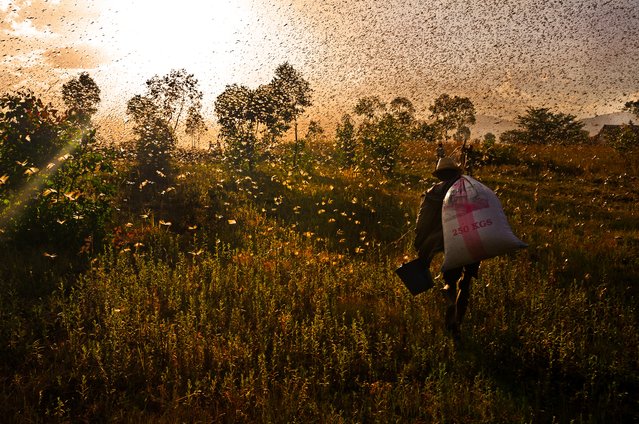
“Locusts & Men”. Oppression, interaction, collaboration. In the life cycle of nature nothing is lost, but the coexistence of different species is sometimes difficult. In Madagascar periodically returns the archaic antagonism between man and the migratory locust, in a circle of life where the two species are looking for space and food for their survival. Photo location: Madagascar, 2013. (Photo and caption by Michele Martinelli/National Geographic Photo Contest)

“Locusts & Men”. Oppression, interaction, collaboration. In the life cycle of nature nothing is lost, but the coexistence of different species is sometimes difficult. In Madagascar periodically returns the archaic antagonism between man and the migratory locust, in a circle of life where the two species are looking for space and food for their survival. At the end of the day a man walks home carrying on his shoulders the heavy bag which contains the locusts captured during the day. The insects provide nutritious meals for the man and his family. Photo location: Madagascar, 2013. (Photo and caption by Michele Martinelli/National Geographic Photo Contest)

ATTENTION! All pictures are presented in high resolution. To see Hi-Res images – just TWICE click on any picture. In other words, click small picture – opens the BIG picture. Click BIG picture – opens VERY BIG picture.
Details
03 Dec 2013 10:59:00
A Sorb egg painter decorates an Easter egg while using bent spoons full of melted wax as coloring at the annual Easter egg market on March 16, 2013 in Schleife, Germany. Easter is a particularly important time of year for Sorbs, a Slavic minority in eastern Germany, and the period includes the tradition of painting Easter eggs that include visual elements intended to ward off evil. Many Sorbs still speak Sorbian, a language closely related to Polish and Czech.  (Photo by Adam Berry)

A Sorb egg painter decorates an Easter egg while using bent spoons full of melted wax as coloring at the annual Easter egg market on March 16, 2013 in Schleife, Germany. Easter is a particularly important time of year for Sorbs, a Slavic minority in eastern Germany, and the period includes the tradition of painting Easter eggs that include visual elements intended to ward off evil. Many Sorbs still speak Sorbian, a language closely related to Polish and Czech. (Photo by Adam Berry)
Details
19 Mar 2013 06:41:00
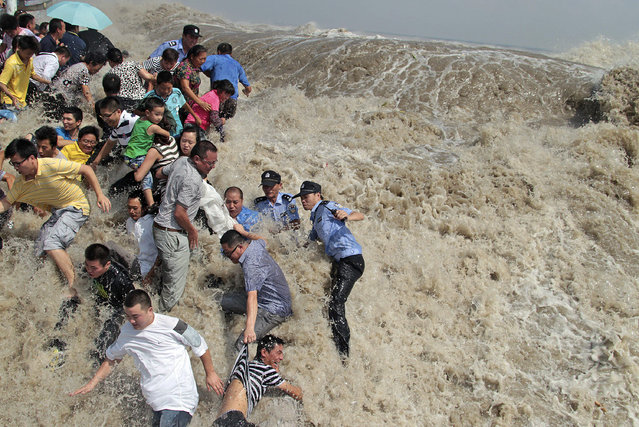
Policemen and residents run as waves from a tidal bore surge past a barrier on the banks of Qiantang River in Haining, Zhejiang province August 31, 2011. As Typhoon Nanmadol approaches eastern China, the tides and waves in Qiantang River recorded its highest level in 10 years, local media reported. (Photo by Reuters/China Daily)

Policemen and residents run as waves from a tidal bore surge past a barrier on the banks of Qiantang River in Haining, Zhejiang province August 31, 2011. As Typhoon Nanmadol approaches eastern China, the tides and waves in Qiantang River recorded its highest level in 10 years, local media reported. (Photo by Reuters/China Daily)
Details
30 Aug 2013 11:37:00