Loading...
Done
A boy walks past boats docked at the entrance gate of the fishermen's village in the El Max area of the Mediterranean city of Alexandria September 12, 2014.  El Max, where hundreds of boats dart through the canals, has been called the “Venice of Egypt” for its waterways and relaxed atmosphere. Its fishermen, however, worry about how they will make ends meet on meagre earnings they  say are being reduced further by polluted waters that are making fishing more difficult. (Photo by Amr Abdallah Dalsh/Reuters)

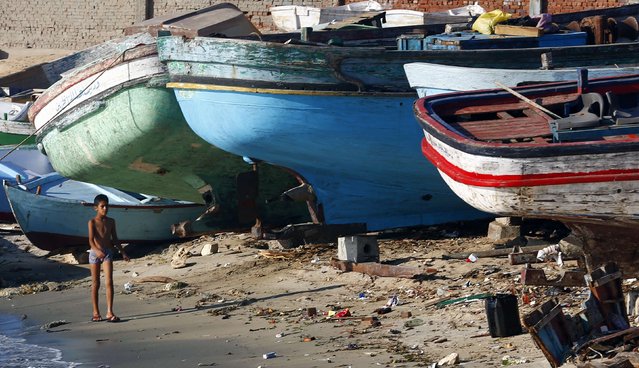
A boy walks past boats docked at the entrance gate of the fishermen's village in the El Max area of the Mediterranean city of Alexandria September 12, 2014. El Max, where hundreds of boats dart through the canals, has been called the “Venice of Egypt” for its waterways and relaxed atmosphere. Its fishermen, however, worry about how they will make ends meet on meagre earnings they say are being reduced further by polluted waters that are making fishing more difficult. While the government has tried to fix the state's bloated finances by cutting subsidies and reining in spending, some argue the reforms hurt Egypt's most vulnerable who have long relied on a generous system of fuel and food subsidies to supplement low incomes. (Photo by Amr Abdallah Dalsh/Reuters)
Details
12 Dec 2014 12:42:00
The setting sun illuminates the sky behind wind turbines of a wind park near Neusiedl am See, December 22, 2014. (Photo by Heinz-Peter Bader/Reuters)

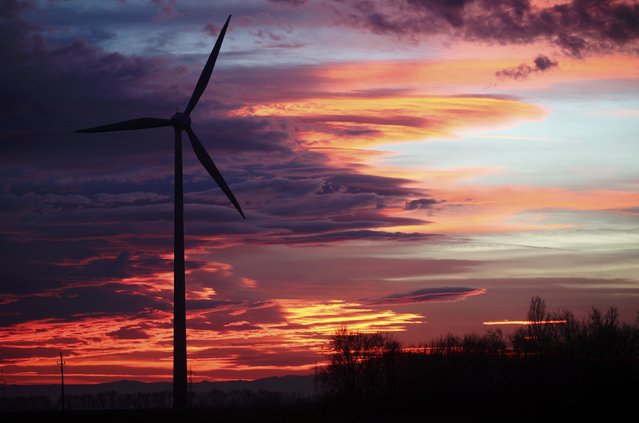
The setting sun illuminates the sky behind wind turbines of a wind park near Neusiedl am See, December 22, 2014. (Photo by Heinz-Peter Bader/Reuters)
Details
08 Jan 2015 14:27:00
In this photo taken Wednesday, April 30, 2014, a dragonfly sits on the nose of a Gharial, rare crocodile-like creatures, in the River Chambal near Bhopepura village in the northern Indian state of Uttar Pradesh. The narrow 250-mile stretch of the Chambal is a place of crocodiles and jackals, of river dolphins and the occasional wolf. Hundreds of species of birds, storks, geese, babblers, larks, falcons and so many more, nest along the river. (Photo by Altaf Qadri/AP Photo)

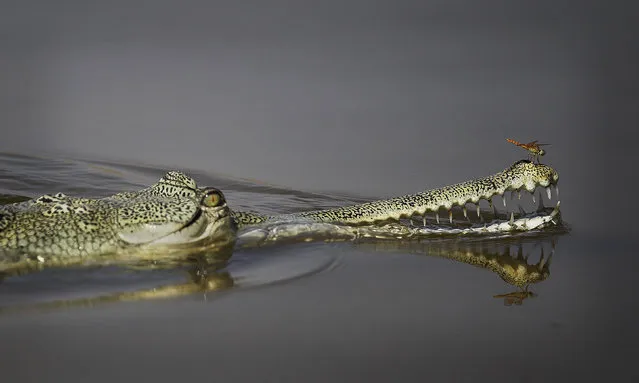
In this photo taken Wednesday, April 30, 2014, a dragonfly sits on the nose of a Gharial, rare crocodile-like creatures, in the River Chambal near Bhopepura village in the northern Indian state of Uttar Pradesh. The narrow 250-mile stretch of the Chambal is a place of crocodiles and jackals, of river dolphins and the occasional wolf. Hundreds of species of birds, storks, geese, babblers, larks, falcons and so many more, nest along the river. Endangered birds lay small speckled eggs in tiny pits they dig in the sandbars. Gharials, rare crocodile-like creatures that look like they swaggered out of the Mesozoic Era, are commonplace here and nowhere else. (Photo by Altaf Qadri/AP Photo)
Details
23 Feb 2015 12:55:00
Chris Renshaw has recently been awarded the 2015 Africa Geographic “Photographer of the Year” award. Chris tells that his love “for anything wild and adventurous came from a deep rooted attachment to the African continent. This image shows that timing, a bit of anticipation, and luck allowed this incredible moment in time to be captured”. (Photo by Chris Renshaw)

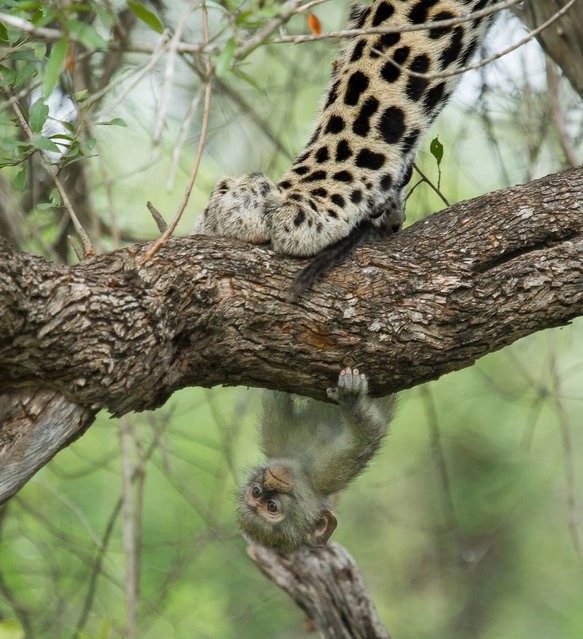
Chris Renshaw has recently been awarded the 2015 Africa Geographic “Photographer of the Year” award. Chris tells that his love “for anything wild and adventurous came from a deep rooted attachment to the African continent. This image shows that timing, a bit of anticipation, and luck allowed this incredible moment in time to be captured”. (Photo by Chris Renshaw)
Details
19 Nov 2015 08:00:00
A resident looks into a newly-built giant trash can, partially buried underground, next to a street in Taiyuan, Shanxi province November 6, 2014. The trash can, which has a diameter of 1.9 meters and a depth of 2.8 meters, could contain approximately 10 cubic metres of garbage. It was built to replace an open-air garbage dump site, local media reported. (Photo by Reuters/Stringer)

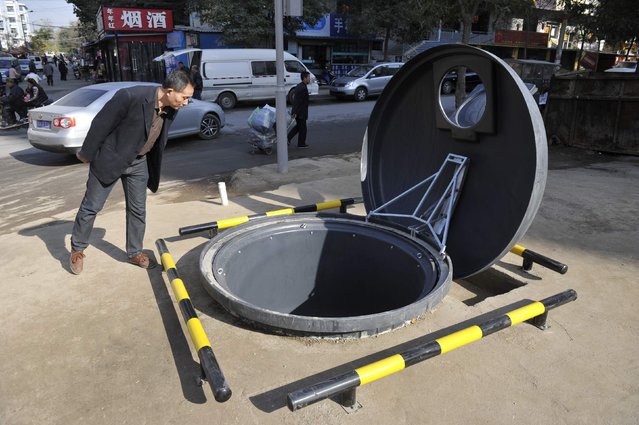
A resident looks into a newly-built giant trash can, partially buried underground, next to a street in Taiyuan, Shanxi province November 6, 2014. The trash can, which has a diameter of 1.9 meters and a depth of 2.8 meters, could contain approximately 10 cubic metres of garbage. It was built to replace an open-air garbage dump site, local media reported. (Photo by Reuters/Stringer)
Details
08 Nov 2014 12:40:00
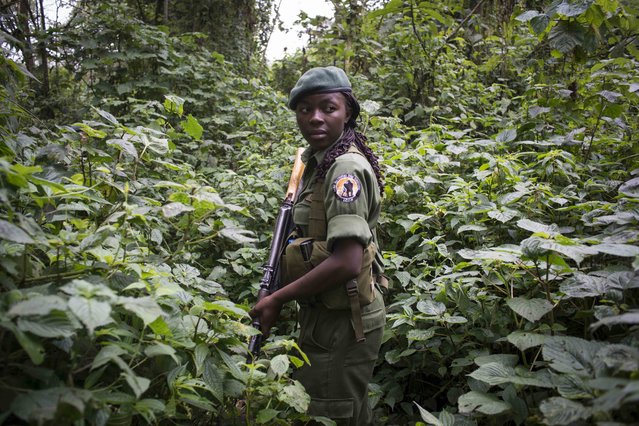
Aline, along with other rangers and park staff visit the gorilla's in the parks Mikeno sector, where the majority of the gorilla families live in Virunga National Park. Therefore there has been a surge of poaching and violence in the area. For the first time, women have taken up the most dangerous job in wildlife, becoming para-military rangers at the Virunga National Park in DR Congo. Virunga is Africa's oldest national park and home to over 200 of the world's 800 remaining mountain gorillas. For two decades it has been at the centre of a war. Hundreds of rebels operate in the park and over 150 park rangers have died protecting it from them. (Photo by Monique Jaques)

Aline, along with other rangers and park staff visit the gorilla's in the parks Mikeno sector, where the majority of the gorilla families live in Virunga National Park. Therefore there has been a surge of poaching and violence in the area. For the first time, women have taken up the most dangerous job in wildlife, becoming para-military rangers at the Virunga National Park in DR Congo. (Photo by Monique Jaques)
Details
08 Oct 2016 11:46:00
A brown bears cools off in a pool at the bear sanctuary near the village of Mramor, on August 18, 2020. The bear sanctuary was closed for visitors on August 18, as part of safety measures to curb the spread of the COVID-19 (novel coronavirus) disease. (Photo by Armend Nimani/AFP Photo)

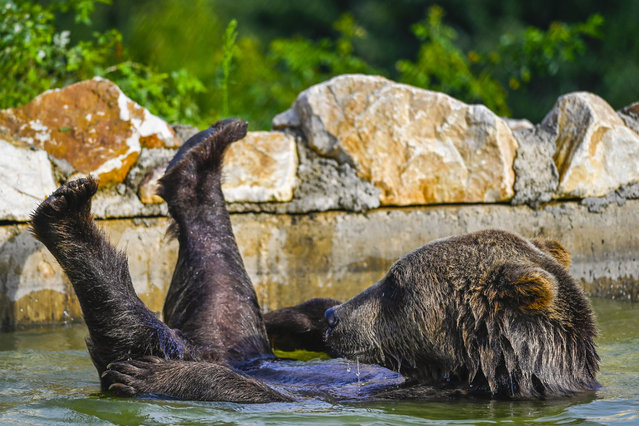
A brown bears cools off in a pool at the bear sanctuary near the village of Mramor, on August 18, 2020. The bear sanctuary was closed for visitors on August 18, as part of safety measures to curb the spread of the COVID-19 (novel coronavirus) disease. (Photo by Armend Nimani/AFP Photo)
Details
23 Aug 2020 00:03:00
Tatyana Abramova, 33, plays with her home fox Plombir at her countryside house outside Siberian city of Novosibirsk on September 12, 2020. The official start of the Soviet experiment to better understand the domestication of animals by humans began in 1959, and was initiated by geneticists Dmitri Beliaiev and Lioudmila Trout on a farm in Akademgorodok, the scientific center of excellence in Siberia. Their primary objective was to domesticate foxes, to understand how the ancestor of wolves, another canine, evolved into a loyal and loving dog. And understand what this domestication tells us about the genetic evolution of species. (Photo by Alexander Nemenov/AFP Photo)

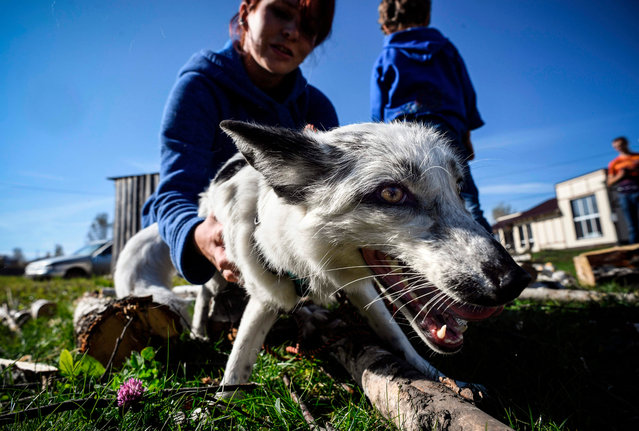
Tatyana Abramova, 33, plays with her home fox Plombir at her countryside house outside Siberian city of Novosibirsk on September 12, 2020. The official start of the Soviet experiment to better understand the domestication of animals by humans began in 1959, and was initiated by geneticists Dmitri Beliaiev and Lioudmila Trout on a farm in Akademgorodok, the scientific center of excellence in Siberia. Their primary objective was to domesticate foxes, to understand how the ancestor of wolves, another canine, evolved into a loyal and loving dog. And understand what this domestication tells us about the genetic evolution of species. (Photo by Alexander Nemenov/AFP Photo)
Details
25 Oct 2020 00:05:00