Loading...
Done
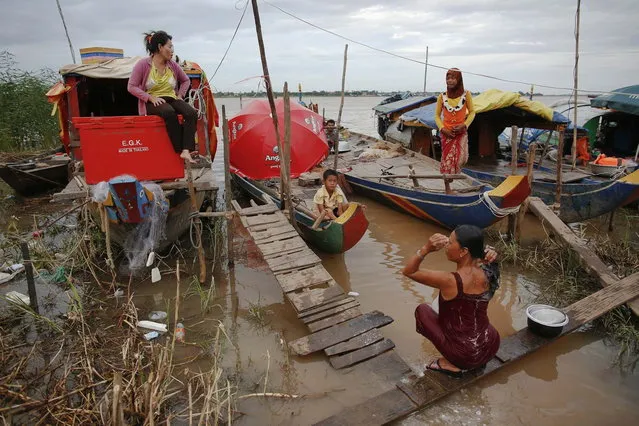
Ethnic Cham Muslim people pass the time near their boats on banks of Mekong river in Phnom Penh July 29, 2013. (Photo by Damir Sagolj/Reuters)

Ethnic Cham Muslim people pass the time near their boats on banks of Mekong river in Phnom Penh July 29, 2013. About 100 ethnic Cham families, made up of nomads and fishermen without houses or land who arrived at the Cambodian capital in search of better lives, live on their small boats on a peninsula where the Mekong and Tonle Sap rivers meet, just opposite the city's centre. The community has been forced to move several times from their locations in Phnom Penh as the land becomes more valuable. They fear that their current home, just behind a new luxurious hotel under construction at the Chroy Changva district is only temporary and that they would have to move again soon. (Photo by Damir Sagolj/Reuters)
Details
31 Jul 2013 06:34:00
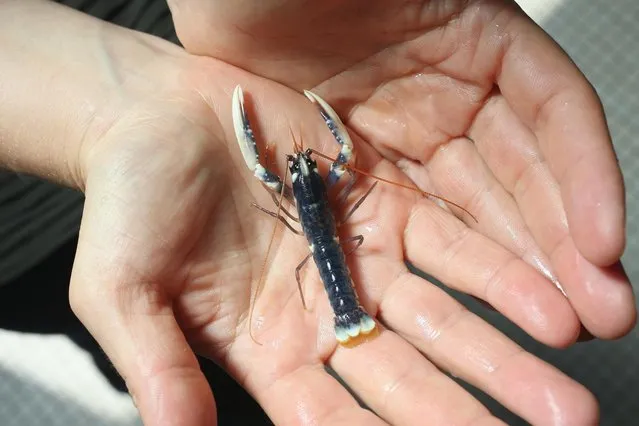
Isabel Schmalenbach, an environmental scientist with the Helgoland Biological Institute (Biologische Anstalt Helgoland), part of the Alfred Wegener Institute for Polar and Marine Research, holds a one-year old baby European lobster (Homarus gammarus) raised at the institute on August 3, 2013 on Helgoland Island, Germany. (Photo by Sean Gallup/Getty Images)

Isabel Schmalenbach, an environmental scientist with the Helgoland Biological Institute (Biologische Anstalt Helgoland), part of the Alfred Wegener Institute for Polar and Marine Research, holds a one-year old baby European lobster (Homarus gammarus) raised at the institute on August 3, 2013 on Helgoland Island, Germany. Later in the day Schmalenbach and her colleagues released a total of 415 one-year old lobsters into the North Sea as part of an effort to repopulate the lobster population around Helgoland (also called Heligoland). In the 19th century local fishermen caught up to 80,000 lobsters a year in the surrounding waters, combined with the heavy allied bombing of the island during and after World War II, as well as other environmental factors, decimated the lobster population. (Photo by Sean Gallup)
Details
05 Aug 2013 08:39:00
Anemone - Havriin hair


OMG! Five cute mongolian military and popular music videos. (Photo: Anemone – “Havriin hair” Music Video).
Details
20 Jul 2012 10:20:00


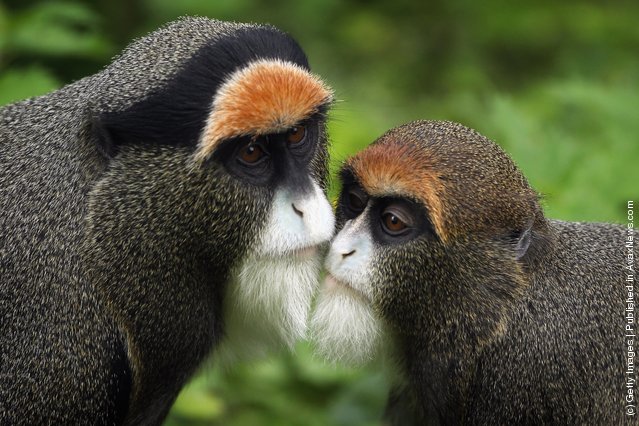
Two De Brazza's monkeys stand together at Port Lympne Wild Animal Park on June 21, 2011 in Hythe, England. Port Lympne has welcomed a host of new arrivals this year with wildebeest, colobus monkeys, gorillas and rhinos all adding to the current stock. Port Lympne and Howletts Wild Animal parks were set up by the late John Aspinall to protect and breed rare and endangered species and, where possible, return them to safe areas in the wild. The Aspinall Foundation which runs the parks also manages two gorilla rescue and rehabilitation projects in the central African countries of Gabon and Congo where they have successfully reintroduced over 50 gorillas to the wild. (Photo by Dan Kitwood/Getty Images)
Details
24 Jun 2011 10:12:00
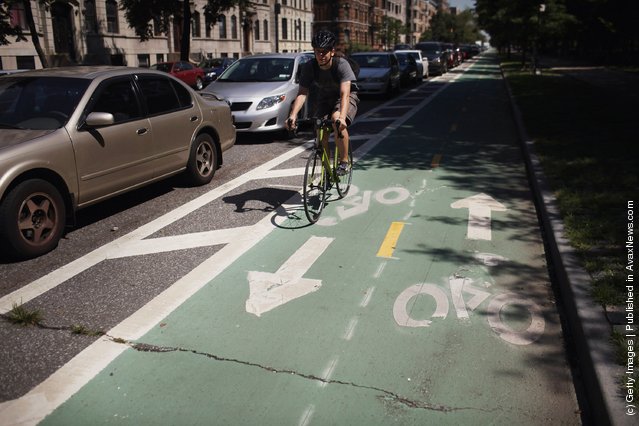
A man rides his bike along a controversial bike lane on Prospect Park West

A man rides his bike along a controversial bike lane on Prospect Park West on August 17, 2011 in the Brooklyn borough of New York City. In what is being viewed as a victory for the Bloomberg administration, a judge on Tuesday dismissed an effort by Brooklyn residents to remove a bicycle lane installed by the city on Prospect Park West. Mayor Michael Bloomberg, along with his transportation commissioner, Janette Sadik-Khan, has attempted to make New York more bicycle and pedestrian friendly with numerous bike and pedestrian lanes around New York City. The effort has angered some in the city who see the lanes as adding to traffic, taking up parking spaces and a danger to pedestrians. (Photo by Spencer Platt/Getty Images)
Details
18 Aug 2011 11:22:00
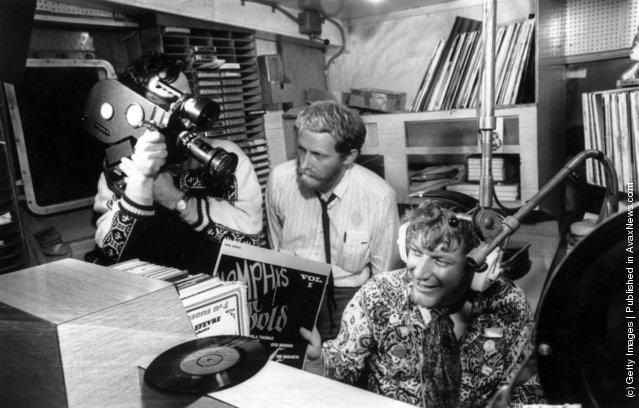
The World in Action team making a program about the pirate radio ship Caroline, filmed by Paddy Searle, and produced by Mike Hodges. The DJ being filmed is Robbie Dale, and Hodges is standing behind him

“«Pirate radio» in the UK first became widespread in the early 1960s when pop music stations such as Radio Caroline and Radio London started to broadcast on medium wave to the UK from offshore ships or disused sea forts. At the time these stations were not illegal because they were broadcasting from international waters. The stations were set up by entrepreneurs and music enthusiasts to meet the growing demand for pop and rock music, which was not catered for by the legal BBC Radio services”. – Wikipedia

Photo: The “World in Action” team making a program about the pirate radio ship Caroline, filmed by Paddy Searle, and produced by Mike Hodges. The DJ being filmed is Robbie Dale, and Hodges is standing behind him. (Photo by James Jackson/Evening Standard/Getty Images). 6th September 1967
Details
09 Sep 2011 08:54:00
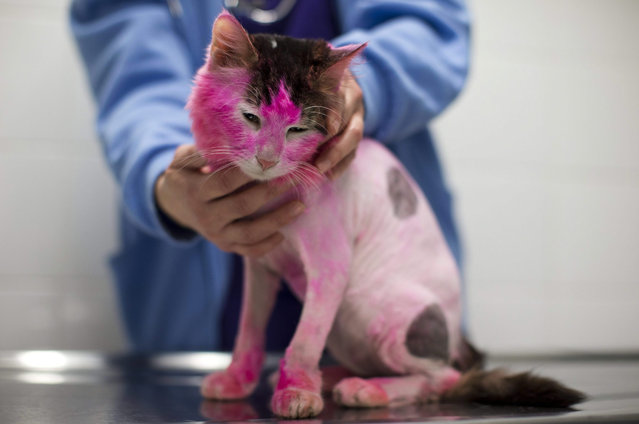
“Bazooka”, a one year old stray cat, is treated at the SPCA (Society for Prevention of Cruelty to Animals) clinic in Tel Aviv, Israel, 06 January 2016. Bazooka arrived at the clinic in critical condition after he went through severe abuse with bruises all over his body and painted with pink oxidation. (Photo by Abir Sultan/EPA)

“Bazooka”, a one year old stray cat, is treated at the SPCA (Society for Prevention of Cruelty to Animals) clinic in Tel Aviv, Israel, 06 January 2016. Bazooka arrived at the clinic in critical condition after he went through severe abuse with bruises all over his body and painted with pink oxidation. The Israeli street cat population is estimated to be about two million. Without enough financial support from the state, animal rights organizations find it difficult to keep the up with the pace when it comes to spaying and neutering feral cats, causing the population to grow. (Photo by Abir Sultan/EPA)
Details
27 Jan 2016 13:17:00
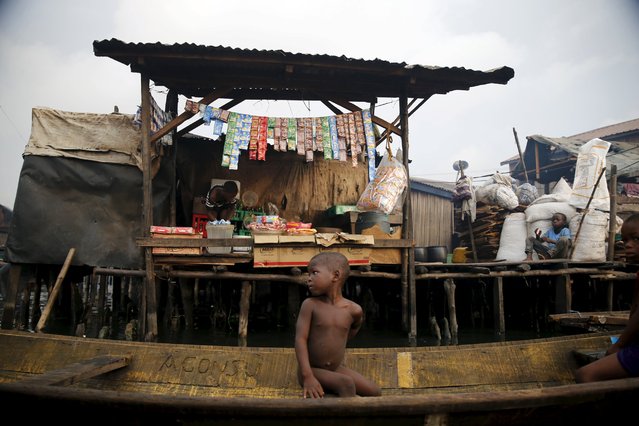
A boy sits in a canoe in front of a shed built on a raft in the Makoko fishing community on the Lagos Lagoon, Nigeria February 29, 2016. Makoko, a vast slum of houses on stilts in a Lagos lagoon, now boasts a new school – pyramid-shaped, floating and capable of withstanding the waterways' extreme weather, it is a beacon of hope for the nearly 100,000 Nigerians who live there.  (Photo by Akintunde Akinleye/Reuters)

A boy sits in a canoe in front of a shed built on a raft in the Makoko fishing community on the Lagos Lagoon, Nigeria February 29, 2016. In Makoko, a sprawling slum of Nigeria's megacity Lagos, a floating school capable of holding up to a hundred pupils has since November brought free education to the waterways known as the Venice of Lagos. It offers the chance of social mobility for youngsters who, like most of the city's 21 million inhabitants, lack a reliable electricity and water supply and whose water-based way of life is threatened by climate change as well as rapid urbanisation. (Photo by Akintunde Akinleye/Reuters)
Details
05 Mar 2016 12:01:00