Loading...
Done
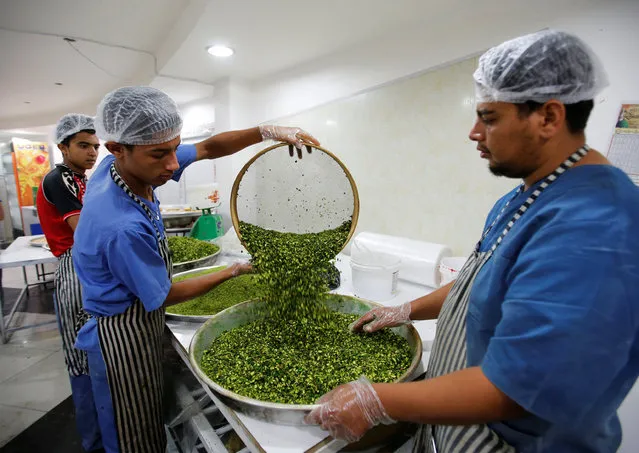
Iraqi workers make traditional sweets, during the Muslim fasting month of Ramadan in Baghdad, June 13, 2016. (Photo by Khalid al Mousily/Reuters)

Iraqi workers make traditional sweets, during the Muslim fasting month of Ramadan in Baghdad, June 13, 2016. (Photo by Khalid al Mousily/Reuters)
Details
14 Jun 2016 12:51:00
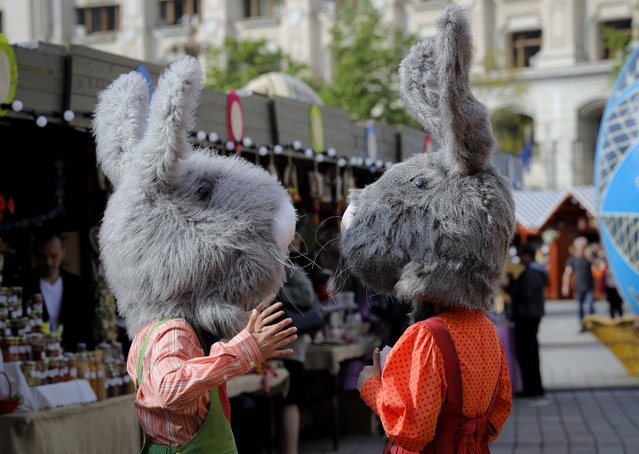
In this Thursday, April 13, 2017, picture entertainers wearing rabbit costumes speak at a fair in Bucharest, Romania. Ahead of Easter, celebrated by both Orthodox and Catholic believers on April 16 processions of priests clad in golden robes carrying foliage on Palm Sunday in a recreation of Jesus' ride into Jerusalem, mixed with more commercial flavored celebrations like an Easter fair outside the giant palace built by late Communist leader Nicolae Ceausescu where entertainers strutted around wearing giant rabbit heads. (Photo by Vadim Ghirda/AP Photo)

In this Thursday, April 13, 2017, picture entertainers wearing rabbit costumes speak at a fair in Bucharest, Romania. Ahead of Easter, celebrated by both Orthodox and Catholic believers on April 16 processions of priests clad in golden robes carrying foliage on Palm Sunday in a recreation of Jesus' ride into Jerusalem, mixed with more commercial flavored celebrations like an Easter fair outside the giant palace built by late Communist leader Nicolae Ceausescu where entertainers strutted around wearing giant rabbit heads. (Photo by Vadim Ghirda/AP Photo)
Details
17 Apr 2017 08:01:00
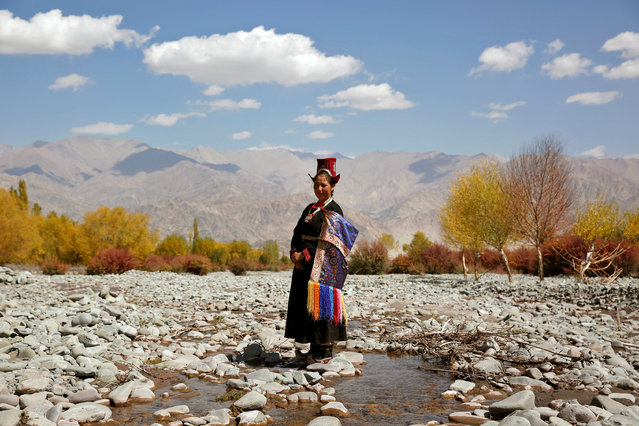
Tsewang Dolma, 33, a farmer and housewife poses for a photograph in Matho, a village nestled high in the Indian Himalayas, India September 29, 2016. When asked how living in the world's fastest growing major economy had affected life, Dolma replied: “Our culture is spoiled now. We don't wear our traditional dress”. (Photo by Cathal McNaughton/Reuters)

Tsewang Dolma, 33, a farmer and housewife poses for a photograph in Matho, a village nestled high in the Indian Himalayas, India September 29, 2016. When asked how living in the world's fastest growing major economy had affected life, Dolma replied: “Our culture is spoiled now. We don't wear our traditional dress”. (Photo by Cathal McNaughton/Reuters)
Details
13 Oct 2016 11:32:00
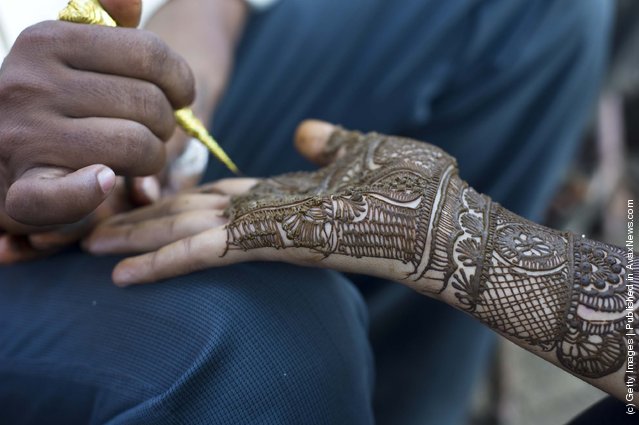
Application of henna or “Mehndi”  to a girls hand in a market in Jaipur, India

“Mehndi or menhdi is the application of henna as a temporary form of skin decoration in India, as well as by expatriate communities from the country. The word mehndi is derived from the Sanskrit word mendhikā. The use of mehndi and turmeric is described in the earliest Vedic ritual books. Haldi (Staining oneself with turmeric paste) as well as mehndi are important Vedic customs as a symbolic representation of the Outer and the Inner Sun. Vedic customs are meant to awaken the “inner light” and so the gold of the inner Sun has an important symbolic function”. – Wikipedia

Photo: Application of henna or “Mehndi” to a girls hand in a market on October 18, 2010 in Jaipur, India. (Photo by Simon de Trey-White/Getty Images)
Details
23 Nov 2011 13:33:00
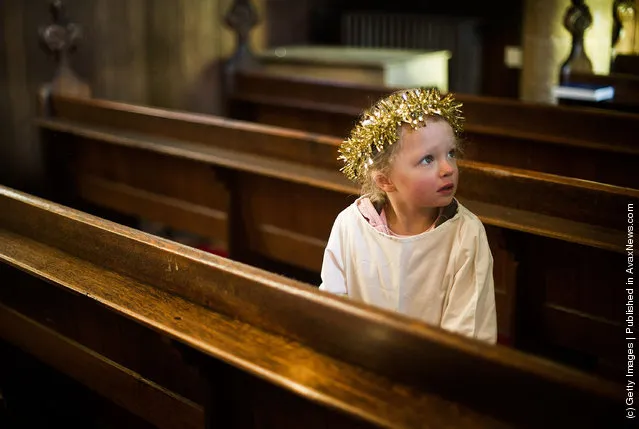
Children perform during a traditional Christmas Nativity

Cathryn Shrimpton, 4, prepares to play the Angle Gabriel during a traditional Christmas Nativity on December 18, 2011, at St Mary's Church, Myton Village, England. In schools and churches around the country children busy preparing and performing in the telling of the traditional nativity story. (Photo by Bethany Clarke/Getty Images)
Details
20 Dec 2011 13:18:00
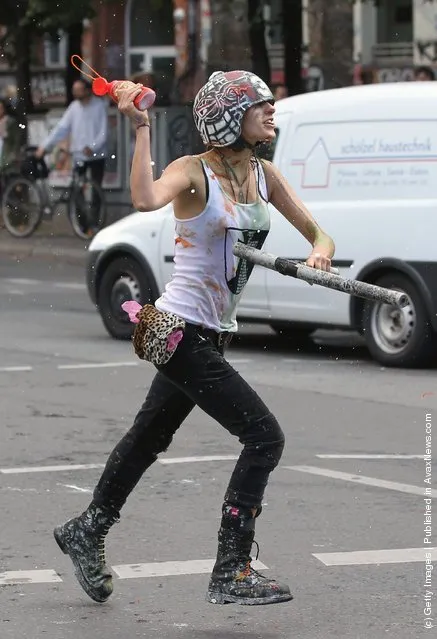
Kreuzberg Vegetable Battle

A female participant armed with a bottle of ketchup attacks in the annual Vegetable Battle in Kreuzberg district near Oberbaumbruecke Bridge on August 28, 2011 in Berlin, Germany. The event pits Kreuzberg district residents againts Friedrichshain district residents for control of the Oberbaumbruecke, and the two sides pelt each other with rotten vegetables, other foods, ketchup, water guns and styrofoam bats until one side has pushed the other from the bridge. The event had originally been cancelled for today, but so many participants showed up anyway and began battling on the Kreuzberg side, where the situation escalated and began to threaten traffic, that police relented and let them later battle it out on the bridge. Kreuzberg claimed victory. (Photo by Sean Gallup/Getty Images)
Details
29 Aug 2011 15:02:00
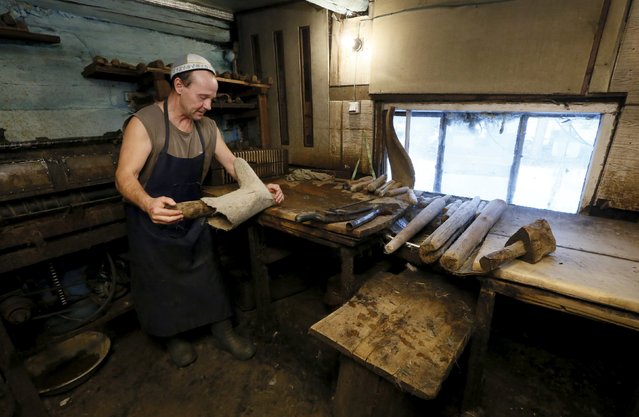
Ivan Plakhuta, 54, the owner of a small workshop manufacturing valenki, Russian traditional footwear, rolls a valenok in the remote Siberian village of Bolshaya Rechka, located in Taiga area in the foothills of the Western Sayan Mountain Ridge in the Yermakovsky district of Krasnoyarsk region, Russia, November 10, 2015. (Photo by Ilya Naymushin/Reuters)

Ivan Plakhuta, 54, the owner of a small workshop manufacturing valenki, Russian traditional footwear, rolls a valenok in the remote Siberian village of Bolshaya Rechka, located in Taiga area in the foothills of the Western Sayan Mountain Ridge in the Yermakovsky district of Krasnoyarsk region, Russia, November 10, 2015. (Photo by Ilya Naymushin/Reuters)
Details
16 Nov 2015 08:03:00
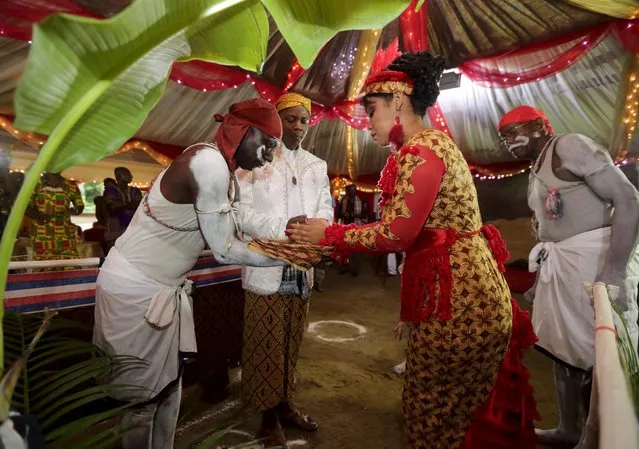
Winti spiritual leader Ramon Mac-Nack (2nd L) looks on as as his bride Melissa Karwafodi (2nd R) hands a gourd to a Maroon priest (L) as they are wedded in the first Winti marriage ever to be held in public, in district Para, Suriname, November 16, 2015. (Photo by Ranu Abhelakh/Reuters)

Winti spiritual leader Ramon Mac-Nack (2nd L) looks on as as his bride Melissa Karwafodi (2nd R) hands a gourd to a Maroon priest (L) as they are wedded in the first Winti marriage ever to be held in public, in district Para, Suriname, November 16, 2015. The Winti religion, which formed centuries ago out of elements of different religious traditions that African slaves brought with them to Suriname, was considered a form idolatry and prohibited by law since the days of slavery until it was finally officially recognized in 1971. (Photo by Ranu Abhelakh/Reuters)
Details
27 Nov 2015 05:51:00