Loading...
Done
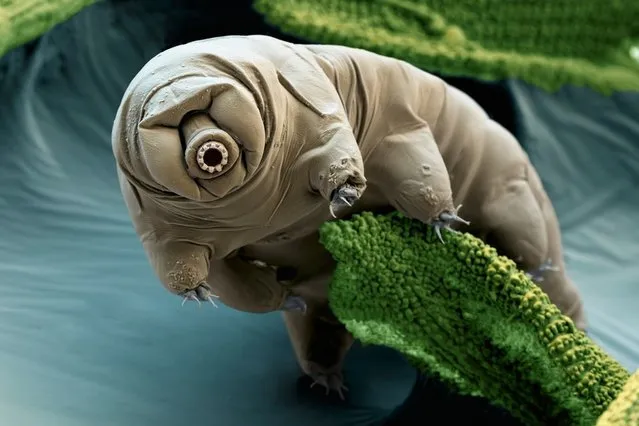
Tardigrades (commonly known as waterbears or moss piglets). (Photo by SPL/East News)

“Tardigrades (commonly known as waterbears or moss piglets) are small, water-dwelling, segmented animals with eight legs. Tardigrades were first discovered in 1773 by Johann August Ephraim Goeze, who called them kleiner Wasserbär, meaning “little water bear” in German. The name Tardigrada means “slow walker” and was given by Lazzaro Spallanzani in 1777. The name water bear comes from the way they walk, reminiscent of a bear's gait. The biggest adults may reach a body length of 1.5 millimetres (0.059 in), the smallest below 0.1 mm. Freshly hatched tardigrades may be smaller than 0.05 mm”. – Wikipedia. Photo: Tardigrades. (Photo by SPL/East News)
Details
26 Sep 2012 09:55:00
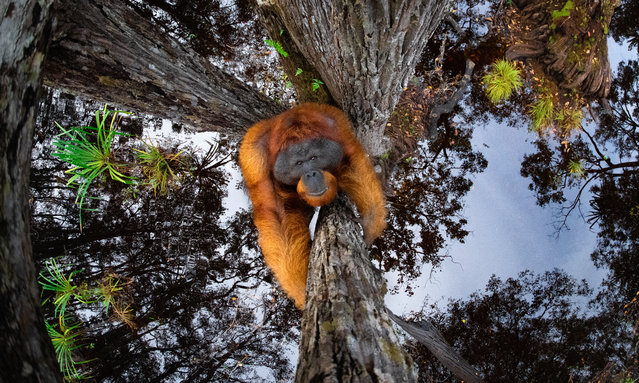
Bornean orangutan (Pongo pygmaeus). Tanjung Puting National Park, Borneo – winner of the gold and grand prizes in the 2020 world nature photography awards. (Photo by Thomas Vijayan/World Nature Photography Awards)

Bornean orangutan (Pongo pygmaeus). Tanjung Puting National Park, Borneo – winner of the gold and grand prizes in the 2020 world nature photography awards. (Photo by Thomas Vijayan/World Nature Photography Awards)
Details
18 Mar 2021 09:28:00
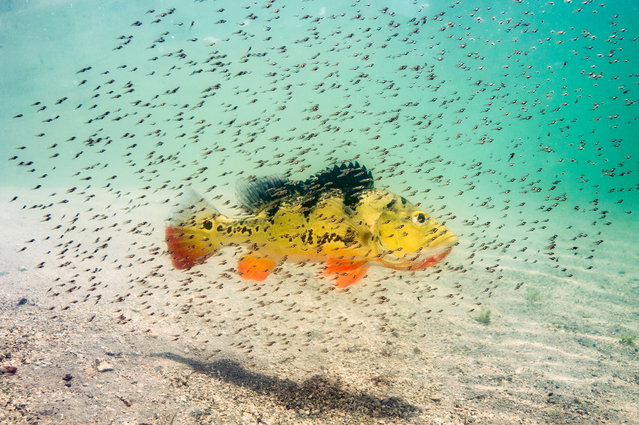
Michael O’Neill won a prize in animal portraits with fry of a peacock bass hovering around their mother for protection against predators in South Florida. (Photo by Michael Patrick O'Neill/2016 National Geographic Nature Photographer of the Year)

Michael O’Neill won a prize in animal portraits with fry of a peacock bass hovering around their mother for protection against predators in South Florida. (Photo by Michael Patrick O'Neill/2016 National Geographic Nature Photographer of the Year)
Details
10 Dec 2016 08:57:00
“Festive preparation”. Baghnapara, Bardhaman, West Bengal, India. Two girls prepare for the Gajan festival. They will perform a play based on Indian mythology. (Photo by Krishnasis Ghosh)

“Festive preparation”. Baghnapara, Bardhaman, West Bengal, India. Two girls prepare for the Gajan festival. They will perform a play based on Indian mythology. (Photo by Krishnasis Ghosh)
Details
04 Mar 2016 12:23:00
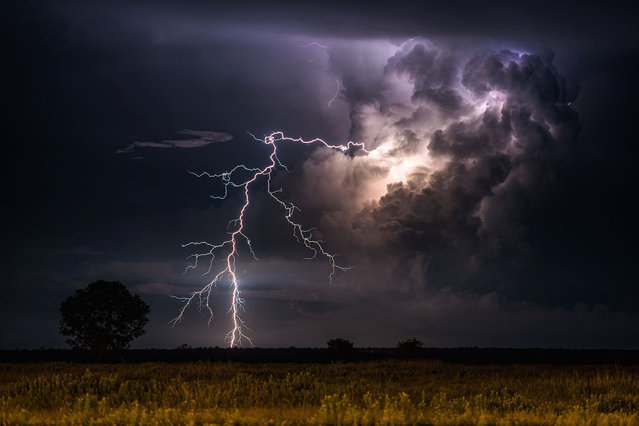
An incredible clear-air lightning display from storms to the east of Noonamah, just outside Darwin on April 6, 2015. (Photo by Jacci Ingham/The Guardian)

An incredible clear-air lightning display from storms to the east of Noonamah, just outside Darwin on April 6, 2015. (Photo by Jacci Ingham/The Guardian)
Details
12 Jun 2017 09:16:00
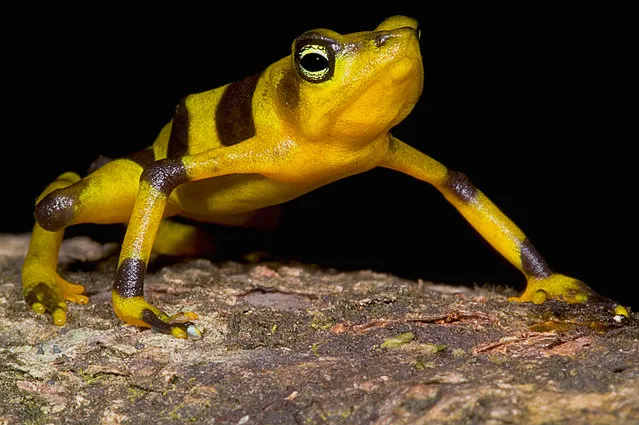
The golden harlequin toad has vanished from the wild, and only a small number live on in captivity. A fungus caused them, and many other amphibians, to die out in their home in Central America. (Photo by Danté Fenolio/The Guardian/Johns Hopkins University Press)

Wildlife photographer Danté Fenolio has headed into areas untouched by sunlight – deep seas, caves and underground – and found creatures that are exploding with colour. Here: The golden harlequin toad has vanished from the wild, and only a small number live on in captivity. A fungus caused them, and many other amphibians, to die out in their home in Central America. (Photo by Danté Fenolio/The Guardian/Johns Hopkins University Press)
Details
20 Jun 2016 12:19:00
Breath of an Arctic fox by Marco Gaiotti, Italy. Marco was watching this little Arctic fox as it incessantly called another nearby. Gradually he noticed the fox’s wet breath was quickly freezing in the air after each call. It was late winter in Spitsbergen, Svalbard, and the air was -35C (-31F). Photographing Arctic foxes is often frustrating, as they are normally running around fast in search of food, but this one was very relaxed and let Marco get close enough to focus on it, with the light glowing perfectly in the background. (Photo by Marco Gaiotti/Wildlife Photographer of the Year 2021)

Breath of an Arctic fox by Marco Gaiotti, Italy. Marco was watching this little Arctic fox as it incessantly called another nearby. Gradually he noticed the fox’s wet breath was quickly freezing in the air after each call. It was late winter in Spitsbergen, Svalbard, and the air was -35C (-31F). Photographing Arctic foxes is often frustrating, as they are normally running around fast in search of food, but this one was very relaxed and let Marco get close enough to focus on it, with the light glowing perfectly in the background. (Photo by Marco Gaiotti/Wildlife Photographer of the Year 2021)
Details
05 Dec 2021 06:36:00
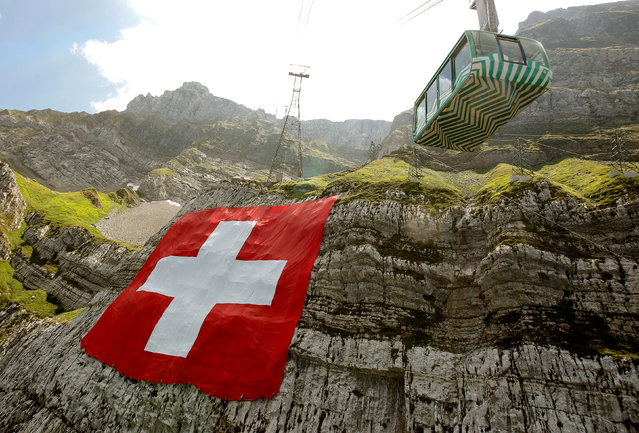
Climbers place a huge 80x80 metres (262x262 feet) Swiss national flag on the western face of the north-eastern Swiss landmark Mount Saentis, Switzerland on July 31, 2018. (Photo by Arnd Wiegmann/Reuters)

Climbers place a huge 80x80 metres (262x262 feet) Swiss national flag on the western face of the north-eastern Swiss landmark Mount Saentis, Switzerland on July 31, 2018. (Photo by Arnd Wiegmann/Reuters)
Details
01 Aug 2018 09:02:00