Loading...
Done
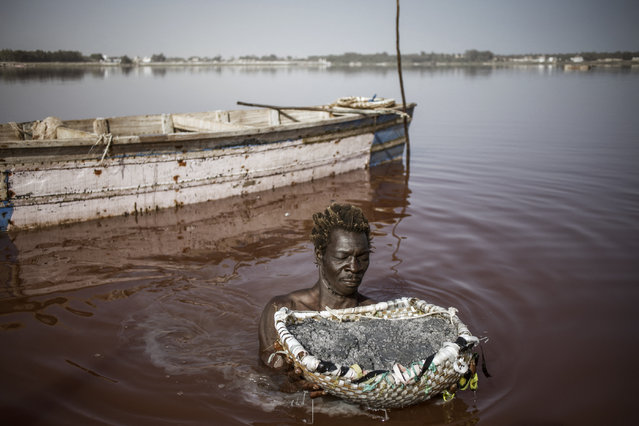
Toure, a Gambian salt harvester, holds a basket filled with  the salt collected from the crust of the bottom of the Lake Retba (Pink Lake) in Senegal on March 16, 2021. Lake Retba, divided from the Atlantic Ocean by a narrow corridor of dunes, owes its name to the pink waters caused by the Dunaliella salina algae and is known for its high salt content, up to 40% in some areas. (Photo by Marco Longari/AFP Photo)

Toure, a Gambian salt harvester, holds a basket filled with the salt collected from the crust of the bottom of the Lake Retba (Pink Lake) in Senegal on March 16, 2021. Lake Retba, divided from the Atlantic Ocean by a narrow corridor of dunes, owes its name to the pink waters caused by the Dunaliella salina algae and is known for its high salt content, up to 40% in some areas. (Photo by Marco Longari/AFP Photo)
Details
24 Mar 2021 10:29:00
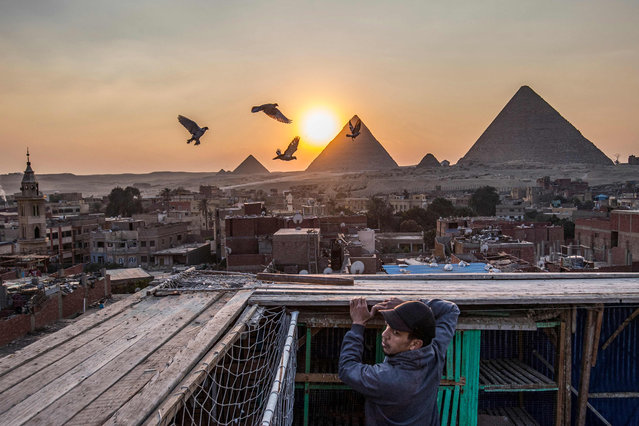
Omar Gamal, a 28-year-old pigeon keeper, stands next to his pigeon coop on his rooftop in the Egyptian capital's twin city of Giza on February 21, 2021, with the Pyramids of (R to L) Khufu (Cheops), Khafre (Chephren), and Menkaure (Menkheres) in the background. An ancient tradition handed down through the generations, the practice of domesticating pigeons stretches across borders from the banks of the Nile to north Africa and beyond, with people not only training birds for competitions, but also serving them up as a dining delicacy. (Photo by Khaled Desouki/AFP Photo)

Omar Gamal, a 28-year-old pigeon keeper, stands next to his pigeon coop on his rooftop in the Egyptian capital's twin city of Giza on February 21, 2021, with the Pyramids of (R to L) Khufu (Cheops), Khafre (Chephren), and Menkaure (Menkheres) in the background. An ancient tradition handed down through the generations, the practice of domesticating pigeons stretches across borders from the banks of the Nile to north Africa and beyond, with people not only training birds for competitions, but also serving them up as a dining delicacy. (Photo by Khaled Desouki/AFP Photo)
Details
27 Mar 2021 09:11:00
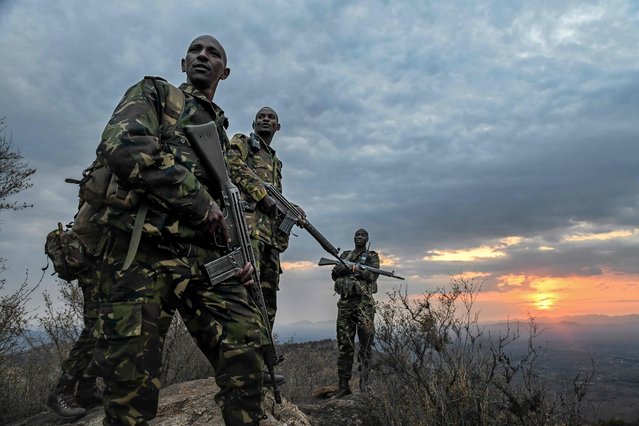
Armed officers of Lewa Wildlife Conservancy's (LWC) anti-poaching unit look out from a ridge at dawn in Meru, on July 31, 2021, as they wind up their nightly security patrol against poaching and illegal incursions into the conservancy. Despite the global condemnation of poaching and the resources that have been mobilised to safeguard endangered wildlife, well-funded and well-equipped poaching groups continue to pose a real threat to Africa’s wildlife. (Photo by Tony Karumba/AFP Photo)

Armed officers of Lewa Wildlife Conservancy's (LWC) anti-poaching unit look out from a ridge at dawn in Meru, on July 31, 2021, as they wind up their nightly security patrol against poaching and illegal incursions into the conservancy. Despite the global condemnation of poaching and the resources that have been mobilised to safeguard endangered wildlife, well-funded and well-equipped poaching groups continue to pose a real threat to Africa’s wildlife. (Photo by Tony Karumba/AFP Photo)
Details
19 Aug 2021 09:19:00
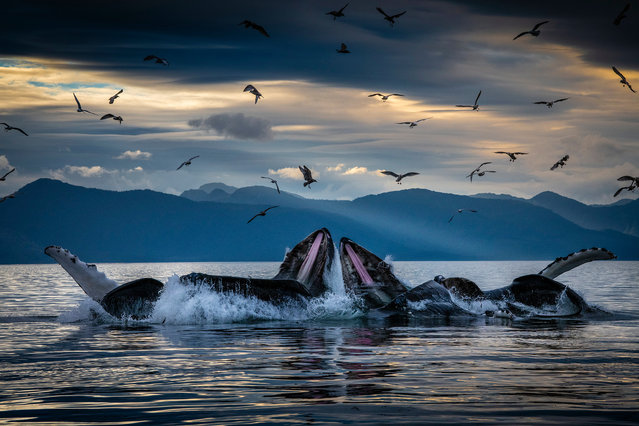
“Secrets of the Whales”. Skerry’s photographs celebrate the lives and culture of whales, illuminating recent research and their diverse behaviours. His latest work focuses on four key species: sperm whales, humpbacks, orca and beluga whales. Humpback whales bubble-net feeding off the coast of Alaska. They work cooperatively to feed on herring by blowing a perfect ring of bubbles underwater to form a net encircling the fish. The whales then swim up through the centre of the bubble net with their mouths open. (Photo by Brian Skerry/National Geographic Photo/Visa pour l'Image)

“Secrets of the Whales”. Skerry’s photographs celebrate the lives and culture of whales, illuminating recent research and their diverse behaviours. His latest work focuses on four key species: sperm whales, humpbacks, orca and beluga whales. Humpback whales bubble-net feeding off the coast of Alaska. They work cooperatively to feed on herring by blowing a perfect ring of bubbles underwater to form a net encircling the fish. The whales then swim up through the centre of the bubble net with their mouths open. (Photo by Brian Skerry/National Geographic Photo/Visa pour l'Image)
Details
04 Sep 2021 09:02:00
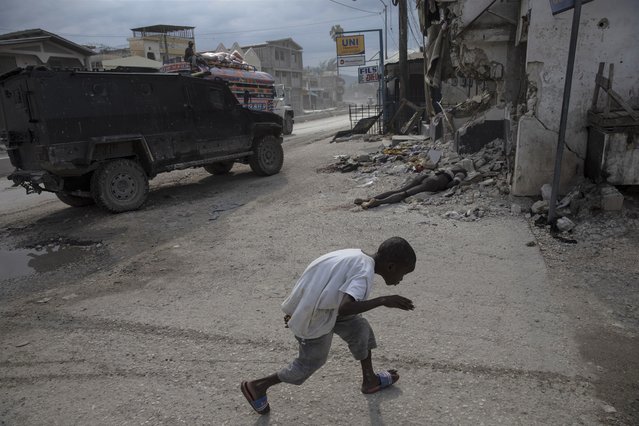
A boy crouches to avoid the camera as he runs past the body of a man killed during clashes between police and gang members, in the Martissant neighborhood of Port-au-Prince, Haiti, Saturday, October 2, 2021. Haitian gangs have seized control of more land and committed more crimes than ever before – all without a care. (Photo by Rodrigo Abd/AP Photo)

A boy crouches to avoid the camera as he runs past the body of a man killed during clashes between police and gang members, in the Martissant neighborhood of Port-au-Prince, Haiti, Saturday, October 2, 2021. Haitian gangs have seized control of more land and committed more crimes than ever before – all without a care. (Photo by Rodrigo Abd/AP Photo)
Details
29 Oct 2021 08:42:00
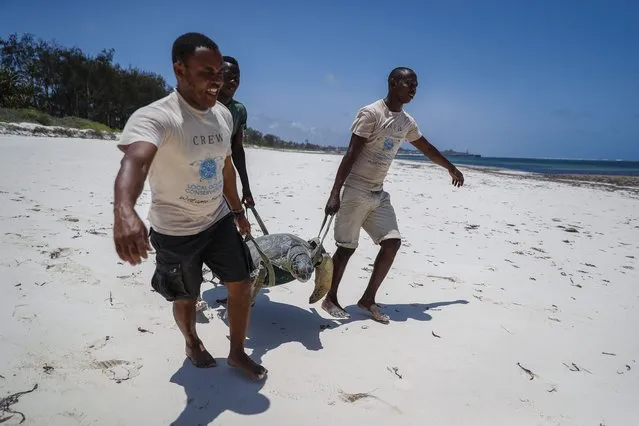
Fikiri Kiponda, left, and Wilson Saro, right, carry a green turtle that was unintentionally caught in a fisherman's net, before releasing it back into the Watamu National Marine Park on the Indian Ocean coast of Kenya Wednesday, September 22, 2021. A former accountant, Kiponda and the Local Ocean Conservation group rescue sea turtles that have been caught in fishermen's nets, and then release them back into the marine park or treat injured ones at a rescue center until they are fit. (Photo by Brian Inganga/AP Photo)

Fikiri Kiponda, left, and Wilson Saro, right, carry a green turtle that was unintentionally caught in a fisherman's net, before releasing it back into the Watamu National Marine Park on the Indian Ocean coast of Kenya Wednesday, September 22, 2021. A former accountant, Kiponda and the Local Ocean Conservation group rescue sea turtles that have been caught in fishermen's nets, and then release them back into the marine park or treat injured ones at a rescue center until they are fit. (Photo by Brian Inganga/AP Photo)
Details
29 Oct 2021 08:56:00
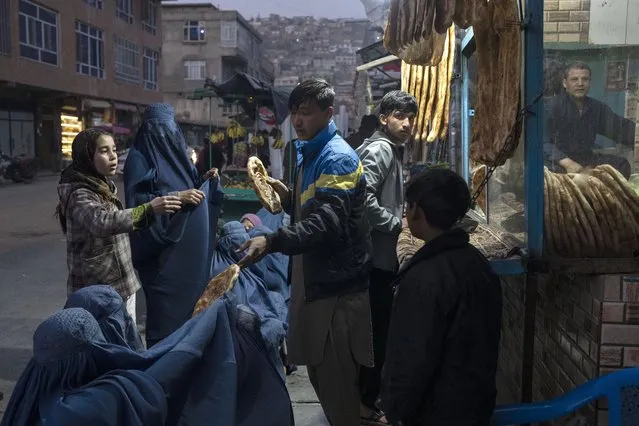
A man distributes bread to Burka-wearing Afghan women outside a bakery in Kabul, Afghanistan, Thursday, December 2, 2021. According to U.N. figures from early November, almost 24 million people in Afghanistan, around 60% percent of the population, suffer from acute hunger, including 8.7 million living in near famine. Increasing numbers of malnourished children have filled hospital wards. (Photo by Petros Giannakouris/AP Photo)

A man distributes bread to Burka-wearing Afghan women outside a bakery in Kabul, Afghanistan, Thursday, December 2, 2021. According to U.N. figures from early November, almost 24 million people in Afghanistan, around 60% percent of the population, suffer from acute hunger, including 8.7 million living in near famine. Increasing numbers of malnourished children have filled hospital wards. (Photo by Petros Giannakouris/AP Photo)
Details
17 Dec 2021 10:10:00
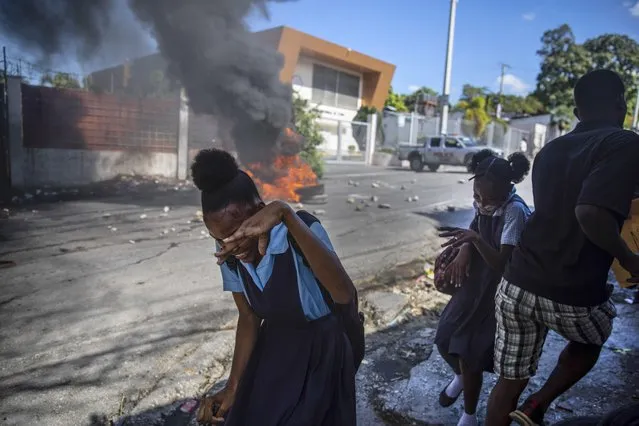
Students run past a burning barricade set up by protesters demanding the release of kidnapped people, in Port-au-Prince, Haiti, Thursday, November 25, 2021. The country is experiencing a rise in gang-related kidnappings, many demanding ransom, with the U.S. State Department issuing a warning in Aug. about the risk of kidnapping in Caribbean country. (Photo by Joseph Odelyn/AP Photo)

Students run past a burning barricade set up by protesters demanding the release of kidnapped people, in Port-au-Prince, Haiti, Thursday, November 25, 2021. The country is experiencing a rise in gang-related kidnappings, many demanding ransom, with the U.S. State Department issuing a warning in Aug. about the risk of kidnapping in Caribbean country. (Photo by Joseph Odelyn/AP Photo)
Details
21 Dec 2021 06:43:00