Loading...
Done
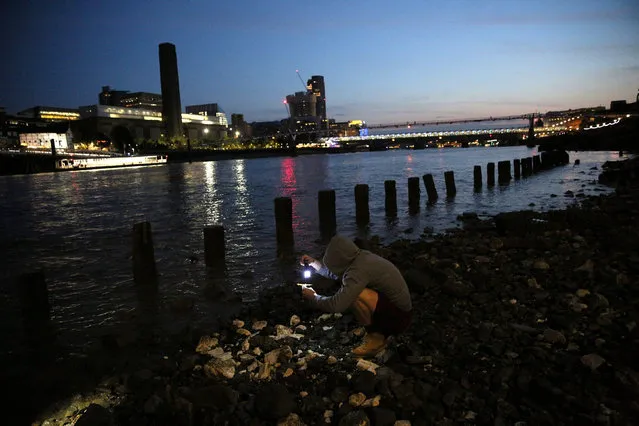
A mudlark uses a torch to look for items on the bank of the River Thames in London, Britain June 06, 2016. Mudlarking is believed to trace its origins to the 18th and 19th century, when scavengers searched the Thames' shores for items to sell. These days, history and archaeology fans are the ones hoping to find old relics such as coins, ceramics, artifacts or everyday items from across centuries. They wait for the low tide and then scour specific areas of exposed shores. "If you're in a field you could be out all day long, with the river you're restricted to about two or three hours," mudlark Nick Stevens said. While many just use the naked eye for their searches, others rely on metal detectors for which a permit from the Port of London Authority is needed. Digging also requires consent. (Photo by Neil Hall/Reuters)

A mudlark uses a torch to look for items on the bank of the River Thames in London, Britain June 06, 2016. Mudlarking is believed to trace its origins to the 18th and 19th century, when scavengers searched the Thames' shores for items to sell. These days, history and archaeology fans are the ones hoping to find old relics such as coins, ceramics, artifacts or everyday items from across centuries. their finds with the Portable Antiquities Scheme. Any item over 300 years old must be recorded. (Photo by Neil Hall/Reuters)
Details
27 Aug 2016 10:43:00
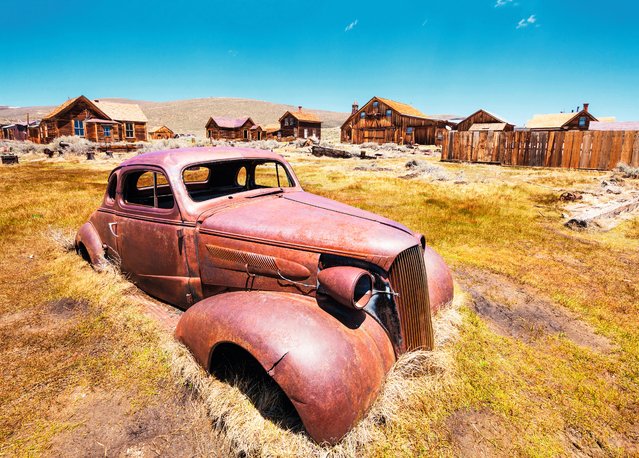
Bodie, Mono County, California. Gold was discovered at Bodie in 1859 (just after the initial California gold rush) and it went from mining camp to boomtown. Its decline began in 1880, when word spread of new boomtowns elsewhere. The Standard Consolidated Mine closed in 1913, and four years later the Bodie Railway was abandoned. By 1940 the population was down to 40. Today, Bodie is maintained in a state of arrested decay as a visitor attraction. (Photo by Alamy Stock Photo)

Kieron Connolly’s new book of photographs of more than 100 once-busy and often elegant buildings gives an idea of how the world might look if humankind disappeared. Here: Bodie, Mono County, California. Gold was discovered at Bodie in 1859 (just after the initial California gold rush) and it went from mining camp to boomtown. Its decline began in 1880, when word spread of new boomtowns elsewhere. The Standard Consolidated Mine closed in 1913, and four years later the Bodie Railway was abandoned. By 1940 the population was down to 40. Today, Bodie is maintained in a state of arrested decay as a visitor attraction. (Photo by Alamy Stock Photo)
Details
07 Sep 2016 09:50:00
A man poses in front of a portrait of late Chinese Chairman Mao Zedong during the opening of an exhibition of Mao related art in Beijing, China, September 8, 2016. (Photo by Thomas Peter/Reuters)

A man poses in front of a portrait of late Chinese Chairman Mao Zedong during the opening of an exhibition of Mao related art in Beijing, China, September 8, 2016. (Photo by Thomas Peter/Reuters)
Details
09 Sep 2016 09:17:00
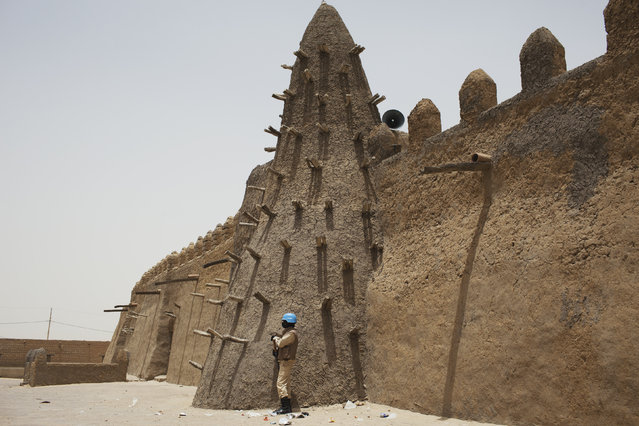
Timbuktu: A UN peacekeeper from Burkina Faso stands guard at the Djinguereber mosque, built in the 14th century, during a visit by a UN delegation on election day in Timbuktu, Mali, July 28, 2013. (Photo by Joe Penney/Reuters)

Timbuktu: A UN peacekeeper from Burkina Faso stands guard at the Djinguereber mosque, built in the 14th century, during a visit by a UN delegation on election day in Timbuktu, Mali, July 28, 2013. (Photo by Joe Penney/Reuters)
Details
08 Jul 2015 12:33:00
Actor Cornelius Obonya as Jedermann and actress Brigitte Hobmeier as Buhlschaft perform on stage during a dress rehearsal of Hugo von Hofmannsthal's drama “Jedermann” (Everyman) at Domplatz square in Salzburg, Austria, July 16, 2015. (Photo by Leonhard Foeger/Reuters)

Actor Cornelius Obonya as Jedermann and actress Brigitte Hobmeier as Buhlschaft perform on stage during a dress rehearsal of Hugo von Hofmannsthal's drama “Jedermann” (Everyman) at Domplatz square in Salzburg, Austria, July 16, 2015. The play is directed by Julian Crouch and Brian Mertes and will premiere as part of the annual Salzburg cultural Festival on July 19, 2015. (Photo by Leonhard Foeger/Reuters)
Details
17 Jul 2015 13:23:00
A Nepalese Hindu devotee bathes in the Bagmati River on her way to the Pashupatinath Temple to offer prayers to Lord Shiva, Hindu god of destruction during Shravan festivities in Sundarijal, on the outskirts of Kathmandu on August 3, 2015. According to the Nepali calendar, Shravan is considered the holiest month of the year with each Monday of the month known as Shravan Somvar when worshippers offer prayers for a happy and prosperous life. (Photo by Prakash Mathema/AFP Photo)

A Nepalese Hindu devotee bathes in the Bagmati River on her way to the Pashupatinath Temple to offer prayers to Lord Shiva, Hindu god of destruction during Shravan festivities in Sundarijal, on the outskirts of Kathmandu on August 3, 2015. According to the Nepali calendar, Shravan is considered the holiest month of the year with each Monday of the month known as Shravan Somvar when worshippers offer prayers for a happy and prosperous life. (Photo by Prakash Mathema/AFP Photo)
Details
04 Aug 2015 12:46:00
Lindsay Mann (L) and Anabella Mowbray kiss as they take photos of themselves laying in the confetti on 7th Avenue in Times Square on New Year's Eve in New York January 1, 2015. (Photo by Carlo Allegri/Reuters)

Lindsay Mann (L) and Anabella Mowbray kiss as they take photos of themselves laying in the confetti on 7th Avenue in Times Square on New Year's Eve in New York January 1, 2015. (Photo by Carlo Allegri/Reuters)
Details
11 Aug 2015 13:46:00
Yenny Mamani "Marta la Altena", top, grabs Leonor Cordova "Angela la Simpatica" in a hold during a Bolivian wrestling Cholitas fight in Madrid, Spain, Thursday October 8, 2015. (Photo by Paul White/AP Photo)

Yenny Mamani "Marta la Altena", top, grabs Leonor Cordova "Angela la Simpatica" in a hold during a Bolivian wrestling Cholitas fight in Madrid, Spain, Thursday October 8, 2015. (Photo by Paul White/AP Photo)
Details
11 Oct 2015 08:08:00