Loading...
Done
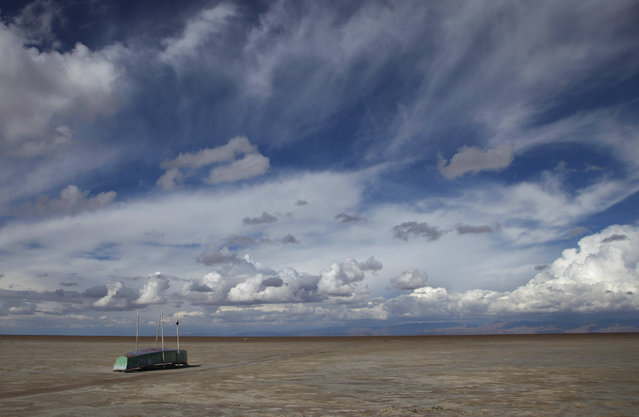
In this January 12, 2016 photo, an abandoned boat lies on the dried up lake bed of Lake Poopo, on the outskirts of Untavi, Bolivia. Drought caused by the recurrent El Nino meteorological phenomenon is considered the main driver of the lake's demise. Along with glacial melting, authorities say another factor is the diversion of water from Poopo's tributaries, mostly for mining but also for agriculture. (Photo by Juan Karita/AP Photo)

In this January 12, 2016 photo, an abandoned boat lies on the dried up lake bed of Lake Poopo, on the outskirts of Untavi, Bolivia. Drought caused by the recurrent El Nino meteorological phenomenon is considered the main driver of the lake's demise. Along with glacial melting, authorities say another factor is the diversion of water from Poopo's tributaries, mostly for mining but also for agriculture. (Photo by Juan Karita/AP Photo)
Details
21 Jan 2016 12:33:00
Norwegian Trolls By Ivar Rodningen Part 1

Ivar Rodningem is a professional illustrator, whose imaginative mind transports us into a parallel world where trolls roam the lands. These creatures might seem scary at first sight, but in reality they are very docile and friendly, help each other and humans that they happen to meet. One of their characteristic features is of course their large noses and long tails. They are one with the nature, which is why it is almost impossible to see a troll if he doesn’t want to be found. Just like you and I they love having fun, though it is hard thing to do, considering their size.


See also:Part 2
Details
26 Feb 2015 20:03:00
Two and a half year-old Jennifer Martin in tears during a visit to Santa at Harrods department store in London, 10th December 1949. (Photo by William Vanderson/Fox Photos/Hulton Archive/Getty Images)

Two and a half year-old Jennifer Martin in tears during a visit to Santa at Harrods department store in London, 10th December 1949. (Photo by William Vanderson/Fox Photos/Hulton Archive/Getty Images)
Details
29 Dec 2017 07:53:00
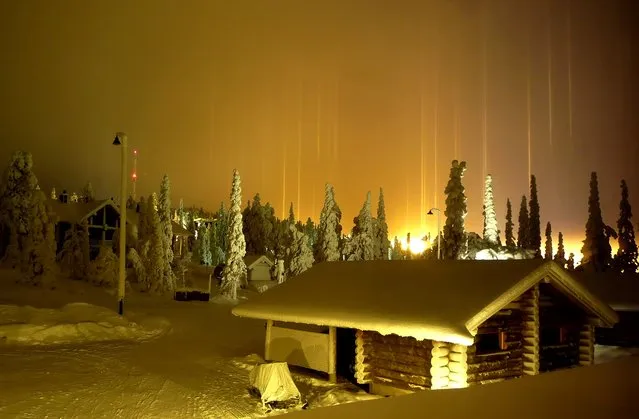
Mysterious Light Pillar

A light pillar is a visual phenomenon created by the reflection of light from ice crystals with near horizontal parallel planar surfaces. The light can come from the Sun (usually at or low to the horizon) in which case the phenomenon is called a sun pillar or solar pillar. It can also come from the Moon or from terrestrial sources such as streetlights.
Details
03 May 2014 15:17:00
Thick smoke rises during an eruption from Mount Merapi, Indonesia's most active volcano, as seen from Tunggularum village in Sleman on March 11, 2023. (Photo by Devi Rahman/AFP Photo)

Thick smoke rises during an eruption from Mount Merapi, Indonesia's most active volcano, as seen from Tunggularum village in Sleman on March 11, 2023. (Photo by Devi Rahman/AFP Photo)
Details
24 Mar 2023 03:33:00
A Vietnamese woman, wearing the traditional “ao dai” long dress, poses for photos along peach blossom flowers ahead of the Vietnamese “Tet” (Lunar New Year festival), in a field in Hanoi, Vietnam, February 2, 2016. (Photo by Reuters/Kham)

A Vietnamese woman, wearing the traditional “ao dai” long dress, poses for photos along peach blossom flowers ahead of the Vietnamese “Tet” (Lunar New Year festival), in a field in Hanoi, Vietnam, February 2, 2016. (Photo by Reuters/Kham)
Details
03 Feb 2016 13:43:00
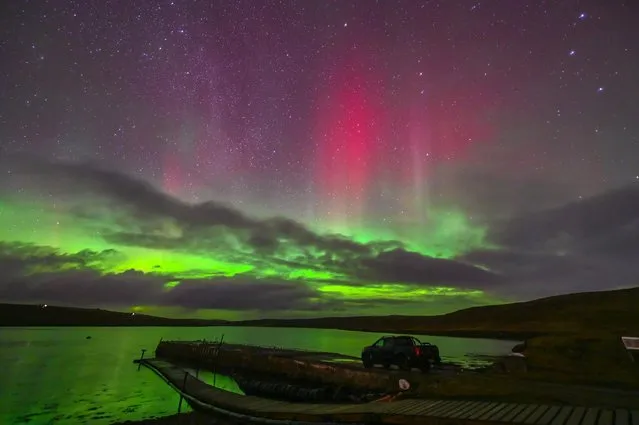
The northern lights as seen from from Yell in the Shetland Islands, Scotland on January 15, 2023. The aurora borealis is caused by collisions between electrically charged particles released from the sun that enter the Earth’s atmosphere and collide with gases such as oxygen and nitrogen. (Photo by Ryan Nisbet/Capture Media Agency)

The northern lights as seen from from Yell in the Shetland Islands, Scotland on January 15, 2023. The aurora borealis is caused by collisions between electrically charged particles released from the sun that enter the Earth’s atmosphere and collide with gases such as oxygen and nitrogen. (Photo by Ryan Nisbet/Capture Media Agency)
Details
23 Feb 2023 04:42:00
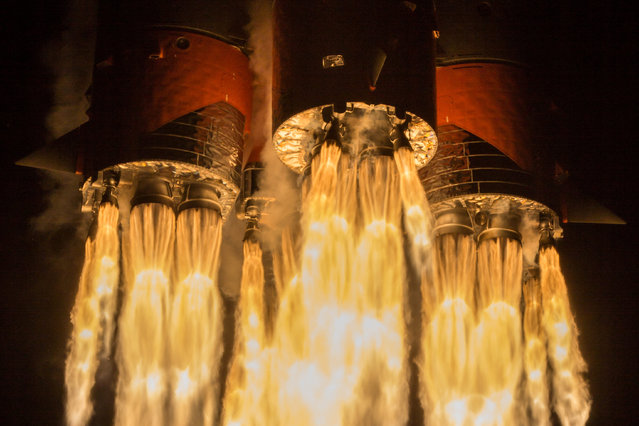
A handout photo made available by the Roscosmos State Corporation for Space Activities shows the Soyuz-2.1b launch vehicle with the OneWeb communication satellites launching from the Baikonur Cosmodrome, Kazakhstan, 07 February 2020. Thirty-four satellites from OneWeb were successfully put into orbit on a single Soyuz rocket from Baikonur. (Photo by Roscosmos/EPA/EFE)

A handout photo made available by the Roscosmos State Corporation for Space Activities shows the Soyuz-2.1b launch vehicle with the OneWeb communication satellites launching from the Baikonur Cosmodrome, Kazakhstan, 07 February 2020. Thirty-four satellites from OneWeb were successfully put into orbit on a single Soyuz rocket from Baikonur. (Photo by Roscosmos/EPA/EFE)
Details
13 Apr 2020 00:03:00