Loading...
Done
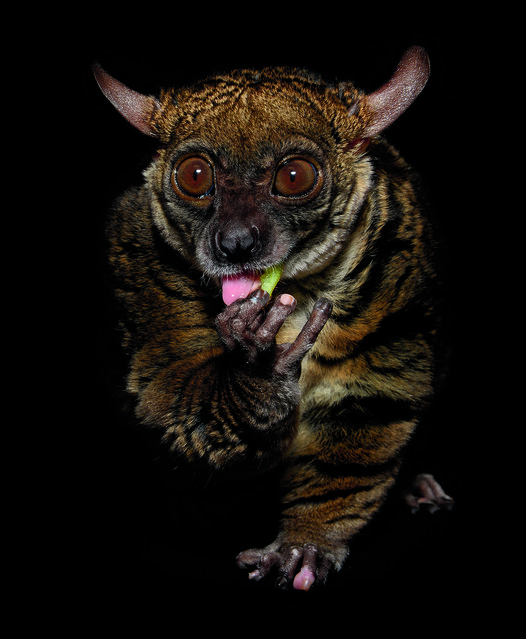
Galagos, more commonly known as bush babies, are tiny African primates with remarkable jumping abilities. Thanks to the elastic energy stored in the tendons of their lower legs, small-eared galagos can jump 6 feet straight up in the air. (Photo by Traer Scott/Chronicle Books)

Galagos, more commonly known as bush babies, are tiny African primates with remarkable jumping abilities. Thanks to the elastic energy stored in the tendons of their lower legs, small-eared galagos can jump 6 feet straight up in the air. (Photo by Traer Scott/Chronicle Books)
Details
07 Sep 2014 12:38:00
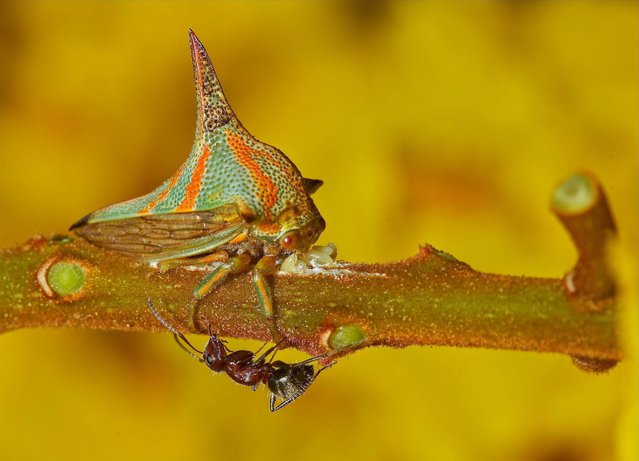
Grand Prize Winner. “Unwelcome Nursery Visitor”. (Photo by Elaine Kruer/The Palm Beach Post)

Grand Prize Winner. “Unwelcome Nursery Visitor”. (Photo by Elaine Kruer/The Palm Beach Post)
Details
18 Aug 2014 09:32:00
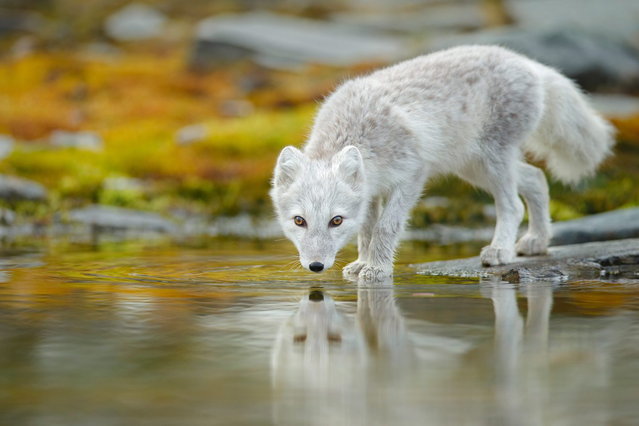
GDT Naturfotograf 2014 – “Die besten Naturfotografien des Jahres”. Radomir Jakubowski – Spieglein Spieglein. 2nd place: Mammals. (Photo by Radomir Jakubowski)

GDT Naturfotograf 2014 – “Die besten Naturfotografien des Jahres”. Radomir Jakubowski – Spieglein Spieglein. 2nd place: Mammals. (Photo by Radomir Jakubowski)
Details
11 May 2014 12:06:00
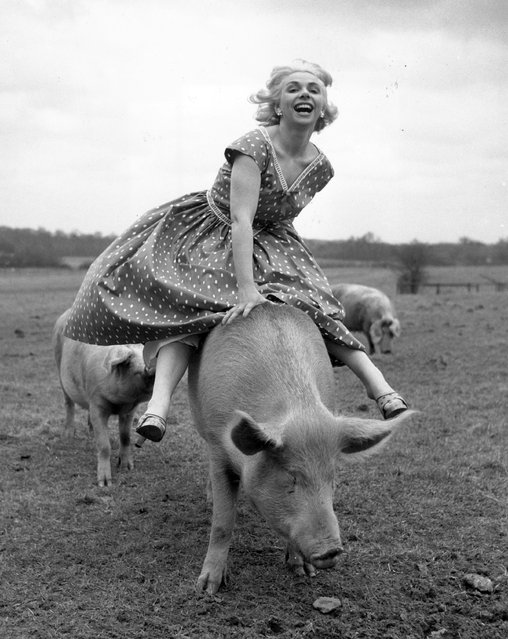
Horse racing commentator Joanne Mathews takes a break from the horses and has some fun with a local pig. 22nd March 1956. (Photo by John Pratt/Keystone Features)

Horse racing commentator Joanne Mathews takes a break from the horses and has some fun with a local pig. 22nd March 1956. (Photo by John Pratt/Keystone Features). P.S. All pictures are presented in high resolution.
Details
10 Sep 2012 07:48:00
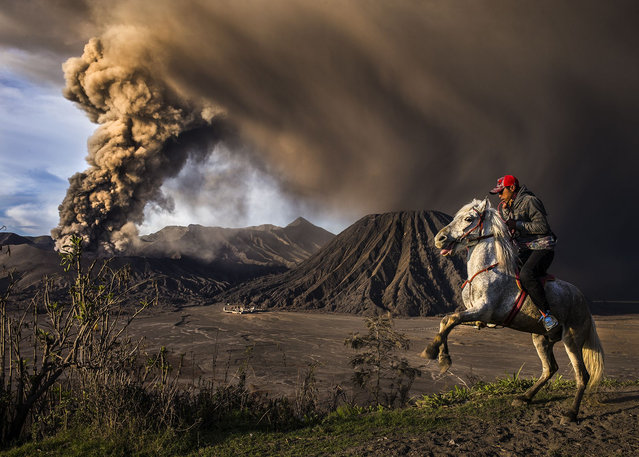
On Guard, Indonesia, by Riksa Dewantara. The explosive eruption and loud rumbling of the Mount Bromo volcano in Bromo Semeru Tengger national park scared the horse causing it to rear up onto its hind legs. Second place, Journeys and Adventures category. (Photo by Riksa Dewantara/SIPA Contest)

On Guard, Indonesia, by Riksa Dewantara. The explosive eruption and loud rumbling of the Mount Bromo volcano in Bromo Semeru Tengger national park scared the horse causing it to rear up onto its hind legs. Second place, Journeys and Adventures category. (Photo by Riksa Dewantara/SIPA Contest)
Details
01 Nov 2018 00:03:00
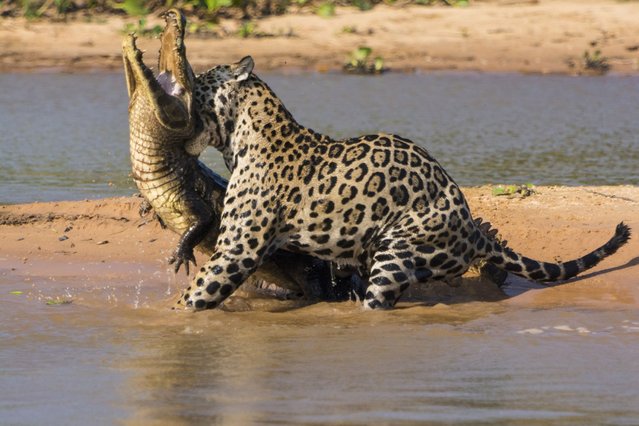
Jaguar attacks a Yacare Caiman. (Photo by Barcroft Media)

These stunning images show the 20-stone cat striking with lightning speed while the eight-foot reptile basks on a river island. The scene unfolded by the Cuiabá River in the Pantanal Wetlands of western Brazil. Photo: Jaguar attacks a Yacare Caiman. (Photo by Barcroft Media)
Details
28 Oct 2013 10:17:00
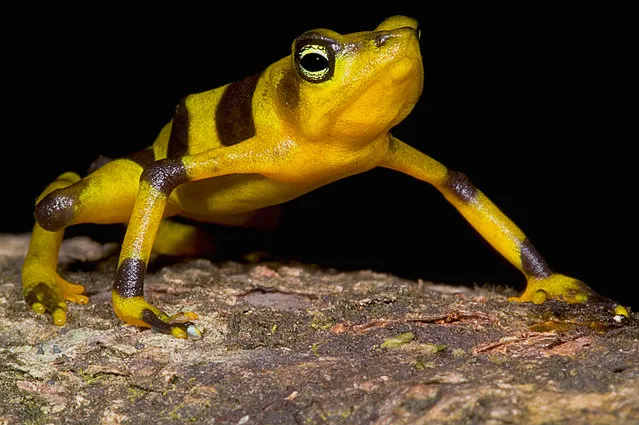
The golden harlequin toad has vanished from the wild, and only a small number live on in captivity. A fungus caused them, and many other amphibians, to die out in their home in Central America. (Photo by Danté Fenolio/The Guardian/Johns Hopkins University Press)

Wildlife photographer Danté Fenolio has headed into areas untouched by sunlight – deep seas, caves and underground – and found creatures that are exploding with colour. Here: The golden harlequin toad has vanished from the wild, and only a small number live on in captivity. A fungus caused them, and many other amphibians, to die out in their home in Central America. (Photo by Danté Fenolio/The Guardian/Johns Hopkins University Press)
Details
20 Jun 2016 12:19:00
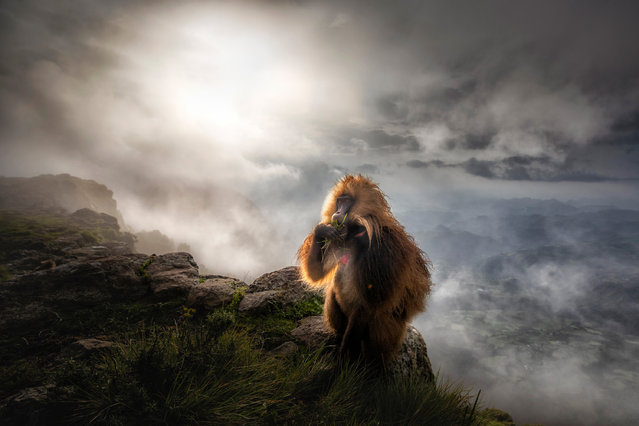
Highly commended, mammals: Gelada after the storm – Marco Gaiotti (Italy). “Gelada baboons are the only monkey species in the world that feed on grasses. They are native to the tableland of Ethiopia. Every morning large family groups wander from their sleeping places in the steep rock face, up to 1,000 metres high, to the feeding grounds at the tablelands. This image clearly depicts their feeding strategy: they pull out bunches of grass, sort the stalks and then lift them to their mouth. This shot was taken towards the end of the rainy season after a heavy storm”. (Photo by Marco Gaiotti/2019 GDT European Wildlife Photographer of the Year)

Highly commended, mammals: Gelada after the storm – Marco Gaiotti (Italy). “Gelada baboons are the only monkey species in the world that feed on grasses. They are native to the tableland of Ethiopia. Every morning large family groups wander from their sleeping places in the steep rock face, up to 1,000 metres high, to the feeding grounds at the tablelands. This image clearly depicts their feeding strategy: they pull out bunches of grass, sort the stalks and then lift them to their mouth. This shot was taken towards the end of the rainy season after a heavy storm”. (Photo by Marco Gaiotti/2019 GDT European Wildlife Photographer of the Year)
Details
31 Oct 2019 00:03:00