Loading...
Done
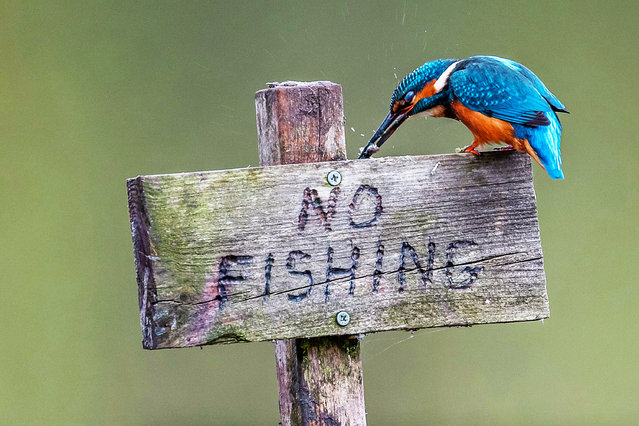
This little kingfisher clearly didn't read the sign when it landed itself a minnow in a no fishing zone. Taxi driver Paul Bird, 52, from Newmarket, Suffolk, UK, captured this amusing moment whilst out looking to photograph kingfishers in Norfolk, an hour drive from his home. Paul explained: “There are a total of six perches the bird was using from which to fish, one of them being the No Fishing sign”. (Photo by Paul Bird/Solent News & Photo Agency)

This little kingfisher clearly didn't read the sign when it landed itself a minnow in a no fishing zone. Taxi driver Paul Bird, 52, from Newmarket, Suffolk, UK, captured this amusing moment whilst out looking to photograph kingfishers in Norfolk, an hour drive from his home. Paul explained: “There are a total of six perches the bird was using from which to fish, one of them being the No Fishing sign”. (Photo by Paul Bird/Solent News & Photo Agency)
Details
02 Dec 2018 00:03:00
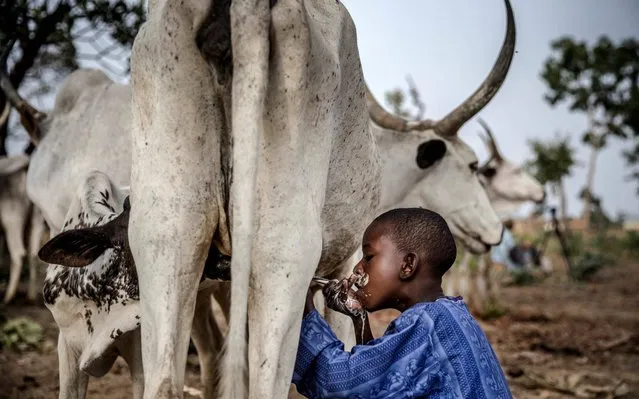
8-year-old Fulani boy Suleiman Yusuf drinks milk from a cow belonging to his father cattle near his family's house at Kachia Grazing Reserve, Kaduna State, Nigeria, on April 16, 2019. Kachia Grazing Reserve is an area set aside for the use of Fulani pastoralist and it is intended to be the foci of livestock development. The purpose for the grazing reserves is the settlement of nomadic pastoralists and inducement to sedentarisation through the provision of land for grazing and permanent water as way to avoid conflict. (Photo by Luis Tato/AFP Photo)

8-year-old Fulani boy Suleiman Yusuf drinks milk from a cow belonging to his father cattle near his family's house at Kachia Grazing Reserve, Kaduna State, Nigeria, on April 16, 2019. Kachia Grazing Reserve is an area set aside for the use of Fulani pastoralist and it is intended to be the foci of livestock development. The purpose for the grazing reserves is the settlement of nomadic pastoralists and inducement to sedentarisation through the provision of land for grazing and permanent water as way to avoid conflict. (Photo by Luis Tato/AFP Photo)
Details
10 Jul 2019 00:01:00
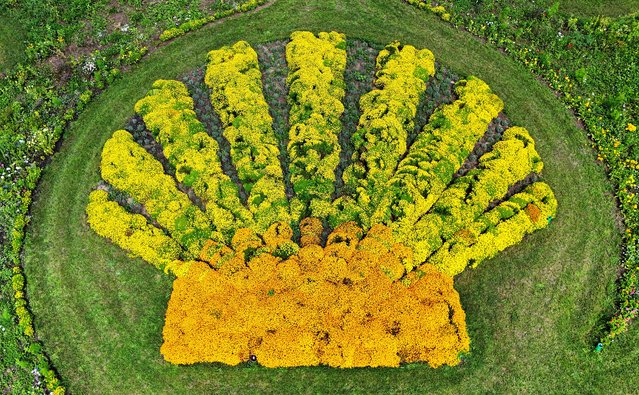
A picture taken with a drone shows a huge work of art created with various flowers and flowering plants in Jacobsdorf, Germany, 29 July 2024. Artist Michael Uy has transformed a piece of fallow land into an insect paradise for bees, bumblebees and butterflies. Using plants, the artist has planted and sown oversized images in the shape of a shell and a winding path of life on a large meadow in Jacobsdorf. (Photo by Hannibal Hanschke/EPA/EFE)

A picture taken with a drone shows a huge work of art created with various flowers and flowering plants in Jacobsdorf, Germany, 29 July 2024. Artist Michael Uy has transformed a piece of fallow land into an insect paradise for bees, bumblebees and butterflies. Using plants, the artist has planted and sown oversized images in the shape of a shell and a winding path of life on a large meadow in Jacobsdorf. (Photo by Hannibal Hanschke/EPA/EFE)
Details
04 Sep 2024 02:53:00
Nermin Halilagic, 38, poses with kitchen utensils in Bihac, Bosnia and Herzegovina, January 23, 2017. (Photo by Dado Ruvic/Reuters)

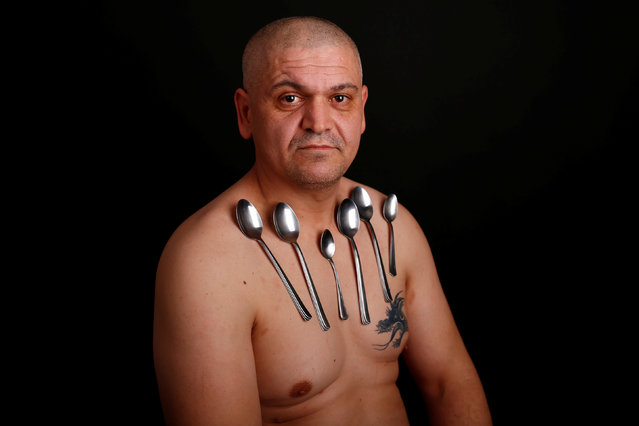
Nermin Halilagic, 38, poses with kitchen utensils in Bihac, Bosnia and Herzegovina, January 23, 2017. Halilagic discovered earlier this year that he had the unusual ability to attach items to his body using what he says is a special energy radiated from his body. (Photo by Dado Ruvic/Reuters)
Details
26 Jan 2017 12:52:00
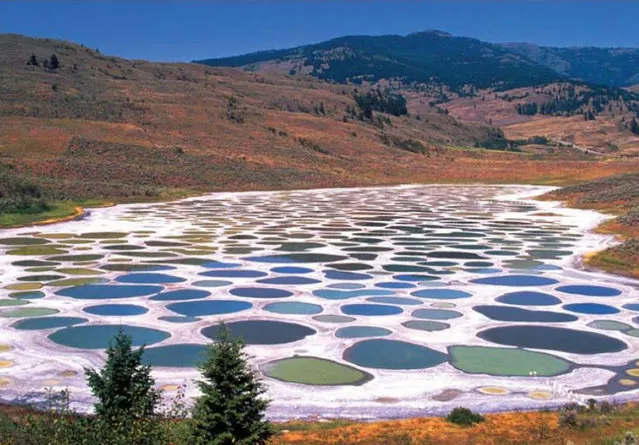
Kliluk, the Spotted Lake, Canada

Originally known to the First Nations of the Okanagan Valley as Khiluk, which was- and remains today revered as a sacred site producing therapeutic waters. During World War I the minerals of Spotted Lake were used in manufacturing ammunition. Later the area came under the control of the Ernest Smith Family, for a term of about 40 years. In 1979 Smith attempted to create interest in a spa at the lake. The First Nations responded with an effort to buy the lake; in October 2001 they finally struck a deal. First Nations arranged the purchase of 22 hectares of land for a total of $720,000, and contributed about 20% of the cost. The Indian Affairs Department paid the remainder.
Details
06 Mar 2015 12:59:00
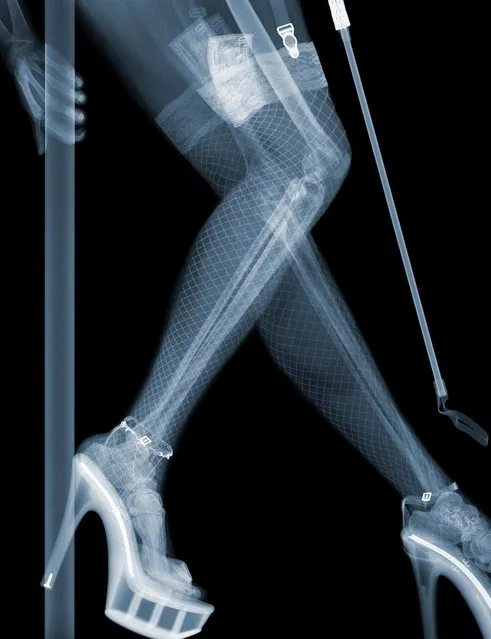
“Stripper”: Has tucked her cash away safely. (Photo by Nick Veasey/Barcroft Media)

British artist Nick Veasey used an X-ray machine to show us exactly what's going on under people's clothes. The equipment took copies of items separately before they were mashed together to create characters and situations. The work is part of Veasey's latest exhibition named “X-ray Voyeurism”. In order to create the work, the 51-year-old has spent the last 20 years exposing himself to harmful radiation in his studio. Photo: “Stripper”: Has tucked her cash away safely. (Photo by Nick Veasey/Barcroft Media)
Details
22 Jun 2014 10:49:00
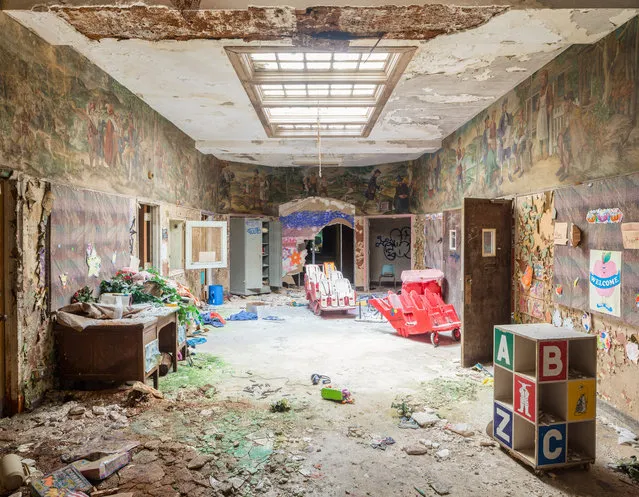
This area of the hospital was last used as a day care center in the early 2000s. (Photo by Will Ellis/Caters News)

A spooky sight to behold! This is what a psychiatric hospital that has been abandoned for years looks like. Complete with bowling alley and a theater, the hospital shows just how much nature has weathered it over time as paint peels from the walls and the mattress gather dust. Here: This area of the hospital was last used as a day care center in the early 2000s. (Photo by Will Ellis/Caters News)
Details
03 Dec 2015 08:01:00
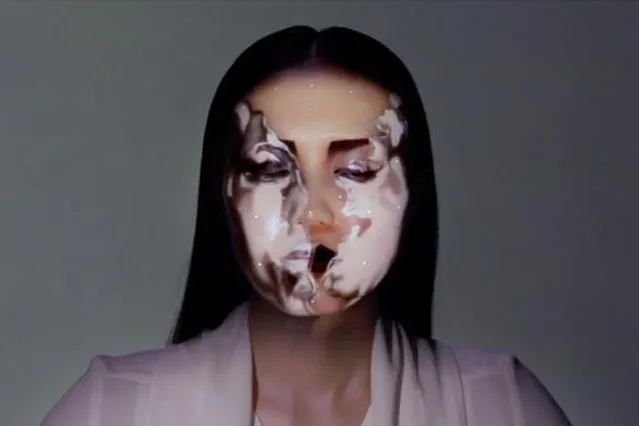
Real-Time Face Tracking And Projection Mapping By Nobumichi Asai

Nobumichi Asai has used projection mapping to put CGI onto cars, docks, building and more. What is his latest canvas? A real, live human face! Asai used Omote, a combination of real-time face tracking and projection mapping to transform a model's face into mesmerizing patterns. It's called “electronic makeup”, but as you will see in the (creepy-ish) video, it goes much, much beyond anything makeup can possibly do.
Details
20 Aug 2014 10:49:00