Loading...
Done
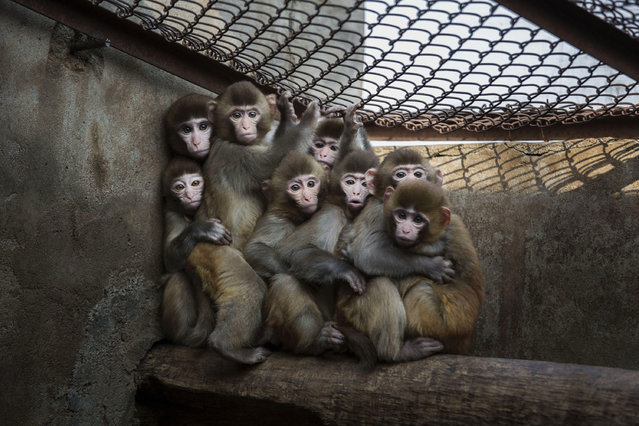
Macaque monkeys crowd together in their cage at a monkey farm on February 3, 2016 in Xinye county, Henan province, China. The area boasts a centuries-long and lucrative history of raising and training monkeys for performance. In Xinye, villagers are seeing an increase in business with the lunar calendar's “Year of the Monkey”. Farmers say most of the monkeys are bred and raised for domestic zoos, circuses, and performing groups, but add that some are also sold for medical research in China and the United States. Despite the popularity of the tradition, critics contend the training methods and conditions constitute animal cruelty. (Photo by Kevin Frayer/Getty Images)

Macaque monkeys crowd together in their cage at a monkey farm on February 3, 2016 in Xinye county, Henan province, China. The area boasts a centuries-long and lucrative history of raising and training monkeys for performance. In Xinye, villagers are seeing an increase in business with the lunar calendar's “Year of the Monkey”. Farmers say most of the monkeys are bred and raised for domestic zoos, circuses, and performing groups, but add that some are also sold for medical research in China and the United States. Despite the popularity of the tradition, critics contend the training methods and conditions constitute animal cruelty. (Photo by Kevin Frayer/Getty Images)
Details
31 Dec 2016 09:56:00
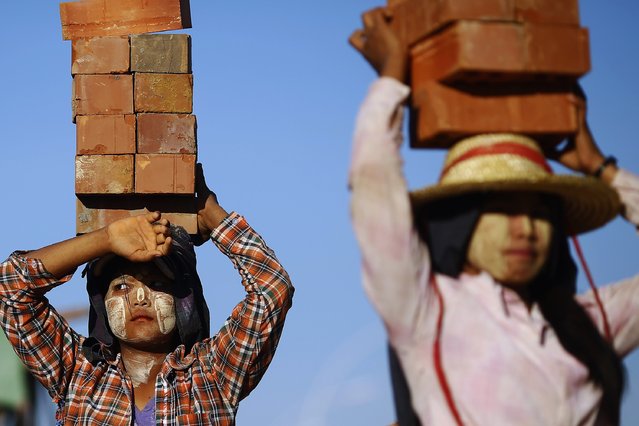
Construction workers carry bricks on their heads near the country's parliament building in Naypyitaw November 11, 2014. Yangon lost its status as Myanmar's capital in 2005, after the former military junta carved a new seat of government from a parched wilderness some 380 km (236 miles) to the north and called it Naypyitaw (“Abode of Kings”). (Photo by Damir Sagolj/Reuters)

Construction workers carry bricks on their heads near the country's parliament building in Naypyitaw November 11, 2014. Yangon lost its status as Myanmar's capital in 2005, after the former military junta carved a new seat of government from a parched wilderness some 380 km (236 miles) to the north and called it Naypyitaw (“Abode of Kings”). (Photo by Damir Sagolj/Reuters)
Details
15 Nov 2014 12:29:00
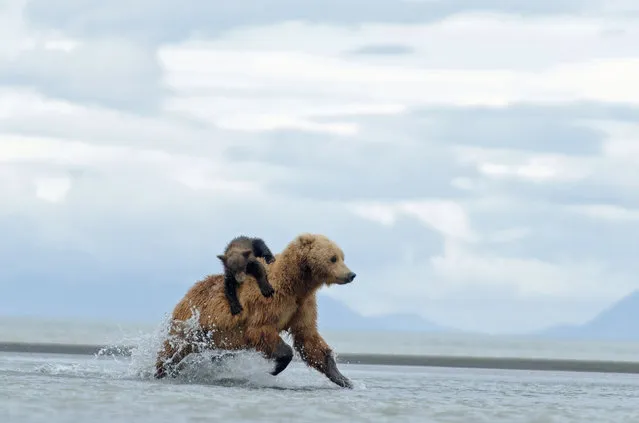
A adorable bear cub cant get enough of playing buckaroo – as it hangs onto its mum splashing about in a river. His mum was attempting to catch a fish supper for the pair as the plucky cub continued to jump on her back. And as she was concentrating on her meal the young bear became a distraction. So she sprung into life with him on her back before he was tossed into the water much to his delight. (Photo by Lisa Sidorsky/Caters News)

A adorable bear cub cant get enough of playing buckaroo – as it hangs onto its mum splashing about in a river. His mum was attempting to catch a fish supper for the pair as the plucky cub continued to jump on her back. And as she was concentrating on her meal the young bear became a distraction. So she sprung into life with him on her back before he was tossed into the water much to his delight. (Photo by Lisa Sidorsky/Caters News)
Details
15 Nov 2014 13:10:00
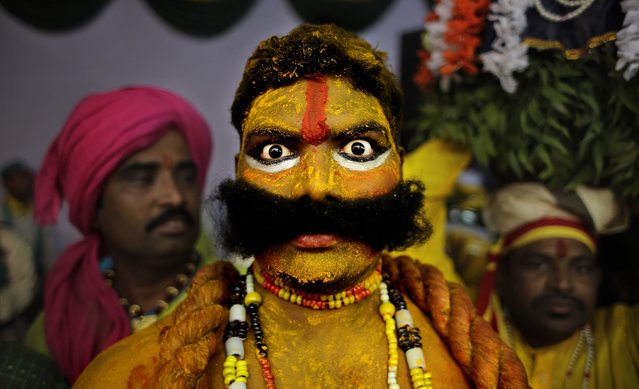
An artist from the state of Telangana reacts to the camera as they wait for their turn to perform during a media preview displaying a glimpse of culture of different parts of India, in New Delhi, India, Thursday, January 22, 2015. The tableaux will be part of the Indian Republic Day parade on Jan. 26. (Photo by Altaf Qadri/AP Photo)

An artist from the state of Telangana reacts to the camera as they wait for their turn to perform during a media preview displaying a glimpse of culture of different parts of India, in New Delhi, India, Thursday, January 22, 2015. The tableaux will be part of the Indian Republic Day parade on Jan. 26. (Photo by Altaf Qadri/AP Photo)
Details
23 Jan 2015 13:04:00
What the World Eats By Peter Menzel And Faith D'Aluisio Part 2

A stunning photographic collection featuring portraits of people from 30 countries and the food they eat in one day. In this fascinating study of people and their diets, 80 profiles are organized by the total number of calories each person puts away in a day. Featuring a Japanese sumo wrestler, a Massai herdswoman, world-renowned Spanish chef Ferran Adria, an American competitive eater, and more, these compulsively readable personal stories also include demographic particulars, including age, activity level, height, and weight. Essays from Harvard primatologist Richard Wrangham, journalist Michael Pollan, and others discuss the implications of our modern diets for our health and for the planet. This compelling blend of photography and investigative reportage expands our understanding of the complex relationships among individuals, culture, and food.
Details
02 May 2014 09:20:00
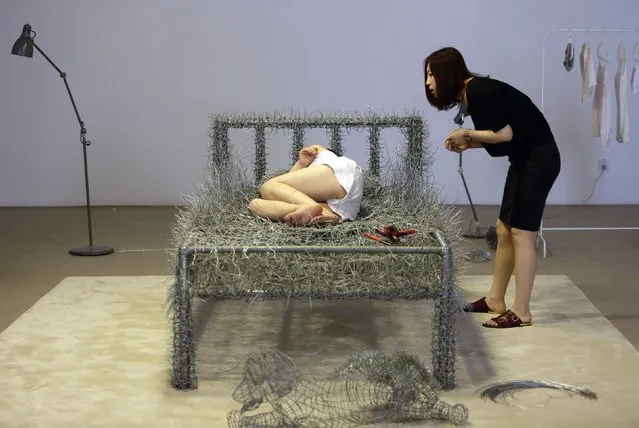
Chinese artist Zhou Jie takes a nap on an unfinished iron wire bed, one of her sculpture works, after lunch as a friend of hers looks on at Beijing Now Art Gallery, in Beijing August 11, 2014. (Photo by Jason Lee/Reuters)

Chinese artist Zhou Jie takes a nap on an unfinished iron wire bed, one of her sculpture works, after lunch as a friend of hers looks on at Beijing Now Art Gallery, in Beijing August 11, 2014. Zhou started her art project titled “36 Days” on August 9, in which she would live inside an exhibition hall with an unfinished iron wire bed, some iron wire sculptures in the shape of stuffed animal dolls, a certain amount of food and her mobile phone, for 36 days. The entire process is open to visitors and she may also interact with them, according to Zhou. (Photo by Jason Lee/Reuters)
Details
16 Aug 2014 10:37:00
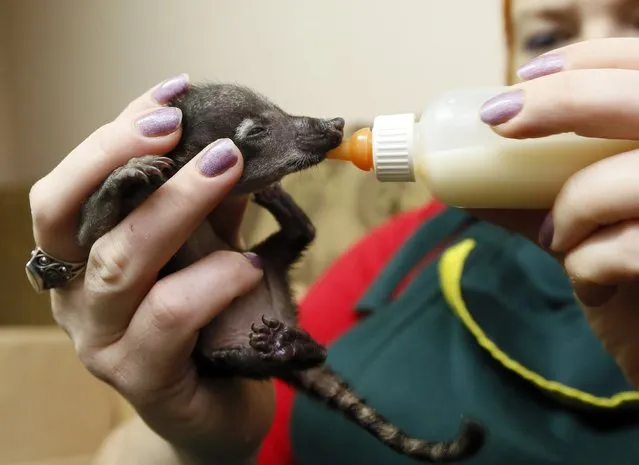
An employee feeds a one-week-old coati cub with a bottle of milk at the Royev Ruchey zoo in the suburbs of Krasnoyarsk, Siberia, October 10, 2014. The mother of three cubs refused to nurse them, according to zoo employees. (Photo by Ilya Naymushin/Reuters)

An employee feeds a one-week-old coati cub with a bottle of milk at the Royev Ruchey zoo in the suburbs of Krasnoyarsk, Siberia, October 10, 2014. The mother of three cubs refused to nurse them, according to zoo employees. (Photo by Ilya Naymushin/Reuters)
Details
11 Oct 2014 14:18:00
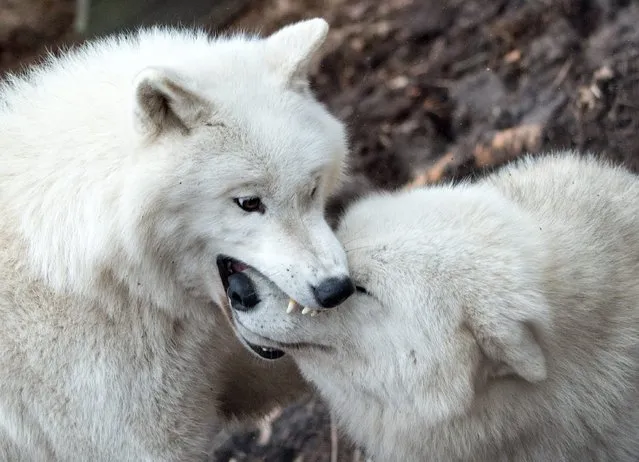
Arctic wolves in their new enclosure in the wildlife park in Hanau, Germany, 10 February 2015. The pack is one of the park's main attractions, which specializes in local and European breeds. (Photo by Boris Roessler/EPA)

Arctic wolves in their new enclosure in the wildlife park in Hanau, Germany, 10 February 2015. The pack is one of the park's main attractions, which specializes in local and European breeds. (Photo by Boris Roessler/EPA)
Details
14 Feb 2015 13:37:00