Loading...
Done
What the World Eats By Peter Menzel And Faith D'Aluisio Part 2

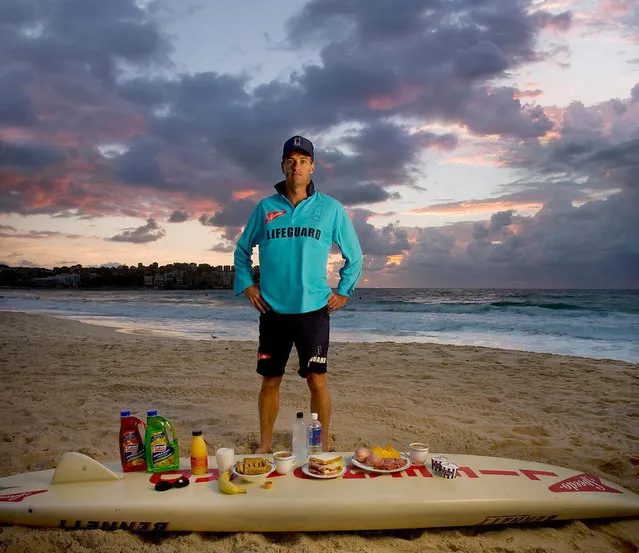
A stunning photographic collection featuring portraits of people from 30 countries and the food they eat in one day. In this fascinating study of people and their diets, 80 profiles are organized by the total number of calories each person puts away in a day. Featuring a Japanese sumo wrestler, a Massai herdswoman, world-renowned Spanish chef Ferran Adria, an American competitive eater, and more, these compulsively readable personal stories also include demographic particulars, including age, activity level, height, and weight. Essays from Harvard primatologist Richard Wrangham, journalist Michael Pollan, and others discuss the implications of our modern diets for our health and for the planet. This compelling blend of photography and investigative reportage expands our understanding of the complex relationships among individuals, culture, and food.
Details
02 May 2014 09:20:00
Bad Weather. Girl in the rain

“The marvels of daily life are exciting; no movie director can arrange the unexpected that you find in the street.” – Robert Doisneau

Photo: “Running on heels”, 2012. (Photo by Danny Santos)

Details
05 Dec 2012 09:26:00
Hirari in Harajuku. Ran into one of my favorite street snap models in Harajuku, Hirari. (Photo by Tokyo Fashion)

Hirari Ikeda, a well-known Harajuku street fashion personality, on the street in Shibuya. (Photo by Tokyo Fashion)


Details
28 Nov 2012 10:16:00
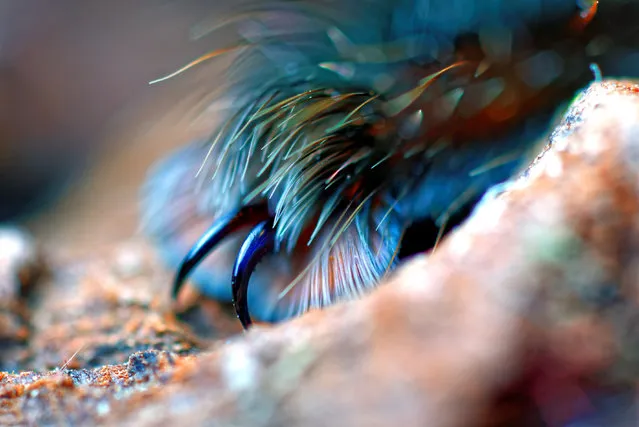
Brachypelma albopilosum, foot detail. (Photo by Michael Pankratz/Caters News Agency)

Michael Pankratz’s intriguing works focus specifically on the feet of tarantulas – an appendage that many have perhaps never focused on. The extreme close-ups of tarantulas’ “paws” show fine, colourful hairs, and sharp claws. Here: Brachypelma albopilosum, foot detail. (Photo by Michael Pankratz/Caters News Agency)
Details
19 Oct 2017 09:17:00
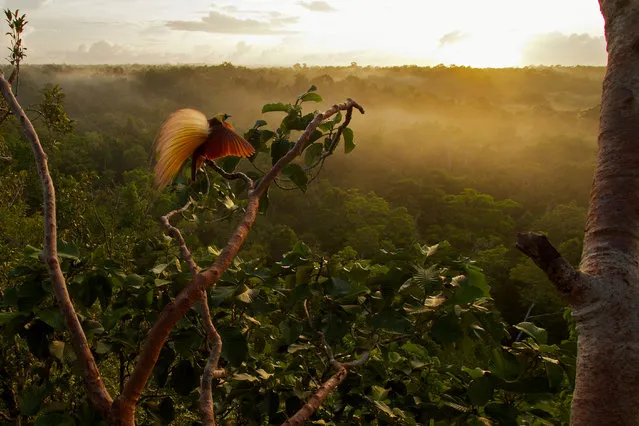
A greater bird of paradise (Paradisaea apoda) displaying in Badigaki Forest, Wokam Island (Aru Islands, Indonesia). Found here in Aru and on adjacent New Guinea, the greater bird of paradise represents about 40 different species of birds of paradise that depend on intact rainforest across the New Guinea region spanning eastern Indonesia and Papua New Guinea. With more than 80% of forest cover still intact, this region represents the largest remaining block of rainforest in the entire Asia-Pacific. (Photo by Tim Laman/naturepl.com/LDY Agency)

A greater bird of paradise (Paradisaea apoda) displaying in Badigaki Forest, Wokam Island (Aru Islands, Indonesia). Found here in Aru and on adjacent New Guinea, the greater bird of paradise represents about 40 different species of birds of paradise that depend on intact rainforest across the New Guinea region spanning eastern Indonesia and Papua New Guinea. With more than 80% of forest cover still intact, this region represents the largest remaining block of rainforest in the entire Asia-Pacific. (Photo by Tim Laman/naturepl.com/LDY Agency)
Details
14 Nov 2021 05:57:00
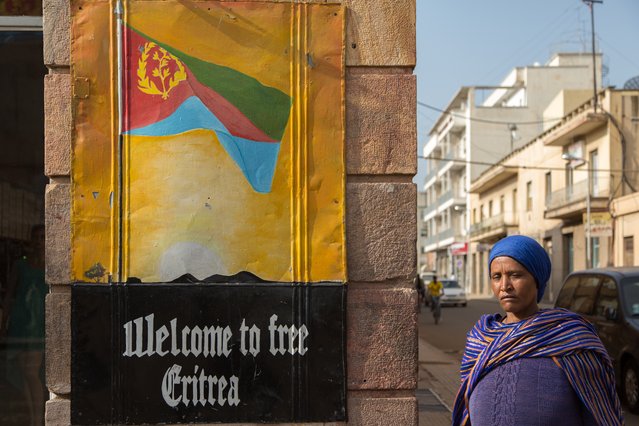
For her series “Dolce Vita in Hell”, Swiss photojournalist Stéphanie Buret headed to Eritrea and found a country struggling to haul itself out of oppression – but with its art deco buildings still looking stunning. (Photo by Stéphanie Buret/The Guardian)

For her series “Dolce Vita in Hell”, Swiss photojournalist Stéphanie Buret headed to Eritrea and found a country struggling to haul itself out of oppression – but with its art deco buildings still looking stunning. (Photo by Stéphanie Buret/The Guardian)
Details
04 Aug 2016 10:35:00
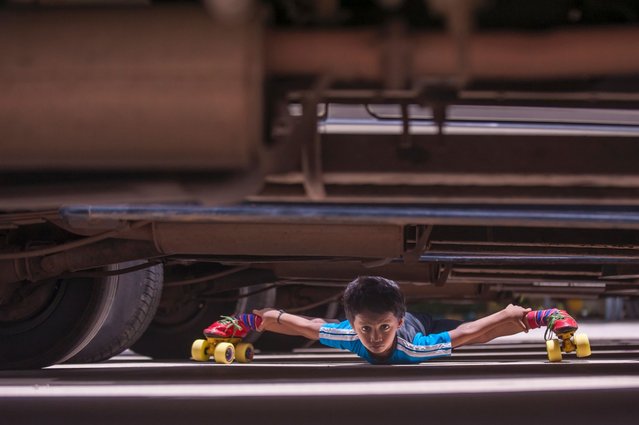
A super flexible schoolboy has become a limbo legend - by roller-skating under 39 cars in a row. It took six-year-old Gagan Satish just 29 seconds to cover a distance of nearly 70 metres with his face just five inches from the ground. (Photo by Arkaprava Ghosh/Barcroft Media India)

A super flexible schoolboy has become a limbo legend - by roller-skating under 39 cars in a row. It took six-year-old Gagan Satish just 29 seconds to cover a distance of nearly 70 metres with his face just five inches from the ground. (Photo by Arkaprava Ghosh/Barcroft Media India)
Details
24 Jul 2014 12:59:00
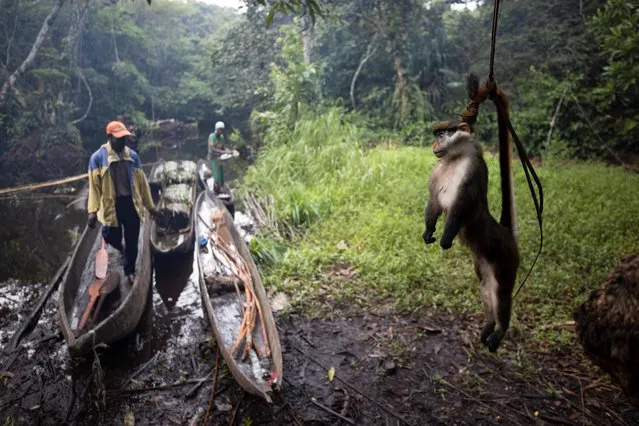
A dead red-tailed monkey hangs by its tail above the ground, in order to keep it away from ants, in the forest near the city of Mbandaka, Democratic Republic of the Congo, April 5, 2019. Bushmeat hunters are emptying Central Africa's forests at a high rate, researchers say. A growing appetite for wild meat in cities has ramped up the scale of hunting. Research shows around 6 million tonnes of bushmeat are sourced annually from the Congo Basin, whose forest spans across six countries and is second in size only to the Amazon. (Photo by Thomas Nicolon/Reuters)

A dead red-tailed monkey hangs by its tail above the ground, in order to keep it away from ants, in the forest near the city of Mbandaka, Democratic Republic of the Congo, April 5, 2019. Bushmeat hunters are emptying Central Africa's forests at a high rate, researchers say. A growing appetite for wild meat in cities has ramped up the scale of hunting. Research shows around 6 million tonnes of bushmeat are sourced annually from the Congo Basin, whose forest spans across six countries and is second in size only to the Amazon. (Photo by Thomas Nicolon/Reuters)
Details
14 Oct 2019 00:03:00