Loading...
Done
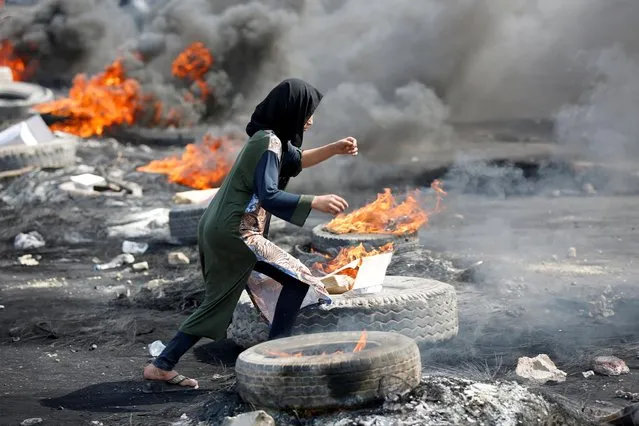
A demonstrator runs between burning tires during a curfew, two days after the nationwide anti-government protests turned violent, in Baghdad, Iraq on October 3, 2019. (Photo by Wissm al-Okili/Reuters)

A demonstrator runs between burning tires during a curfew, two days after the nationwide anti-government protests turned violent, in Baghdad, Iraq on October 3, 2019. (Photo by Wissm al-Okili/Reuters)
Details
05 Oct 2019 00:01:00
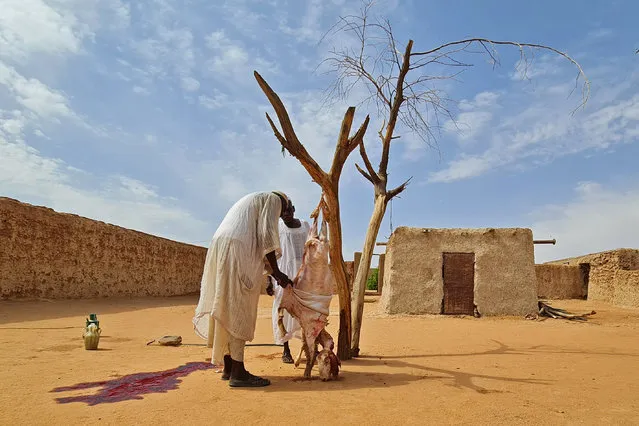
Men skin slaughtered sheep on the first day of the Eid al-Adha Muslim holiday in Wad Hamid, about 100 kilometres north of Sudan's capital, on June 28, 2023. (Photo by AFP Photo/Stringer)

Men skin slaughtered sheep on the first day of the Eid al-Adha Muslim holiday in Wad Hamid, about 100 kilometres north of Sudan's capital, on June 28, 2023. (Photo by AFP Photo/Stringer)
Details
09 Jul 2023 02:55:00
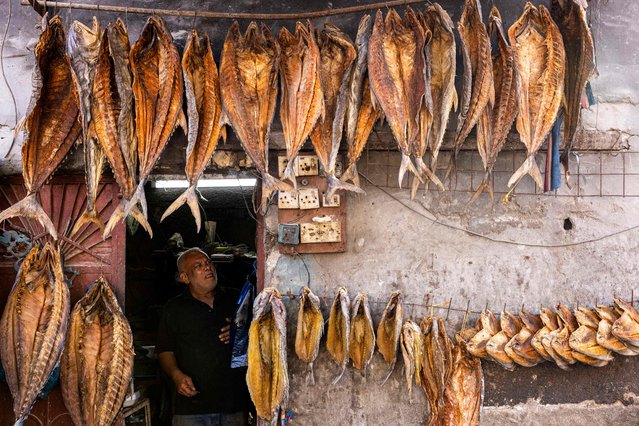
An Iraqi man sells dried fish ahead of Eid al-Fitr, which marks the end of the Muslim holy fasting month of Ramadan, in Basra on April 8, 2024. (Photo by Hussein Faleh/AFP Photo)

An Iraqi man sells dried fish ahead of Eid al-Fitr, which marks the end of the Muslim holy fasting month of Ramadan, in Basra on April 8, 2024. (Photo by Hussein Faleh/AFP Photo)
Details
18 May 2024 00:07:00
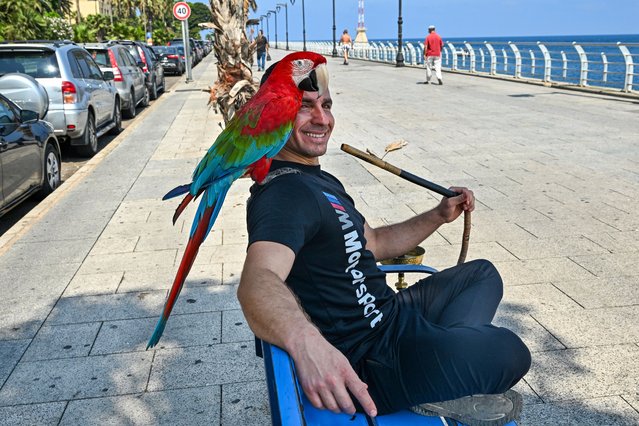
A man smokes a water pipe sitting on a bench with his pet parrot at the Ain al Mreisseh seaside promenade in Beirut on June 28, 2024. (Photo by Joseph Eid/AFP Photo)

A man smokes a water pipe sitting on a bench with his pet parrot at the Ain al Mreisseh seaside promenade in Beirut on June 28, 2024. (Photo by Joseph Eid/AFP Photo)
Details
26 Jul 2024 04:20:00
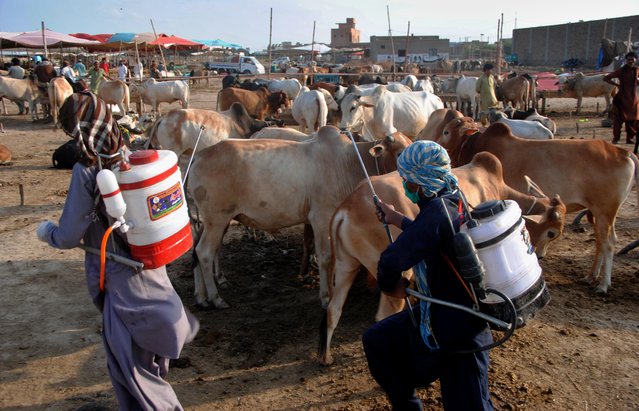
Health workers wearing face masks spray disinfectant liquid on sacrificial animals amid concerns over the spread of the SARS-CoV-2 coronavirus that causes the pandemic COVID-19 disease ahead of the Muslim festival of Eid al-Adha at an animal market in Hyderabad, southern Pakistan, 21 July 2020. Eid al-Adha, also known as the Festival of the Sacrifice, is the second and holiest of the two main Islamic holidays celebrated each year (the other one being Eid al-Fitr). Every year, on the 10th day of the Islamic lunar month of Dhu al-Hijjah, Muslims around the world ritually slaughter a sacrificial animal and split the meat into three parts: one is reserved for the family, another for friends and relatives, and the third is given to the poor and needy. The Saudi Supreme Court has declared that the first day of Eid al-Adha this year falls on 31 July. (Photo by Nadeem Khawar/EPA/EFE)

Health workers wearing face masks spray disinfectant liquid on sacrificial animals amid concerns over the spread of the SARS-CoV-2 coronavirus that causes the pandemic COVID-19 disease ahead of the Muslim festival of Eid al-Adha at an animal market in Hyderabad, southern Pakistan, 21 July 2020. (Photo by Nadeem Khawar/EPA/EFE)
Details
23 Jul 2020 00:07:00
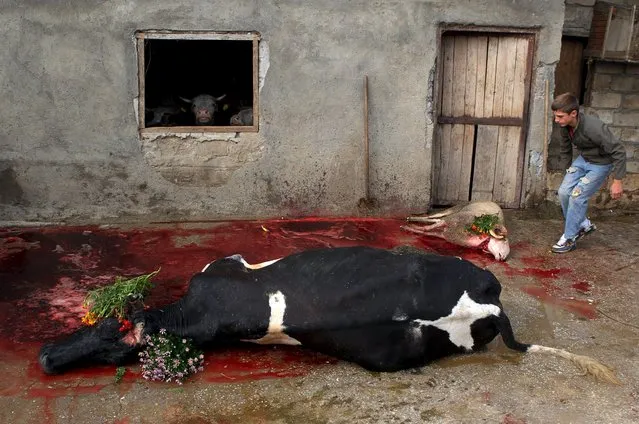
A youth stands near a cow and a sheep that were sacrified in the village of Miratovc for the celebration of Eid-al-Adha, near the town of Presevo, southern Serbia September 24, 2015. (Photo by Hazir Reka/Reuters)

A youth stands near a cow and a sheep that were sacrified in the village of Miratovc for the celebration of Eid-al-Adha, near the town of Presevo, southern Serbia September 24, 2015. Muslims across the world celebrate the annual festival of Eid al-Adha or the Feast of the Sacrifice. (Photo by Hazir Reka/Reuters)
Details
26 Sep 2015 08:03:00


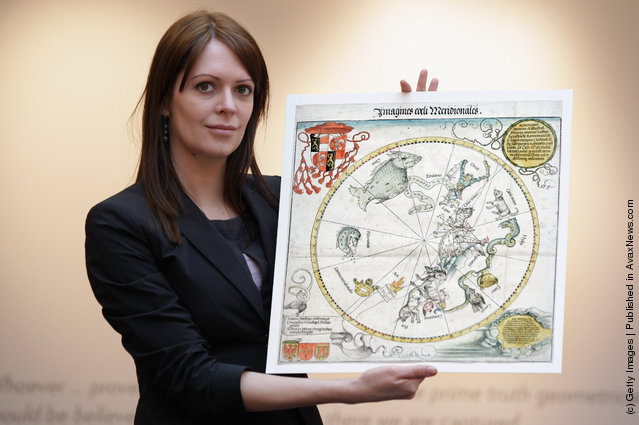
Head of European Prints, Severine Nackers holds a celestial Map of the Southern Sky by Albrecht Durer, at Sotheby's Auction House on March 25, 2011 in London, England. The two woodcut maps depicting the Northern and Southern skies circa 1515, are the earliest printed star charts of their kind ever published in Europe, and are expected to fetch between Ј120,000-180,000 GBP when they go on sale at the “London sale of Old Master, Modern and Contemporary prints” at Sotheby's Auction house on March 30, 2011. (Photo by Dan Kitwood/Getty Images)
Details
25 Mar 2011 14:57:00


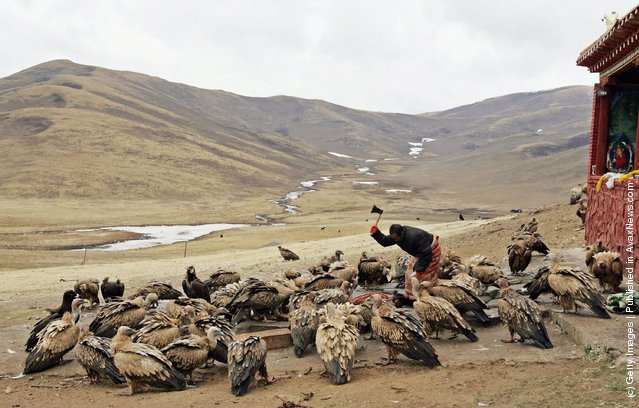
“Sky burial or ritual dissection was once a common funerary practice in Tibet wherein a human corpse is cut in specific locations and placed on a mountaintop, exposing it to the elements or the mahabhuta and animals – especially to birds of prey. The location of the sky burial preparation and place of execution are understood in the Vajrayana traditions as charnel grounds. In Tibet the practice is known as jhator, which literally means, «giving alms to the birds»”. – Wikipedia

Photo: A burial master chops bones of a body to feed vultures during a celestial burial ceremony on April 19, 2006 in Dari County of Guoluo Prefecture, Qinghai Province, northwest China. Celestial burial is a traditional funeral of Tibetan people, which began in the 7th century. (Photo by China Photos/Getty Images)
Details
18 Jun 2011 12:12:00